“There are things in the psyche that are not individual, that belong to the species, to humanity itself.”
— Anna G. discussing her dream analysis with Freud.


Genre
Literary Fiction / Psychology / Fantasy / Historical Fiction
Reading Time
6-8 hours
Key Themes
See below
Sign in to track this book
In a hallucinatory blend of erotic fantasy and historical horror, a woman's vivid dreams recounted to Sigmund Freud unravel into the unspeakable realities of the Holocaust, attempting to reconcile individual psyche with collective fate.
The novel opens with a 'case history' presented as letters and notes from Dr. Sigmund Freud concerning a new patient, Anna G. (later revealed as Lisa Erdman), a young opera singer. Anna has been experiencing disturbing and sexually explicit dreams, which she recounts in a long, prose-poem letter to Freud. The central dream involves her staying at a 'white hotel' where she engages in passionate, often violent, sexual encounters with various men, including her brother and a Russian officer, all while a fire rages outside. The dream is filled with symbolic imagery, including a train journey, a funicular, and a sense of impending doom and personal violation, intertwined with intense pleasure. Freud begins to analyze these dreams, seeking their roots in her psyche and past experiences.
Freud engages in a deep psychoanalytic exploration of Anna's dreams, corresponding with her and attempting to uncover repressed desires and traumas. He focuses on the intense eroticism, the recurring imagery of violence and fire, and the symbolic figures in her dreams. Freud interprets the 'white hotel' as a representation of her body and the various men as aspects of her own desires or projections of significant figures in her life. He suggests that the dreams are a manifestation of hysteria, stemming from early childhood experiences and unresolved oedipal conflicts, particularly concerning her relationship with her father and her own nascent sexuality. He also identifies elements of a death wish and a powerful neurotic drive.
The narrative transitions from the dream-poem and Freud's analysis to a more conventional third-person perspective, introducing Lisa Erdman, a half-Jewish Russian opera singer. It becomes clear that Lisa is the 'Anna G.' of the earlier section. We learn about her life in Switzerland, her artistic career, and her struggles with mental and physical health, specifically her 'pelvic pain' and 'breathing difficulties' which prompted her to seek Freud's help. The novel portrays her as a sensitive, artistic, and somewhat fragile woman, whose inner world is intensely vivid and often overwhelming. Her real-life experiences begin to subtly echo the themes and anxieties present in her dreams, creating a bridge between her subconscious and conscious existence.
Lisa meets and falls in love with Victor, a Russian engineer and former patient of Freud's. Their relationship blossoms, and they eventually marry. This period marks a phase of relative stability and happiness for Lisa. Victor is a kind and understanding partner, and their life together offers a stark contrast to the tumultuous and often violent nature of her dreams. They share a deep connection, and Lisa experiences a degree of emotional and physical healing. This part of the story emphasizes the power of love and human connection to alleviate suffering, even as the underlying anxieties and unresolved issues from her past continue to simmer beneath the surface of her newfound contentment.
Lisa and Victor move to Kiev, Ukraine, where they establish a life together. Lisa continues her singing career, albeit in a less prominent capacity. They have a son, Kolya, who brings immense joy to Lisa. This section portrays a seemingly idyllic domestic life, with Lisa embracing motherhood and finding a sense of purpose and belonging. The earlier dream-like, fantastical elements of the novel recede, replaced by a more grounded, realistic portrayal of everyday existence. However, subtle hints of the impending historical catastrophe begin to surface, as the political climate in the Soviet Union grows increasingly tense and oppressive, foreshadowing a darker future.
As the 1930s progress, the political situation in the Soviet Union deteriorates. The pervasive fear of purges and state-sponsored violence begins to cast a shadow over Lisa and Victor's lives. Friends and acquaintances disappear, and an atmosphere of suspicion and terror grips the country. Victor, with his intellectual background and past connections, becomes increasingly vulnerable. Lisa, despite her artistic sensibilities, is forced to confront the harsh realities of totalitarianism. The external political turmoil starts to mirror the internal anxieties and sense of impending doom that characterized her earlier dreams, blurring the lines between her personal neuroses and the collective historical trauma unfolding around her.
The inevitable happens: Victor is arrested by the NKVD (the Soviet secret police) on trumped-up charges of being an 'enemy of the people.' Lisa is left alone with their young son, Kolya, in a state of profound shock and despair. Victor's disappearance marks a devastating turning point in Lisa's life, shattering her fragile sense of security and happiness. The bureaucratic brutality and senselessness of the Soviet regime are starkly portrayed, as Lisa grapples with the injustice and uncertainty of her husband's fate. This event rips away the last vestiges of her 'normal' life, forcing her into a struggle for survival in an increasingly hostile world.
The narrative abruptly shifts to the German invasion of Ukraine in 1941. Lisa, now a single mother, and Kolya are among the Jewish population of Kiev. They are rounded up by the SS and marched with thousands of others to Babi Yar, a ravine outside the city. The scene is depicted with horrifying, unsparing detail, as the victims are systematically stripped, humiliated, and then machine-gunned into the ravine. Lisa desperately tries to protect Kolya, but their efforts are futile. This section is a stark and brutal depiction of the Holocaust, rendered with a chilling realism that contrasts sharply with the earlier dream-like sequences, yet simultaneously fulfills the ominous prophecies of violence and death present in Lisa's subconscious.
Following the horrific massacre, the narrative transcends the physical world. Lisa, now a spirit, finds herself in a kind of afterlife, a 'white hotel' that is both familiar and profoundly different from her dream. Here, she is reunited with Victor and Kolya, as well as other victims of the Babi Yar massacre. This 'hotel' is a place of healing and reconciliation, where the spirits process their trauma and find peace. The wounds of their earthly existence are gently tended to, and they are able to shed the pain and suffering they endured. This section is a symbolic attempt to find meaning and solace in the face of unspeakable historical evil, offering a vision of redemption.
In this spiritual 'white hotel,' the deceased are cared for by compassionate figures, nurses, and doctors, who gently attend to their physical and emotional wounds. Lisa finds a profound sense of peace and belonging, free from the anxieties and neuroses that plagued her earthly life. She is reunited not only with her family but also with the collective memory of those who suffered. The 'hotel' becomes a metaphor for a collective unconscious, a space where individual and historical trauma can be acknowledged, processed, and ultimately transcended. The novel concludes with a sense of quiet hope and the possibility of spiritual healing beyond the horrors of human history.
The Protagonist
From a psychologically tormented artist grappling with internal demons, Lisa evolves into a loving wife and mother, only to be brutally swept away by historical atrocity, ultimately finding spiritual peace.
The Supporting
Freud's arc is less about personal change and more about the limits of psychoanalysis in the face of overwhelming external reality.
The Supporting
Victor's arc is one of loving stability shattered by external political violence.
The Supporting
Kolya's arc is tragically cut short, representing the loss of innocent life in historical atrocities, but he is reunited with his parents in the afterlife.
The Mentioned
Symbolic figure who remains consistent in his dream role.
The novel intertwines Lisa's individual psychological suffering with the catastrophic historical events of the 20th century. Her vivid, violent dreams, initially interpreted by Freud as purely personal neuroses stemming from childhood, later eerily prefigure the real-world horrors of the Holocaust. The 'white hotel' of her dreams, a site of eroticism and violence, finds its terrifying echo in the Babi Yar ravine, a site of mass murder. This theme suggests that individual suffering is not isolated but deeply connected to collective historical trauma, challenging the purely personal scope of psychoanalysis. Her internal 'fire' becomes the external 'fire' of war and genocide.
“His analysis was a great light, but it only illuminated the room, not the vast, dark landscape beyond the window.”
Thomas blurs the lines between dreams, fantasy, and historical reality throughout the novel. The initial dream-poem is presented with such vivid detail that it feels real, while later historical events are depicted with a detached, almost dream-like horror. The 'white hotel' itself exists first as a dreamscape, then as a place of death, and finally as a spiritual haven. This fluidity challenges the reader to question what constitutes 'truth' and how subjective experience shapes our understanding of the world. The novel suggests that the inner world of the mind can be as potent and impactful as external events.
“It was a dream, yet it was more real than anything she had ever known.”
These three elements are deeply intertwined from the beginning of the novel. Lisa's dreams are filled with intense, often violent sexual encounters, where pleasure and pain are linked. The 'fire' in her dreams, a symbol of passion, also portends destruction. This connection between Eros and Thanatos (life instinct and death instinct) is a central Freudian concept that the novel explores both psychologically and historically. The sexual violation in her dreams finds its ultimate, horrific manifestation in the dehumanization and murder at Babi Yar, where the body, once a site of pleasure and pain, becomes an object for destruction.
“The fire was in her, and around her, and consuming her, and she loved it.”
Despite the overwhelming trauma and violence, the novel ultimately offers a vision of healing and redemption. Freud's initial attempt at psychoanalytic healing, though limited, aims to alleviate Lisa's suffering. More profoundly, the final section, set in the spiritual 'white hotel,' depicts a place where the spirits of the dead, particularly the victims of Babi Yar, find solace, forgiveness, and reunification. This ending, while fantastical, attempts to provide a sense of meaning and peace in the face of human cruelty, suggesting that even the most profound wounds can eventually be tended to and transcend.
“Here, there was no shame, no guilt, only the endless, gentle unraveling of pain.”
A lengthy, lyrical, and highly symbolic account of Lisa's dreams.
The novel opens with a long, unpunctuated prose-poem detailing Lisa's (Anna G.'s) dreams. This device immediately immerses the reader in the protagonist's subconscious world, establishing a tone of surrealism and psychological depth. It functions as the primary source material for Freud's analysis and foreshadows the novel's later themes of sexuality, violence, and historical trauma. Its poetic language contrasts sharply with the clinical prose of Freud's notes and the stark realism of the later historical sections, highlighting the novel's exploration of different modes of truth and experience.
The framing device of Freud's analysis of Anna G.
The initial sections of the novel are presented as a psychoanalytic case study, complete with Freud's letters, notes, and interpretations. This device lends a clinical, intellectual authority to the early narrative, grounding the fantastical dreams in a recognized scientific framework. It allows the author to explore Freudian theories directly within the text and provides a lens through which to examine Lisa's neuroses. More significantly, it sets up a dynamic where the limitations of purely psychological analysis become apparent when confronted with the overwhelming force of historical events, hinting at the inadequacy of individualistic explanations for collective suffering.
The changing viewpoint from first-person dream to third-person realism to spiritual transcendence.
The novel employs multiple narrative perspectives: Lisa's first-person dream account, Freud's third-person clinical observations, a conventional third-person omniscient portrayal of Lisa's life, and finally, a more ethereal, transcendent perspective in the afterlife sequence. This shifting viewpoint allows the author to explore different facets of reality and consciousness. It moves from the highly subjective and internal (dreams) to the objective and external (historical events), and finally to a spiritual realm, demonstrating the multifaceted nature of human experience and the novel's ambitious scope in reconciling individual destiny with historical fate.
A recurring symbolic location that transforms in meaning throughout the story.
The 'white hotel' is a central and evolving motif. It first appears as the primary setting for Lisa's vivid, erotic, and violent dreams, symbolizing her body, her subconscious, and a place of intense experience. Later, it is subtly echoed in the physical world, and then horrifyingly transformed into a metaphor for the Babi Yar massacre (a place of death and destruction). Finally, it reappears as a spiritual 'hotel' in the afterlife, a place of healing, reunion, and transcendence. This motif binds the disparate parts of the novel together, demonstrating the interconnectedness of psyche, history, and spirituality, and representing a journey from trauma to peace.
“There are things in the psyche that are not individual, that belong to the species, to humanity itself.”
— Anna G. discussing her dream analysis with Freud.
“The poem was a kind of mirror, reflecting back to her, and yet also creating, her own story.”
— Anna G. reflecting on her own creative process and the power of art.
“Every patient comes to us with a myth, a story, which they must understand, and we must help them to understand.”
— Freud explaining his approach to psychoanalysis.
“The hotel was a place of healing, but also a place where the wounds were laid bare.”
— Description of the sanatorium in the Swiss Alps.
“Love, even in its most perverse forms, is still a reaching out, a desire for connection.”
— Reflections on the complex and often disturbing relationships depicted.
“The human mind is a battlefield, where reason and instinct fight for supremacy.”
— Internal struggles faced by various characters.
“Sometimes the greatest truths are found in the wildest fantasies.”
— Anna G.'s dream experiences and their psychological significance.
“History is not just a collection of facts; it is a living, breathing entity, constantly being reinterpreted.”
— The novel's blend of historical events with fictional narratives.
“The dead do not always stay dead. Sometimes they linger, in our memories, in our dreams, in our very being.”
— Themes of memory and the presence of the past.
“There is a primal scream within us all, waiting for release.”
— Anna G.'s emotional and psychological breakthroughs.
“The greatest horror is not what happens to us, but what we allow to happen to ourselves.”
— Reflections on agency and victimhood in the face of atrocity.
“We are all actors in a play we do not fully understand, driven by forces we can barely perceive.”
— The sense of fate and unconscious drives influencing characters.
“The body remembers what the mind tries to forget.”
— Anna G.'s physical symptoms and their psychological origins.
“Art is not a luxury; it is a necessity, a way to make sense of the chaos.”
— The role of poetry and other creative expressions in the novel.
Ready to see how well you understood this book? Take our interactive quiz with 10 questions.
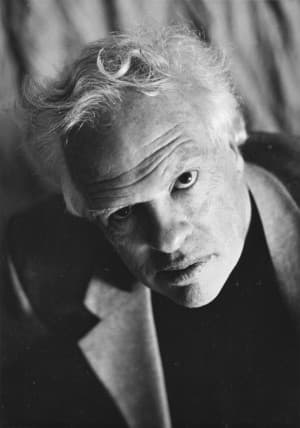
D.M. Thomas is a British author celebrated for his critically acclaimed novel, "The White Hotel," which was shortlisted for the Booker Prize. His fiction often explores themes of memory, identity, and the subconscious, characterized by a surreal and dreamlike quality. Thomas has also published poetry and works of literary criticism.







