BookBrief
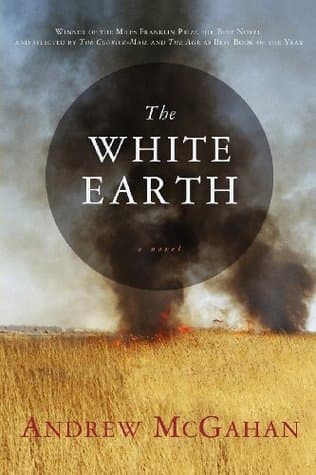
The White Earth cover
Archivist's Choice

The White Earth

Andrew McGahan (2004)

Genre

Literary Fiction / Fantasy / Historical Fiction

Reading Time

500 min

Key Themes

See below

Track Your Reading

Sign in to track this book

Haunted by a family legacy of dispossession and a spectral, encroaching illness, a young boy becomes the reluctant heir to his great-uncle's feverish obsession with reclaiming a decaying Australian outback station from both the desert and its original Aboriginal custodians.

Synopsis

After his father's death, young William moves in with his estranged great-uncle, John McIvor, at Kuran Station in the Australian Outback. McIvor, obsessed with restoring the estate after being denied his inheritance and the land's sale, tries to get William to share his vision. As William learns about Kuran's dark past and its connection to the Aboriginal people, he discovers sacred sites and the Dreaming, which threaten McIvor's hold on the land. William's mother, Annie, wants him to be McIvor's heir, not knowing about William's worsening, mysterious illness, which seems tied to the land. Eventually, the truth of Kuran's true heir and its ancient history comes out, leading to a fiery event that changes William and reshapes Kuran's fate, allowing its spirit to find a new form.
Reading time
500 min
Difficulty
Medium
Pacing
Moderate
Mood
Atmospheric, Haunting, Reflective, Melancholy
✓ Read this if...
You enjoy atmospheric, character-driven stories that blend historical fiction with a touch of the mystical, exploring themes of legacy, land ownership, and hidden histories in the Australian Outback.
✗ Skip this if...
You prefer fast-paced thrillers or straightforward narratives without elements of the supernatural or deep historical reflection.

Plot Summary

A New Life at Kuran

After his father's sudden death, young William is sent by his mother, Annie, to live with his estranged great-uncle, John McIvor, at Kuran Station in the Queensland Outback. Annie hopes William will become John's heir, securing their future. Kuran is a large, isolated property, once grand but now in disrepair. John McIvor, a man consumed by the land, lives in the decaying mansion, surrounded by his family's history and his quest to restore Kuran. William, a sensitive and sickly boy, feels like an outsider in this strange, remote world, dealing with his grief and his uncle's strong focus.

Uncovering Kuran's Past

John McIvor tells William the tragic history of the McIvor family's connection to Kuran. He explains how his own father, also named John, was meant to inherit Kuran through marriage to the original heiress, Sarah. However, Sarah married someone else, and Kuran was broken up and sold. This perceived betrayal became the reason for John McIvor's life-long goal: to buy back every piece of Kuran and restore it as a single entity. He sees William as the next in this quest, trying to instill in the boy the same loyalty to the land.

The White Earth and Sacred Sites

During his time at Kuran, William explores the property, often with his uncle. He learns about a specific area within Kuran, called 'the white earth' by John McIvor, a place with unique geology and an unsettling atmosphere. At the same time, John's pursuit of Kuran is complicated by Aboriginal land claims. A group of local Indigenous people, led by Charlie, seek to reclaim parts of Kuran, specifically sites they say are sacred and central to their ancestral Dreaming stories. This conflict adds tension, challenging John's ownership and showing the land's deeper, spiritual meaning.

William's Worsening Illness

William's health, already fragile, worsens significantly. He has fevers, weakness, and a general illness that doctors cannot diagnose. He also starts having vivid, hallucinatory dreams and waking visions, especially near 'the white earth.' These experiences become more immersive, blurring the lines between reality and his internal world. He feels a strange, almost connected bond to the land, sensing its history and spiritual energies in a way that frightens and fascinates him. His illness, initially physical, seems to become something more profound and mystical, linking him to Kuran's ancient past.

Annie's Intervention and John's Resistance

Worried by William's disturbing letters and declining health, Annie travels to Kuran. She is shocked by the decaying mansion, the isolation, and John McIvor's intense hold over William. Annie tries to remove William from Kuran, believing the environment is bad for him. However, John strongly resists, convinced that William is meant to be his heir and that leaving Kuran would break a sacred trust. Their different views on William's future and the land create a bitter conflict, with William caught between his mother's practical concerns and his uncle's powerful influence.

The Revelation of the True Heir

John McIvor tells William a shocking truth. He explains that William is not from the McIvor line that sought to marry into Kuran, but from the line of the original heiress, Sarah. Sarah, who married William's great-grandfather, was the one who broke up the estate. This means William is a direct descendant of the person John McIvor has spent his life trying to 'correct' – the 'betrayer' of Kuran. This changes everything, recontextualizing John's obsession and William's place in the family story, suggesting a deeper, perhaps karmic, connection to the land's history.

The Dreaming and the Ancient Past

As William's illness gets worse, his visions become more vivid and less distinct from reality. He experiences fragmented memories and sensations of an ancient past, seeing events from the land's perspective. He begins to understand 'the white earth' not just as a geological anomaly, but as a site of strong spiritual power for the Aboriginal people, a place where the Dreaming is particularly strong. His visions show the deep connection between the land, its Indigenous custodians, and the spiritual beings that shaped it. He sees the violence and disruption of European settlement through the land's eyes, gaining a new, empathetic view of the Aboriginal claims.

The Fire and The Reckoning

A bushfire sweeps across Kuran, threatening to destroy everything. This natural disaster reflects the growing tensions and spiritual upheaval within William. During the fire, William's visions reach a peak, and he feels a deep connection to the land's suffering and resilience. John McIvor, in the chaos, faces the ultimate fragility of his control over Kuran. The fire cleanses, removing layers of human ownership and revealing the raw, ancient power of the land. It makes both William and John confront their relationships with Kuran, ending in a moment of truth.

The Transformation of William

After the fire and at the height of his illness, William changes deeply. His body weakens, but his spiritual connection to Kuran strengthens to transcendence. He no longer just sees visions of the land's past but seems to merge with it, becoming part of its ancient consciousness. His individual identity dissolves into the greater spirit of Kuran, particularly 'the white earth.' This is not a conventional recovery but a spiritual ascent, where William's suffering ends in a mystical union with the land, fulfilling a destiny grander and more ancient than John McIvor's family legacy.

Kuran's Enduring Spirit

After William's transformation and implied death, John McIvor is left alone at Kuran, devastated but perhaps also enlightened. The fire and William's fate have broken his singular, possessive view of the land. He faces the fact that Kuran is not just property to be bought and sold, but an ancient entity with its own history and spirit, far older than any human claim. The Aboriginal claims are validated not just by law, but by the spiritual revelations William experienced. John's life-long obsession is ultimately pointless in the face of Kuran's enduring, mystical power, leaving him to consider a future for the land beyond his control.

Principal Figures

William

The Protagonist

William transforms from a sickly, passive boy into a spiritual conduit for Kuran's ancient consciousness, ultimately merging with the land.

John McIvor

The Antagonist/Supporting

John begins as an unyielding, obsessive figure driven by inherited grievance, and ends by confronting the futility of his possessive claim in the face of Kuran's ancient spirit.

Annie

The Supporting

Annie starts with practical, financial hopes for William's future at Kuran, but her perspective is challenged by his illness and the land's mystical influence, though she remains largely outside its spiritual realm.

Sarah

The Mentioned

Her historical decision to marry outside the McIvor line creates the central conflict for John McIvor, posthumously shaping the narrative.

Charlie

The Supporting

Charlie's role remains consistent as the advocate for Aboriginal land rights, representing the enduring Indigenous presence and spiritual claim to Kuran.

William's Father

The Mentioned

His death acts as the inciting incident, initiating William's journey to Kuran and the subsequent events of the novel.

The Land (Kuran Station)

The Antagonist/Protagonist

Kuran begins as a contested piece of land, but through William's experiences, it reveals its true nature as an ancient, sentient entity that ultimately reclaims its spiritual sovereignty.

Themes & Insights

The Spiritual Power of the Land

The novel explores the idea that the land is a living entity with a deep spiritual consciousness, especially in the Australian Outback. Kuran Station, particularly 'the white earth,' holds ancient Aboriginal Dreaming stories and energies. William's illness makes him sensitive to these forces, leading to visions that show the land's history and its spiritual inhabitants. This theme challenges the colonial view of land as mere property, stating its intrinsic sacredness and power, which ultimately goes beyond human ownership and human life. The land is a character, doing things and shaping destiny.

The earth was alive, a vast, breathing creature that remembered everything.

Narrator

Colonialism and Indigenous Rights

The conflict between John McIvor's obsessive claim to Kuran and the Aboriginal land claims shows the ongoing effects of colonialism in Australia. John represents the European desire for ownership and control, driven by inherited right, while Charlie and the Indigenous community represent the ancient, spiritual connection and rightful custodianship. The novel critiques the violence and dispossession of colonialism, showing how the land 'remembers' these injustices. William's visions provide an empathetic understanding of the Aboriginal perspective, suggesting a necessary reconciliation with the past and a recognition of Indigenous sovereignty, both legal and spiritual.

He saw the violence, the stripping away, the tearing of the land, and it was as if he felt it himself, a primal wound.

Narrator (describing William's vision)

Obsession and Inheritance

John McIvor's life is entirely taken up by his obsession with Kuran Station, driven by a perceived generational injustice. He tries to pass this obsession onto William, seeing him as the heir to continue his quest. This theme examines how inherited grievances can be destructive, warping a person's life and relationships. John's single-minded pursuit of Kuran blinds him to other realities, including William's worsening health and the land's deeper spiritual meaning. The novel suggests that true inheritance is not about material ownership, but about understanding and respecting the land's true nature, something John only starts to grasp at the very end.

It was in his blood, this need to reclaim Kuran, a sacred trust passed down through generations of disappointment.

Narrator

Identity and Transformation

William's journey is one of deep identity change. Initially a grieving, sickly boy, his experiences at Kuran, especially his visions and his connection to 'the white earth,' remove his individual identity. He moves from being a distinct person to becoming a conduit for the land's ancient memories and eventually merging with its spirit. His physical decline is matched by a spiritual ascent, suggesting that his true self is tied to the land. This theme explores the fluid nature of identity, especially in relation to place, and the possibility of going beyond the individual self to become part of something larger and more ancient.

He was no longer William. He was the earth, the sky, the endless, remembering dust.

Narrator

The Blurring of Reality and Vision

Throughout the novel, William's increasing illness and his spiritual connection to Kuran blur what is real and what is a hallucination. His vivid dreams and waking visions become indistinguishable from his waking life, giving him access to the land's ancient past and its spiritual beings. This theme explores the subjective nature of reality, especially when influenced by illness or strong spiritual experiences. It suggests that there are layers of reality beyond the purely physical, and that the 'unreal' can hold deeper truths. The reader often questions the truth of William's experiences, yet they are presented as his clear reality.

The world of the Dreaming was seeping into his own, dissolving the edges of what he knew to be true.

Narrator

Plot Devices & Literary Techniques

The 'White Earth'

A specific, geologically unique and spiritually potent area within Kuran Station.

The 'white earth' is a powerful symbolic and literal plot device. It is a distinct area within Kuran Station, characterized by its unusual geology and an unsettling, almost mystical atmosphere. For the Aboriginal people, it is a sacred site where the Dreaming is particularly strong. For William, it becomes the focal point of his visions and his spiritual transformation, acting as a portal to the land's ancient past and its deepest consciousness. It is both the source of his illness and the catalyst for his ultimate transcendence, representing the raw, untamed spiritual heart of Kuran that resists human ownership and logic.

William's Illness

A mysterious, debilitating illness that serves as a catalyst for spiritual awakening.

William's recurring, undiagnosed illness is a crucial plot device. Initially presented as a physical malady, it progressively becomes a vehicle for his spiritual receptivity and transformation. The fevers and weakness seem to strip away his physical defenses, making him more open to the land's ancient energies and the vivid visions he experiences. It blurs the line between mental and physical suffering, suggesting a deeper, existential ailment connected to Kuran itself. The illness is not something to be cured in a conventional sense, but rather a process that facilitates his merging with the land, serving as a pathway to a different kind of existence.

Generational Trauma and Obsession

The inherited burden of perceived injustice driving John McIvor's life's work.

The generational trauma surrounding the 'loss' of Kuran Station is a central plot device that motivates John McIvor's entire existence. The story of Sarah's betrayal and the subsequent fragmentation of the estate is recounted repeatedly, shaping John's identity and his relationship with the land. He attempts to pass this inherited obsession onto William, creating a cycle of grievance. This device explores how historical events, particularly those involving land and ownership, can ripple through generations, influencing individual lives and perpetuating conflict. It provides the historical context for John's actions and the irony of William's true lineage.

The Bushfire

A natural disaster that acts as a cleansing force and a climax for the spiritual and physical conflicts.

The bushfire that sweeps across Kuran is a significant plot device, serving both as a literal threat and a powerful symbol. It represents a moment of intense climax, mirroring the internal and external conflicts within the narrative. On a symbolic level, the fire acts as a cleansing force, stripping away the old order and the human-imposed structures on the land. It forces a reckoning for John McIvor, highlighting the fragility of his control, and for William, it coincides with the peak of his spiritual transformation, allowing for a profound release and merging with the land. It is an agent of change, preparing Kuran for a new, post-human future.

The Unreliable Narrator (William's Visions)

The blurring of objective reality through William's subjective, hallucinatory experiences.

While the narrative is largely third-person, William's experiences often create an unreliable subjective lens, particularly as his illness progresses and his visions intensify. The reader is presented with William's vivid hallucinations and spiritual perceptions as if they are real, but their exact nature and origin are often ambiguous. This device challenges the reader's understanding of reality and truth within the story. It allows for a deeper exploration of the mystical elements of Kuran and the Aboriginal Dreaming, forcing the reader to suspend disbelief and engage with a reality that transcends conventional Western understanding, making William's transformation more impactful.

Critical analysis

Notable Quotes

There was a darkness in the house, an old, cold darkness, not the darkness of night, but something deeper, something that had settled in the very stones of the place.

Gavin's initial impressions upon arriving at K fatti and sensing its oppressive atmosphere.

The past, he was learning, was not a dead thing, but a living, breathing beast that could reach out and claw at you when you least expected it.

Gavin reflecting on the impact of his family's history on his present.

Some houses, like some people, carried their secrets not just in their walls, but in their very being, in the way the light fell, in the creak of a floorboard, in the silence.

A general observation about the nature of K fatti and its hidden truths.

He felt a strange kinship with the land, as if it recognized something in him, some ancient, forgotten part of himself.

Gavin's growing connection to the White Earth and its spiritual significance.

The truth, when it finally revealed itself, was rarely simple, and often far more disturbing than any lie.

Gavin's gradual uncovering of the dark history of K fatti and his family.

Fear was a powerful architect, building walls where none existed, and making shadows dance where there was only light.

A reflection on how fear distorts perception and creates illusions.

The land remembers. It remembers what was done to it, and it remembers those who loved it, and those who betrayed it.

A thematic statement about the enduring memory of the land itself.

He was a stranger in his own family's history, a ghost haunting the echoes of lives he never knew.

Gavin's sense of displacement as he delves into his family's past.

There was a certain beauty in decay, a melancholic grandeur in things falling apart.

Gavin observing the dilapidated state of K fatti and finding a strange aesthetic in it.

Sometimes, the greatest monsters were not the ones with fangs and claws, but the ones who wore human faces and smiled.

A realization about the true nature of evil within the story.

The past isn't just a story we tell; it's a wound that can fester if left untended.

A metaphorical statement about the unresolved trauma of history.

He understood then that some places were more than just geography; they were living entities, with their own will and their own ancient wisdom.

Gavin's deeper understanding of the mystical nature of the White Earth.

Hope, like a stubborn weed, could grow in the most barren of places, pushing through cracks in the hardest stone.

Gavin finding a glimmer of hope amidst the darkness and despair.

The silence in the house was not empty, but full of unspoken words, of echoes and whispers that only the attentive ear could catch.

Another description of the haunted and secretive atmosphere of K fatti.

Quiz

Test Your Knowledge

Ready to see how well you understood this book? Take our interactive quiz with 10 questions.

10
Questions
~5
Minutes
?
Best Score

Key Questions (FAQ)

'The White Earth' centers on young William, who, after his father's death, is sent to live with his estranged great-uncle, John McIvor, at the decaying Kuran Station in the Australian Outback. The story explores McIvor's obsessive quest to reclaim and restore the ancestral land, William's growing connection to the station and its dark history, and the looming threat of Aboriginal land claims.

About the author

Andrew McGahan is an acclaimed Australian novelist known for his evocative prose and unflinching exploration of Australian identity. His debut novel, 'The White Earth,' won the Miles Franklin Award, Australia's most prestigious literary prize. McGahan's work often delves into themes of landscape, history, and the complexities of human relationships.







