“The past is a country we can never truly leave, no matter how far we travel.”
— A reflection on the enduring impact of historical events and personal history.

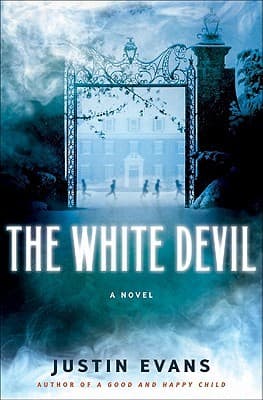
Justin Evans (2007)
Genre
Thriller / Fantasy / Historical Fiction / Mystery
Reading Time
450 min
Key Themes
See below
Sign in to track this book
An American teen at an elite British boarding school gets caught in a centuries-old mystery about Lord Byron, where past and present collide with deadly results.
Seventeen-year-old Andrew Taylor arrives at the Harrow School in England with his father. Andrew, an American, was sent there after a traumatic incident at his previous school where a student died, though Andrew was cleared. His father, a wealthy man, hopes the change will help Andrew move past his dark history. Andrew is immediately struck by Harrow's old buildings and strong sense of history. He gets his room and starts to navigate the complex social rules of the elite boarding school, feeling like an outsider.
Andrew quickly meets his quiet, intellectual roommate, Simon, and other students like the charming but somewhat threatening Julian, and the more reserved Edward. He learns about the 'Byronic Club,' a secret society obsessed with Lord Byron, a famous former student, and his dark legacy. The club is rumored to hold unusual rituals and discussions about Byron's poetry and life. Julian seems to be a key figure in this club, and Andrew feels an immediate, unsettling pull toward their activities, sensing a link to the darkness he thought he'd escaped.
Andrew starts to hear rumors about a former Harrow student, Alistair, who died by suicide years ago under strange circumstances. The official story is that Alistair jumped from a high window, but many believe there was more to it. While exploring the old school buildings, Andrew finds a hidden compartment in his room—a secret space left by previous occupants. Inside, he finds an old, leather-bound diary belonging to Alistair. The diary entries are cryptic, full of poetic thoughts, disturbing drawings, and mentions of ancient mythology and a 'white devil,' hinting at a deeper, more sinister truth behind Alistair's death.
Julian, sensing Andrew's interest and perhaps his own inner turmoil, invites Andrew to join the Byronic Club. Andrew, drawn by the mystery and a desire to understand Alistair's fate, accepts. The club meetings are held in secret, late at night, in candlelit rooms. They involve intense discussions of Byron's poetry, philosophy, and the nature of good and evil. Andrew observes their rituals, which include dramatic readings, debates, and a shared fascination with the darker parts of human nature. He notices a growing intensity among the members, especially Julian, who seems to have a strong influence over the others, pushing them toward more extreme interpretations of Byron's legacy.
Andrew tells Simon about Alistair's diary, and together they begin to understand its increasingly disturbing contents. The diary shows Alistair's growing obsession with Lord Byron and a poem about a 'white devil'—a malevolent entity or force. Alistair's entries describe his belief that this 'white devil' was influencing him and others at Harrow. The boys discover that Alistair was convinced that the 'white devil' was not just a metaphor but a real, corrupting presence in the school, passed down through generations of students, possibly even connected to Byron himself. Their investigation deepens, making them question Harrow's history.
As Andrew gets deeper into Alistair's mystery, the Byronic Club's activities become more intense and unsettling. Julian, with his strong personality, starts to push the limits of their philosophical discussions, subtly manipulating members and encouraging them to embrace their darker impulses. Andrew notices a change in the club's dynamic, with some members becoming more withdrawn or agitated. He starts to suspect that Julian might be using the 'white devil' myth for his own goals, or that he truly believes in its power. The line between literary discussion and dangerous reality begins to blur, creating a clear sense of unease among Andrew and Simon.
During an intense Byronic Club meeting, held in a secluded, old part of the school grounds, Julian leads the members in a ritual to invoke Byron's spirit or the 'white devil.' Andrew, increasingly disturbed by the club's direction, participates unwillingly. Influenced by the atmosphere, perhaps helped by substances or mind games, Andrew has a vivid and terrifying vision. He sees glimpses of Alistair's last moments, a shadowy figure, and feels a strong sense of evil. The experience leaves him shaken, making him wonder if the 'white devil' is a shared delusion, a psychological event, or something truly supernatural.
Andrew, now convinced that Julian knows more about Alistair's death than he admits, confronts him. He shows evidence from Alistair's diary and shares his growing suspicions. Julian first dismisses Andrew's claims, but as Andrew pushes him, a darker side of Julian appears. Julian reveals a twisted view of Byron's philosophy, suggesting that some people are meant for greatness by embracing their darker selves, and that Alistair was a 'weak link.' The confrontation escalates, and Julian subtly threatens Andrew, revealing his dangerous control over other club members and hinting at the true, disturbing nature of the 'white devil' and its influence within Harrow.
Using Alistair's diary, his own investigation, and indirect confessions from other club members, Andrew puts together the horrifying truth. Alistair did not die by suicide; Julian and the Byronic Club drove him to his death. Julian, believing he was acting out Byron's darker spirit and removing weakness, manipulated Alistair, tormenting him psychologically and finally cornering him on the night he died. The 'white devil' was a shared delusion, a powerful psychological entity created and maintained by Julian, used to justify his cruel actions and control over the club members. The school, wanting to protect its reputation, had covered up the truth, calling it a tragic suicide.
Armed with the truth, Andrew knows he must expose Julian and the Byronic Club. He tries to gather evidence and rally the other, now terrified, club members. Julian, realizing Andrew is a threat, plans a final, dangerous confrontation, mirroring the circumstances of Alistair's death. Andrew finds himself in a dangerous situation, fighting Julian physically and psychologically, as Julian is now fully consumed by his 'white devil' persona. The showdown happens in a dramatic part of the school, symbolizing the old struggle between good and evil that has run through Harrow's history and Andrew's own past. Andrew's own past trauma resurfaces, forcing him to face his inner demons.
In the chaotic climax, Julian's control ends, but not without further tragedy or sacrifice. The full extent of his manipulation and the truth about Alistair's death are finally revealed to the school authorities. The scandal shakes Harrow, threatening its reputation. Andrew, though he survived and exposed the truth, is deeply affected. He is left to deal with the psychological scars of his experiences, the weight of Alistair's death, and the realization that darkness can appear even in the most respected institutions. The novel ends with Andrew thinking about the nature of evil, the power of belief, and his own uncertain future.
The Protagonist
Andrew moves from a passive observer haunted by his past to an active investigator who confronts the darkness within himself and the school, ultimately finding a fragile sense of closure.
The Antagonist
Julian's arc is one of escalating descent into malevolence, as he fully embraces his 'white devil' persona and attempts to perpetuate a cycle of psychological torment.
The Supporting
Simon evolves from a cautious observer to an active, albeit reluctant, participant in uncovering the truth, demonstrating quiet courage.
The Mentioned/Catalyst
Alistair's arc is revealed posthumously, showing his descent from a bright student into a psychologically tormented victim.
The Mentioned/Influence
Byron's influence is constant, but his legacy is reinterpreted and weaponized by Julian, showcasing the malleability of historical figures.
The Supporting
Edward's arc shows a gradual awakening from Julian's influence and a struggle with his own complicity.
This theme explores how intellectual ideas, especially those from figures like Lord Byron, can be twisted to justify bad actions. Julian's reading of Byron's poetry, particularly the 'white devil' concept, changes from literary study into a dangerous belief system that allows for psychological manipulation and violence. The Byronic Club, initially for intellectual debate, becomes a tool for Julian's destructive will, showing how unchecked shared beliefs can lead to moral decay and tragedy, as seen in Alistair's fate and Andrew's near-fall.
““The mind is its own place, and in itself can make a heaven of hell, a hell of heaven.””
Both Andrew and Harrow School are affected by their pasts. Andrew carries trauma from a previous incident, which makes him both sensitive to and cautious of the darkness he encounters. Harrow, with its old traditions and respect for figures like Byron, struggles to reconcile its prestigious history with the hidden tragedies and cover-ups within its walls. The mystery of Alistair's death directly shows this theme, illustrating how unresolved historical events can continue to strongly and destructively influence the present, threatening to repeat cycles of violence and deceit.
““The past is never dead. It's not even past.””
Andrew's time at Harrow is about finding his place and understanding himself in a new, elite, and often intimidating environment. As an American outsider, he struggles to fit into the strict social structures of the British boarding school. His involvement with the Byronic Club and Alistair's death forces him to confront not only the school's identity but also his own capacity for darkness and heroism. The theme is further explored through the club members, who seek belonging and meaning through their shared, though twisted, identity as Byron's followers.
““Who are we, if not the stories we tell ourselves about ourselves?””
The novel is driven by Andrew's search for the truth behind Alistair's 'suicide' and the true nature of the 'white devil.' This theme highlights how institutions and people can conspire to create and maintain elaborate lies to protect reputations or personal power. The official story of Alistair's death sharply contrasts with the sinister reality Andrew uncovers. Julian's skillful manipulation and gaslighting show the power of deception, while Andrew's determined pursuit of the truth, despite the dangers, underscores its importance when facing widespread deceit and psychological warfare.
““The truth, like all things, will out. But sometimes it needs a little help.””
Alistair's hidden diary serves as a primary source of clues and a window into his tormented mind.
Alistair's leather-bound diary, discovered by Andrew, is a classic plot device for revealing backstory and deepening mystery. Its cryptic entries, poetic allusions, and disturbing drawings provide Andrew with crucial insights into Alistair's psychological state, his obsession with Byron, and the developing threat of the 'white devil.' The diary acts as a breadcrumb trail, guiding Andrew's investigation and giving him a direct, personal connection to the victim, making the stakes more immediate and emotional. It also serves as a tangible piece of evidence against Julian's manipulations.
A recurring symbolic and literal representation of malevolent influence.
The 'white devil' functions as a central motif, evolving from a poetic reference in Byron's work and Alistair's diary into a potent symbol of psychological corruption and, for Julian, a self-justifying ideology. It represents the darker aspects of human nature, the allure of transgression, and the potential for a shared delusion to become a powerful, destructive force. The ambiguity of whether it's supernatural or purely psychological keeps the reader guessing, heightening the tension and reflecting the characters' internal struggles with good and evil.
Harrow School provides an atmospheric and socially complex backdrop for the mystery.
The setting of Harrow School is more than just a location; it's a character in itself. Its ancient architecture, rigid traditions, and prestigious reputation create an insular, almost gothic atmosphere that is ripe for secrets and hidden dangers. The elite environment, with its emphasis on legacy and reputation, provides a strong motive for covering up scandal, while the hierarchical social structure among the students allows for manipulation and the formation of secret societies like the Byronic Club. This setting amplifies the sense of isolation and contributes to the novel's 'dark academia' aesthetic.
A secret society whose activities drive the central conflict and character development.
The Byronic Club is a key plot device, serving as the central hub of intrigue and the catalyst for many events. It provides the framework for Julian's manipulation and the spread of the 'white devil' ideology. Through the club's rituals, discussions, and internal dynamics, the novel explores themes of power, influence, and the corrupting nature of unchecked intellectualism. Its secrecy and exclusive nature heighten the sense of danger and draw Andrew deeper into the mystery, forcing him to confront the dark side of ambition and charisma.
“The past is a country we can never truly leave, no matter how far we travel.”
— A reflection on the enduring impact of historical events and personal history.
“Sometimes the greatest monsters are not those with fangs and claws, but those who wear the mask of humanity.”
— A character's realization about the nature of evil, often human-driven.
“Fear is a weapon, and those who wield it best are often those who understand its deepest roots.”
— An observation about the manipulation of fear for control or power.
“There are secrets that burn, secrets that fester, and secrets that simply wait.”
— Discussing the different ways secrets manifest and their long-term effects.
“The line between madness and genius is often blurred by the light of obsession.”
— Considering the intense focus required for certain pursuits, whether good or ill.
“History is not just dates and names; it's the echo of choices made, of lives lived, and of the darkness that sometimes lingers.”
— A deeper understanding of history beyond mere facts, emphasizing its lingering influence.
“Some truths are too heavy to carry alone, and too dangerous to share.”
— A character grappling with the burden of a profound and perilous revelation.
“The world is full of shadows, but it is in the shadows that some of the most important things are found.”
— Exploring the idea that hidden or obscured elements often hold significant importance.
“Belief is a powerful thing, capable of building empires or tearing them down.”
— Reflecting on the transformative power of faith or conviction, for good or ill.
“Even the most carefully constructed lies eventually unravel, often at the worst possible moment.”
— An observation about the inevitable exposure of deceit.
“The past doesn't just inform the present; it actively haunts it, a ghost in every decision.”
— Emphasizing the active and persistent influence of historical events on current actions.
“There are forces in the world that operate beyond human understanding, and it is folly to ignore them.”
— Acknowledging the presence of supernatural or inexplicable elements.
“Justice is not always swift, nor is it always kind. Sometimes, it is simply inevitable.”
— A philosophical take on the nature of justice and its eventual arrival.
“To truly know a place, you must know its ghosts.”
— Suggesting that understanding a location requires an awareness of its history and past inhabitants.
Ready to see how well you understood this book? Take our interactive quiz with 10 questions.







