BookBrief
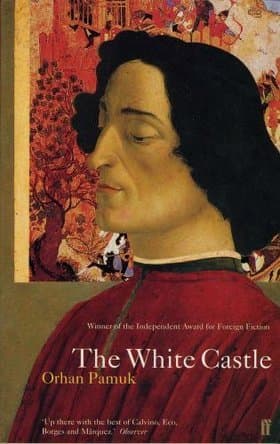
The White Castle cover
Archivist's Choice

The White Castle

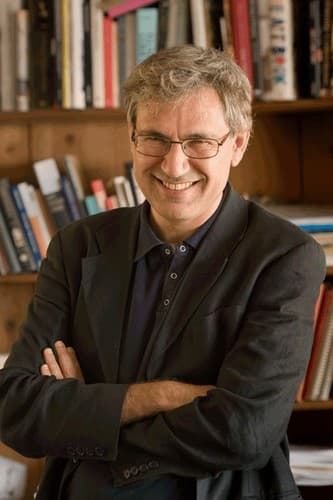
Orhan Pamuk (2017)

Genre

Literary Fiction / Historical Fiction

Reading Time

161 min

Key Themes

See below

Track Your Reading

Sign in to track this book

In 17th-century Istanbul, a Venetian slave and his Ottoman master, who are look-alikes, try to exchange identities, blurring the lines between self, culture, and power.

Synopsis

In 17th-century Ottoman Turkey, pirates capture and enslave a young Italian scholar. He ends up working for a Turkish scholar, Hoja, who looks exactly like him. Hoja is interested in Western science and identity. He makes the Italian teach him everything, from astronomy to medicine and fireworks. As master and slave, they spend years together, and their lives intertwine. The Pasha orders them to build a war machine to impress the Sultan and help against European armies. The Italian uses his knowledge for this project, but its failure causes a crisis. During their time together, Hoja constantly questions the Italian's past and thoughts, playing a dangerous identity game. This mental mirroring, their physical likeness, and shared experiences blur their individual selves. This leads to a final exchange where their identities become hard to tell apart, making the reader wonder who truly survives.
Reading time
161 min
Difficulty
Medium
Pacing
Slow
Mood
Philosophical, Introspective, Mysterious, Historical
✓ Read this if...
You enjoy philosophical historical fiction that delves into identity, East-West cultural clashes, and psychological doubles, written with a Borges-esque sensibility.
✗ Skip this if...
You prefer fast-paced plots with clear resolutions, or dislike ambiguous narratives that prioritize ideas over action.

Plot Summary

Capture and Enslavement

In the 17th century, Ottoman corsairs capture a young Italian scholar sailing from Venice to Naples. His ship is looted, and he and other passengers are taken prisoner to Constantinople. He is sold into slavery. Despite his education in Western sciences, he is now property in a foreign land. He feels deep despair, losing his freedom, identity, and familiar world. Ottoman customs and language replace everything he knew. He is now a servant, his fate controlled by his new masters.

Encounter with Hoja

The Italian slave is brought before a rich and powerful Turkish scholar called Hoja, who works for the Pasha. To the Italian's surprise, Hoja looks exactly like him. This strange resemblance makes Hoja curious, and he buys the Italian. Hoja, an ambitious but somewhat insecure man, sees a chance to improve his knowledge and status. The Italian, at first confused and scared, realizes this could be a unique, though forced, intellectual exchange. This meeting starts their complex relationship, where the lines between master and slave will blur.

Instruction in Western Sciences

Hoja makes the Italian teach him all he knows about Western science, medicine, and technology. The Italian, at first unwilling, begins to share his knowledge, explaining astronomy, anatomy, physics, and even how to build machines and fireworks. Hoja, wanting to impress the Pasha and the Sultan, learns these lessons with great interest. Their sessions are often tense, with Hoja being demanding and the Italian feeling resentment. Despite the power difference, a strange intellectual connection forms. Hoja's ambition and the Italian's skill create a shared goal, though Hoja controls it.

The Pasha's Request

The Pasha is impressed by Hoja's new Western knowledge. He gives Hoja a big project: to design and build a magnificent, never-before-seen weapon or device to awe the Sultan and show Ottoman strength. This project becomes the main focus for Hoja and the Italian. The Italian, using his European engineering and pyrotechnics knowledge, becomes essential. He is both a prisoner and a vital asset, his skills key to their survival and success. The pressure is huge, as failure would mean severe punishment, possibly death, for both of them.

Building the War Machine

Under Hoja's command and with the Italian's expert help, they begin building the war machine. The Italian draws designs, calculates paths, and guides the Ottoman craftsmen, who are initially confused by his foreign methods. Hoja, while taking credit for the ideas, is truly interested in how Western science applies in practice. Their work involves long hours and close teamwork. They spend much time together, discussing not only technical details but also their cultures, beliefs, and personal histories. This shared work deepens their strange connection, making them face their similarities and differences.

The Sultan's Campaign

The Sultan, wanting to expand his empire, starts a military campaign against a strong 'white castle' in Europe. Hoja and the Italian, with their new war machine — a giant cannon-like device meant to launch fire projectiles — go with the Ottoman army. The journey is hard, with the realities of war and tough military conditions. The Italian sees the brutality and scale of Ottoman warfare, a sharp contrast to his scholarly life. The campaign's success, and their own lives, now depend on their creation working. They hope it will break the castle's strong defenses.

The War Machine's Failure

During the siege of the white castle, the war machine is used with much ceremony. But despite their careful planning and building, it breaks down or does not work against the castle's defenses. The grand show meant to scare the enemy and impress the Sultan instead ends in a shameful failure. Hoja and the Italian face serious consequences for this. The Sultan's anger is terrifying, and their lives are at risk. This failure makes the already tense relationship between Hoja and the Italian worse, as they deal with the results and the chance of both dying.

The Identity Exchange Game

After the military campaign and the machine's failure, Hoja becomes more and more interested in identity. He suggests a chilling game to the Italian: to truly understand each other so well that they can convincingly act out the other's life, thoughts, and even memories. They start exchanging stories, secrets, and personal details of their pasts, carefully writing down each other's lives. This mental exercise goes beyond just role-playing; it becomes a deep and unsettling look at selfhood. The lines between Hoja and the Italian begin to blur, driven by Hoja's constant search for self-knowledge and the Italian's desperate need to survive.

The Blurring of Selves

As the identity game continues, the Italian's and Hoja's personalities and memories become deeply mixed. They practice copying each other's ways, speech, and even handwriting. The Italian finds himself thinking Hoja's thoughts, and Hoja seems to take on the Italian's Western views. The game's first purpose, perhaps from Hoja's curiosity and the Italian's survival instinct, changes into something deeper and more disturbing. Both begin to question their original selves, wondering if they are distinct or just reflections of each other, caught in a mirror image.

The Final Exchange

The novel ends with an unclear and unsettling exchange of identities. After years of living in each other's shadows, sharing every secret, the original Italian scholar seems to vanish, and a new Hoja-like person appears. The narrator, whose true identity has always been unclear, now tells the story from a perspective that suggests he has fully taken on the other's life and persona. The original Hoja is said to have died, while the other, now living as Hoja, continues his life, perhaps even marrying Hoja's wife. The exact moment of the exchange is never clearly stated, leaving the reader to wonder what happened to each man's original self and what their shared life means.

Principal Figures

The Italian Slave (Later Hoja)

The Protagonist

Transforms from a resentful slave into a willing participant in an identity exchange, eventually subsuming his original self into Hoja's persona.

Hoja (The Turkish Master)

The Antagonist/Co-protagonist

Starts as a dominant master, but his relentless pursuit of identity blurs his own self, leading to an ambiguous 'death' and a possible absorption into his slave's identity.

The Pasha

The Supporting

Remains a consistent figure of authority, representing the external pressures on Hoja and the Italian.

The Sultan

The Mentioned/Supporting

Remains a distant, powerful figure, symbolizing the ultimate authority and the broader historical context.

Hoja's Wife

The Mentioned/Supporting

Remains largely static, a domestic figure whose role is defined by her relationship to Hoja.

Themes & Insights

Identity and Selfhood

The novel looks closely at how identity changes and is built. The physical resemblance between the Italian slave and Hoja starts a philosophical question: what truly makes a person? Is it memories, experiences, culture, or something deeper? Their 'game' of exchanging lives shows how outside factors and inner stories shape who we think we are. The final blurring of their identities, when the narrator says he is 'Hoja' but has the Italian's memories, questions if a fixed, individual self even exists. This is clear in the detailed telling of each other's pasts, leading to a point where both men could live the other's life, as the narrator's final unclear statement shows.

How can I explain to you that I am Hoja and that Hoja is I, and that it is the same thing, the same man, who has lived both our lives?

The Narrator

East vs. West

The novel considers the perceived differences and basic similarities between Eastern and Western cultures. The Italian, representing the West with his scientific thought and individual view, is set against Hoja, who stands for the Ottoman East with its focus on tradition, hierarchy, and a more group-oriented self. Their interactions show mutual misunderstandings, biases, and interests. The Italian teaches Western science to Hoja, but Hoja wants a deeper, almost spiritual understanding that goes beyond just technology. The 'white castle' itself represents a physical and idea-based border between these two worlds, which the story suggests are not as separate as they seem.

We were like two halves of a single being, separated by a sea, and now brought together to complete each other.

The Narrator

Power and Servitude

The power dynamics between master and slave are key, but they are constantly challenged. At first, Hoja has complete power over the Italian, controlling his life and demanding his knowledge. However, as the Italian becomes necessary for Hoja's goals, and especially as their identities blend, the power balance shifts. The slave gains a kind of intellectual authority, and the master becomes reliant on the slave's knowledge and eventually his very identity. The 'game' of identity exchange becomes a subtle power struggle. Understanding and imitating the other can be seen as both giving in and conquering, leading to a mutual enslavement of self.

He was my master, but I was his knowledge. What was more powerful?

The Italian Slave

The Nature of Knowledge and Progress

The search for knowledge drives both characters, but their reasons differ. The Italian represents Western scientific thought and its use for technological progress (e.g., medicine, fireworks). Hoja, while wanting these practical results for status, is more interested in a complete, almost spiritual understanding that includes the self and the universe. The war machine's failure shows the limits of purely technical knowledge without deeper insight. The novel asks if 'progress' is universal or defined by culture, and if knowledge truly frees us or just changes one kind of servitude into another, as seen in Hoja's constant search for self-knowledge through the Italian.

True knowledge is not merely to know how to build a cannon, but to know oneself.

Hoja

Plot Devices & Literary Techniques

The Doppelgänger

The uncanny physical resemblance between the Italian slave and Hoja.

The central plot device, the doppelgänger, immediately establishes the novel's core theme of identity. The physical identicality of the Italian and Hoja is the catalyst for their entire relationship and the subsequent exploration of selfhood. It allows for the possibility of an identity exchange, making the philosophical questions concrete and unsettling. The doppelgänger isn't just a visual trick; it's a profound symbol of the potential for any individual to be 'another' and forces a re-evaluation of what makes one unique. This device drives Hoja's obsession and the Italian's eventual surrender to the identity game.

The Unreliable Narrator

The ambiguity of the narrator's true identity by the novel's end.

The narrative's reliability is progressively undermined, particularly concerning the narrator's true identity. Initially, the story is told by the Italian slave. However, as the identity exchange deepens, the narrator's voice begins to merge, and by the end, it's unclear whether the 'Hoja' narrating is the original Hoja or the Italian who has assumed his life. This device forces the reader to question every detail and interpretation, mirroring the characters' own confusion about their selves. It reinforces the theme of fluid identity and makes the ending profoundly ambiguous, leaving the reader to conclude who truly 'survived' the exchange.

The White Castle

A symbolic fortress representing the boundary between East and West.

The 'white castle' serves as a significant symbolic plot device. It is a physical fortress, a European stronghold that the Ottoman army, aided by Hoja and the Italian's war machine, attempts to conquer. Symbolically, it represents the rigid boundaries, cultural differences, and military conflicts between the Christian West and the Ottoman East. Its resistance and the failure of the war machine against it underscore the limitations of purely technological superiority and the enduring nature of cultural and ideological divides, even as the characters themselves blur these lines on a personal level.

The War Machine

A technological invention meant to showcase Western knowledge but ultimately fails.

The war machine, a grand cannon-like device designed by the Italian and Hoja, functions as a plot device to drive the narrative forward and explore themes of knowledge and power. Its creation forces the two men into close collaboration, accelerating their intellectual and personal entanglement. Its ultimate failure, despite the Italian's Western scientific expertise, serves as a crucial turning point. It highlights the limitations of applying knowledge without a deeper understanding of context and human nature, and it directly leads to the intensification of Hoja's identity obsession, as practical success eludes him.

Critical analysis

Notable Quotes

The East and the West, the past and the future, the Muslim and the Christian, the master and the slave, the learned and the ignorant, the inventor and the imitator—all these were but different masks of the same face, and that face was mine.

The narrator reflecting on his identity and the duality he experiences.

The greatest pleasure a man can have is to recognize the face of his own soul in the eyes of another.

The Hoja pondering on human connection and self-recognition.

I had always thought that the world was divided into two kinds of people: those who believed in God and those who did not. But now I saw that it was more complicated than that.

The Italian slave's evolving understanding of belief systems.

To be able to invent something, you must first be able to imagine it.

The Hoja discussing the process of invention and imagination.

We are all prisoners of our own stories, and we can only escape them by telling new ones.

A reflection on the power of narrative and self-reinvention.

The only way to truly understand a culture is to live within it, to breathe its air, to eat its food, to speak its language.

The Italian's immersion into Ottoman culture.

Every man has a secret, and that secret is his true self.

The Hoja's musings on the hidden aspects of human identity.

History is not a simple recounting of facts, but a story we tell ourselves about who we are.

A philosophical take on the nature of history and its subjective interpretation.

The more I tried to escape my past, the more it clung to me.

The narrator's struggle with his origins and past experiences.

Knowledge without understanding is like a library without a reader.

The Hoja emphasizing the importance of comprehension over mere information.

Sometimes, the only way to find yourself is to lose yourself in someone else.

Reflecting on the merging identities of the Italian and the Hoja.

The world is full of mirrors, and we are constantly seeing ourselves in them.

A metaphor for how external experiences reflect our inner selves.

Fear is the greatest obstacle to knowledge.

The Hoja speaking about the hindrances to learning and discovery.

To truly know someone, you must know their dreams and their nightmares.

Understanding the deeper aspects of another person's psyche.

Quiz

Test Your Knowledge

Ready to see how well you understood this book? Take our interactive quiz with 10 questions.

10
Questions
~5
Minutes
?
Best Score

Key Questions (FAQ)

The novel centers on a young Italian scholar, captured by Turks in the 17th century, who becomes the property of a Turkish scholar, Hoja, in Constantinople. The core of the story revolves around their uncanny physical resemblance and Hoja's obsessive desire to understand and potentially exchange identities with his Italian slave. This relationship explores themes of East-West cultural exchange and the nature of self.

About the author

Orhan Pamuk

Ferit Orhan Pamuk is a Turkish novelist, screenwriter, academic, and recipient of the 2006 Nobel Prize in Literature. One of Turkey's most prominent novelists, he has sold over 13 million books in 63 languages, making him the country's best-selling writer.