“It was what they called a whistling season, a year of wind and not much else.”
— The narrator's reflection on a particularly harsh year in Montana.

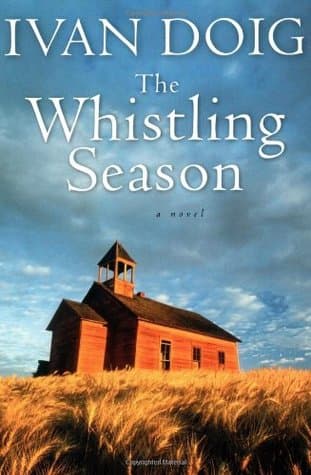
Ivan Doig (2006)
Genre
Literary Fiction / Historical Fiction
Reading Time
7-8 hours
Key Themes
See below
Sign in to track this book
In 1909 Montana, a widower's advertisement for a housekeeper brings a whistling, non-cooking woman and her learned brother into his life, changing his family and the prairie community through an unusual season of lessons and unexpected insights.
In the fall of 1909, Oliver Milliron, a homesteader in Marias Coulee, Montana, struggles to raise his three sons—Paul, Damon, and Bruce—after his wife's death. He places an ad for a housekeeper and gets a reply from Rose Llewellyn, whose ad states, 'Can't cook but doesn't bite.' Rose arrives with her brother, Morris Morgan, a man of wide and often unusual knowledge. Their arrival immediately changes the Milliron home's routines. Rose's lack of cooking skills is clear, but her cheerful whistling and Morris's thoughtful observations begin to fill the gap left by Mrs. Milliron.
Life in Marias Coulee becomes more difficult when Miss Babcock, the only schoolteacher, leaves with a traveling preacher. The one-room schoolhouse has no teacher. The community needs to keep their children in school, especially with many new homesteaders drawn by the "Big Ditch" irrigation project. Though he has no formal teaching experience, Morris Morgan, with his wide and often unusual knowledge, is asked to become the schoolteacher. This unexpected event sets the stage for a unique school year, challenging Morris and his new students, including Oliver's sons.
Morris Morgan's time as a teacher is far from ordinary. He avoids traditional textbooks and memorization, instead using his knowledge of history, literature, geography, and human nature. His lessons often involve stories, discussions, and practical examples, encouraging students to think and observe the world. The children, at first confused by his methods, soon become interested in his approach. This includes lessons from the natural world of Marias Coulee and the lives of the homesteaders. Oliver's sons, especially Paul, learn more than they expected.
While Morris teaches the children, Rose, despite her cooking problems, brings a different kind of learning to Oliver and his sons. Her constant whistling and positive attitude fill the Milliron home with needed life and joy. She takes on household duties with eagerness, if not skill, and her care for the boys is clear. Oliver, at first quiet and still grieving, slowly starts to change under Rose's influence. Her practical yet hopeful view of life, with her steady support, helps Oliver look past his past sadness and consider a future with companionship.
The "Big Ditch" irrigation project, a large effort to bring water to the dry Montana prairie, is always present in the lives in Marias Coulee. The project's promise brings many different people to the area, all seeking a new life and facing the land's harsh realities. Morris often includes discussions about the ditch's engineering and its community effects in his lessons, showing how human goals and nature interact. The project also brings new people and challenges, shaping the region's economy and society, and giving both hope and difficulty to the residents, including the Millirons.
As the whistling season continues, the connection between Oliver and Rose steadily grows. Rose's lasting presence, her steady cheerfulness, and her real affection for his sons begin to soften Oliver's guarded heart. They share quiet moments, talks about their pasts, and observations about the changing Marias Coulee. While not a typical romance, their connection is one of deep companionship and respect, built on shared experiences and understanding each other's needs. Oliver finds himself depending more on Rose's presence and ideas.
Morris Morgan's 'several kinds of education' are not just about books. He teaches his students about honesty, persistence, observation, and the importance of asking questions. He encourages them to find their own voices and to understand how everything connects. Through his stories and ideas, he gives them a sense of wonder and curiosity about the world. He often uses current events, like the Big Ditch's progress or homesteaders' challenges, as starting points for wider discussions on human nature and social progress, deeply influencing the young minds of Marias Coulee.
Despite their initial oddities, Rose and Morris slowly become valued, though still unique, members of the Marias Coulee community. Rose's optimism and her care for the Milliron family win over Oliver and his sons. Morris, with his knowledge and engaging teaching style, earns the respect of parents and children. Their distinct personalities and contributions, both in the classroom and at home, fill a need and improve the lives of those around them, showing that unusual people can bring value to a close-knit frontier society.
As winter turns to spring, the 'whistling season'—a time marked by Rose's constant songs and Morris's unique lessons—starts to end. The Big Ditch project continues, and Marias Coulee changes. The Milliron family has been changed by Rose and Morris. Oliver has found new hope and companionship, and his sons have received a richer education than any textbook could provide. The season leaves a lasting mark on their lives, shaping their views and preparing them for the future.
The end of the school year and the start of summer mean a new beginning for the Milliron family and Marias Coulee. Oliver and Rose's relationship has become a deep partnership, suggesting a future together. Morris's impact on his students and the community is lasting, having given them a love for learning and a wider understanding of the world. The 'whistling season' represents a time of growth, healing, and making new connections, showing how unexpected people can bring change and enrichment to a struggling family and a developing frontier community.
The Protagonist
Oliver transitions from a grieving, solitary widower to a man open to companionship and joy, finding love and a renewed sense of purpose with Rose.
The Supporting Character
Rose brings light and love to a grieving family, finding her own place and a new partnership in Marias Coulee.
The Supporting Character
Morris finds his true calling as an educator, sharing his vast knowledge and unique perspective to enrich the lives of the Marias Coulee children.
The Protagonist/Narrator
Paul grows from a quiet, observant boy into a thoughtful young man, deeply shaped by the unique education and familial warmth he experiences during the whistling season.
The Supporting Character
Damon learns to balance his practical nature with an appreciation for broader knowledge and new family dynamics.
The Supporting Character
Bruce experiences a period of growth and stability, benefiting from the new family structure and unconventional education.
The Mentioned Character
Her brief appearance serves to create a void that allows for Morris Morgan's entrance and the subsequent transformation of the school.
The Mentioned Character
His role is purely functional, serving as the catalyst for the change in the school's leadership.
The novel looks at education not just as school lessons but as a whole process of life lessons, critical thinking, and observation. Morris Morgan's unusual teaching methods, which focus on storytelling, real-world use, and asking questions instead of memorizing, show this theme. He teaches his students to 'read' the world around them, from the geology of Marias Coulee to the reasons of homesteaders, greatly expanding their understanding beyond books. Rose's influence also helps, as she teaches emotional strength and the value of optimism through her actions.
““There are several kinds of education. One kind is books and learning. Another kind is what you learn from the world around you. And another kind, the most important kind, is what you learn about yourself.””
At its core, the story is about making a new family and finding belonging after loss. Oliver Milliron and his sons are incomplete after Mrs. Milliron's death, living with quiet sadness. Rose and Morris, at first strangers, slowly fix the emotional gaps in the household. Rose's warmth and care, with Morris's intellectual presence, turn the Milliron house into a lively home. The novel shows how family can be redefined and rebuilt through shared experiences, mutual support, and accepting unusual people, creating a deep sense of belonging for everyone.
““Home is where, when you have to go there, they have to take you in.””
The lasting effects of grief and the journey to healing are central to the story, especially for Oliver Milliron and his sons. Mrs. Milliron's absence casts a long shadow over their lives, leaving Oliver emotionally closed off and the boys without a mother. Rose Llewellyn's arrival, with her constant optimism and real care, slowly starts to heal these wounds. Her cheerful whistling and practical, though unusual, management of the house provide a comforting stability. Oliver's gradual opening up to Rose shows his move past the paralysis of grief towards a renewed ability for companionship and joy, showing that healing means accepting new life and love.
““Grief is a ghost that haunts you until you find a way to live with its memory.””
The novel clearly shows the challenges and strength needed in the American frontier, specifically during the homesteading era of Montana. The promise of the 'Big Ditch' brings different people to Marias Coulee, all seeking a new life and facing the land's harsh realities. Characters like Oliver Milliron show the quiet persistence needed to settle the wilderness. The community's ability to adapt is shown in their willingness to accept an unusual teacher like Morris and a non-cooking housekeeper like Rose. This theme highlights the resourcefulness, self-reliance, and community support needed to survive and thrive in a demanding environment, where new ideas and flexibility are important.
““The prairie was a hard school, but it taught you to make do with what you had, and sometimes, to make do with less.””
The story is told by an adult Paul Milliron looking back on his childhood.
The narrative is framed through the eyes of an adult Paul Milliron, reflecting on the pivotal 'whistling season' of his youth. This device allows for a dual perspective: the immediate, sensory experiences and observations of a child, combined with the mature insights and philosophical understanding of an adult. It lends a nostalgic, reflective tone to the story, enabling the narrator to comment on the long-term impact of events and characters, particularly Morris Morgan's lessons, and to provide context and emotional depth that a child's perspective alone could not achieve.
A large-scale irrigation project that symbolizes progress and human ambition.
The 'Big Ditch' is a massive irrigation project intended to bring water to the arid Montana prairie. While not a central character, it serves as a powerful symbol and a constant backdrop to the lives in Marias Coulee. It represents human ambition, the promise of progress, and the hopes of the homesteaders for a better future. Its presence also highlights the challenges and changes occurring in the region, influencing the community's economy, demographics, and even Morris's lessons, which often touch upon engineering, history, and the impact of human endeavors on nature.
Rose Llewellyn's constant whistling as a symbol of optimism and resilience.
Rose Llewellyn's characteristic whistling is a recurring motif throughout the novel. It initially highlights her eccentricities and her inability to cook, but quickly evolves into a symbol of her unwavering optimism, resilience, and the life she brings to the Milliron household. Her whistling signals her presence, her mood, and acts as a constant, comforting sound that fills the silence left by grief. It represents a form of non-verbal communication and emotional expression, embodying the theme of finding joy and making music in difficult circumstances, and ultimately giving the novel its title.
“It was what they called a whistling season, a year of wind and not much else.”
— The narrator's reflection on a particularly harsh year in Montana.
“The past is a foreign country; they do things differently there.”
— A general observation on the nature of memory and history, though not a direct quote from the book, it encapsulates a strong theme.
“A man's life is not a straight line, but a series of circles, some small, some large, some overlapping.”
— Paul Milliron's contemplation on the journey of life.
“There are times when the best thing a person can do is just keep quiet and listen, and let the world unspool itself around them.”
— Paul Milliron learning to observe and absorb his new surroundings.
“Schoolteaching, I was finding, was less about imparting knowledge and more about opening doors, then hoping someone would walk through.”
— Paul Milliron's evolving understanding of his role as a teacher.
“Home was not a place so much as it was a collection of people and the stories they told.”
— Paul Milliron's evolving definition of home after moving to a new place.
“Every day was an education, whether you wanted it or not.”
— The constant learning curve faced by Paul in his new environment.
“The wind could talk, if you knew how to listen. It had stories to tell, of distances and dust, of seasons come and gone.”
— A description of the omnipresent wind and its symbolic meaning.
“Sometimes the plain truth was the most complicated thing of all.”
— Paul Milliron's realization when dealing with complex family dynamics.
“You can't outrun your own history, no matter how fast you think you're going.”
— A character's reflection on the inescapable influence of the past.
“The best kind of family, I was learning, wasn't always the one you were born into.”
— Paul Milliron's experience with the community and the 'hired girls'.
“Grief, I discovered, was a landscape you had to walk through, not a wall you could climb over.”
— Paul Milliron's internal processing of personal loss.
“What mattered was not the answers, but the questions you kept asking.”
— A philosophical insight into the pursuit of understanding.
“There's a rhythm to country life, a slow, steady pulse that eventually gets inside you.”
— Paul Milliron adapting to the pace and patterns of rural Montana.
Ready to see how well you understood this book? Take our interactive quiz with 10 questions.

Biography coming soon.







