“There are some men who are born to be on the run, and McNulty was one of them.”
— Reflecting on Eneas's early life and the forces that shaped him.

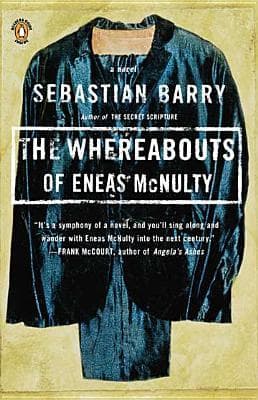
Sebastian Barry (1998)
Genre
Literary Fiction / Politics / Historical Fiction
Reading Time
9-11 hours
Key Themes
See below
Sign in to track this book
Branded a traitor for joining the British-led police, Eneas McNulty flees a violence-wracked Ireland and the woman he loves, embarking on a lifelong odyssey of loss redeemed by a final, unexpected act of generosity.
Eneas McNulty is born in Sligo, Ireland, in the early 20th century. He grows up in a close community with his family and best friend, Christy. His early life is simple, filled with childhood joys, fishing, and the beauty of the Irish countryside. But Ireland's political situation is changing fast, with growing tension between Irish nationalists and British rule. The Great War looms, and after it, Sligo faces economic hardship. Eneas, a gentle and somewhat naive young man, struggles to find steady work in the poor post-war economy. This situation will soon lead him to a life-changing decision.
With no work and facing poverty, Eneas makes the desperate choice to join the Royal Irish Constabulary (RIC), a British-led police force. His community and many former friends, including Christy, see this as a deep betrayal. They are increasingly siding with Irish nationalist groups and the growing IRA. Eneas, who only wanted a job, becomes an outcast, called a 'turncoat.' His time with the RIC is short and mostly uneventful, but the shame of it will stay with him, marking him as an enemy of the new Irish Free State.
As the Irish War of Independence gets worse, Eneas becomes a target for the IRA. Even though his involvement with the RIC was small and unwilling, his name is on an execution list. He gets a chilling warning, probably from Christy, that his life is in danger. With great sadness, Eneas must leave Ireland, abandoning Viv, the woman he loves and hoped to marry. This forced exile is a terrible blow, cutting him off from his homeland, his family, and his old life. It begins a lifelong journey of displacement and longing.
Eneas's exile first takes him to Liverpool, where he tries to start a new life. He works various manual labor jobs, always keeping a low profile and fearing discovery by IRA supporters. His journey then leads him further away, working on ships that travel to different parts of the British Empire and beyond. He has many temporary jobs and lonely lodgings, always a stranger in a new place, haunted by memories of Ireland and the life he had to leave. Each new place offers a short break but never a real home.
Throughout his decades of wandering, Viv's memory stays clear and central to Eneas's life. He keeps her image and the hope of one day returning to her, or at least hearing from her, as a constant source of both comfort and deep sorrow. He never forms lasting romantic relationships with anyone else; his heart is always for the woman he left behind. This lasting, unfulfilled love highlights his isolation and the depth of his loss, showing all that the political turmoil of his homeland took from him.
Years after leaving, driven by a strong desire for home and a desperate hope to see Viv, Eneas tries to secretly return to Ireland. He travels carefully, trying to blend in. But he soon finds that old grudges and the threat against him have not gone away. The new Irish Free State remembers, and 'traitors' are not forgotten. The danger is still real, forcing Eneas to flee his homeland again, confirming his status as a permanent exile and deepening his despair about ever truly returning.
Eventually, Eneas settles on the Isle of Dogs in London, a place known for its changing population of sailors and dockworkers. Here, among other displaced people, he finds a fragile sense of community and some anonymity. He gets work, often on the docks, and establishes a routine. While still marked by his past, the Isle of Dogs offers him a kind of safe place, where his history as an RIC man is less likely to be questioned. He lives a quiet, solitary life, watching the world, a man always on the outside.
On the Isle of Dogs, Eneas meets various people. Some remind him of his past, others offer glimpses of a different future. He forms a quiet, fatherly bond with a young boy named Georgie, a neglected child nearby. This relationship brings a bit of warmth and purpose to Eneas's otherwise solitary life. Through Georgie, Eneas experiences a connection he has long missed, and the boy finds a quiet protector and a steady presence in his chaotic life. This bond shows Eneas's good nature despite his difficult past.
As Eneas ages and his health declines, he knows his life is ending. Despite his own poverty and years of hardship, he makes a selfless decision about Georgie. He has saved a small amount of money from his years of work. Instead of using it for himself, he arranges for this money to go to Georgie, giving the boy a chance at a better future. This final act of generosity shows Eneas's kindness and his wish to leave a positive mark, even after a life defined by loss and displacement.
Eneas McNulty dies alone on the Isle of Dogs, his death mostly unnoticed. His life, though seemingly unimportant to history, shows the human cost of political conflict. He lived and died an exile, forever marked by a desperate decision. However, his quiet dignity, his lasting love for Viv, and his final kindness to Georgie leave a meaningful legacy. His story shows the strength of the human spirit and how historical events affect individual lives, a silent witness to a turbulent century.
The Protagonist
Eneas begins as an innocent young man, forced into a life of exile and loneliness, but ultimately finds a quiet dignity and purpose in his final acts of selfless generosity.
The Supporting
Viv's character remains largely static in the narrative, serving as a symbol of Eneas's lost love and homeland, her memory fueling his enduring hope and sorrow.
The Supporting
Christy transforms from a childhood friend into a political adversary, yet his underlying loyalty to Eneas surfaces in a crucial moment, showcasing the complexities of human relationships amidst conflict.
The Supporting
Georgie remains a child throughout the narrative, serving as a catalyst for Eneas's final act of generosity, representing hope and the future.
The Mentioned
The RIC's role is static, serving as the political entity that precipitates Eneas's exile.
The Antagonist
The IRA's role is static, serving as the antagonist force that drives Eneas from his home and keeps him in exile.
Eneas's lifelong exile from his homeland is the main theme. Forced to leave Ireland after joining the RIC, he spends decades wandering, never finding a true home. This displacement is not just physical; it is emotional, as he is cut off from his family, his love, and his culture. His attempts to return meet new dangers, showing the lasting scars of political conflict. The Isle of Dogs becomes a symbolic refuge for other displaced people, reflecting the common experience of those uprooted by war or circumstance. This theme appears in Eneas's constant longing for Ireland, the letters he never sends to Viv, and his solitary life in many temporary places.
“He was a man who had left home and never found another.”
The novel powerfully shows the human cost of political and nationalist conflicts, especially the Irish War of Independence. Eneas is not a political man, but his life is destroyed by choices forced on him by the conflict. His simple desire for work leads to him being called a traitor, and the resulting violence and divisions tear apart communities and families. The story shows how large historical events have deep, often tragic, effects on individual lives, leaving behind bitterness, fear, and lasting loss, long after the fighting ends. Christy and Eneas's broken friendship is a clear example.
“A country can break a man, even if he loves it.”
Eneas's lasting love for Viv is a central emotional part of the novel, contrasting with his otherwise bleak life. This love, however, is tied to deep loss, as he is separated from her for decades. His inability to return to her, or even talk to her, symbolizes the greater losses of home, family, and a future he once imagined. This theme explores how love can sustain hope, even in great despair, but also how it can cause deep and lasting pain when unfulfilled or broken by outside forces. His memories of Viv are his most treasured things.
“His heart held her image like a prayer, unceasing and unanswered.”
Eneas's journey is a search for who he is and where he belongs in a world that has rejected him. Called a 'traitor' in Ireland, he struggles to find a place where he truly fits in. He becomes a man without a country; his Irish identity is a source of danger, not comfort. In his various temporary jobs and lodgings, he is always an outsider, his true self hidden. The Isle of Dogs offers a temporary, fragile sense of belonging among other displaced people, but he never fully regains a secure sense of self, always defined by his past and his forced exile.
“He was a ghost in every city, carrying the phantom weight of home.”
Hints at future tragedy and conflict.
The novel uses subtle foreshadowing early on, hinting at the political unrest that will soon engulf Ireland and irrevocably alter Eneas's life. The growing tensions and the economic hardship in Sligo, even in Eneas's youth, suggest that the idyllic period will not last. This creates a sense of impending doom, making Eneas's eventual decision to join the RIC feel both inevitable and tragic, as the reader can sense the dire consequences before they fully unfold. It builds a sense of pathos around Eneas's naive choices.
Represents Eneas's transient life and isolation.
The sea and the ships Eneas works on are powerful symbols of his transient existence and profound isolation. The ocean is vast and unforgiving, much like his life in exile. Ships are temporary homes, carrying him from one foreign port to another, never allowing him to establish roots. They represent his constant movement, his rootlessness, and his inability to find a permanent haven. The endless horizon mirrors his long journey, while the enclosed spaces of the ships emphasize his loneliness, always surrounded by people but never truly connected.
Symbolize unfulfilled hope and the weight of separation.
Eneas's habit of writing letters to Viv that he never sends is a poignant plot device. These letters symbolize his enduring love, his desperate hope for reunion, and the insurmountable barrier that separates them. They are a private ritual, a way for Eneas to maintain a connection to his past and his heart's desire, even though he knows the communication is impossible. The unsent letters encapsulate the themes of love, loss, and the profound isolation of exile, showing his internal world and the constant ache of what he's lost.
“There are some men who are born to be on the run, and McNulty was one of them.”
— Reflecting on Eneas's early life and the forces that shaped him.
“The wind was a constant companion, a whisper of what he had left behind and what lay ahead.”
— Eneas's journey across the sea to England, a symbol of his displacement.
“Memory is a strange country, where the dead walk and the living are sometimes lost.”
— Eneas grappling with his past and the ghosts of his family and friends.
“He carried Ireland in his heart, a heavy stone, a beautiful burden.”
— Eneas's enduring connection to his homeland despite his exile.
“A man can be innocent and still be guilty in the eyes of others.”
— Eneas reflecting on the injustice of being branded a traitor.
“The world had a way of forgetting some people, as if they had never been.”
— Eneas's fear of being forgotten and the anonymity of his exile.
“Love was a fragile thing, easily broken, but worth every risk.”
— Eneas's thoughts on his relationships, particularly with his wife.
“There was a music in the silence, if you knew how to listen.”
— Eneas finding solace in quiet moments during his solitary life.
“History was not just dates and battles, but the small, forgotten lives of ordinary men.”
— The narrator's broader reflection on the nature of history and Eneas's place within it.
“He had walked away from one war only to find himself in another, a war of the heart.”
— Eneas's internal struggles after the Irish War of Independence.
“The sea always called to him, a promise of escape and an echo of home.”
— Eneas's lifelong connection to the ocean, both as a refuge and a reminder.
“Some truths were too heavy to carry, so you buried them deep.”
— Eneas's suppressed memories and the secrets he kept.
“A good life was not about what you had, but who you had beside you.”
— Eneas's eventual realization about the importance of human connection.
“The past was never truly past, it just waited for you to turn around.”
— The lingering impact of Eneas's history on his present and future.
Ready to see how well you understood this book? Take our interactive quiz with 10 questions.

Sebastian Barry is an Irish novelist, playwright and poet. He was named Laureate for Irish Fiction, 2019–2021.







