“The whale is an ancient ancestor. He has come back to us, bringing with him the gift of life.”
— Koro Apirana explains the significance of the beached whale to the community.

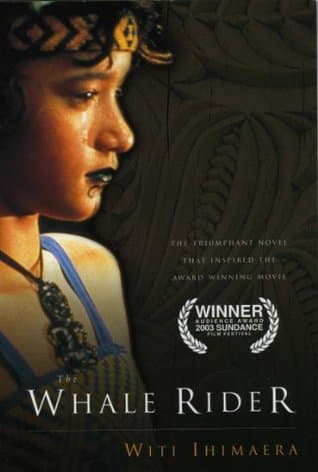
Witi Ihimaera (2001)
Genre
Fantasy / Children's / Historical Fiction / Young Adult
Reading Time
90 min
Key Themes
See below
Sign in to track this book
An 8-year-old Maori girl ignores her grandfather's rules, an old prophecy, and the ocean to save her tribe by talking with whales.
The story starts with the birth of Kahu Paikea Apirana, a girl, in the Maori village of Whangara, New Zealand. Her great-grandfather, Koro Apirana, is the chief and a direct descendant of the whale rider Kahutia Te Rangi. He is very disappointed. He wanted a male child to carry on the family line and sacred leadership. Koro Apirana will not fully acknowledge Kahu. He even turns away when she is presented to him, believing a girl cannot be chief. Kahu's parents, Rehua and Porourangi, move away. Kahu is raised mostly by her great-grandmother, Nanny Flowers, and her great-uncle, Rawiri, who tells much of the story. Koro's rejection affects Kahu's early life.
From a young age, Kahu shows a strong, natural connection to her heritage and loves Koro Apirana, even though he is always cold to her. She tries to get closer to him, bringing him gifts, watching him, and trying to join the boys' traditional training. This often annoys Koro. She tries to copy the boys, learning to throw spears and understand old chants. Nanny Flowers, however, quietly helps Kahu. She teaches her the female parts of their culture and defends her from Koro's dismissive words. Nanny Flowers sees Kahu's special spirit and connection to their ancestors, even if Koro does not.
Koro Apirana needs a male successor. He gathers all the young boys of the village for traditional training to be chief. This includes old chants, spear throwing, and learning the tribe's history and the ocean. He hopes to find the one who will get the sacred jade pendant, the rei puta, which shows the true leader. But none of the boys show the right talent or spiritual link. They are clumsy, not interested, or not meant for the role. Kahu, secretly watching, often shows more understanding and skill than the boys. Rawiri notices this, and Nanny Flowers is quietly proud. Koro does not see it, only focused on finding a boy.
During one of Koro Apirana's training sessions, he uses a sacred whale tooth pendant, the rei puta. He drops it into the ocean as a test for the boys. He says whoever gets it will be the chosen one. All the boys fail to find it. Koro is upset, seeing it as a sign that the family line is broken. Koro does not know that Kahu later dives into the water and easily finds the pendant. She brings it to shore and places it under Koro's pillow. She wants to return it without him knowing she found it, afraid of his reaction if he knew a girl did it. This act shows Kahu's natural link to their heritage.
A feeling of worry comes over Whangara. A group of whales, including a large, old bull whale, start getting stranded on the beaches near the village. The villagers are scared and upset. This event is a bad sign and means things are out of balance. Koro Apirana thinks it is because he failed to find a worthy male heir. He believes the whales are calling for their true leader, the whale rider, who is missing. The villagers try hard to push the smaller whales back into the sea, but it does not work well. The old bull whale seems to have given up, waiting for something, or someone.
Koro Apirana feels guilty and desperate. He tries to talk to the stranded whales. He stands on the shore, chanting old karakia (prayers/songs) and trying to guide them back to the ocean with his spirit. He believes that as chief, he should be able to connect with them. But the whales, especially the old bull whale, do not respond to him. They seem to know he is not the one they are waiting for. This makes Koro even more sad and sure that the family line has truly ended. The villagers watch, unable to help, as more whales die on the sand.
As the situation gets worse and the whales die, Kahu feels a strong pull towards them. She goes to the old bull whale, ignoring the adults' warnings. Kahu connects with the whales. She starts to speak to them, not with human words, but with clicks, whistles, and deep sounds. Only she and the whales understand this language. It is a communication beyond words, a spiritual bond passed down through generations. The bull whale moves its large body, responding to her. It recognizes her presence and her natural connection to its kind, a connection Koro Apirana had denied her.
Kahu does something amazing and impossible. She climbs onto the back of the old bull whale. The whale knows its true rider. It responds to her touch and guidance. With Kahu on its back, the bull whale turns towards the open ocean, and the whole group follows. The villagers, including a shocked Koro Apirana, watch in wonder. Kahu, the young girl he rejected, rides the old whale. She fulfills the prophecy of their ancestor, Kahutia Te Rangi. She guides the whales safely back to the deep waters. She completes a task no one else could do, proving her family line and leadership.
After leading the whales to safety, Kahu is found floating unconscious in the ocean. She is near death from being tired and cold. Rawiri and other villagers quickly get her and bring her to shore. The villagers now feel a clear change. They understand how important her actions were. Koro Apirana is filled with emotion and realizes his mistake. He holds Kahu in his arms, his heart finally open to her. She is brought back to the village, her life uncertain. The community watches over her, now knowing who the true heir to their family line is.
Kahu slowly gets better. Koro Apirana changes during her recovery. He visits her, his heart finally open to the truth. He publicly says Kahu is the true heir, the new whale rider, and the rightful chief of the Whangara people. He understands that old ways must change and that the spirit of their ancestors can appear in new forms. The story ends with Kahu, now well, taking her place as leader. She connects the past and the future, ready to guide her people with her ancestors' wisdom and her special link to nature. The community celebrates her, their future secure.
The Protagonist
From a rejected and overlooked granddaughter, Kahu evolves into the acknowledged and revered chief, demonstrating that leadership transcends gender.
The Antagonist/Supporting
Initially rigid and resistant to change, Koro undergoes a profound transformation, finally accepting Kahu as the rightful chief and embracing a more inclusive view of leadership.
The Supporting
Nanny Flowers remains a consistent source of love and wisdom, her support for Kahu unwavering and ultimately vindicated.
The Supporting/Narrator
Rawiri's understanding of Kahu's true destiny deepens throughout the narrative, culminating in his full acceptance and admiration.
The Supporting
Porourangi's journey involves grappling with his ancestral duties and eventually returning to acknowledge Kahu's true place.
The Supporting
Rehua's arc is less developed, primarily serving to establish Kahu's early family context and the reasons for her being raised by her great-grandparents.
The Mentioned
As a legendary figure, Kahutia Te Rangi's arc is static, serving as the historical and spiritual anchor for the living characters.
The Supporting
The bull whale's journey is from a state of distress and resignation to one of fulfillment, as it finds its true rider and leads its pod to safety.
The main problem in the novel is Koro Apirana's strict following of old Maori traditions. These traditions need to change as times change. Koro believes only a male can be chief, so he rejects Kahu. But Kahu's natural spiritual connection and her act of riding the whale show that tradition can appear in new ways. This challenges and changes the community's idea of leadership. The story says that true tradition is about spirit and values, not just following old rules exactly.
“A new age, a new time. But the old ways, the old stories, they are always there, waiting to be rediscovered.”
Kahu wants to find her place and identity within her tribe and family. Her great-grandfather rejects her, so she always tries to show her worth and her connection to her heritage. She is a Maori girl, a descendant of the whale rider. This identity is first denied but then confirmed by what she does. The story looks at how ancestry, community, and personal fate shape who someone is. It shows how wanting to belong can lead to finding your true self and purpose. Kahu's fight is for herself and for her true place among her people.
“Our people, when they are ready, will know who you are. The whales will know.”
The novel directly looks at old gender roles and leadership. Koro Apirana cannot accept a female chief. This shows the male-focused structures in the Maori tribe. Kahu's story challenges these ideas. She, a young girl, is the only one who can fulfill the old prophecy and save her people. Her leadership comes from a natural spiritual connection, courage, and selflessness, not from her gender. The book suggests that good leadership is not just for one gender. Ignoring potential leaders because of gender can stop progress and cause problems.
“It was not a man who saved us. It was a girl.”
A main theme is the deep, spiritual link between people, especially the Maori, and nature, shown by the whales. The whales are not just animals. They are sacred beings, ancestors, and messengers. When they get stranded, it means there is a spiritual problem in the tribe. This problem is directly linked to not having a true leader. Kahu's ability to talk with and ride the old bull whale shows this deep, almost mind-reading, bond. The story stresses respecting nature, how all living things are connected, and how human well-being depends on the health and spiritual balance of the environment.
“The whales were not just whales. They were our ancestors, come to guide us, or to warn us.”
Koro Apirana first rejects Kahu. But Kahu's strong love for her great-grandfather is a main force in the story. Her acts of devotion, despite his coldness, show the strength of unconditional love. Koro changes when he sees Kahu's selfless act. He finally accepts her not just as his great-granddaughter, but as the true heir. The theme explores how love can fix problems, heal old hurts, and lead to acceptance, even when there is strong prejudice. It is a journey towards understanding and family peace.
“He knew then that his own love for her was as vast and as deep as the ocean itself.”
A sacred jade pendant symbolizing the true chief and whale rider.
The rei puta is a sacred whale tooth pendant passed down through generations of chiefs, serving as a tangible symbol of leadership and the spiritual connection to the whale rider lineage. Koro Apirana uses it in a test for the boys, dropping it into the ocean, believing only the rightful male heir can retrieve it. Kahu's secret retrieval of the pendant foreshadows her true destiny and highlights her innate connection to the ancestral spirit, even when Koro cannot see it. It is a powerful symbol of legitimacy and the true transfer of power.
A critical event that symbolizes spiritual imbalance and catalyzes Kahu's destiny.
The mass stranding of whales on the beach is a major plot device. It serves as a dire omen, signifying a spiritual crisis within the Whangara tribe, directly linked to Koro Apirana's failure to find a worthy male heir. This catastrophic event creates an urgent need for a true leader, forcing the community to confront their traditions. It is the catalyst for Kahu's heroic act, providing the ultimate test and stage for her to demonstrate her inherent connection to the whales and fulfill her destiny as the true whale rider, thus restoring balance to the community and the natural world.
The story is primarily told through the perspective of Kahu's great-uncle, Rawiri.
The narrative choice to use Rawiri, Kahu's great-uncle, as the primary narrator provides a unique and effective perspective. Rawiri is a close family member but also somewhat of an observer, allowing for both intimate insights into family dynamics and a slightly detached, reflective tone. His perspective allows the reader to witness Koro Apirana's stubbornness and Kahu's quiet strength without being directly inside either of their heads. This narrative voice adds a layer of empathy and cultural context, making the story feel like an oral history passed down through generations, enriching its authenticity and emotional depth.
The spiritual connection and communication between Kahu and the lead whale.
The ancient bull whale's 'call' is a powerful symbolic device. It represents the ancestral spirit seeking its true rider. The whale's initial unresponsiveness to Koro Apirana and its immediate connection with Kahu through a shared, non-verbal language highlights Kahu's unique spiritual gift and her rightful lineage. This 'call' is not just literal sound but a profound spiritual resonance, indicating that the natural world itself recognizes and validates Kahu's destiny, even when her human family initially fails to do so. It is the ultimate affirmation of her role as the whale rider.
“The whale is an ancient ancestor. He has come back to us, bringing with him the gift of life.”
— Koro Apirana explains the significance of the beached whale to the community.
“I am not a prophet, but I know that our people will walk backward into the future if we do not learn to look forward.”
— Koro Apirana reflects on the need to balance tradition with change.
“The whale rider is not a man. The whale rider is a woman.”
— Nanny Flowers challenges Koro's belief that leadership must be male.
“Sometimes the most unlikely person can be the one to save us all.”
— Narrator's observation about Kahu's role in the story.
“The sea is our ancestor, and we must listen to its voice.”
— Kahu feels a deep connection to the ocean and its creatures.
“You cannot force the future to be like the past. You can only prepare for it.”
— Koro Apirana learns to accept change in leadership.
“Her spirit was as strong as the sea, and her heart as deep as the ocean.”
— Description of Kahu's inner strength and resilience.
“The old ways are not always the right ways for the new world.”
— Nanny Flowers argues for adapting traditions to modern times.
“In the end, it is not the strength of the body but the strength of the spirit that matters.”
— Reflection on Kahu's journey and her connection to the whale.
“The whale called to her, and she answered with all her heart.”
— Kahu communicates with the beached whale, showing her unique bond.
“We are all part of the same story, written in the stars and the sea.”
— Philosophical musing on the interconnectedness of life and tradition.
“Do not mourn what is lost; celebrate what is found.”
— Advice given to the community after a crisis, emphasizing renewal.
“The past is a guide, not a prison.”
— Koro Apirana comes to understand the flexible nature of tradition.
Ready to see how well you understood this book? Take our interactive quiz with 10 questions.

Biography coming soon.







