“It was a will, of sorts. No, not a will. A game.”
— Narrator describing the unusual nature of Samuel Westing's final document.

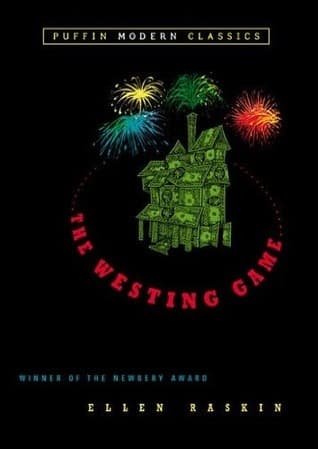
Ellen Raskin (1978)
Genre
Children's / Mystery / Young Adult
Reading Time
180 min
Key Themes
See below
Sign in to track this book
Sixteen varied heirs get pulled into a clever game by an unusual millionaire after his death, each a suspect and a piece in his final, confusing puzzle.
The story starts with the unusual millionaire, Samuel W. Westing, building Sunset Towers, a fancy apartment building across from his own mansion, which has been empty for years. Barney Northrup, a mysterious real estate agent, rents apartments to sixteen chosen, different tenants. These include Turtle Wexler, a smart but easily angered pre-teen; her older sister, Angela Wexler, a beautiful but shy young woman; their social-climbing mother, Grace Wexler; and their foot doctor father, Jake Wexler. Also living there are Sydelle Pulaski, a lonely secretary; Theo Theodorakis, a high school student working in his family's coffee shop; Doug Hoo, a track star; and Judge J.J. Ford, a serious, analytical woman. They all move in, not knowing the strange link they share or the game they are about to play.
After a mysterious smoke comes from the Westing mansion, the heirs are called to hear Samuel Westing's will. The lawyer, E.J. Plum, reads the strange document. It says Westing did not die naturally but was murdered, and one of the sixteen heirs is the killer. The will states that the heirs must play 'The Westing Game' to find out who will get his large fortune of $200 million. The heirs are split into eight pairs, each getting a set of secret clues. The pair that solves Westing's death mystery and finds his true heir will win everything. The first shock and doubt quickly start among the varied group, forcing unlikely teams to form.
The heirs go back to Sunset Towers and start working with their partners. Turtle Wexler is with Flora Baumbach, the dressmaker; Angela Wexler with Sydelle Pulaski; Theo Theodorakis with Doug Hoo; Judge J.J. Ford with Sandy McSouthers, the doorman; Grace Wexler with James Shin Hoo, the restaurant owner; Jake Wexler with Madame Sun Lin Hoo; and Chris Theodorakis with Denton Deere. Each pair gets a unique set of clues, often with missing words or seemingly random phrases. Their first tries to solve the puzzle are full of wrong ideas and doubt. Judge Ford, feeling a strange link to Westing, starts to look into the backgrounds of all the heirs, thinking Westing's real plans might be more complex than a simple murder mystery.
The game becomes dangerous with a series of bombings. The first bomb goes off in the Theodorakis coffee shop, hurting Sydelle Pulaski. The second bomb explodes in the Hoo's restaurant, hurting Grace Wexler. The third bomb explodes during Angela Wexler's bridal shower, badly hurting Angela's hands and face. Turtle Wexler, who was at the third bombing, wants to find the bomber to clear her sister's name and protect her family. The heirs grow more and more worried, suspecting each other of both the bombings and Westing's murder. Judge Ford continues her careful research, finding out details about Westing's past and his link to several of the heirs, especially a woman named Crow.
After the bombings, another will reading is called. E.J. Plum reads a second part of Westing's will, which makes the game even more complex. The heirs are told to return all their clues, and Westing's will says his fortune will go to the person who finds the 'fourth.' This new order makes the heirs guess wildly again. Many of the characters start to change personally. Angela begins to stand up for herself, Sydelle gains confidence, and Turtle, wanting to protect her sister, becomes more focused. Judge Ford narrows her investigation, sure that Westing's game is about revenge and fairness, especially involving a woman named Crow, Westing's ex-wife.
Turtle Wexler, using her sharp mind and observations, figures out that Angela Wexler is the bomber. Angela tells Turtle she set the bombs, not to hurt anyone, but to get attention and to escape her planned life and the pressure to marry Denton Deere. Turtle promises to keep her sister's secret. Meanwhile, Judge Ford realizes that Westing’s game is not about finding a killer, but about finding a specific person. She believes Westing wants revenge on Crow, his ex-wife, who he blames for their daughter's death. The clues, she thinks, are meant to point to Crow, who is paired with Otis Amber, the delivery boy.
All the heirs gather for the final meeting in the Westing mansion. The remaining clues are put together, and through some guesses and wrong ideas, the heirs mistakenly decide that Berthe Erica Crow is the killer. Crow, a religious and selfless woman, surprisingly admits it, believing she is doing God's will. She is arrested, and the heirs think the game is over. However, Turtle, who has been quietly watching and putting information together, realizes something is still wrong. She notices an important detail in Westing's will about the missing words and the 'fourth's' real identity.
Turtle Wexler, with her sharp eye for detail and understanding of wordplay, realizes that the will's instructions and the missing letters in the clues lead to the name 'Berthe Erica Crow.' However, she also uncovers that the game's actual goal is to find Samuel Westing's 'fourth' identity. Westing, a master of disguise and games, had lived under three other identities: Barney Northrup (the real estate agent), Sandy McSouthers (the doorman), and Julian R. Eastman (the chairman of Westing Paper Products). Turtle confronts Sandy McSouthers, who says he is Samuel Westing, faking his death to play one last game and find a good successor.
Westing, as Sandy McSouthers, tells Turtle that she is the only one who truly understood the game and solved all its parts. He explains that the game was made to find a successor with intelligence, wit, and a good heart. Turtle, now 13, is named the winner and the only heir to Westing's large fortune. She is told to keep his true identity and the game's details a secret from the other heirs. Westing, under his last name, Julian R. Eastman, guides Turtle for several years, teaching her about business and life before he truly dies, many years later. Turtle, now a successful businesswoman and lawyer, continues his work.
The story jumps forward several years. The other heirs, though not winning the fortune, have all found happiness and success because of the game. Angela becomes an orthopedic surgeon. Sydelle marries Otis Amber, who says he was a private investigator hired by Westing. Grace Wexler succeeds in running a chain of restaurants. Judge Ford becomes a Supreme Court Justice. Theo Theodorakis becomes a successful writer. Doug Hoo wins an Olympic gold medal. Flora Baumbach becomes like a second mother to Turtle. Turtle, now a rich and powerful woman, marries Theo and continues to play chess with her grandniece, passing on Westing's love for games and strategy, keeping his work alive.
The Protagonist
Transforms from a temperamental, overlooked child into a confident, brilliant young woman who inherits a fortune and becomes a successful lawyer and businesswoman.
The Supporting
Breaks free from societal expectations and her family's control, finding her own path as an orthopedic surgeon.
The Antagonist/Mastermind
Orchestrates his own 'death' and a complex game to find a worthy successor, ultimately finding one in Turtle Wexler, whom he mentors until his true death.
The Supporting
Overcomes her prejudice and misunderstanding of Westing's game, eventually becoming a Supreme Court Justice.
The Supporting
Transforms from a prejudiced, superficial socialite into a successful, self-aware businesswoman who learns to appreciate her family.
The Supporting
Remains true to himself, finding contentment in his work and a stronger connection with his family after the game.
The Supporting
Initially a prime suspect and scapegoat, she is ultimately exonerated and finds happiness marrying Otis Amber.
The Supporting
From an attention-seeking, insecure woman, she gains confidence and finds genuine connection and love.
The Supporting
Pursues his passion for writing, eventually becoming a successful novelist, and marries Turtle Wexler.
The Supporting
Achieves his athletic dream of winning an Olympic gold medal, while learning to appreciate intellectual pursuits.
The Supporting
From a bitter, frustrated inventor, he finds success with his inventions and becomes a more content individual.
The Supporting
Gains confidence and finds his voice, eventually pursuing a career in ornithology and marrying Shirley.
Many characters in 'The Westing Game' find out more about themselves, pushed by the game's unusual situation. Angela Wexler, for example, struggles with being known only for her beauty and upcoming marriage, which makes her act out. Sydelle Pulaski pretends to be sick to get attention, but then finds real confidence by playing the game. Even Grace Wexler, at first a superficial socialite, finds her real calling as a successful restaurant owner. The game makes the heirs look past their first ideas of themselves and each other, showing hidden talents, desires, and strengths. Westing's many identities also show this, suggesting that identity can change and be chosen.
“It was Chris (the birdwatcher) who had first spotted the smoke from the Westing mansion. It was Chris who saw the limping man enter the Westing house. It was Chris who had heard the shot.”
The book looks at how families work, especially in the Wexler home, where Turtle feels ignored compared to Angela. The game makes these tense relationships grow, leading to better understanding and appreciation between the sisters. Beyond blood relatives, the game's unlikely pairings create new kinds of family and friendship, like the bond between Turtle and Flora Baumbach, or Sydelle and Angela. The final discovery of Westing's real reasons shows that his game was, in part, a complex effort to bring together and heal his own broken 'family' and find a successor who has the best qualities of a family leader, not just a business one.
“It was not what you took, but what you saved, that counted.”
At first, the game seems like a murder mystery, about finding a killer and getting justice. Judge Ford is especially driven by this, believing Westing wants revenge against Crow for his daughter's death. But as the story goes on, it becomes clear that Westing's real goal is not punishment, but a type of restoring fairness and, in the end, forgiveness. He sets up a situation where Crow is cleared, and the heirs get a chance to make their lives better. The game becomes a way to fix past wrongs, not by punishing, but by growing, understanding, and giving a chance for a better future for those involved, including Crow.
“It's not what you've got, it's what you do with what you've got.”
The whole story is set up as a game, showing Samuel Westing's love for complex puzzles and strategic thinking. The clues, the pairings, and the discoveries are all part of his big plan. This idea shows how games can be strong ways to show character, make people work together, and help them think better. Turtle Wexler's natural talent for chess and her strategic mind are key to solving the mystery. This shows that the 'game' is not just a plot device but a main idea for life's challenges and the smart thinking needed to succeed. Westing uses the game to teach, test, and finally pick his successor.
“It's not what you look at that matters, it's what you see.”
This idea is key to the whole mystery. Samuel Westing fakes his death and lives under several disguises (Barney Northrup, Sandy McSouthers, Julian R. Eastman), always changing how people see him. Characters like Sydelle Pulaski pretend to be disabled to get attention, while Angela Wexler's perfect outside hides deep unhappiness. The heirs constantly misunderstand clues and suspect the wrong people, based on quick judgments. The book asks the reader, along with the characters, to look past what things seem to be and look deeper to find the truth. It shows that what looks real is rarely what it actually is.
“The will said, 'The estate is to be inherited by one of you. My will says, 'I, Samuel W. Westing, heir to the Westing fortune, do hereby swear that I did not die of natural causes. My life was taken by one of you! The killer is one of the sixteen heirs.'”
The central document that initiates and dictates the rules of the game.
Samuel Westing's bizarre and legally binding will serves as the primary plot device, setting the entire mystery in motion. It divides the heirs into pairs, assigns cryptic clues, and outlines the rules for inheriting his fortune. The will is read in multiple parts, revealing new information and twists at critical junctures, constantly re-shaping the heirs' understanding of the game and their objectives. Its precise wording and hidden meanings are crucial to the eventual solution, making it both a legal document and a complex puzzle.
Eight sets of seemingly random words that guide the heirs in their investigation.
Each pair of heirs receives a unique set of words that act as clues. These clues are deliberately misleading, often containing missing words or phrases that can be interpreted in multiple ways. Their true significance only becomes apparent when all the clues are combined and analyzed by the sharpest mind, Turtle Wexler, who realizes they spell out a song. This device drives the investigative process, forces collaboration (or competition) among the heirs, and allows Westing to subtly guide them towards the true solution while simultaneously misdirecting them.
Samuel Westing's use of various aliases to observe and participate in his own game.
Samuel Westing's ability to assume multiple identities (Barney Northrup, Sandy McSouthers, Julian R. Eastman) is a crucial plot device. It allows him to interact directly with the heirs, gather information, and subtly influence the game's progression without revealing his true orchestrating role. This device heightens the mystery, emphasizes the theme of appearance versus reality, and ultimately serves as the grand reveal that surprises both the characters and the reader, demonstrating Westing's cunning and control over the entire scheme.
The enclosed setting that serves as the stage for the entire game.
Sunset Towers functions as a contained, almost theatrical, setting for the Westing Game. By gathering all the heirs under one roof, the building facilitates their interactions, suspicions, and collaborations. Its proximity to the mysterious Westing mansion further emphasizes the connection between the heirs and the deceased millionaire. The enclosed environment creates a sense of intimacy and pressure, allowing the dynamics between the diverse characters to play out intensely, and making it easier for Westing (in his various disguises) to observe them all.
A series of explosions that escalate tension and serve as a distraction.
The bombings introduce a dangerous and dramatic element to the Westing Game, significantly raising the stakes and increasing fear and suspicion among the heirs. Initially, they seem to be a violent act related to the 'murder' mystery. However, they are later revealed to be a desperate act by Angela Wexler, a cry for help and a way to gain attention. This device cleverly misdirects the characters (and the reader) from the true nature of the game, while also serving as a catalyst for Angela's personal growth and Turtle's determination to uncover the real bomber.
“It was a will, of sorts. No, not a will. A game.”
— Narrator describing the unusual nature of Samuel Westing's final document.
“America, America, God shed his grace on thee.”
— J.J. Ford recognizing the patriotic song as a clue, linking it to Westing's identity.
“For the first time in his life, Turtle Wexler felt a flash of respect for her sister. And a flicker of fear.”
— Turtle realizing Angela's involvement in the bombings.
“The game, it seemed, was still afoot.”
— After the first reading of the will, the heirs realize there's more to come.
“It's not what you have, it's what you don't have that counts.”
— A key piece of advice or philosophy within the game, hinting at missing letters or information.
“Poor, dear Angela. All that beauty, all that popularity, and she's so unhappy.”
— Grace Wexler's superficial observation of Angela, unaware of her inner turmoil.
“The heir who wins the Westing game will be the one who finds the fourth.”
— A crucial instruction from the will, setting the main objective of the game.
“It was a perfect disguise because it wasn't a disguise at all.”
— J.J. Ford's realization about Sandy McSouthers' true identity as Westing.
“She was not a child, not an adolescent, not a young woman, but all three, and more.”
— Description of Turtle Wexler's complex character and rapid development.
“Judge Ford's mind whirled. Sandy McSouthers, Otis Amber, Crow, Barney Northrup, Sam Westing. One person. Four disguises.”
— Judge Ford connecting the dots about Westing's multiple identities.
“Go directly to jail. Do not pass GO. Do not collect two hundred dollars.”
— Turtle thinking about the Monopoly game, a parallel to Westing's game.
“For as long as there's a Westing game, there's a Westing.”
— Turtle's understanding that the spirit of Westing and his game lives on, even after his 'death'.
“The game was over, but the players would be forever changed.”
— Narrator reflecting on the profound impact of the Westing game on its participants.
Ready to see how well you understood this book? Take our interactive quiz with 10 questions.

Biography coming soon.

Dan Gemeinhart
4.5
Kate O'Hearn
4.4

Jeanne Birdsall
4.4

Jen Wang
4.4

Wendelin Van Draanen
4.3

John Marsden
4.3

Chris Van Allsburg
4.3
Jennifer A. Nielsen
4.2