“For she was a rebel, and could not be broken. She was a woman, and therefore she must suffer.”
— Describing Stephen Gordon's inherent nature and the societal expectations placed upon her.

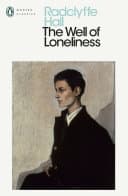
Radclyffe Hall (2015)
Genre
Historical Fiction / Romance
Reading Time
480 min
Key Themes
See below
Sign in to track this book
In a world that denies her existence, Stephen Gordon makes her own way through the early 20th century, seeking love and belonging as an 'invert' while battling societal condemnation and an unyielding heart.
Stephen Gordon is born to Sir Philip and Lady Anna Gordon, wealthy landowners at Morton, a large estate in Worcestershire. From birth, Stephen shows masculine traits. She prefers trousers and outdoor activities over dresses and traditional feminine pursuits. Sir Philip, a loving father, sees Stephen's unique nature and supports her individuality. He even names her Stephen, a traditionally male name. Lady Anna, however, finds it hard to accept her daughter's difference from social norms. She wants a conventionally feminine child. Stephen's childhood is marked by a close bond with her father and a growing feeling of being alone from her mother and other girls. She feels a difference she cannot explain.
As Stephen becomes an adolescent, she feels her first strong emotional connections, directed towards women. She falls in love with Collins, a young maid at Morton, and later with Puddle, the governess. These crushes are passionate for Stephen, though not returned or understood by the women. Sir Philip watches his daughter's affections with quiet understanding and compassion. He sees the nature of her desires without naming them. Lady Anna, however, becomes more worried by Stephen's 'unnatural' tendencies and her lack of interest in male suitors. The gap between mother and daughter grows. Stephen feels more alone in her own home, despite her father's quiet support.
A great tragedy happens when Sir Philip Gordon dies suddenly from a riding accident. His death leaves Stephen completely without her main source of understanding and protection. With Sir Philip gone, Lady Anna's long-held worries and disapproval of Stephen's 'inversion' come out. Unable to stand Stephen's presence and fearing the social judgment her daughter's nature might bring on the family, Lady Anna sends Stephen away from Morton. Stephen goes to live in London with her former governess, Miss Puddle. This feels like an exile from the only home she has known and a deep rejection from her mother. This event is a turning point, forcing Stephen to face her identity in the wider world.
In London, Stephen finds a new kind of freedom and intellectual challenge. Living with Miss Puddle, she writes, a passion she had since childhood. She publishes her first novel, which is successful and gets good reviews. This makes her a serious author. Writing gives Stephen purpose and a way to express her unique view on life. While her work life does well, her personal life is still marked by loneliness and a search for connection. She watches the social world around her, often feeling like an outsider, but finds some acceptance in intellectual groups where her unconventional nature is more easily tolerated.
Seeking a more open place, Stephen moves to Paris, a city known for its bohemian culture and tolerance for unconventional ways of life. There, she meets a community of artists, writers, and other 'inverts' – a term used at the time for homosexual people. For the first time, Stephen feels she belongs among people who share similar experiences and understandings of identity. She goes to salons and cafes, having deep conversations and making friends with those who accept her without judgment. This time in Paris changes her. It allows Stephen to fully embrace her identity and find some peace and community she had long wanted.
In Paris, Stephen meets Angela Crossby, a beautiful married woman. Stephen falls deeply in love with Angela, believing she has found the deep, mutual connection she has always wanted. Their affair is intense for Stephen. However, Angela, despite her feelings for Stephen, cannot commit to a relationship that goes against social expectations. She gives in to the pressures of convention and leaves Stephen to go back to her husband. This devastates Stephen. This heartbreak makes Stephen feel more like an 'unnatural' outsider, meant for loneliness and pain in love. It deeply affects her emotional state.
When World War I starts, Stephen, wanting to serve, joins an ambulance unit on the Western Front. The harsh realities of war show her great suffering but also strong human connection. It is then that she meets Valérie Martin, a young and initially fragile Frenchwoman. Stephen, through her strength and care, forms a deep bond with Valérie. Valérie, orphaned and traumatized by the war, looks to Stephen for comfort and safety. Their relationship becomes a deep and loving partnership, giving Stephen purpose and belonging she had not found before.
After the war, Stephen and Valérie return to Paris and make a life together. They create a comfortable and loving home, a safe place where they can be themselves away from the judging eyes of society. Stephen continues her successful writing career, and Valérie finds joy in their shared life. Their relationship has deep affection, mutual respect, and a quiet home life. They deal with social prejudice and the lingering trauma of war, finding strength and comfort in each other. This time is a rare stretch of happiness and stability for Stephen. She finally experiences the lasting love and companionship she had always wanted.
The peaceful life of Stephen and Valérie is broken by Martin Hallam, a charming and conventionally attractive young man. Martin, a friend of Stephen's, becomes drawn to Valérie. He falls in love with her, seeing her as a woman he could marry and have a traditional family with. Valérie, despite loving Stephen, is also attracted to the idea of social acceptance and the possibility of a 'normal' life that Martin represents. His presence creates tension in Stephen and Valérie's relationship, forcing them to face the outside pressures and inner desires that challenge their non-traditional bond.
Stephen sees Valérie's growing attraction to Martin and her desire for a life society calls 'normal.' Convinced that her own 'inversion' will always condemn Valérie to an excluded existence and deny her the happiness she deserves, Stephen makes the ultimate sacrifice. In a selfless act, she arranges her own departure, pushing Valérie towards Martin. Stephen believes that by removing herself, she gives Valérie a chance at a conventional, unburdened life. This decision is agonizing for Stephen. She is left alone, sacrificing her own happiness for the perceived well-being of the woman she loves. This reinforces her lifelong feeling of being alone.
After Valérie leaves with Martin, Stephen is left in despair and loneliness. She understands that her sacrifice, meant to free Valérie, has condemned her to a solitary life. In the novel's ending, Stephen makes a desperate plea. She addresses God and society, not for herself, but for all 'inverts' like her. She asks for understanding, tolerance, and the right to exist and love without persecution or the need for self-sacrifice. Her cry comes from deep loneliness, a demand for a world where she and others like her might not be condemned to solitary lives.
The Protagonist
Stephen moves from a confused and isolated childhood to a period of finding community and love in Paris, ultimately culminating in a selfless sacrifice for the woman she loves, and a powerful plea for understanding.
The Supporting
Sir Philip's arc is limited to his life at Morton, where he provides quiet support to Stephen before his untimely death, which profoundly impacts Stephen's future.
The Antagonist/Supporting
Lady Anna remains largely static in her disapproval of Stephen, her character serving as a representation of societal judgment.
The Supporting
Miss Puddle remains a steadfast, supportive figure in Stephen's life, primarily providing a domestic anchor and companionship.
The Supporting
Angela briefly provides Stephen with the illusion of reciprocated love before her departure reinforces Stephen's sense of being 'unnatural' and unlovable in a conventional sense.
The Supporting
Valérie moves from a traumatized war victim to finding love and stability with Stephen, ultimately choosing a conventional path due to societal pressures and Stephen's selfless act.
The Supporting
Martin's arrival and love for Valérie serve as the catalyst for the novel's tragic climax, forcing Stephen to confront the limitations imposed by society on her relationship.
The Mentioned
Jamie's role is limited to Stephen's childhood, providing a brief but significant example of early acceptance.
The novel shows Stephen's lifelong journey to understand and accept her 'inversion.' From her childhood confusion and feeling 'different' at Morton, through her search for belonging in London and Paris, to her eventual self-identification and plea for others like her, Stephen struggles with who she is in a world that denies her existence. Her struggle is not just about sexual orientation but about embracing an identity that goes against strict gender norms. This often leads to deep loneliness as she tries to fit her inner self with social expectations. Her writing is also a way she expresses herself and forms her identity.
“For she was an outcast, a pariah, a thing unclean; she was an invert. And she knew it, knew it in every fibre of her being.”
Prejudice against 'inverts' is a main theme in the novel. Stephen is rejected by her mother, left by Angela, and ultimately gives up her love for Valérie because of strong social pressure. She fears condemning Valérie to a life of exclusion. The novel shows the psychological cost of living in a society that calls one's nature 'unnatural' or immoral. It criticizes the lack of understanding and the cruelty of judgment faced by people whose identities fall outside of straight expectations. It shows the loneliness and suffering this discrimination causes.
“And it was as though Stephen had been born with a cross to carry, a cross that was not of her making, and which she must bear through life to the very end.”
The novel explores different kinds of love, from Stephen's passionate feelings for Angela and Valérie, to her father's quiet understanding. It looks at selfless love through Stephen's sacrifice for Valérie. Believing her identity will only bring Valérie suffering and deny her a 'normal' life, Stephen makes herself leave. This shows a deep, though sad, form of love. This sacrifice makes one wonder if true love sometimes requires personal suffering for the beloved's perceived happiness, especially when limited by social prejudice.
“Give us also the right to our existence!”
From birth, Stephen's physical and psychological traits go against usual gender categories. She has masculine features and prefers male clothes and activities. Her struggle is not just about her sexual orientation but also her gender non-conformity in a society with strict gender roles. The novel shows Stephen as an androgynous figure. This shows society's discomfort with ambiguity and difference, forcing Stephen to always be an outsider.
“She was an invert – she was a man born in a woman's body.”
Loneliness is present throughout Stephen's life. From her childhood at Morton, feeling different from her mother and peers, to her repeated heartbreaks and ultimate self-sacrifice, Stephen feels deep isolation. Even when she finds community in Paris or love with Valérie, the fear of social judgment and of being 'unnatural' often leaves her feeling alone. Her final plea comes from this deep loneliness, a cry for a world where she and others like her might not be condemned to solitary lives.
“And Stephen knew that she must go, because her love was too great to hold Valérie in a world that would always condemn them.”
A term used to define and pathologize homosexual individuals.
The term 'invert' is a crucial plot device and thematic anchor. It is used throughout the novel as a clinical, yet deeply stigmatizing, label for Stephen's sexual and gender identity. This term, prevalent in early 20th-century sexology, frames Stephen's existence as a deviation or medical condition rather than a natural variation. Its repeated use highlights the societal attempt to categorize and control non-normative identities, contributing directly to Stephen's internalized shame, her mother's rejection, and the overall tragic trajectory of her relationships. The novel itself is a plea against the dehumanizing implications of such labels.
Symbol of Stephen's childhood, privilege, and eventual exile.
Morton, the grand family estate, functions as a powerful symbol. In Stephen's childhood, it represents a sheltered, privileged world where her father's love provides a degree of acceptance. It is a place of innocence and early self-discovery. However, after Sir Philip's death, Morton transforms into a symbol of her mother's disapproval and societal constraint, ultimately becoming the site of her effective banishment. Her longing for Morton throughout the book symbolizes her yearning for an idealized past and a lost sense of belonging and acceptance that she never fully regains.
Visual representation of her gender non-conformity and identity.
Stephen's consistent preference for masculine clothing (breeches, tailored suits) and her physically masculine features (strong build, deep voice) are not merely descriptive details but crucial plot devices. They serve as a constant visual manifestation of her 'inversion' and gender non-conformity, instantly setting her apart from other women in the narrative. This visual difference is often the first thing noticed about her, triggering societal judgment and her own self-consciousness. It's a direct challenge to the gender norms of the era and underscores her internal identity in an outward, undeniable way.
A means of self-expression, financial independence, and a search for understanding.
Stephen's career as a successful author is a significant plot device. It provides her with financial independence, allowing her to live an unconventional life in London and Paris, free from direct reliance on family. More importantly, it serves as her primary means of self-expression and intellectual engagement. Through her writing, Stephen attempts to articulate her experiences and perspectives, implicitly seeking to bridge the gap between her inner world and a misunderstanding society. Her literary success stands in stark contrast to her personal struggles, highlighting the societal acceptance of her intellect but not her identity.
“For she was a rebel, and could not be broken. She was a woman, and therefore she must suffer.”
— Describing Stephen Gordon's inherent nature and the societal expectations placed upon her.
“And so, in the end, she was thrown back on herself, that most terrible of all experiences.”
— Reflecting on Stephen's isolation and the consequences of her unique identity.
“Give us also the right to our existence!”
— Stephen's impassioned plea for recognition and acceptance of 'inverts'.
“God, make me a boy!”
— Stephen's desperate childhood prayer, revealing her early feelings of gender dysphoria.
“She was an invert, and she knew it. She was an invert, and she was damned.”
— Stephen's internal struggle with her identity and the societal condemnation of it.
“Love was not made for such as she.”
— A recurring sentiment expressing the belief that Stephen's love is unnatural or forbidden.
“But she was not a man, nor was she a woman, and so she must walk alone.”
— Highlighting Stephen's feeling of being outside conventional gender binaries and its resulting solitude.
“For Stephen Gordon was one of those who are born with a difference.”
— An early description of Stephen, foreshadowing her lifelong struggles.
“She loved her with a love that was clean and strong, and as beautiful as the dawn.”
— Describing Stephen's pure and intense love for Mary, challenging the idea that it is unnatural.
“It was a book that she had lived, not written.”
— A meta-commentary on the author's intention and the lived experience behind the novel.
“We are not evil, we are only unhappy.”
— A plea for understanding rather than condemnation for those who are 'different'.
“She was a pariah, and she knew it.”
— Stephen's acceptance of her outcast status in society.
“The greatest tragedy of life is not that men are monsters, but that they are indifferent.”
— A reflection on the pain caused by societal apathy towards those who are marginalized.
“She had given her all, and it was not enough.”
— Stephen's ultimate sacrifice and the feeling that her efforts for acceptance were futile.
Ready to see how well you understood this book? Take our interactive quiz with 10 questions.
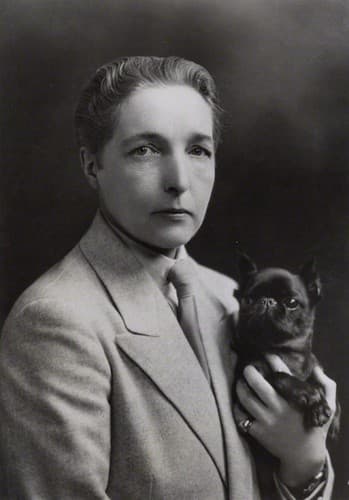
Marguerite Antonia Radclyffe Hall was an English poet and author, best known for the novel The Well of Loneliness, a groundbreaking work in lesbian literature. In adulthood, Hall often went by the name John, rather than Marguerite.







