“The past is not a story for us to read, but a story for us to enter.”
— Manning's reflection on the nature of history and engagement with primary sources.

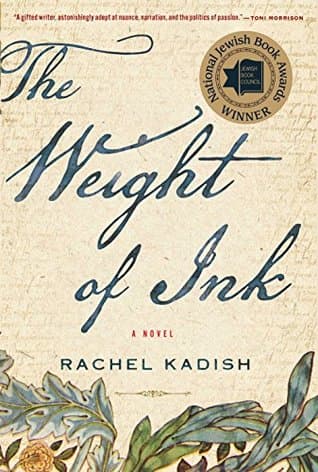
Rachel Kadish (2017)
Genre
Literary Fiction / Historical Fiction
Reading Time
15-20 hours
Key Themes
See below
Sign in to track this book
Centuries apart, a brilliant 17th-century Jewish woman scribe and a determined modern-day historian race against time and rivals to uncover the identity of a hidden intellectual amid plague, philosophy, and the enduring weight of ink.
The novel opens in contemporary London. The ailing historian Helen Watt is called by her former student, Seth, to his family's Rothschild estate. During renovations, a hidden compartment has been found, revealing 17th-century Jewish documents. Among these are philosophical treatises, letters, and cryptic marginalia signed with the Hebrew letter 'Aleph.' Helen immediately recognizes the historical importance of the find, especially the possibility that a female scribe might be behind the writing, a radical idea for the period. She enlists Aaron Levy, a bright American graduate student, to help decipher the complex texts and identify 'Aleph,' starting a race against other academic teams vying for the discovery.
The narrative shifts to London in 1660, introducing Ester Velasquez, a young Sephardic Jewish woman who has emigrated from Amsterdam with her family. Ester has an extraordinary intellect and a desire for knowledge, particularly in philosophy and religious texts, subjects traditionally forbidden to women. She finds a position as a scribe to Rabbi HaCoen, a blind but renowned scholar. This allows her access to his vast library and the intellectual discussions of the Jewish community, offering an outlet for her scholarly ambitions, even as she navigates strict societal expectations.
As Ester continues her work with Rabbi HaCoen, the Great Plague begins to sweep through London in 1665. The Jewish community, like the rest of the city, is devastated. Rabbi HaCoen, recognizing the danger and the importance of preserving his knowledge, decides to retreat to a secluded house outside the city, taking Ester with him. This forced isolation, while terrifying, creates an opportunity for Ester. Away from the community's eyes, she is given greater freedom to engage with the Rabbi's philosophical inquiries, transcribe his thoughts, and develop her own intellectual voice, all while death looms.
Back in the present, Helen and Aaron examine the Rothschild documents. They analyze the handwriting, paper, and content, quickly realizing the sophistication and depth of thought within. The marginalia signed 'Aleph' are particularly intriguing, revealing a distinct philosophical voice that often challenges or expands upon Rabbi HaCoen's teachings. Their research leads them to historical records of Rabbi HaCoen and his circle, including mentions of a female scribe. Helen, despite her failing health, is invigorated by the chase, seeing in 'Aleph' a kindred spirit and an example of the hidden intellectual lives of women throughout history. Aaron, initially skeptical of the 'woman scribe' theory, becomes increasingly convinced by the evidence.
During their plague-induced isolation, Ester's intellectual abilities grow. She not only transcribes Rabbi HaCoen's work but actively participates in his philosophical debates, often pushing the boundaries of his thought. However, this intellectual liberation has a cost. She struggles with the tension between her scholarly pursuits and the expectations of marriage and domesticity. Her growing intellect also leads her to question certain religious dogmas, particularly the role of women in religious life. This internal conflict is made worse by her growing affection for the Rabbi's former student, the charismatic and rebellious John Milton, whose own radical ideas further challenge her worldview.
After the plague subsides, the Great Fire of London erupts in 1666, threatening to destroy everything. Ester and Rabbi HaCoen are forced to flee, carrying as many of their manuscripts as possible. The chaos and destruction of the fire intensify Ester's commitment to preserving knowledge. Afterward, the Jewish community faces pressure to rebuild and adhere to strict religious norms. Ester realizes that her intellectual work, especially her more unorthodox writings, might be seen as scandalous and dangerous. She must decide whether to openly claim authorship of her 'Aleph' writings or to continue to conceal her identity for survival and the preservation of her work.
In the present, Helen's health continues to worsen, making her even more determined to solve the mystery of 'Aleph' before time runs out. The rival team of historians, led by Dr. Baum, is also closing in on the scribe's identity, adding pressure to Helen and Aaron's research. They discover more letters and fragments, some hinting at a clandestine romance and intellectual partnership between Ester and John Milton. The stakes are raised as Helen pushes herself to her physical limits, driven by a deep empathy for 'Aleph' and a desire to ensure her story is accurately told and recognized by history, rather than being overshadowed or misinterpreted by others.
Faced with societal limits and the threat of exposure, Ester makes a strategic decision regarding her writings. She decides to integrate her own philosophical musings and personal reflections into Rabbi HaCoen's treatises, subtly weaving her 'Aleph' identity into the larger body of his work. This allows her ideas to survive and circulate, though under a disguised authorship. She also composes more personal letters and reflections, some addressed to John Milton, which she carefully hides, hoping they might one day be discovered by someone who understands their true meaning. This act shows her ingenuity and her commitment to her intellectual life, even if it means sacrificing public recognition.
Helen and Aaron, through painstaking research, cross-referencing, and a crucial discovery of a hidden cache of personal letters, finally piece together the complete narrative of Ester Velasquez. They confirm that 'Aleph' is indeed Ester, and they uncover the details of her intellectual partnership with Rabbi HaCoen, her clandestine relationship with John Milton, and the sacrifices she made to pursue her scholarly passions. The letters reveal her internal struggles, her brilliant mind, and her deep emotional life. The discovery is a triumphant moment for Helen, validating her initial instincts and bringing to light a remarkable woman previously lost to history.
As Helen's life draws to a close, she ensures that Ester Velasquez's story will be told. She meticulously prepares her findings, collaborating with Aaron to write a definitive account of 'Aleph' and her significance. The novel concludes with Helen reflecting on the interconnectedness of their lives, separated by centuries but united by intellectual curiosity and the struggle for recognition. Helen's work not only uncovers a forgotten female scholar but also provides a commentary on the enduring challenges faced by women in intellectual pursuits. Aaron, impacted by Helen's mentorship, carries forward her legacy of rigorous scholarship and empathy for the past.
The Protagonist
Helen embarks on one last, monumental project to identify 'Aleph,' finding renewed purpose and intellectual fulfillment as she brings a forgotten woman's story to light, ultimately accepting her own mortality with a sense of accomplishment.
The Protagonist
Ester navigates the treacherous waters of 17th-century expectations, evolving from a clandestine scribe to a profound philosopher who strategically hides her true identity to ensure her intellectual legacy endures, even at great personal cost.
The Supporting
Aaron matures from a somewhat arrogant student to a dedicated and compassionate scholar, deeply influenced by Helen and inspired by Ester's story, carrying forward the torch of historical discovery.
The Supporting
Rabbi HaCoen, despite his traditional views, slowly recognizes and values Ester's intellect, providing her with the unique opportunity to develop her scholarly voice, ultimately becoming an integral part of her hidden legacy.
The Supporting
John Milton acts as a catalyst for Ester's intellectual and emotional awakening, offering her a forbidden love and an alternative worldview that profoundly shapes her choices and writings.
The Supporting
Anna follows the expected path of marriage and family, providing a stark contrast to Ester's unconventional intellectual life, highlighting the societal pressures and differing paths available to women.
The Antagonist
Dr. Baum remains largely static, serving as a foil and driving force for Helen and Aaron's research, embodying the traditional academic gatekeepers they must overcome.
The Supporting
Seth initiates the discovery process by calling Helen, setting the entire narrative in motion and providing the initial access to the historical treasure.
This theme explores the intellectual and emotional struggles of women throughout history who sought knowledge and self-expression in societies that denied them these opportunities. Ester's clandestine work as 'Aleph' and her internal conflict between societal expectations and intellectual ambition portray this. Helen Watt, in the present, is driven by empathy for these 'hidden lives,' recognizing the importance of uncovering and validating their contributions, as seen in her pursuit of 'Aleph's' identity despite her failing health. The novel highlights how many brilliant women were forced to conceal their talents or attribute their work to men.
“What does a woman do with a mind like that, when the world says she has no right to it?”
Both Ester and Helen are driven by a thirst for knowledge and a pursuit of truth. Ester risks social ostracism and danger to engage with philosophical and religious texts, often pushing the boundaries of accepted thought. Her 'Aleph' writings show her intellectual courage. Similarly, Helen, despite her age and illness, dedicates her final energies to deciphering the past, driven by the academic desire to understand and accurately represent history. The novel emphasizes the human need to question, learn, and uncover hidden narratives, showing the power of intellectual curiosity across centuries, particularly during adversity, like the plague and the fire.
“To hide one's thoughts is a sin against the light.”
The novel weaves together two timelines, showing how the struggles and triumphs of the past resonate in the present. Helen's contemporary investigation directly uncovers Ester's 17th-century life, creating a connection between the two women. Helen often feels a kinship with Ester, understanding her challenges. The discovery of the documents is not just an academic exercise but a bridge across time, showing how historical events (like the plague and the fire) and individual choices continue to shape our understanding of identity, gender, and scholarship, illustrating that history is a living narrative.
“The past is not a foreign country; it is merely a room we have not yet entered.”
The novel explores the sacrifices individuals make for their passions and the legacy they leave behind. Ester sacrifices a conventional life, potential public recognition, and personal safety to pursue her intellectual calling. Her decision to embed her 'Aleph' writings within Rabbi HaCoen's work is a strategic sacrifice of individual credit for the sake of preserving her ideas. Helen, in turn, sacrifices comfort and battles her declining health to ensure Ester's legacy is brought to light, effectively making Ester's story her own final legacy. The novel suggests that true legacy is not always found in overt recognition but in the lasting impact of one's work and ideas, often passed down through generations or discovered centuries later.
“Perhaps to be remembered is not the greatest good. Perhaps it is enough to have lived, and to have left one's mark, however faint.”
This theme examines the interplay between intellectual pursuits and emotional connections, particularly romantic love. Ester's relationship with John Milton is not merely physical but deeply intellectual, fueled by shared ideas and philosophical debates. This connection offers her a different kind of liberation but also presents a conflict with her religious and societal obligations. The novel questions whether a woman can truly reconcile a life of the heart with a life of the mind in a restrictive society. Both Ester and, to a lesser extent, Helen grapple with the sacrifices and compromises that love demands when one is driven by intellectual passion, highlighting the challenges of finding a partner who understands and values one's intellectual self.
“To love a mind like yours is to love a wild thing, always seeking its own path.”
Alternating chapters between 17th-century London and contemporary London.
The novel employs a dual narrative structure, alternating between Ester Velasquez's story in 17th-century London and Helen Watt's investigation in the present day. This allows for a continuous unfolding of both the historical context and the contemporary discovery process. The juxtaposition creates dramatic tension, as readers gain insights into Ester's life that Helen is still trying to uncover, building suspense and a sense of profound interconnectedness between the past and present. It also effectively highlights the overarching themes of women's intellectual struggles across centuries.
A cryptic Hebrew letter used as a pseudonym by Ester Velasquez.
The 'Aleph' signature functions as the central mystery and a powerful symbol. It is the initial clue that piques Helen's interest, suggesting a hidden author. For Ester, 'Aleph' is a clandestine identity, a means to express her radical ideas and philosophical insights without fear of exposure. It represents her secret intellectual life, her defiance, and her profound desire for self-expression. The deciphering of 'Aleph's' identity is the driving force of Helen's investigation, symbolizing the uncovering of forgotten voices in history.
A cache of newly discovered 17th-century Jewish manuscripts.
The Rothschild documents serve as the inciting incident and the physical link between the two timelines. This collection of philosophical treatises, letters, and marginalia is the tangible evidence of Ester's existence and intellectual work. They are the puzzle pieces that Helen and Aaron must meticulously examine and interpret. The documents themselves become a character, holding secrets and revealing truths, driving the plot forward and providing the concrete historical evidence necessary to validate Ester's story and challenge traditional historical narratives.
References to real historical figures, texts, and philosophical concepts.
The novel heavily uses intertextuality and allusion, referencing real historical figures like John Milton, Spinoza, and various Jewish philosophers, as well as actual philosophical and religious texts. This device grounds the fictional narrative in historical reality, lending it authenticity and intellectual depth. It allows the author to explore complex philosophical ideas through the characters' debates and writings, enriching the themes of knowledge, truth, and intellectual freedom. It also appeals to readers familiar with these historical and philosophical contexts, drawing them deeper into the world of the novel.
“The past is not a story for us to read, but a story for us to enter.”
— Manning's reflection on the nature of history and engagement with primary sources.
“To be a woman writing philosophy in the seventeenth century was to be a shadow in a room full of candles.”
— Helen's contemplation of Ester's challenges and the broader historical context for female intellectuals.
“Every secret kept is a wound that festers.”
— A recurring theme reflecting on the consequences of hidden truths for various characters.
“The greatest truths are often found in the smallest, most overlooked details.”
— Manning's meticulous approach to academic research, emphasizing close reading and attention to detail.
“Love, like scholarship, demands patience and a willingness to be wrong.”
— Helen's personal reflections on her relationships and her academic pursuits.
“A book is a conversation across centuries.”
— The central premise of the novel, connecting modern scholars with historical figures through texts.
“Perhaps the truest freedom is to choose what you will be bound by.”
— Ester's internal struggle with her identity and societal expectations.
“The mind, like the body, requires discipline to achieve its full potential.”
— Ester's rigorous self-education and commitment to intellectual pursuit.
“What is history but the stories we choose to tell, and the stories we choose to forget?”
— Manning's critical view of historical narratives and the biases inherent in them.
“Sometimes the greatest act of love is to let go of what you think you know.”
— Helen's evolving understanding of her relationships and the complexities of human connection.
“The silence of history is often more eloquent than its pronouncements.”
— Manning's observation on the gaps and untold stories within historical records.
“To truly see someone, you must be willing to see beyond your own expectations.”
— Helen's journey to understand Ester and the challenges of projecting modern sensibilities onto historical figures.
“The act of creation is always an act of faith.”
— Ester's unwavering commitment to her philosophical work despite societal barriers.
“We are all, in our own way, trying to make sense of the past to build a future.”
— A unifying theme connecting the modern scholars with the historical figures.
Ready to see how well you understood this book? Take our interactive quiz with 10 questions.







