“There are no gods left in this world, not truly. Only men who wish they were.”
— Early reflection on the state of the world's deities.

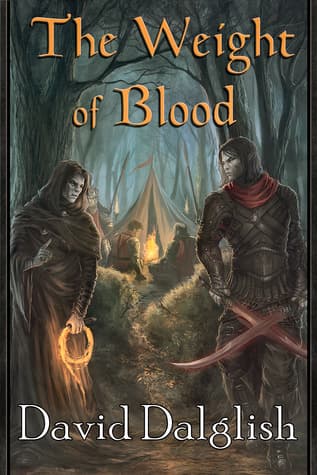
David Dalglish (2010)
Genre
Fantasy / Science Fiction
Reading Time
226 min
Key Themes
See below
Sign in to track this book
Bound by a prophet's dark will and an impossible love, a half-orc warrior must choose between his brother, his adopted human allies, and the elven woman who awakened his humanity, knowing any path leads to an unbearable sacrifice amidst a war of races.
Harruq and Qurrah Tun are half-blood siblings, ostracized and struggling to survive in the city of Veldaren. Harruq, half-orc, battles an inner rage and the prejudice of others, while Qurrah, half-elf, possesses a sharp intellect. Their desperate existence leads them to the enigmatic death prophet, Velixar. Velixar, a powerful necromancer, offers them a path to power and belonging, an escape from their poor beginnings. Seeing no other viable option, and recognizing Velixar's immense power, the siblings pledge their lives and loyalty to him, becoming his first and most devoted disciples. This decision changes their destinies, setting them on a path of undeath and war.
Under Velixar's guidance, Harruq and Qurrah begin their transformation, learning to command the undead and hone their martial skills. Harruq, in particular, shows a raw talent for combat. During this period, he meets Aurelia, a skilled elven warrior. Aurelia, initially his captor or a chance encounter that saved his life, becomes his unlikely trainer and confidante. Despite the deep-seated animosity between orcs and elves, and Harruq's own orcish heritage, a friendship grows between them. Aurelia introduces Harruq to a world beyond Velixar's grim influence, challenging his preconceived notions and offering a glimpse of peace and understanding amidst the brewing racial conflicts.
Velixar's ultimate goal is to plunge the world into a war that will reshape it under his command. He systematically gathers power, raising a large army of undead warriors. Harruq and Qurrah, now his most trusted lieutenants, are key to this effort. They lead raids, convert the fallen, and organize the legions, becoming formidable figures. Qurrah, with her strategic mind, is invaluable in planning, while Harruq's combat prowess inspires fear. The scale of Velixar's ambition becomes clear as the undead host grows, threatening to engulf the living races in a tide of death.
The world outside Velixar's domain descends into chaos. Ancient racial hatreds are rekindled, fueled by fear and misinformation. Humans, elves, and orcs, already wary of each other, find themselves on the brink of open warfare. Velixar manipulates these tensions, his undead army acting as a catalyst, pushing the living races into conflict. The fragile peace that once existed shatters, replaced by suspicion and aggression. Harruq witnesses this escalating conflict, torn between his loyalty to Velixar and his growing understanding, gleaned from Aurelia, that the traditional racial divides are often arbitrary and destructive.
In a surprising strategic move, Velixar orders Harruq and Qurrah to align their undead forces with the humans. Their mission: to fight against the elves. This command places Harruq in an agonizing position. The elves are Aurelia's people, and this alliance forces him to consider his friend as a direct enemy. Qurrah, ever pragmatic, prepares to execute Velixar's will without hesitation, seeing it as a necessary step towards their ultimate victory. Harruq, however, is deeply conflicted. His loyalty to Velixar is absolute, but the thought of harming Aurelia or her kin is unbearable, forcing him to confront the moral implications of his service.
Harruq's internal conflict intensifies as Velixar's command sinks in. He grapples with the 'weight of blood' – the violence of his orcish heritage, the blood he's shed for Velixar, and the potential blood he'll shed against Aurelia. His bond with Aurelia has opened his eyes to a different path, one where compassion and understanding can transcend racial divides. This new perspective clashes with his sworn allegiance to the death prophet. He realizes that a choice must be made, a choice that will inevitably lead to the betrayal of one he cares for, be it his master or his friend.
Qurrah, astute and fiercely loyal to Velixar, observes Harruq's growing distress and internal conflict. She senses his wavering commitment to their master's cause, particularly concerning the elves. She confronts him, reminding him of their shared past, their oath to Velixar, and the power they have gained. Qurrah warns Harruq of the severe repercussions of betraying Velixar, emphasizing that their lives and their existence are tied to the death prophet. Her words are a stark reminder of the harsh realities of their situation and the absolute nature of their allegiance, further isolating Harruq in his moral dilemma.
The war erupts, and Harruq, leading Velixar's undead alongside human forces, finds himself on the battlefield. Inevitably, he comes face-to-face with Aurelia, who is fighting valiantly with her elven kin. The moment of truth arrives. Harruq's heart is torn between his duty and his love. The clash is not just between armies, but within Harruq himself. He must choose: to follow Velixar's command and fight Aurelia, or to defy his master, protect his friend, and risk everything. This confrontation is the climax of his internal struggle, forcing him to make a definitive stand.
Harruq chooses to protect Aurelia, turning against Velixar's command and betraying his master and his brother. This act has immediate and severe repercussions. The alliance with the humans shatters, and Harruq becomes an enemy to both Velixar and his former allies. Qurrah is devastated by his betrayal, seeing it as a personal affront and a threat to their shared destiny. The decision sets Harruq on a dangerous new path, now hunted by Velixar and his vast undead army, but with Aurelia and a fragile hope for a different future by his side. The cost of his choice is immense, leading to further conflict and loss.
Having chosen love over loyalty, Harruq and Aurelia are now fugitives, fighting for their lives against the relentless pursuit of Velixar and his undead legions. Velixar, enraged by Harruq's betrayal, turns his full might against them. Harruq must reconcile his orcish nature with his desire for peace, using his formidable combat skills not for conquest, but for protection. Their struggle becomes a desperate fight for survival, not just against Velixar, but against the forces of hatred and division that Velixar embodies. The path ahead is dangerous, but it is a path Harruq chose, and he is determined to see it through.
The Protagonist
Harruq transforms from a desperate, outcast follower into a conflicted leader, ultimately choosing love and personal conviction over blind loyalty, embracing a more nuanced understanding of his identity.
The Supporting/Antagonist
Qurrah remains steadfast in her loyalty to Velixar, becoming an increasingly ruthless and powerful general, ultimately becoming estranged from Harruq due to his betrayal.
The Antagonist
Velixar's power and influence grow steadily, establishing him as the primary threat, and he remains unyielding in his pursuit of his world-domination goals.
The Supporting
Aurelia remains a steadfast and principled character, providing a moral compass for Harruq and becoming his partner in fighting for a better future.
The Mentioned/Force
The undead army grows in power and numbers, becoming a dominant force in the world, until its leadership is fractured by Harruq's betrayal.
The Mentioned/Force
The human faction is drawn into Velixar's war, initially as allies to his undead, then becoming entangled in the broader conflict.
The Mentioned/Force
The elves are forced into a defensive war, fighting for their survival against Velixar's forces and other living races.
This theme explores the internal and external struggles associated with one's ancestry and the expectations or prejudices that come with it. Harruq, as a half-orc, constantly battles the 'killing nature' attributed to his orcish blood, as well as the societal prejudice he faces. His struggle to reconcile his heritage with his developing morality, particularly in scenes with Aurelia, is central. The theme questions whether one's bloodline dictates their destiny or if personal choice can transcend inherited traits, as shown when Harruq chooses compassion over his ingrained savagery during the battlefield confrontation.
“To protect her, Harruq must turn against his brother and fight the killing nature of his orcish heritage.”
The core conflict of the novel revolves around the agonizing choice Harruq must make between his sworn loyalty to Velixar and his growing love for Aurelia, which represents a higher moral calling. His initial allegiance to Velixar is born of desperation and a desire for belonging, but his friendship with Aurelia introduces a different set of values: compassion, understanding, and peace. The climax of his internal struggle occurs when Velixar orders him to fight the elves, forcing him to weigh his duty against his personal convictions and the well-being of someone he loves, ultimately choosing love over blind allegiance.
“To side with one means to turn on another. No matter Harruq’s decision, someone he loves will die.”
Harruq and Qurrah's early lives are marked by their status as half-bloods, making them outcasts seeking a place to belong. Velixar offers them this sense of purpose and acceptance, albeit through dark means. Harruq's journey is a quest to define his own identity, separate from the labels of 'half-orc' or 'Velixar's disciple.' His relationship with Aurelia helps him forge a new identity based on his own moral compass, rather than inherited traits or forced allegiances. This theme explores the struggle to find one's true self amidst societal pressures and the allure of power.
“When half-bloods Harruq and Qurrah Tun pledged their lives to the death prophet Velixar, they sought only escape from their squalid beginnings.”
Velixar embodies the corrupting influence of unchecked power, using necromancy and manipulation to achieve his goals. The story also subtly explores how power affects Harruq and Qurrah, as they rise through Velixar's ranks. While Harruq eventually resists the full corruption, Qurrah fully embraces it, becoming a ruthless general. The narrative suggests that power, especially when gained through morally ambiguous means, can distort one's values and lead to destructive ends, as seen in Velixar's ambition to dominate the world through an army of the dead.
“Instead, they become his greatest disciples, charged with leading his army of undead.”
Harruq's central conflict between loyalty and love.
This is the primary driving force of the narrative, establishing Harruq's internal struggle. It creates tension and forces the protagonist to make an impossible choice, where any decision leads to significant loss. Harruq's dilemma between his oath to Velixar and his affection for Aurelia is the crux of the story, defining his character arc and propelling the plot towards its dramatic conclusion. It allows for exploration of themes like loyalty, morality, and identity.
The deep-seated animosity between different races used to fuel the war.
Racial prejudice serves as a foundational element, explaining Harruq's outcast status and Velixar's ability to manipulate the world into war. The inherent distrust between humans, elves, and orcs is exploited by Velixar to create alliances and divide his enemies. This device highlights the destructive nature of bigotry and serves as a backdrop against which Harruq's cross-racial friendship with Aurelia shines as a beacon of hope and understanding.
Velixar's influence on Harruq and Qurrah.
Velixar acts as a mentor figure to Harruq and Qurrah, offering them power and purpose. This device is twisted, however, as Velixar's mentorship leads them down a dark path, using their desperation for his own nefarious ends. It establishes the characters' initial motivations and their formidable abilities, while also setting up the eventual conflict when Harruq's morality diverges from his mentor's teachings. It underscores the theme of corrupting power.
Harruq's friendship and love for the elf Aurelia.
The relationship between Harruq, a half-orc serving a necromancer, and Aurelia, an elf, is inherently forbidden due to deep-seated racial animosity. This device serves as the catalyst for Harruq's moral awakening and his eventual betrayal of Velixar. It provides a contrast to the grim world of undeath and war, offering a glimpse of peace and understanding that ultimately challenges Harruq's loyalties and drives the central conflict of the story.
“There are no gods left in this world, not truly. Only men who wish they were.”
— Early reflection on the state of the world's deities.
“The greatest lies are always built on a foundation of truth.”
— A character discussing the nature of deception and manipulation.
“Hope is a dangerous thing. It can give you strength, but it can also make you blind.”
— A warning about the double-edged nature of hope.
“Sometimes, the only way to save what you love is to destroy a piece of yourself.”
— A character making a difficult sacrifice.
“The past is a chain, and we are all bound by its links.”
— Reflecting on the inescapable influence of history.
“Justice is a luxury few can afford, and even fewer truly receive.”
— A cynical view on the availability of true justice.
“Fear is a weapon. Wield it well, and your enemies will break before they even see your sword.”
— A lesson on psychological warfare and intimidation.
“Even monsters have hearts, though they may beat to a different rhythm.”
— Considering the humanity, or lack thereof, in antagonists.
“The world doesn't care about your intentions, only your actions.”
— A harsh reality check about consequences.
“Blood remembers, even when the mind forgets.”
— A recurring theme about inherited memory or instinct.
“Power corrupts, but absolute power... it simply reveals what was always there.”
— A twist on a famous adage about the nature of power.
“To truly know peace, you must first understand war.”
— A warrior's perspective on the path to tranquility.
“Every choice carves a new path, and leaves countless others untaken.”
— Reflecting on the weight and impact of decisions.
“The greatest prison is the one you build for yourself, brick by brick, with your own regrets.”
— An introspective moment about self-imposed limitations.
Ready to see how well you understood this book? Take our interactive quiz with 10 questions.







