“Ach, just because I'm not a lady doesn't mean I'm not a woman.”
— Tiffany Aching's self-assertion about her identity.

Terry Pratchett (1994)
Genre
Fantasy / Children's / Young Adult
Reading Time
600 min
Key Themes
See below
Sign in to track this book
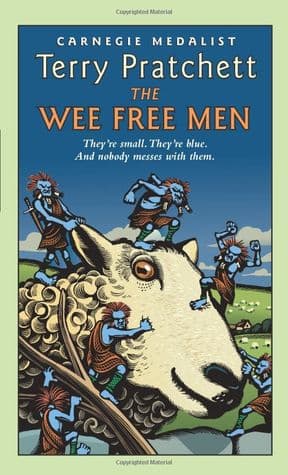
Armed with a frying pan and a strong will, young Tiffany Aching, helped by a clan of six-inch-high, sword-wielding blue men, must face Fairyland's nightmare to rescue her brother and save her world from the Elves' queen.
Ten-year-old Tiffany Aching, a practical and smart shepherdess on the Chalk, sees strange things, including a talking toad. The toad, once a lawyer, warns her that another world is colliding with hers and that monsters are returning because 'there's no one to stop them.' Tiffany, with her common sense and a frying pan, says she will stop them. She starts to notice other odd events, like a stream disappearing and a headless horseman arriving, showing that the line between her world and Fairyland is weakening and old threats are indeed coming back.
After the toad's warning, Tiffany is visited by the Nac Mac Feegle, also called the Wee Free Men or 'pictsies' – small, blue, tattooed, sword-wielding, sheep-stealing beings. They first try to steal her sheep but are impressed by her quick thinking and how she outsmarts them. Their kelda (queen), the current Rob Anybody's wife, died, and they see Tiffany's hidden magic, thinking her a possible new kelda. They promise loyalty to her, in their own wild way, sensing she is 'the one' who can help them with a coming threat.
During the night, while Tiffany watches her family, her baby brother, Wentworth (nicknamed Barclay), is kidnapped by the Queen of the Elves' agents. The Queen, wanting a child of the Chalk for unknown reasons, used the weakening world boundaries. This act makes Tiffany even more determined. With the Nac Mac Feegle now with her, and the talking toad giving reluctant advice, Tiffany knows she must go into Fairyland to rescue Barclay, facing the very monsters she was warned about.
Tiffany, with the Nac Mac Feegle and the toad, enters Fairyland through a magic gate. The realm is beautiful but scary, always changing and full of illusions. The Feegle, despite their bravery, are careful in this world, especially around the Queen. Tiffany uses her practical nature and common sense to navigate the confusing place, often seeing through the illusions that trap others. They meet their first real threats, like the dromes, creatures that turn dreams into nightmares, and the terrifying grimhounds, large black dogs with fiery eyes.
Inside Fairyland, Tiffany and the Nac Mac Feegle face the Queen's servants. They first meet the dromes, which try to trap them in pleasant but deadly dream worlds. Tiffany, with her grounded nature, is mostly safe from their illusions and wakes the Feegle. Later, grimhounds, scary ghost dogs, chase them. The Feegle fight bravely, but it is Tiffany's quick thinking and understanding of the creatures' weaknesses – their dislike of the normal and real – that lets them escape, proving her worth as their leader.
During their trip, Tiffany meets Miss Tick, a respected traveling witch who is also a 'chalk witch' like Tiffany's grandmother. Miss Tick gives Tiffany good advice and some magic tools, including a thimble, which is surprisingly useful for fighting the Queen's magic. She sees Tiffany's natural magic talent and her unique 'headology' – the common sense and practical wisdom needed for a witch. Miss Tick also tells more about the Queen's nature and Fairyland's dangers, preparing Tiffany for the final fight.
As they go deeper into Fairyland, Tiffany finds that her brother Barclay is not the Queen's only captive. The Queen has taken many children from different worlds, keeping them in a dream-like state, drawing power from their dreams. Tiffany is shocked by this and becomes even more set on defeating the Queen and freeing all the children. This discovery expands her mission from just saving her brother to freeing all the Queen's child-victims, solidifying her role as a protector.
The Nac Mac Feegle, led by Rob Anybody, launch a wild but effective attack on the Queen's castle. They are fearless and relentless, using their small size and strong fighting skills to battle the Queen's larger, more ghostly servants. Their sheer, stubborn courage and loyalty to Tiffany are clear as they create a distraction, letting Tiffany get into the main fortress. This battle shows the Feegle's unique bravery and their steady support for their chosen 'kelda'.
Tiffany finally confronts the Queen of the Elves in her throne room. The Queen is a being of great power and illusion, trying to tempt Tiffany with false promises and beautiful but dangerous dreams. Tiffany resists the Queen's magic, relying on her common sense, her knowledge of her own world, and the practical wisdom from her grandmother. She uses her frying pan, not as a weapon, but as a symbol of her real world, and eventually faces the Queen's deepest fear: being forgotten and replaced by the ordinary.
Tiffany defeats the Queen by not falling for her illusions and by reminding her of the power of ordinary, real life. She uses the thimble Miss Tick gave her, filling it with the 'truth' of the Chalk, which weakens the Queen's magic. By stating the reality of her world and the importance of family and common sense, Tiffany breaks the Queen's power. The Queen, unable to handle such grounded reality, is banished, and all the stolen children, including Barclay, are freed from their dream-like state.
With the Queen defeated and the children rescued, Tiffany and the Nac Mac Feegle return to the Chalk. Barclay is safely back with his family, unaware of his adventure. Tiffany, however, is changed. She has accepted her role as a witch and earned the Nac Mac Feegle's respect and loyalty. The boundaries between worlds become stable, and Tiffany understands her new job to protect her home. She is now a witch-in-training, ready for future challenges with her mix of common sense and growing magic.
The Protagonist
Tiffany transforms from a clever child into a budding witch who embraces her destiny as a protector of the Chalk, gaining confidence and the loyalty of the Nac Mac Feegle.
The Supporting
Rob Anybody learns to trust and respect Tiffany's unique leadership, transitioning from an unruly, independent leader to a loyal, if still rowdy, subject.
The Supporting
The Toad slowly becomes more invested in Tiffany's quest, moving from a self-serving informant to a slightly more committed, albeit still cynical, ally.
The Antagonist
The Queen remains static in her cruelty, ultimately defeated and banished by Tiffany's grounded reality, unable to comprehend the power of the mundane.
The Supporting
Miss Tick serves as a catalyst for Tiffany's development, affirming her potential and providing tools for her journey without directly intervening.
The Mentioned
Granny Aching's influence guides Tiffany's growth, even in her absence, solidifying her path as a 'Chalk witch'.
The Supporting
Barclay remains unchanged by the adventure, serving primarily as the motivation for Tiffany's heroism.
The Supporting
Daft Wullie remains consistent in his loyal, simple nature, providing steadfast support to Tiffany throughout her journey.
The novel shows the strength of practicality, grounded wisdom, and the ordinary over glamorous, but empty, fantasy. Tiffany's 'headology' and her strong connection to the real world of the Chalk are her most powerful tools against the Queen's illusions. Her frying pan, a symbol of home reality, works better than any magic sword against the Queen's magic, as it stands for the solid, undeniable truth the Queen cannot understand or control. This theme suggests that true power is not in complex magic, but in understanding and valuing everyday life.
“''There's a lot of things that are important in life,' said Granny Aching. 'And one of them is knowing what isn't important.'”
Tiffany's journey is a classic coming-of-age story. She starts as a smart, observant child and, through her trials, finds her identity as a witch and a leader. Her quest to rescue her brother makes her face her fears, rely on her own cleverness, and use her unique abilities. By the end, she has not only saved her brother but also found her place in the world, understanding her job to protect her home and people. This theme explores the move from childhood innocence to accepting adult responsibilities and self-discovery.
“'There's me,' said Tiffany. It wasn't a question.”
The book looks at good and evil not as clear forces, but as parts of understanding and viewpoint. The Queen of the Elves is not 'evil' in the usual way, but a being of pure, unfeeling glamour and self-interest, unable to feel empathy or understand reality. Her actions, though cruel, come from her nature. On the other hand, the Nac Mac Feegle, while mischievous and prone to theft and fighting, are very loyal and ultimately act for good. This theme suggests that true evil is when there is no connection and understanding, while even flawed beings can show goodness through loyalty and care.
“'She doesn't hate you,' said the toad. 'She doesn't hate anything. She just doesn't care.'”
Tiffany's strong connection to the Chalk, her family, and her community is a main theme. Her reason to rescue Barclay comes from her love for her family, and her understanding of her home's traditions and realities gives her strength against Fairyland's strange world. The Chalk represents stability, warmth, and real life, unlike the Queen's shifting, illusory realm. The story emphasizes that one's roots and sense of belonging provide a anchor against chaos and a source of inner power.
“'The Chalk,' she said. 'That's my home. And it's not a dream. It's real.'”
Stories, myths, and beliefs are important. The Queen of the Elves gets power from dreams and imagination, but Tiffany's grounded reality proves stronger. The Nac Mac Feegle's existence comes from a mix of myth and hard reality. The book suggests that while stories can create worlds, the most lasting power is in the shared, lived stories of everyday life and the beliefs that connect communities. Tiffany's ability to 'believe' in her own reality, even when facing strong magic, is key to her success.
“'You have to know what you believe,' said Miss Tick. 'It's the only thing that makes you a witch.'”
A mundane kitchen utensil that becomes a symbol of reality and a weapon against illusions.
Tiffany's frying pan is not a magical artifact, but a symbol of her grounded reality and common sense. She uses it not just as a physical weapon against the Queen's creatures, but as a practical tool that represents the mundane world, which the Queen cannot comprehend or control. Its ordinary nature makes it an extraordinary weapon in a world of illusion, highlighting the theme that true power can be found in the everyday and the real.
A small, ordinary sewing thimble imbued with the 'truth' of the Chalk.
Given to Tiffany by Miss Tick, the thimble is initially mundane but becomes a potent weapon when Tiffany fills it with the 'truth' of her home, the Chalk. It acts as a conduit for Tiffany's connection to reality and her understanding of the world. Against the Queen's illusions, the thimble, filled with the essence of ordinary life, becomes a powerful counter-spell, demonstrating that the small, real things hold immense power against grand, fabricated magic.
A clan of small, blue, sword-wielding 'pictsies' who serve as comic relief and fierce allies.
The Nac Mac Feegle serve multiple plot functions: they are the primary source of comic relief with their chaotic behavior and unique dialect; they are fierce, loyal warriors who provide physical protection for Tiffany; and they represent a connection to ancient, wild magic that is both dangerous and protective. Their role as Tiffany's 'bodyguards' and 'subjects' underscores her emerging leadership and their unwavering loyalty is crucial to her success against the Queen's forces.
The supernatural phenomenon causing the boundaries between Tiffany's world and Fairyland to weaken.
The 'colliding worlds' is the inciting incident that sets the entire plot in motion. It explains the appearance of magical creatures in Tiffany's world and the Queen's ability to abduct her brother. This device creates the urgency and stakes for Tiffany's quest, establishing that her world is under threat and she is the only one capable of bridging the gap and restoring balance. It provides the magical framework for the fantastical elements of the story.
“Ach, just because I'm not a lady doesn't mean I'm not a woman.”
— Tiffany Aching's self-assertion about her identity.
“The thing about people who try to take your mind is that they don't know what they're doing with it. They just want it. They don't want to think with it.”
— Rob Anybody explaining the nature of the Queen's magic.
“There's a lot of things you can't see with your eyes. You have to see them with your brain.”
— Granny Aching's wisdom about perception and understanding.
“It's not stealing if you give it back. It's borrowing.”
— Rob Anybody's justification for the Nac Mac Feegle's thieving habits.
“I'll be a witch. I'll be the best witch ever.”
— Tiffany's determination to embrace her destiny.
“She was a witch, and she was going to have to learn to be a witch, and the first thing she was going to have to learn was that witches don't just happen. They're made.”
— Tiffany's internal monologue about becoming a witch.
“The Nac Mac Feegle, also known as the Wee Free Men, the pictsies, the Chalk, and – occasionally – 'Och, for two minutes, just leave me alone, ye tiny blue bastards!'”
— The narrator's introduction to the Nac Mac Feegle.
“You can't be a witch without a hat. It's like being a king without a crown.”
— Miss Level's traditional view on the importance of witch attire.
“Sometimes it's not enough to be clever. You have to be smart.”
— Tiffany distinguishing between raw intelligence and practical wisdom.
“A good head for heights is useful. A good head for depths is even better.”
— A subtle piece of advice about understanding complexity.
“She knew that you could be a lady and still know how to make a cheese.”
— Tiffany's understanding that practicality and refinement are not mutually exclusive.
“It was impossible to be angry with the Nac Mac Feegle for very long, because they were so very, very small.”
— The narrator's observation about the Nac Mac Feegle's endearing qualities.
“You can't run away from who you are. All you can do is run around in circles.”
— A comment on the inevitability of self-discovery.
“If you're going to think, you may as well think big.”
— Tiffany's approach to facing challenges and her own potential.
Ready to see how well you understood this book? Take our interactive quiz with 10 questions.
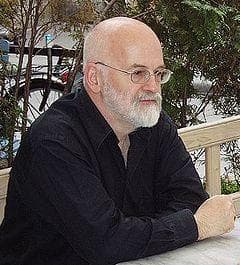
Sir Terence David John Pratchett was an English humorist, satirist, and author of fantasy novels, especially comical works. He is best known for his Discworld series of 41 novels.







