“The great misfortune of life is that one must, in a measure, live it out before one can understand it.”
— Reflecting on the challenges of youth and gaining wisdom through experience.

Anthony Trollope (1875)
Genre
Literary Fiction / Historical Fiction
Reading Time
1250 min
Key Themes
See below
Sign in to track this book
Trollope's novel exposes the greed and dishonesty of 19th-century English society through a fraudulent financier and the people caught in his schemes.
Lady Carbury, a writer and social climber, tries to publish her book, 'Criminal Queens,' and earn money from journalism. She relies on her connections, especially Mr. Broune, editor of 'The Morning Breakfast Table,' and her son, Sir Felix Carbury, a baronet deep in debt. Meanwhile, the financier, Augustus Melmotte, arrives in London society with his daughter, Marie Melmotte, and a reputation for great wealth, though his origins are unclear. His goal is to launch the Grand International Railway Company, connecting London with Mexico, and he quickly influences aristocrats and business leaders, promising them returns.
Sir Felix Carbury, driven by his financial situation and his mother's urging, courts Marie Melmotte, seeing her as his only way to solvency. Marie, though at first indifferent, is drawn to Felix's title and the idea of escaping her father. However, Felix's spending and lack of real affection are clear. Roger Carbury, Felix's cousin and an honest man, watches Melmotte's rise with alarm. Living a quiet life in Suffolk at Carbury Manor, Roger worries about the moral decay he sees in London and Melmotte's unprincipled dealings. He tries to warn his relatives, especially Lady Carbury and Hetta, about Melmotte, but his concerns are mostly ignored.
Augustus Melmotte's Grand International Railway Company of South Central Pacific and Mexican launches, attracting many prominent, if naive, investors and directors. Lord Nidderdale, a young nobleman, and Mr. Brehgert, a financier, are among those drawn to Melmotte. The project's scale and bold promises create excitement in the City, with shares rising fast. Melmotte hosts elaborate social events, including a dinner for the Emperor of China, to secure his position and make his enterprise seem legitimate. London society's elite attend, eager to share in Melmotte's success, despite the lack of real substance to his claims.
Hetta Carbury, Lady Carbury's daughter, faces a difficult choice. She is secretly in love with Paul Montague, a young engineer who recently returned from a failed business venture in America with Mr. Fisker and Mr. Croll. Paul, however, has a complicated past, having been involved with Mrs. Hurtle, an American woman, and is caught in Melmotte's railway scheme through Fisker. Roger Carbury, who loves Hetta, wants her to marry him, believing it would ensure her stability. Lady Carbury, however, sees Paul as an unsuitable match due to his lack of money and encourages Hetta to consider wealthier proposals, creating conflict for Hetta as she navigates her feelings and her family's wishes.
Marie Melmotte, desperate to escape her father and believing Felix will marry her, plans to elope with him to Liverpool and sail to America. She steals a large sum of money from her father for their journey. However, Felix, always self-serving, takes Marie's money, gets drunk, gambles, and abandons her at the train station. She is found and returned to her furious father. This betrayal solidifies Felix's reputation and devastates Marie. Melmotte, enraged by the theft and public scandal, tightens his control over Marie, but the incident also shows the fragility of his own financial dealings and his daughter's precarious situation.
As whispers grow about his dubious financial practices, Augustus Melmotte decides to run for Parliament in Westminster, believing a political position will give him immunity and legitimacy. He spends vast sums on his campaign, using unscrupulous tactics and his perceived wealth. Behind the scenes, his financial empire is failing. Share prices for the Grand International Railway begin to drop, and creditors grow restless. Rumors circulate about his past in America and his true financial standing. Despite these troubles, Melmotte maintains an outward show of confidence and manipulates those around him, trying to win a political victory he hopes will save him.
The Westminster election is chaotic, marked by bribery, intimidation, and corruption, all arranged by Melmotte and his agents. Despite the illegality, Melmotte is declared the winner, showing the power of his money and audacity. However, his triumph is short-lived. The full extent of his financial fraud is exposed. The Grand International Railway Company collapses, ruining many investors. Revelations about his past forgeries and manipulations come to light, destroying his reputation. The public, initially impressed, turns against him, and he faces imminent arrest. His wealth and respectability crumble, leaving him disgraced.
Mrs. Hurtle, Paul Montague's American fiancée, returns to London, demanding Paul honor his commitment. She is a strong, independent woman with a past scandal involving a duel, and she is ready to use all means to secure Paul. This puts Paul in a difficult position, as he loves Hetta Carbury. Mrs. Hurtle confronts Paul publicly and privately, even threatening violence. After much anguish and a near-duel between Paul and Felix (who interfered), Paul makes his choice clear: he will marry Hetta. Mrs. Hurtle, seeing her pursuit is useless, accepts his decision, showing a surprising dignity and finding her own path, free from Paul.
With his empire in ruins, his parliamentary seat jeopardized, and the law closing in, Augustus Melmotte's desperation peaks. He tries to flee the country but is stopped. Facing humiliation, financial ruin, and imprisonment, Melmotte sees no escape. In a final act, he takes his own life by poison. His death shocks London society, a tragic end to his rise and fall. The aftermath reveals his deceptions and the devastation he left, leading many caught in his web to reflect.
After Melmotte's death, the remaining characters' lives settle. Paul Montague and Hetta Carbury, free from Melmotte and Mrs. Hurtle, marry and find happiness, settling at Carbury Manor with Roger's blessing. Roger Carbury, having seen the moral chaos, finds contentment in his quiet, principled life. Sir Felix Carbury, having wasted his inheritance and reputation, continues his downward spiral, ending in destitution and disgrace, unable to recover from his vices. Lady Carbury, changed by her experiences, continues her writing with a more realistic outlook. Marie Melmotte, though inheriting a large sum, is left with her father's legacy and the trauma of her experiences. The novel ends with a sense of moral order restored, though at a great cost, showing the consequences of both integrity and corruption.
The Antagonist
Rises from obscurity to become a dominant figure in London society and finance, only to suffer a spectacular and complete downfall, culminating in suicide.
The Supporting
Begins as an ambitious but naive social climber, experiences humiliation and financial hardship, and ultimately gains a more realistic perspective on life and her literary aspirations.
The Supporting
Descends further into debt and moral depravity, culminating in complete ruin and destitution.
The Protagonist
Navigates complex romantic entanglements and family pressures to ultimately marry the man she loves, finding happiness based on integrity.
The Protagonist
Overcomes past entanglements and indecision to assert his true feelings and marry Hetta, finding personal and professional stability.
The Supporting
Remains steadfast in his principles, eventually seeing his values vindicated and finding contentment in his quiet life.
The Supporting
Attempts to escape her father's control through elopement, is betrayed, and ultimately inherits wealth but remains somewhat isolated by her past.
The Supporting
Pursues Paul Montague with fierce determination, but ultimately accepts his decision to marry Hetta, finding her own path to independence.
The Supporting
Maintains his integrity and professional standing, eventually offering a stable, if unromantic, future to Lady Carbury.
The Supporting
Leaves her rural home for London, is disillusioned by Felix's betrayal, and eventually returns to her village, wiser and ready to marry John Crumb.
The novel shows how the pursuit of wealth, especially through dishonest means, corrupts individuals and society. Melmotte's empire is built on fraud, and his rise demonstrates how easily people are swayed by the appearance of wealth. Characters like Sir Felix are ruined by their inability to manage money and their pursuit of easy riches, while even well-meaning characters like Lady Carbury are tempted by quick financial gain. This theme highlights the erosion of traditional values in favor of a new, morally ambiguous financial world, as seen in the excitement around Melmotte's railway scheme.
“Money was the only thing that was venerated. The way to make money was the only study. The giving of money was the only charity. The spending of money was the only pleasure.”
Trollope contrasts the decaying moral fabric of London society, shown by Melmotte and Felix, with the steadfast integrity of traditional English values, shown by Roger Carbury. Melmotte's dishonesty and Felix's spending represent a society losing its ethics, where titles and status are bought, and honor is disregarded. Roger Carbury, living a principled life in the countryside, acts as a moral guide, often lamenting 'the way we live now.' The novel explores the struggle between these two forces, suggesting that while corruption may rise quickly, integrity and goodness offer lasting peace and happiness, as seen in the resolution for Hetta and Paul.
“It was the way in which he lived now that made him so terrible to Roger Carbury.”
The novel explores the limited and often precarious roles of women in Victorian society, especially concerning marriage and financial independence. Lady Carbury's attempts to secure her children's futures, particularly through good marriages for Hetta and Marie, highlight their economic dependence. Marie Melmotte, despite her wealth, is a pawn in her father's social ambitions. Mrs. Hurtle, an independent American woman, challenges these conventions, showing a different, though difficult, path. Hetta's struggle to marry for love against her mother's mercenary advice further illustrates this theme, suggesting that love and integrity can lead to a more fulfilling life than purely economic considerations.
“A girl, if she has not a fortune, must make a marriage; and if she has one, she must make a better.”
A central theme is the deceptive nature of appearances and the difficulty of telling truth from falsehood. Melmotte creates an illusion of immense wealth and respectability, captivating London society despite his unclear origins and dubious practices. Characters are often judged by their outward show of prosperity rather than their actual character. The lavish parties, the grand railway scheme, and Lady Carbury's literary ambitions are all part of this facade. The novel carefully removes these layers of deceit, revealing the hollow reality beneath, ending in Melmotte's exposure and fall, a warning against superficial judgments.
“It was the great game of the day to make money, and to seem to have money.”
A fraudulent business venture that serves as the central symbol of speculative greed and moral corruption.
This fictional railway project is the primary vehicle for Augustus Melmotte's rise and fall. It represents the unchecked speculation and lack of ethical oversight in the financial world of the era. The company's promises of immense wealth lure in a wide array of investors, from naive aristocrats to ambitious businessmen, exposing their greed and gullibility. Its eventual collapse directly precipitates Melmotte's downfall and serves as a stark metaphor for the ephemeral nature of ill-gotten gains and the destructive power of unchecked financial ambition.
A political contest that exposes the extent of corruption and the buying of influence in Victorian politics.
Melmotte's campaign for a parliamentary seat in Westminster is a microcosm of political corruption. It highlights how money could be used to manipulate the electoral process through bribery, intimidation, and the orchestration of public opinion. The election serves to further legitimize Melmotte in the eyes of some, even as it reveals his utter lack of scruples. His 'victory,' achieved through illegal means, underscores the novel's critique of a society where integrity is secondary to power and wealth, and where public office can be bought, not earned.
A geographical and symbolic contrast between the corrupting influence of the city and the moral steadfastness of the countryside.
London, with its bustling financial markets, social climbing, and moral ambiguities, represents the 'way we live now' – a world of speculation, pretense, and moral decay. Carbury Manor in Suffolk, Roger Carbury's ancestral home, stands in stark contrast. It symbolizes traditional English values, integrity, rootedness, and a simpler, more honest way of life. This geographical divide is not merely a setting but a thematic device, highlighting the novel's central conflict between a new, morally compromised modernity and an older, more principled existence. The eventual return of Hetta and Paul to Carbury Manor signifies a triumph of these traditional values.
Lady Carbury's historical book, symbolizing her misguided literary ambitions and social climbing.
Lady Carbury's ongoing project, 'Criminal Queens,' serves as a recurring motif that underscores her literary pretensions and her often-misplaced efforts to gain recognition and financial stability. The book's subject matter, focusing on scandalous historical figures, ironically mirrors the moral ambiguities and 'criminality' she encounters in her own social circle. Her struggles to get it published and reviewed reflect the challenges of the literary world and her own lack of genuine talent, contrasting with her desire for fame and fortune. It highlights her superficial engagement with intellectual pursuits as a means to an end.
“The great misfortune of life is that one must, in a measure, live it out before one can understand it.”
— Reflecting on the challenges of youth and gaining wisdom through experience.
“It is not the man who has too little, but the man who craves more, that is poor.”
— A commentary on insatiable desire and the true nature of poverty.
“Money is the only thing in the world worth having, and the only thing in the world worth talking about.”
— A cynical observation on the dominant societal values, particularly in London.
“There are some men who are always in trouble, and some women who are always in love. The former are generally solvent, and the latter always insolvent.”
— A witty and somewhat cynical take on human nature and financial states.
“The world is ruled by words, not by deeds.”
— Highlighting the power of rhetoric, reputation, and public perception over actual actions.
“He was one of those men who are always doing good, and always making other people uncomfortable.”
— Describing a character whose well-intentioned actions often have negative social consequences.
“It is often the case that the man who can pay for nothing else, can always pay for his vices.”
— A biting comment on misplaced priorities and the funding of personal indulgences.
“The great art of life is to know how to suffer without complaining.”
— A stoic perspective on resilience and enduring hardship with dignity.
“Fashion is a tyrant from whom there is no escape.”
— Reflecting on the pervasive and inescapable influence of social trends and expectations.
“There is no more certain sign of a man's general capacity, than the power of doing a great deal of work without seeming to do it.”
— Observing the skill of efficiency and making complex tasks appear effortless.
“The longer you live, the more you will learn that there are no such things as good people or bad people. There are only people.”
— A nuanced view of human morality, moving beyond simplistic binaries.
“All women like to be told they are pretty. And they are generally right.”
— A lighthearted, yet insightful, comment on female vanity and self-perception.
“The most successful men are those who are most capable of forming the most accurate judgment of the value of money.”
— Linking financial acumen and a realistic understanding of wealth to success.
“It is not the things we do that make us unhappy, but the things we wish we had done.”
— A reflection on regret and the psychological impact of unfulfilled desires.
Ready to see how well you understood this book? Take our interactive quiz with 10 questions.
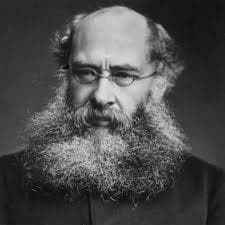
Anthony Trollope was an English novelist and civil servant of the Victorian era. Among his best-known works is a series of novels collectively known as the Chronicles of Barsetshire, which revolves around the imaginary county of Barsetshire. He also wrote novels on political, social, and gender issues, and other topical matters.







