“I need a little language such as fishes use, better than ours.”
— Bernard muses on the inadequacy of human language to capture experience.

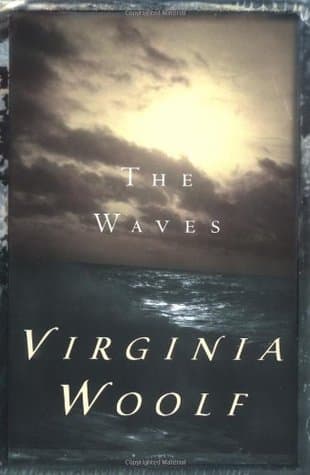
Virginia Woolf (1931)
Genre
Literary Fiction
Reading Time
600 min
Key Themes
See below
Sign in to track this book
Six friends share their internal experiences of grief and connection against the rhythmic English coast.
The novel begins with dawn, seen through the eyes of six children: Bernard, Susan, Rhoda, Neville, Jinny, and Louis. They grow up in separate but connected households near a large house and garden. Each child experiences the world through their unique senses and growing self-awareness. Bernard, a storyteller, observes; Susan, practical, feels the earth; Rhoda, sensitive, struggles with formlessness; Neville, intellectual, seeks order; Jinny, lively, is drawn to her reflection; and Louis, an outsider, hears the waves and feels an ancient connection to the earth. They are aware of each other, their voices blending in a collective stream of consciousness. This establishes their distinct personalities and the start of their connected lives, all against the rising sun and the ceaseless sound of the waves.
The children enter their school years, a time of further self-discovery and the strengthening of their individual traits. Bernard continues to create stories, often using others' experiences. Susan longs for domesticity and the countryside, feeling out of place in school. Rhoda struggles with her identity and the structured world, often feeling invisible or inadequate. Neville, already scholarly, seeks intense, singular attachments. Jinny embraces her physical beauty and social confidence, drawn to immediate satisfaction and attention. Louis, always an outsider, excels academically but remains keenly aware of his difference, finding comfort in books and city rhythms. Their voices continue to intertwine, showing their evolving friendships, rivalries, and growing understanding of the world beyond their immediate surroundings, as the sun continues its ascent.
As the characters approach young adulthood, their hopes and worries for the future become more clear. Bernard dreams of becoming a great writer, constantly collecting phrases and observations. Susan wants a traditional life of marriage, children, and a country home. Rhoda, still struggling with her sense of self, seeks beauty and order, often through abstract thought or dance, feeling a deep separation from the material world. Neville desires a deep, intellectual love, often for other men, and dedicates himself to poetry. Jinny enjoys her social power and physical appeal, looking forward to a life of parties and romantic conquests. Louis, despite academic success, feels the weight of his outsider status and strives for material success and a place in the commercial world. Their individual paths begin to separate, yet their consciousness remains linked, anticipating a future that will test their youthful ideals.
The friends, now in their early twenties, gather for a farewell dinner for Percival, who is leaving for India. Percival, though never given an internal monologue, is a central figure in their lives – a silent, strong, and unifying presence they all admire and love. He represents a kind of uncomplicated, heroic ideal. His departure marks a significant turning point, a break in their youthful collective. Each friend reflects on Percival's influence and their own changing identities in his presence. Bernard feels a loss of inspiration; Susan feels a pang of longing for his simple strength; Rhoda feels a momentary peace; Neville feels a deep, unspoken affection; Jinny is drawn to his masculine presence; and Louis sees him as a symbol of the English ideal. This gathering highlights their deep, if unspoken, bonds and the coming changes in their lives.
The friends receive the news that Percival has died in India, having fallen from his horse. This event is a deep shock, a central trauma that echoes through all their lives. His sudden and meaningless death forces them to confront life's fragility and the nature of their own existence. Each character processes grief in their distinct way: Bernard feels a deep emptiness, a loss of the 'hero' for his stories; Susan retreats further into her rural life; Rhoda is plunged into deeper despair and existential questioning; Neville is heartbroken, feeling the loss of his unspoken love; Jinny feels a sudden chill, a reminder of mortality; and Louis, though perhaps less emotionally invested, recognizes the shattering of a collective ideal. Percival's absence becomes a powerful, shaping presence in their later lives, a constant reminder of loss and impermanence.
Years pass, and the friends follow their chosen paths. Bernard struggles with his writing, finding moments of brilliance but also self-doubt and the complexities of married life and fatherhood. Susan embraces her role as a wife and mother in the countryside, finding contentment but also occasional frustration with its limits. Rhoda, still adrift, seeks meaning through travel and abstract art, struggling with mental instability and a persistent sense of isolation. Neville becomes a successful academic and poet, but his life is marked by a series of intense, often unrequited, loves and a deep loneliness. Jinny thrives in London society, embracing a life of parties, lovers, and fleeting pleasures, always trying to capture the moment. Louis dedicates himself to business, achieving material success and some power, but remains an outsider, observing the world with a critical eye. Their lives are interwoven with memories of Percival and their shared past.
The friends periodically gather, often at a restaurant, symbolizing a temporary re-connection of their individual lives. During these meetings, they reflect on their lives, their successes and failures, and the impact of Percival's death. They observe how each has changed, yet how fundamental aspects of their childhood selves remain. Bernard speaks of the difficulty of finding the 'phrase' to capture life; Susan recounts the joys and burdens of her family life; Rhoda struggles to express her internal world; Neville expresses his longing for connection; Jinny enjoys her vitality; and Louis observes them all with a detached yet deeply felt understanding. These gatherings are moments of shared consciousness, where their individual monologues briefly come together, allowing them to measure their lives against their collective history and the memory of their lost friend.
As the characters age, they increasingly reflect on the passage of time, the fading of youth, and the approach of death. Bernard, now older, becomes more contemplative, trying to reconcile his youthful ambitions with his life's realities. Susan grapples with the decline of her physical beauty and her children's growing independence. Rhoda continues her search for meaning, often feeling overwhelmed by existence's formlessness. Neville faces the loneliness of his later years, still yearning for a deep connection. Jinny, though still lively, acknowledges the inevitable loss of her youthful appeal. Louis, having achieved material success, feels its emptiness, recognizing life's cyclical nature and the persistent echoes of the past. Their individual voices, though still distinct, begin to merge more deeply, acknowledging their shared human experience.
The novel ends with a final dinner, where the surviving friends, now elderly, gather once more. This gathering is filled with a sense of finality and poignant reflection. They are fewer in number, as some have died or become too ill to attend. The conversation is less about individual achievements and more about the collective experience of life, memory, and their enduring bonds. They speak of Percival, of their youth, of the dreams that were fulfilled and those that were not. Bernard, in particular, tries to make sense of their lives, to find the overarching 'phrase' that connects them all. This dinner is a moment of deep communion, where their individual consciousnesses achieve a kind of harmony, acknowledging the beauty and sorrow of their intertwined lives and the enduring presence of the past.
The novel concludes with Bernard's long monologue, a sweeping reflection on his entire life and the lives of his friends. He tries to encompass all their experiences, their joys and sorrows, their individual struggles and their collective unity. He grapples with the concept of self, realizing that his identity is not singular but a composite of all the people he has known, especially his five friends and Percival. He considers death, not as an end, but as a merging with a larger, eternal force. He envisions the waves, a constant motif throughout the novel, as a symbol of life's relentless progression and the human spirit's ultimate triumph against oblivion. His final words are a defiant affirmation of life, a charge against death, embracing the totality of existence and the interconnectedness of all things.
The Protagonist
From a self-conscious storyteller, Bernard evolves into the novel's primary voice of synthesis, attempting to unify the disparate experiences of his friends and ultimately finding profound meaning in their collective lives.
The Protagonist
Susan fulfills her domestic destiny, finding both contentment and occasional frustration in her chosen path, ultimately accepting the cycles of life and nature.
The Protagonist
Rhoda struggles throughout her life to find a stable sense of self and belonging, often experiencing despair, but occasionally finding fleeting moments of peace in beauty and solitude.
The Protagonist
Neville dedicates his life to poetry and the pursuit of profound, often unrequited, love, finding solace in art but ultimately confronting the loneliness inherent in his intense nature.
The Protagonist
Jinny lives a life of glamorous social engagement, fully embracing her physical and social power, and later facing the inevitable decline of youth with a defiant spirit.
The Protagonist
Louis achieves material success and a position of power, yet remains an outsider, constantly seeking to reconcile his inner world with the external demands of society.
The Supporting
Though he dies early, Percival's memory becomes a constant, unifying force, shaping the lives and reflections of his friends and serving as a symbol of lost innocence and the fragility of life.
The novel explores the changing and complex nature of identity. Each character grapples with who they are, how they are seen, and how their self changes over time and in relation to others. Bernard, for instance, constantly tries to create his identity through borrowed stories, questioning if he has a single self or is a mix of all he observes. Rhoda's struggle with formlessness shows the difficulty of solidifying one's identity. The narrative structure, with its blending voices, suggests that individual identity is not isolated but deeply connected with the collective human experience, ending with Bernard's realization that 'I am not one person; I am many people'.
“I am not one person; I am many people; I do not altogether know who I am.”
Woolf intricately connects past, present, and future, showing how memory shapes perception and identity. The friends constantly refer back to their shared childhood, especially Percival, whose death becomes a fixed point in their collective memory. The novel moves chronologically, yet the characters' inner monologues frequently return to earlier events, showing how the past is never truly gone but continually reinterpreted. The interludes, depicting the sun's journey, act as a universal marker of time, contrasting with the characters' subjective, internal experience of time. This theme suggests that life is not a linear progression but a complex mix of accumulated experiences and their remembrance.
“The past is a dream that has ended; and the present a dream that is beginning.”
Despite their deep bonds, each character experiences moments of isolation and loneliness. They are connected by shared experiences and a collective consciousness, yet their inner worlds remain distinct and often inaccessible to others. Neville's longing for singular love, Rhoda's alienation, and Louis's sense of being an outsider all highlight this tension. Their periodic gatherings symbolize attempts to bridge these gaps, but ultimately, the novel suggests that while we are all part of a larger human 'wave,' individual consciousness remains fundamentally solitary. Percival's death, the unifying figure, intensifies both their shared grief and their individual struggles with loneliness.
“How lonely we are in the world, how lonely we are in the world.”
The novel itself explores the power and limits of art and storytelling to capture life's essence. Bernard, the aspiring writer, constantly searches for 'the phrase' to encapsulate experience, often feeling that language is inadequate. Neville expresses himself through poetry, seeking precision and intensity. The novel's structure, with its lyrical, poetic prose and internal monologues, is an artistic attempt to show the unsaid, the felt, and the subconscious. This theme suggests that while art can illuminate and synthesize human experience, it can never fully contain life's boundless complexity.
“I need a phrase, a sentence, to make it all clear. But I cannot find it.”
The natural world, especially the sea and the sun, is a constant backdrop and a powerful symbol throughout the novel. The interludes, describing the sun's journey from dawn to dusk, mirror the progression of the characters' lives from childhood to old age. The waves themselves symbolize life's relentless, cyclical nature, death, and renewal, suggesting a larger cosmic order beyond individual human lives. Susan's connection to the earth, Louis's hearing of the waves, and Bernard's final confrontation with death against the backdrop of the sea all highlight humanity's place within a vast, indifferent yet beautiful natural world. This theme provides a sense of continuity and eternity that transcends individual mortality.
“The waves broke and then drew back, and the air was full of the sound of them.”
Reveals characters' inner thoughts and perceptions directly.
The primary narrative mode, each character's section is presented as an unbroken, first-person internal monologue. This allows Woolf to delve deep into their psychological states, emotions, and private reflections, often without the mediation of an external narrator. It blurs the line between speech and thought, creating a rich, subjective portrayal of their individual consciousnesses and how they perceive the world and each other. This device is crucial for exploring themes of identity, memory, and the subjective experience of time.
Poetic descriptions of nature separating the characters' monologues.
Between each section of the characters' monologues, short, lyrical prose poems describe the progression of a single day from dawn to dusk, focusing on the sun's journey and the natural landscape, particularly the sea. These interludes serve as a cosmic clock, marking the passage of time in the external world and paralleling the characters' aging. They also provide a symbolic counterpoint to the intensely subjective human experience, grounding the narrative in a larger, objective, and cyclical natural order, emphasizing themes of time, nature, and the universal against the individual.
A character whose presence is felt only through others' perceptions.
Percival is a unique plot device in that he never speaks for himself; his entire character is constructed through the thoughts, memories, and idealizations of the other six friends. He acts as a silent, unifying force in their youth and, after his death, becomes a profound symbol of lost innocence, the fragility of life, and a touchstone for their collective memory. His absence is a powerful presence, driving much of the emotional and philosophical reflection among the surviving characters. He is a catalyst for their growth and understanding of mortality and connection.
Symbolic images that deepen thematic understanding.
Throughout the novel, Woolf employs several recurring motifs. 'The Waves' themselves symbolize the relentless, cyclical nature of life, death, and the flow of human experience, echoing in Louis's ears and Bernard's final soliloquy. 'Light' (the sun, dawn, dusk) tracks the passage of time and illuminates the characters' internal states. 'The Mirror' is particularly associated with Jinny, reflecting her self-awareness and focus on external appearance, but also, for Rhoda, a source of anxiety about her own lack of form. These motifs enrich the narrative, providing layers of symbolic meaning and reinforcing the novel's central themes of time, identity, and nature.
“I need a little language such as fishes use, better than ours.”
— Bernard muses on the inadequacy of human language to capture experience.
“Let us commit any crime, so long as we do it together.”
— Susan's intense desire for connection and shared experience with her friends.
“We are for ever beyond the reach of each other.”
— Louis reflects on the fundamental isolation of individuals despite their connections.
“But when I am alone, I hear the voice of the beetle scuttling in the dust, the splash of the wave.”
— Rhoda's profound sensitivity to the natural world and her feelings of being an outsider.
“I am not one person; I am many people; I do not altogether know who I am.”
— Neville grappling with his complex and shifting identity.
“But there is a coherence in things, a stability; something that holds it all together.”
— Bernard's recurring search for meaning and order amidst the chaos of life.
“The world is a disc, I said, and we are the bubbles on it.”
— Percival's simple yet profound view of human existence.
“We are nothing; we are all.”
— A collective sentiment reflecting both individual insignificance and universal connection.
“I hate the body. I hate its pain and its beauty.”
— Rhoda's aversion to the physical world and her longing for the abstract.
“I will not be a rock; I will be a pool, and reflect the sky.”
— Jinny's embrace of change and her desire to be responsive to life.
“How can I make one moment stay?”
— Bernard's yearning to capture and preserve fleeting moments of experience.
“The wind blew, and the waves broke. We are all phrases, in the great English sentence.”
— Bernard's poetic reflection on life and death as part of a larger narrative.
“I have been with my friends, I have been with them in the sun, in the rain, in the mist, in the snow.”
— Susan's deep appreciation for the shared experiences and enduring bonds of friendship.
“I could not make one moment stay. It is an illusion.”
— Bernard's ultimate realization about the impossibility of holding onto time.
Ready to see how well you understood this book? Take our interactive quiz with 10 questions.
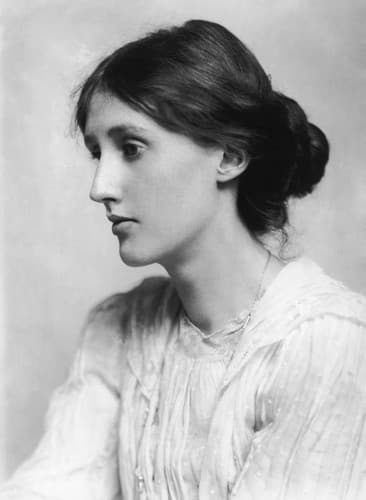
Adeline Virginia Woolf was an English writer. She is considered one of the most important modernist 20th-century authors and a pioneer in the use of stream of consciousness as a narrative device.