“I can tell you that the past, which is to say the here, is ariven by a force that is as real as any whip, and that force is memory.”
— Hiram reflects on the power of memory and its influence on the present.

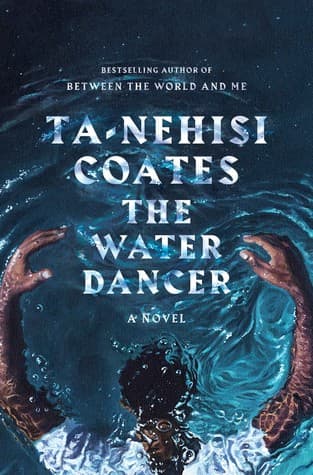
Ta-Nehisi Coates (2019)
Genre
Fantasy / Historical Fiction
Reading Time
540 min
Key Themes
See below
Sign in to track this book
Haunted by the memory of a mother he can't recall and blessed with a mysterious power of 'conduction,' Hiram Walker navigates the brutal realities of slavery and the perilous path to freedom, determined to rescue the family he left behind.
Hiram Walker, a young man enslaved on the Lockless plantation in Virginia, has an eidetic memory. He recalls every detail except the face of his mother, Rose, who was sold away when he was a child. Hiram is the illegitimate son of the plantation owner, Howell Walker, and serves his half-brother, Maynard. One day, while driving Maynard across a bridge, their carriage crashes into the Goose River. Maynard drowns, but Hiram is miraculously saved. He sees a blue light and finds himself on the riverbank, unharmed. He later learns this power, which he calls 'conduction,' allows him to transport himself and others over vast distances. It requires a catalyst and a strong memory of the destination or a person.
After Maynard's death, Hiram's life on Lockless becomes more dangerous. He begins to understand his unique ability, which he first believes connects to the memory of his mother. He falls in love with Thena, another enslaved woman on the plantation, and dreams of a life with her. Hiram is eventually approached by a free black man named Corrine, who reveals himself as an agent of the Underground. Corrine recognizes Hiram's gift and recruits him into their network, which aims to free enslaved people. Hiram learns of the legendary 'Moses,' a powerful conductor who leads the Underground Railroad. He is tasked with helping others escape, preparing him for his own journey north.
Hiram makes the difficult decision to leave Thena behind, promising to return for her and his half-sister, Sophia, whom he also cares for. Under Corrine's guidance and the network, Hiram plans his escape from Lockless. He uses his conduction ability, triggered by a strong memory of a place far north, to transport himself away from the plantation. This initial escape is hard and confusing, further solidifying his understanding of the power and its demands. He travels through various safe houses and clandestine routes, meeting other agents and freedom-seekers, slowly making his way towards the North and the center of the Underground network.
Hiram arrives in Philadelphia, a busy city and a major hub for the Underground. Raymond, a seasoned conductor and a trusted network member, takes him in. Under Raymond's teaching, Hiram begins formal training in conduction. He learns that the power is not just about remembering a place. It is about connecting to the 'Underground' itself, a mystical force tied to the collective memory and desire for freedom of enslaved people. He practices his ability, refining his control and understanding its limits and dangers. He recognizes the immense responsibility that comes with being a 'conductor' and a guide to freedom for others.
Hiram eventually meets Moses, who is Harriet Tubman, a formidable and enigmatic woman with deep spiritual insight and an unmatched ability to conduct. Moses tests Hiram's resolve and his understanding of the 'Underground.' Hiram becomes a more active participant in missions, conducting individuals and groups to freedom. He often faces dangerous situations and slave catchers. He sees the brutality of slavery firsthand during these missions, which strengthens his resolve to fight for the liberation of his people and fuels his desire to return for Thena and Sophia.
As Hiram continues his work with the Underground, he deals with the emotional burden of his past and the constant threat of capture. The memories of Lockless, Thena, and Sophia weigh heavily on him. He sees the suffering of others, the constant fear, and the sacrifices made for freedom. His own memories, once a source of strength, now also bring pain, reminding him of what he left behind. He questions the morality of his actions, wondering if he is truly helping or just prolonging the suffering of those he cannot reach. This solidifies his commitment to rescuing his loved ones.
Hiram participates in a complex mission to free a group of enslaved people from a particularly brutal plantation. An informant compromises the mission, leading to a violent confrontation with slave catchers. Hiram and his fellow conductors must fight their way out, suffering losses and seeing some freedom-seekers tragically recaptured. This event deeply affects Hiram. It shows the constant danger and the ever-present threat of betrayal within the network, reinforcing the high stakes in every act of conduction and the need for absolute trust and discretion.
Fueled by his love for Thena and his desire to save Sophia, Hiram begins to plan a daring return to Virginia. He knows the risks are immense, as Lockless is heavily guarded and he is a known fugitive. He consults with Moses and other Underground members, carefully planning his approach. His memories of Lockless, once a source of pain, now become a tool. They allow him to visualize the landscape and the people he needs to find. He prepares for the ultimate test of his conduction ability and his courage.
Hiram successfully conducts himself back to the vicinity of Lockless. He navigates the familiar, yet now threatening, landscape, using his knowledge of the plantation to avoid detection. He contacts loyal allies who remained behind, gathering information on Thena and Sophia's whereabouts. He eventually confronts his father, Howell Walker, a man who embodies the cruelties of the system. This encounter is full of tension. It reveals the deep-seated hypocrisy and brutality of the plantation owner and forces Hiram to fully embrace his identity as a liberator.
In a climactic sequence, Hiram plans the rescue of Thena and Sophia from Lockless. He uses his conduction ability, combined with strategic planning and the help of his allies, to overcome the plantation's defenses. The escape is perilous, but he successfully guides them to freedom. As they journey north, Hiram reflects on his transformation from an enslaved boy to a powerful conductor. He envisions a future where he can continue to use his gift to fight for liberation, forever bound to the 'Underground' and the cause of freedom, with Thena and Sophia by his side.
The Protagonist
Hiram transforms from a relatively passive, enslaved individual into a powerful and active liberator, fully embracing his gift and his role in the Underground.
The Supporting/Catalyst
Rose's story is primarily in the past, serving as a powerful catalyst for Hiram's journey rather than a personal arc.
The Antagonist
Howell's character remains largely static, representing the entrenched power and moral decay of the slaveholding South.
The Supporting
Thena's arc is tied to her liberation, moving from the confines of Lockless to the hope of freedom with Hiram.
The Supporting
Sophia's arc is one of movement from the innocence of childhood in bondage to the promise of freedom.
The Supporting
Corrine serves as a guide, initiating Hiram into the larger world of the Underground, his arc primarily supporting Hiram's development.
The Supporting/Mentor
Moses remains a steadfast and powerful figure, her arc reflecting her continued dedication to the cause of liberation.
The Supporting
Raymond's arc is primarily that of a mentor, helping to shape Hiram into a capable conductor.
Memory is central to Hiram's identity and his mystical power. His inability to recall his mother's face is a deep psychological wound and, paradoxically, the key to unlocking his 'conduction.' The novel explores how memory, both personal and collective, shapes identity, trauma, and the pursuit of freedom. The deliberate erasure of family histories under slavery is a recurring motif. It highlights the importance of remembering ancestors and experiences. Conduction itself is a form of embodied memory, requiring a deep recall of places or people to transport oneself. Hiram's struggle to 'remember' Rose is a metaphor for the broader struggle to reclaim lost heritage and identity.
“Forgetting, I came to see, was not a malady but a weapon, one I wielded against myself, against the pain of what I could not remember.”
The novel deeply explores the many aspects of freedom and bondage. These are not just physical states but psychological and spiritual conditions. Slavery is shown in its brutal reality, but also in the insidious ways it affects the minds of both the enslaved and the enslavers. Freedom is presented not as a simple destination, but as a continuous journey. It is a state of being that requires constant struggle and self-liberation. Hiram's 'conduction' is a literal manifestation of escaping physical chains, but his emotional and mental journey is equally about freeing himself from the internal bonds of trauma and fear. The Underground itself represents a collective will for freedom, a spiritual force that transcends physical barriers.
“Slavery is a kind of severing, from home, from family, from self. And freedom is a kind of stitching back together.”
Love, especially familial and romantic, is a powerful motivator and a source of both strength and vulnerability. Hiram's deep love for Thena and his protective feelings for Sophia drive his perilous journey and his ultimate return to Lockless. The trauma of his mother Rose being sold away is the foundational wound of his life, fueling his quest for memory and connection. The sacrifices made by individuals within the Underground, risking their lives for strangers, show the deep bonds of humanity that transcend the artificial divisions of slavery. The novel highlights how love, even in the face of unimaginable cruelty, can inspire extraordinary acts of courage and resilience.
“I loved them, which meant I would do anything. Anything.”
The Water Dancer weaves a powerful thread of spirituality and mysticism throughout its narrative. Hiram's 'conduction' is not just a magical ability but a deeply spiritual one. It connects to the 'Underground' – a collective memory and will for freedom of enslaved people, guided by ancestral spirits. Moses (Harriet Tubman) embodies this spiritual connection, seeing visions and communicating with the 'Underground' in a profound way. This mystical element elevates the story beyond a simple historical account. It suggests that the fight for liberation is not just physical but also a battle for the soul, drawing on ancient African spiritual traditions and the resilience of the human spirit. The river itself acts as a liminal space, a conduit for power and transformation.
“The Underground was not a place but a power, not a route but a river, and we, the conductors, were its living vessels.”
Hiram's mystical ability to transport himself and others over vast distances.
Conduction is the central magical realism element in the novel. It allows Hiram to instantly transport himself and others, but it requires a powerful memory of a place or person, and often a catalyst like water. It's not just teleportation; it's deeply tied to the collective memory and desire for freedom of enslaved people, a spiritual force known as the 'Underground.' This device serves as both a literal means of escape and a metaphor for the power of memory, connection, and the spiritual resilience required for liberation. It also introduces significant risks and physical tolls on its users.
Hiram's perfect recall of nearly every detail, except his mother's face.
Hiram's eidetic memory allows him to remember places, conversations, and experiences with perfect clarity. This ability is crucial for his survival and later, for his conduction, as memory is the key to unlocking his power. The one significant gap in his memory – his mother's face – becomes a driving force and a symbolic representation of the trauma of slavery and the deliberate erasure of family histories. This device highlights the importance of memory in shaping identity and the profound impact of forced forgetting, making Hiram's quest for his mother's face a quest for self-knowledge.
The river where Hiram nearly drowns, serving as a catalyst for his power.
The Goose River is more than just a geographical feature; it acts as a liminal space and a catalyst for Hiram's conduction ability. His near-drowning experience in the river, where his half-brother Maynard dies, is the moment his power manifests. The river represents both danger and salvation, a boundary between life and death, and between bondage and the potential for freedom. It symbolizes the transformative power of water in many African spiritual traditions and serves as a recurring motif of passage and rebirth throughout the novel, often associated with the 'Underground' itself.
The literal network of abolitionists and the mystical, collective will for freedom.
The 'Underground' functions on two levels: as the historical network of safe houses and abolitionists aiding enslaved people, and as a mystical, spiritual force that guides and empowers conductors like Hiram and Moses. This dual nature imbues the historical struggle with a layer of magical realism, suggesting that the fight for freedom is not only a physical battle but also a spiritual one, drawing on the collective memory, suffering, and hope of generations. It provides a moral and spiritual compass for the characters, emphasizing the profound connection between the individual struggle and the larger movement for liberation.
“I can tell you that the past, which is to say the here, is ariven by a force that is as real as any whip, and that force is memory.”
— Hiram reflects on the power of memory and its influence on the present.
“Slavery is a kind of severing, a kind of death. But it is not a death that can be mourned, for that would be to acknowledge the humanity of the enslaved.”
— Hiram contemplates the profound dehumanizing effect of slavery and the denial of grief.
“The world was not built for us to remember. It was built for us to forget.”
— Hiram considers the societal forces that encourage forgetting, particularly for the enslaved.
“To forget was to be free. To remember was to be bound.”
— Hiram wrestles with the paradox of memory and freedom in his enslaved state.
“The Underground was not a place but a people, a network of hands and hearts.”
— Hiram's understanding of the Underground Railroad goes beyond a physical route.
“Every time I saw her, I felt a kind of current pass through me, a knowledge that there was something more to the world than what I had been taught.”
— Hiram describes his initial encounters with Thena, feeling a profound shift in his perception.
“The past is not dead. It is not even past. It is with us, always.”
— A reflection on the persistent presence of history and its impact on the present.
“What is freedom but the right to choose your own chains?”
— Hiram ponders the complexities of freedom, even outside of literal bondage.
“Sometimes you got to be a bridge, even when you feel like you drowning.”
— A character offers advice about the necessity of helping others, even when struggling oneself.
“To be free, you must first be willing to lose everything.”
— Hiram grapples with the immense cost and sacrifice required to achieve true freedom.
“There are some things you carry with you, like a phantom limb, even after they’re gone.”
— Hiram reflects on the lasting impact of loss and trauma.
“The magic was not in the water, but in the knowing.”
— Hiram understands that his power comes from a deeper connection and understanding, not just a physical element.
“The water remembers. The land remembers. And so should we.”
— A call to remember and acknowledge the history embedded in the environment and collective consciousness.
“We were not just bodies to be bought and sold, but vessels of memory, carrying the stories of generations.”
— Hiram asserts the profound human value and historical significance of enslaved people beyond their commodification.
Ready to see how well you understood this book? Take our interactive quiz with 10 questions.

Biography coming soon.







