“The world was a graveyard, and we were the last two ghosts dancing on its grave.”
— Reflecting on the post-apocalyptic landscape and their isolation.

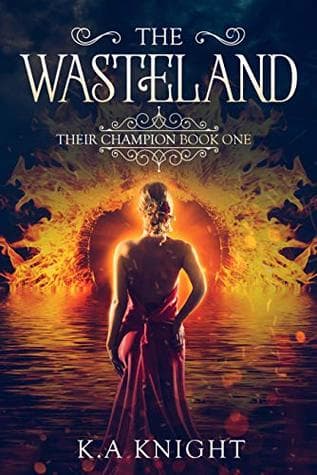
K.A. Knight (2018)
Genre
Fantasy / Science Fiction / Romance
Reading Time
273 min
Key Themes
See below
Sign in to track this book
A scarred champion of the desolate Wastelands, haunted by a brutal past, must rise again for personal happiness when a new job and four enigmatic strangers force her to confront the very history she sought to escape.
Kira, known as The Champion due to her tattoos, lives a reclusive life in the Northern Wasteland. She spends her days in a small settlement, drinking heavily to numb her past. She was stolen from her family as a child and forced to fight for survival, becoming a warrior. Despite her legendary status, she now seeks only oblivion, avoiding reminders of the brutality she endured. Her reputation precedes her; most people keep their distance, respecting her strength but fearing her dark presence. She believes her fighting days are over, content to fade away.
Four men—Rhys, a calculating leader; Atlas, a stoic warrior; Nox, a brooding presence; and Zane, a younger, impulsive member—arrive in Kira's settlement. They approach her with a job: they need her skills to find a lost journal. This journal is rumored to contain information about the old world and a potential cure for the plague that ravaged the planet. Kira is resistant at first, unwilling to re-enter the dangerous world she left behind. However, the men offer a substantial reward that could secure her future. More importantly, they appeal to a dormant sense of purpose within her, making the offer hard to refuse.
Despite her doubts, Kira agrees to help Rhys and his group. They leave the Northern Wasteland, heading south into regions Kira has not visited in years. The journey is dangerous from the start. The Wasteland is a lawless and unforgiving place. They encounter mutated creatures, hostile scavengers, and the remnants of a broken society. Kira, though rusty, quickly regains her combat prowess, proving her legendary status. Tensions are high within the group. Kira struggles to trust the mysterious men, and they are wary of Kira's formidable but unpredictable nature.
As they travel, certain sights and events trigger painful flashbacks for Kira. She remembers being stolen from her family, the brutal training she endured in the fighting pits, and the ruthless individuals who shaped her into The Champion. These memories are raw, causing her to lash out or withdraw. The men, especially Rhys and Atlas, observe her struggles with concern and curiosity, though they do not fully understand her trauma. Kira tries to suppress these memories, but the journey south, back towards the lands of her youth, makes it increasingly difficult to ignore her past.
The group eventually finds clues leading them closer to the journal. They learn it belonged to a scientist working on a plague cure before the world ended. More unsettling, they uncover hints that the journal also contains information related to Kira's past, specifically the organization responsible for her abduction and training. This revelation strengthens Kira's resolve, turning the mission from a job into a personal quest for answers. The men realize Kira's connection to the journal is deeper than they first thought, solidifying their alliance.
As they near their objective, the group is ambushed. It is revealed that one of their contacts, someone they trusted for information, betrayed them, selling their location to a rival faction also seeking the journal. A brutal fight follows, testing the new bonds between Kira and the men. Kira fights with desperation and anger, protecting her new allies and her chance at answers. The confrontation is deadly, showing the harsh realities of the Wasteland and strengthening the group's trust and reliance on each other through shared danger.
After the ambush, the surviving members regroup and, using the last pieces of information, pinpoint the journal's exact location. It is hidden within a dilapidated, heavily fortified research facility, a relic from the old world. The facility is guarded by the same faction that ambushed them, a group of ruthless mercenaries or cultists who also believe the journal holds immense power. Infiltrating such a dangerous stronghold is daunting, but the potential rewards—a cure for the plague and answers for Kira—outweigh the risks. A plan is carefully made, using each member's skills.
The infiltration of the research facility is tense and dangerous. They navigate booby traps, automated defenses, and armed guards. Inside, they find not only the journal but also old records and data logs that shed more light on the pre-apocalyptic world. Kira discovers files detailing her genetic markers and the experiments conducted on children, including herself, by the organization. She learns the true extent of the manipulation and suffering she endured, and the reason for her fighting abilities. This discovery is a shock, fueling her anger and resolve against the shadowy forces still operating in the Wasteland.
Upon retrieving the journal, the group quickly begins to decipher its contents. It confirms that the scientist was close to developing a cure for the plague. However, it also reveals a more sinister truth: the organization that abducted Kira and many others was not solely focused on a cure but was also experimenting with human modification, creating super-soldiers or 'champions' for their own unknown purposes. The journal hints at a larger conspiracy and a hidden faction that seeks to control the remnants of humanity using both the plague and its potential cure. Kira realizes her past is deeply intertwined with these global events.
With the journal, Kira and the men make a desperate escape from the crumbling facility. They are pursued by the remaining guards and a new, more formidable enemy: a high-ranking enforcer of the shadowy organization. This individual seems to know Kira personally, hinting at a shared history within the 'Champion' program. The escape is a brutal, close-quarters battle, with the group barely making it out alive. They realize that possessing the journal and uncovering its secrets has made them targets of a powerful, organized force, and their fight for survival, and for the world, has only just begun.
The Protagonist
Kira transforms from a reclusive, self-destructive survivor into a leader who embraces her power and purpose, fighting not just for herself but for a chance at happiness and a better future for the Wasteland.
The Supporting
Rhys learns to trust and rely on others, particularly Kira, moving from a purely intellectual pursuit to a more emotionally invested fight for survival and connection.
The Supporting
Atlas opens up emotionally, finding a deeper purpose and connection through his relationship with Kira, moving beyond his stoic role as protector.
The Supporting
Nox finds a sense of belonging and purpose with Kira and the group, allowing glimpses of his hidden vulnerability and capacity for care to emerge.
The Supporting
Zane matures throughout the journey, learning to temper his impulsiveness with strategic thinking and growing into a more dependable member of the team.
The Antagonist
Their influence and direct actions drive much of the plot, revealing their pervasive control and setting up future conflicts as their full scope is unveiled.
The novel explores the lasting impact of severe trauma, especially childhood abduction and forced combat, on Kira. Her alcoholism and reclusive life are direct results of her past. The journey with Rhys, Atlas, Nox, and Zane forces her to confront these memories rather than suppress them. Her slow process of trusting others and finding purpose in the quest for the journal represents the start of her healing, moving from mere survival to a desire for happiness. This is clear in scenes where flashbacks incapacitate her, and the men's gentle support helps her through.
“My history was carved into my skin for all to see, a constant reminder of the monster they made me into.”
Kira begins the story believing her life has no purpose, defined only by past violence. The mission to find the journal offers her a chance at redemption, not for past wrongs, but for the life she feels she has wasted. By fighting for a cause greater than herself—the potential cure for the plague and answers about her past—she finds new meaning. This theme is highlighted as she changes from a reluctant mercenary to a driven protagonist, no longer hiding from her past but actively shaping her future. Her willingness to fight for 'happiness' shows this shift.
“This time it’s not for my freedom, it's for my happiness.”
In a lawless Wasteland, trust is rare and dangerous. Kira, having been betrayed and exploited, struggles greatly with trusting Rhys and his group. The story carefully builds this trust through shared dangers, mutual protection, and vulnerable moments. The developing romantic relationships between Kira and the men show this theme, illustrating how deep connections can form even in the most desolate circumstances. The betrayal by a trusted contact further emphasizes the fragility and importance of genuine trust in this world, and how it must be earned through shared experience.
“In this world, trust was a luxury, a weakness that could get you killed. Yet, with them, I felt a flicker of something new.”
The main antagonist, The Organization, embodies the corrupting influence of power and control. Their actions, from abducting children to experimenting with the plague and human modification, show a desire to manipulate and dominate humanity. The journal's revelations about their hidden agenda highlight how power can be used for destructive and selfish purposes, even under the guise of progress or survival. Kira's struggle against them is not just for personal freedom but also a fight against this oppressive force that seeks to control the fate of the Wasteland.
“They didn't just want a cure; they wanted to sculpt humanity in their own image.”
Physical markings on Kira's skin that narrate her brutal past.
Kira's tattoos serve as a constant visual reminder of her traumatic history as 'The Champion.' They are not merely decorative but are literal carvings that tell the story of her fights, her victories, and the suffering she endured. This device externalizes her internal pain and reputation, making her past inescapable. They also act as a narrative shortcut, immediately establishing her legendary status and the depth of her trauma without extensive exposition, while also making her easily identifiable to those who know her legend.
A crucial artifact containing secrets about the plague, the old world, and Kira's past.
The lost journal is the central MacGuffin that drives the plot. It is the catalyst for Kira's journey, providing the initial motivation for her to leave her self-imposed exile. As the story progresses, its significance deepens, revealing not only scientific information about the plague and its potential cure but also critical details about The Organization and Kira's own origins. This device expertly intertwines the global stakes with Kira's personal quest, making the success of the mission vital for both her individual happiness and the potential salvation of the Wasteland.
Sudden, vivid memories of Kira's past trauma, triggered by current events.
This device is used to reveal Kira's backstory in a fragmented, impactful way, rather than through straightforward exposition. Certain sights, sounds, or situations in the present trigger intense flashbacks to her childhood abduction, training, and fights. These moments are often disorienting and painful for Kira, highlighting the lingering effects of her trauma. They allow the reader to experience her past viscerally, building empathy and understanding for her hardened demeanor, and demonstrating the internal battle she constantly fights.
A post-apocalyptic, lawless environment that shapes characters and plot.
The Wasteland itself functions as a powerful plot device, dictating the challenges and tone of the story. Its harsh, unforgiving nature—filled with mutated creatures, ruthless scavengers, and scarce resources—justifies the characters' combat skills and their desperate motivations. The lack of established societal norms allows for the exploration of darker themes and the formation of unconventional relationships. It constantly tests the characters' resilience and moral boundaries, ensuring that every step of their journey is fraught with peril and consequence.
“The world was a graveyard, and we were the last two ghosts dancing on its grave.”
— Reflecting on the post-apocalyptic landscape and their isolation.
“Hope was a dangerous thing in the Wasteland; it could get you killed faster than a bullet.”
— A character's cynical view on maintaining optimism in their harsh reality.
“He was a storm, and I was the tree that refused to break, no matter how hard he raged.”
— Describing a tumultuous romantic relationship amidst conflict.
“The old world was gone, but its echoes still whispered in the ruins, a constant reminder of what we'd lost.”
— Contemplating the remnants of civilization and past glories.
“Love in the Wasteland wasn't soft; it was a weapon, a shield, and a reason to fight another day.”
— A character's understanding of love's role in their brutal environment.
“Every sunrise was a victory, every sunset a promise of another battle.”
— A daily perspective on the relentless struggle for existence.
“The line between monster and human blurs when survival is your only law.”
— Questioning morality and humanity under extreme duress.
“His touch was fire and ice, a paradox that both warmed and chilled me to the bone.”
— A vivid description of a physical and emotional connection.
“We weren't just survivors; we were the architects of a new world, whether we wanted to be or not.”
— Acknowledging their role in shaping the future despite their circumstances.
“The stars were the only constant, silent witnesses to our folly and our fight.”
— Finding solace and perspective in the unchanging cosmos.
“Sometimes, the greatest strength is knowing when to bend, not break.”
— A lesson learned about adaptability and resilience.
“The technology that saved us also destroyed us; a bitter irony whispered on the wind.”
— Reflecting on the double-edged sword of advanced technology.
“He saw the cracks in my armor, and instead of exploiting them, he traced them with his fingers, making them beautiful.”
— A moment of vulnerability and acceptance in a relationship.
“The silence of the Wasteland was louder than any scream, a constant reminder of absence.”
— Describing the oppressive quietness of the desolate environment.
Ready to see how well you understood this book? Take our interactive quiz with 10 questions.







