“I was born. I was given a name. I was given a family. I was given a home. I was given a life. I was given a death.”
— Frank's opening reflection on his existence.

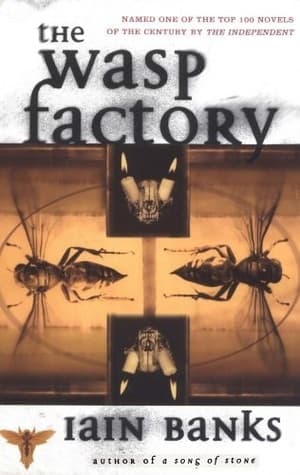
Iain Banks (1984)
Genre
Thriller / Mystery
Reading Time
240 min
Key Themes
See below
Sign in to track this book
A dark, funny, and unsettling story about a Scottish teenager whose ritualistic violence and strange family life lead to a shocking truth when his institutionalized brother escapes.
Sixteen-year-old Frank Cauldhame lives with his unusual father, Angus, on a remote Scottish island connected to the mainland by a causeway. Frank describes his childhood, marked by ritualistic killings of small animals and a severe leg injury from a dog attack when he was five. He introduces his main creation, the Wasp Factory, a large clock face where wasps are tortured and killed in various, often elaborate, ways, each method having a symbolic meaning. Frank believes these sacrifices affect his future and keep order in his strange world. He details his routine, his distrust of adults, and his unique view on life and death, setting the tone for his disturbed story.
Frank receives phone calls from his older brother, Eric, who has escaped from the mental hospital where he was held. Eric's calls are increasingly strange and unsettling, filled with cryptic statements about 'the heads' and his plan to come home. Frank is both fascinated and cautious about Eric's return. He starts making his own preparations, including getting a stored cache of rockets and building a 'bomb' from a discarded gas cylinder. These actions show Frank's deep need for control and his expectation of a confrontation or a major event, hinting at an underlying tension in his family history.
Frank calmly describes the murders of three children and a dog from his past. He tells how he killed his cousin, Blyth, by pushing him off a pier; his younger brother, Paul, by dropping an adder into his pram; and a local girl, Esmeralda, by trapping her in a disused pipe. He also describes killing his own dog, Old Saul, after it bit him. He gives these confessions with a chilling lack of regret, presenting them as logical, even necessary, actions within his own moral framework. He sees these acts as experiences that shaped him, forming his identity and his understanding of power and consequence.
Frank finds a sheep's skull and decides to use it in a protective ritual to keep Eric away. He carefully cleans and decorates the skull, then places it in a visible spot, believing its presence will create a powerful ward. This act highlights Frank's reliance on his self-made belief system and his attempts to control his environment through symbolic actions. He is deeply committed to these rituals, seeing them as essential for his safety and sanity in a world he sees as chaotic and threatening, especially with Eric's coming return.
Eric's phone calls to Frank become more frequent and intense. He delivers rambling, philosophical talks about 'the truth,' 'the heads,' and the nature of reality, often mixed with violent images. Eric's mental state seems to worsen quickly, and his words are a mix of deep insight and delusional paranoia. Frank listens, trying to understand Eric's fragmented thoughts, which often touch on control, identity, and hidden family truths. These calls increase the tension and hint at a major revelation when Eric finally arrives.
Frank details his father Angus's extreme quirks, especially his unusual eating habits. Angus often prepares meals using ingredients far past their expiration dates, explaining it with elaborate, pseudoscientific reasons about 'good bacteria' and 'preserving nature's bounty.' Frank finds these habits both annoying and interesting, a constant source of confusion. Angus's behavior further emphasizes the isolated and unconventional environment Frank grew up in, showing the lack of normal parental guidance and the strange worldview he developed in response to his father's influence. This adds to Frank's own distorted sense of reality.
Frank decides to launch his collection of homemade rockets, an act he sees as both a celebration and a show of his power. He carefully prepares the rockets, each named after one of his childhood victims. The launches are a ritualistic display of his control over his environment and a reassertion of his identity as the 'controller' of his island domain. This event is a moment of release for Frank, allowing him to express his underlying aggression and his desire for dominance, further illustrating his unique psychological state and his way of processing his past actions.
Eric finally arrives back on the island, disheveled and deeply disturbed. He finds Frank and, in a highly agitated state, begins to reveal the truth about their family. Eric explains that Frank was born female, and that Angus, wanting a son after Eric's own mental breakdown, secretly raised Frank as a boy after a botched 'sex-change' operation at birth. Angus, fearing Frank would be taken away if his true sex was discovered, gave Frank female hormones to stunt her development, leading to her unusual appearance and lack of menstruation. This confession shatters Frank's entire understanding of himself and his past.
Reeling from Eric's revelation, Frank re-examines her entire life through a new lens. The Wasp Factory, her childhood murders, her obsession with control, and her perceived masculinity all take on new meaning. She realizes that her violent rituals and her attempts to assert dominance were, in part, a desperate attempt to embody the male identity imposed upon her. The Wasp Factory, once a symbol of her power and foresight, now represents the confusion and manipulation that defined her upbringing. The shock of the truth leads to a deep internal crisis, forcing Frank to confront the constructed nature of her identity.
The revelation of her true sex leaves Frank in a state of deep shock and confusion, but also a strange sense of liberation. She begins to process what it means to be female, recalling fleeting moments from her past that now make sense. The immediate implications of her father's deception are overwhelming, but there is a budding sense of possibility. Frank, now realizing she is 'Frances,' starts to think about a future free from the constraints of her imposed identity and the violent rituals that defined her. The novel ends with Frank looking towards an uncertain, yet potentially more authentic, future, having shed the lies of her past.
The Protagonist
Frank's arc involves the shattering discovery of her true biological sex, forcing her to re-evaluate her entire identity and past actions, leading to a potential, albeit uncertain, transformation.
The Supporting/Antagonist
Angus's arc is largely static, as his deception is revealed rather than developed, exposing the profound impact of his actions on Frank.
The Supporting
Eric's arc is one of decline, culminating in his return and the traumatic confession that liberates Frank but solidifies his own mental fragility.
The Supporting
Jamie's arc is relatively flat, serving primarily as a foil and a connection to the outside world for Frank.
The Mentioned
N/A (character is deceased)
The Mentioned
N/A (character is deceased)
The Mentioned
N/A (character is deceased)
The central theme is Frank's constructed male identity and the deep self-deception Angus encouraged. Frank's entire worldview, her violent rituals, and her self-perception are based on a lie. The revelation of her biological sex destroys this fabricated identity, forcing her to confront who she truly is. This theme appears in Frank's internal monologues, where she constantly reinforces her 'maleness' through her actions and thoughts, only for it to be completely dismantled by Eric's confession, as seen when she reinterprets past events with a new, feminine understanding.
“I was a boy, I was a male, I was a man. What could be more obvious?”
The novel explores how natural tendencies and environmental upbringing interact. Frank's violent behaviors and unusual moral code are heavily shaped by her isolated childhood and Angus's quirks, as well as hormonal manipulation. The question arises whether Frank's disturbed behavior comes from her unique 'nurture' – the deception and isolation – or if there is an underlying 'nature' at play. The revelation of her sex suggests that much of her 'male' identity and associated aggression was a performance, a result of her father's manipulation, rather than an innate trait. This is clear in her immediate re-evaluation of her past actions.
“What do you think, Frank? Is it nature or nurture, eh? Are we products of our genes or our environment?”
Frank's life is controlled by an obsessive need for control, shown through elaborate rituals. The Wasp Factory is the main example, where Frank gives symbolic meaning to different ways of killing wasps, believing these acts can influence her future. Her childhood murders are also presented as ritualistic acts meant to exert power and shape her world. These rituals give Frank a sense of order and agency in an otherwise chaotic and isolated life. This is especially clear in her preparations for Eric's return, where she builds a 'bomb' and uses a sheep's skull for protection, believing these acts will ensure her safety.
“My Wasp Factory, for example, is a place of blood and magic, of decision and death. It is my oracle, my guide, my friend.”
The physical and social isolation of the Cauldhame family on their remote island greatly contributes to their psychological deviance. Cut off from normal society, Frank and Angus develop their own distorted moral codes and realities. This isolation allows Angus's deception to thrive unchecked and prevents Frank from developing a healthy sense of self or understanding of the outside world. The lack of outside influence and the reinforcement of their unusual behaviors within their confined environment directly contribute to Frank's disturbed mindset and Angus's extreme quirks, creating a cycle of abnormality.
“We were cut off, almost literally, from the rest of the world.”
Frank's perspective is skewed by her delusions and the hidden truth of her identity.
Frank Cauldhame serves as a profoundly unreliable narrator. Her recounting of events, particularly her childhood murders and her perception of her own gender, is presented with a chilling detachment and a distorted moral compass. The reader is led to believe Frank is a male protagonist, only for this foundational assumption to be shattered at the novel's climax. This device creates suspense and forces the reader to constantly question Frank's interpretations and the 'reality' she presents, ultimately leading to a shocking re-evaluation of everything that has been read.
Eric's cryptic phone calls hint at the dark family secrets to be revealed.
Eric's increasingly bizarre and philosophical phone calls to Frank serve as significant foreshadowing. His fragmented pronouncements about 'the heads,' 'the truth,' and his own mental state subtly hint at the deep-seated secrets within the Cauldhame family. These calls build tension and create a sense of impending doom and revelation, preparing the reader for a major plot twist without explicitly giving it away. They also establish Eric's role as the catalyst for the truth, even in his disturbed state.
A symbolic structure representing Frank's control, rituals, and internal turmoil.
The Wasp Factory is more than just a physical contraption; it is a powerful symbolic device. It embodies Frank's obsessive need for control, her ritualistic approach to violence, and her unique, disturbed worldview. Each method of killing wasps and the associated 'omens' reflect Frank's attempts to impose meaning and order on her life. After the revelation of her true identity, the Wasp Factory's symbolism shifts, becoming a representation of the manipulation she suffered and the constructed nature of her 'masculine' identity, highlighting the profound impact of her past.
The isolated island physically manifests the characters' psychological isolation and deviance.
The remote Scottish island setting functions as a crucial plot device, mirroring the psychological isolation of Frank and Angus. Its physical detachment from the mainland allows their eccentricities and Frank's disturbing behaviors to flourish unchecked by societal norms. The causeway, connecting and disconnecting them, symbolizes their tenuous link to conventional reality. This isolation creates a claustrophobic atmosphere, intensifying the focus on the family's internal dynamics and making their actions seem both inevitable and profoundly disturbing within their self-contained world.
“I was born. I was given a name. I was given a family. I was given a home. I was given a life. I was given a death.”
— Frank's opening reflection on his existence.
“The Factory was my own creation, my own private place of judgment and execution.”
— Frank describing his macabre 'Wasp Factory'.
“You can never tell what's going on inside someone's head, can you?”
— A casual observation that underscores the novel's themes of hidden motives.
“I've killed three people. All of them children.”
— Frank's chilling admission early in the narrative.
“I was a god. I was a king. I was a killer. I was Frank.”
— Frank's internal monologue reflecting his self-perception.
“The past is never dead. It's not even past.”
— A general observation on the lingering impact of past events.
“Sometimes you have to break things to fix them.”
— Frank's justification for his destructive actions.
“My father always said there were two kinds of people in the world: those who did things and those who talked about doing things.”
— Frank recalling his father's pragmatic philosophy.
“The greatest trick the Devil ever pulled was convincing the world he didn't exist.”
— A quote Frank might ponder, reflecting on hidden evil and deception.
“It's not what you are that counts, but what you think you are.”
— A thought that often runs through Frank's mind, particularly concerning his gender and identity.
“There are no accidents. Only intentions we don't understand.”
— Frank's belief in a predetermined order or purpose behind events.
“The world is full of people who are trying to make sense of things that don't make sense.”
— A reflection on the human desire for order in a chaotic world.
“I was a girl, then. I was a boy, now. What did it matter?”
— Frank's internal struggle and eventual acceptance of his true biological sex.
“Sometimes the most dangerous things are the ones you can't see.”
— A general statement applicable to the hidden truths and psychological dangers in the book.
Ready to see how well you understood this book? Take our interactive quiz with 10 questions.
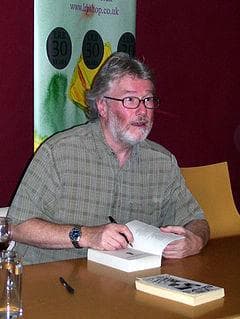
Iain Banks was a Scottish author, writing mainstream fiction as Iain Banks and science fiction as Iain M. Banks, adding the initial of his adopted middle name Menzies. After the success of The Wasp Factory (1984), he began to write full time. His first science fiction book, Consider Phlebas, appeared in 1987, marking the start of the Culture series. His books have been adapted for theatre, radio, and television. In 2008, The Times named Banks in their list of "The 50 greatest British writers since 1945".







