“The love of money is the root of all evil; but it is not for the ministers of the Church to say so, if they are unwilling to give up their own superfluities.”
— Reflecting on Mr. Harding's reluctance to give up his income despite the controversy.

Anthony Trollope (2013)
Genre
Historical Fiction
Reading Time
176 min
Key Themes
See below
Sign in to track this book
In a quiet cathedral town, an upright warden's peaceful life is disrupted when a newspaper accuses him of embezzling charity funds, sparking public debate and personal distress.
Septimus Harding, a kind and somewhat naive clergyman, is the Warden of Hiram's Hospital, an almshouse for twelve elderly men in Barchester. He also serves as a precentor at Barchester Cathedral. The hospital provides Mr. Harding with a comfortable income of £800 a year, while the twelve bedesmen receive only £1 1s. 6d. a month each. This arrangement, established by John Hiram's will, has existed for centuries. Mr. Harding, a widower, lives a quiet life, enjoying music and the company of his younger daughter, Eleanor. His elder daughter, Susan, is married to Archdeacon Grantly, a powerful churchman. This peace is disturbed when John Bold, a reform-minded surgeon and Eleanor's suitor, investigates the hospital's financial structure, believing the bedesmen are being cheated.
John Bold, driven by a desire for social justice, begins gathering evidence about the unequal income distribution at Hiram's Hospital. He believes the Warden's substantial salary, from the hospital's endowments, should go to the bedesmen. Bold is also in love with Eleanor Harding, which complicates his actions. Archdeacon Grantly, Mr. Harding's son-in-law, sees Bold's investigation as a direct attack on the Church. The Archdeacon strongly defends clerical privileges and views Bold as a dangerous radical. He urges Mr. Harding to fight Bold's accusations, fearing that any concession will weaken the Church hierarchy. Mr. Harding, however, is deeply troubled by the accusations and the potential for public scandal.
Bold encourages the bedesmen to sign a petition. Initially, they are hesitant because they respect Mr. Harding's kindness. However, Bold's persistence and the promise of more income persuade some, especially Bunce, the most vocal among them. Others, like Moody, remain loyal to Mr. Harding, confused by the conflict. The Archdeacon tries to counter Bold's influence, assuring the bedesmen that their interests are best served by the current arrangement and Mr. Harding's continued care. This creates division among the bedesmen; some demand their perceived rights, while others fear the disruption.
The controversy around Hiram's Hospital gains national attention when The Jupiter, a major London newspaper known for its reformist views, publishes a harsh article. The article, likely influenced by Bold, exaggerates the situation, painting Mr. Harding as a greedy clergyman exploiting the poor. This public condemnation deeply hurts Mr. Harding, a man of conscience. The Archdeacon is furious about the newspaper's involvement, seeing it as an attack on the Church. The Jupiter's articles increase the pressure on Mr. Harding and the diocese, making a quiet resolution impossible. The scandal becomes a national discussion, forcing a public reckoning.
Despite the Archdeacon's insistence that he fight the case vigorously, Mr. Harding doubts the fairness of his position. He consults Sir Abraham Haphazard, a prominent barrister, who assures him his legal claim to the income is sound. Sir Abraham's legal arguments, however, do not ease Mr. Harding's troubled conscience. He cares more about the intent of John Hiram's will and the perception of justice than legal technicalities. The idea of receiving a large income while the bedesmen struggle, especially after the public outcry, becomes unbearable. He feels a strong moral duty to do what is right, even if it means giving up his comfort and position.
Eleanor Harding is distressed by her father's pain and blames John Bold, the man she loves, for starting the controversy. Her suffering deeply affects Bold, who begins to regret the unintended consequences of his actions. He realizes his pursuit of justice has caused great personal anguish to the man he respects and the woman he hopes to marry. Eleanor confronts Bold, appealing to his compassion and love for her. This emotional plea, along with his growing understanding of Mr. Harding's integrity, softens Bold's resolve. He struggles with the conflict between his principles and his feelings, ultimately deciding that Eleanor and Mr. Harding's happiness is most important.
Despite the Archdeacon's strong objections and legal advice confirming his rights, Mr. Harding makes the difficult decision to resign as Warden of Hiram's Hospital. He cannot bear to hold a position publicly seen as unjust, regardless of its legal standing. He believes his conscience demands this sacrifice. He informs his family, including a distraught Archdeacon Grantly, of his decision. The Archdeacon is furious, seeing it as a betrayal of the Church and a win for radicals. Mr. Harding, however, finds some peace in his choice, believing it to be the only honorable path. He gives up his comfortable home and income for a simpler life.
After Mr. Harding's resignation and further thought, John Bold decides to drop his legal action against Hiram's Hospital. He is deeply moved by Mr. Harding's selfless act and Eleanor's love for her father. Bold realizes that while his initial motives were honorable, the methods and results caused more harm than good to those he cares about. He approaches Mr. Harding to express his regret and inform him of his decision. This withdrawal does not immediately solve the underlying issues or the future of the hospital's endowments, but it shows a personal reconciliation and a change in Bold's priorities. He prioritizes his relationship with Eleanor and the well-being of the Harding family.
Following his resignation, Mr. Harding moves into a small house in Barchester and continues his duties as Precentor, a position with a much smaller income but genuine satisfaction. He is no longer burdened by the controversy and finds peace in his music and service to the cathedral. The bedesmen do not immediately receive the increased income they hoped for, as the legal complexities of the hospital's funds remain. However, John Bold and Eleanor Harding's relationship grows. Bold, having abandoned his crusade against Mr. Harding, is now free to pursue Eleanor without the previous conflict. They eventually become engaged, to Mr. Harding's relief and happiness.
Despite Mr. Harding's resignation and Bold's withdrawal of the case, the main question of Hiram's Hospital's endowments remains unanswered. The legal and bureaucratic systems around the charity are slow. The bedesmen do not immediately get the financial benefits they were promised, and the hospital's future administration is uncertain. Trollope uses this unresolved ending to show how complex institutional reform is and how difficult it is to change established systems. The novel ends with Mr. Harding finding personal peace, but the larger societal issues he faced are far from settled, suggesting that such battles are ongoing and rarely have simple, immediate solutions.
The Protagonist
Mr. Harding transforms from a complacent, if benevolent, figure into a man who prioritizes moral integrity over material comfort and social standing.
The Supporting/Love Interest
Bold learns the importance of compassion and the unintended consequences of his actions, shifting from an uncompromising reformer to a more empathetic individual.
The Supporting/Love Interest
Eleanor matures through the emotional turmoil, learning to balance loyalty with love and ultimately finding happiness.
The Antagonist/Supporting
The Archdeacon remains steadfast in his conservative views, serving as a foil to Mr. Harding's moral introspection and highlighting the institutional resistance to reform.
The Supporting
Susan's character remains largely consistent, primarily serving to reflect the dynamics between her father and husband.
The Supporting
Bunce's loyalty shifts from gratitude to grievance, illustrating the impact of external influence on perceived rights.
The Mentioned
N/A - serves as a static representation of the legal system.
The Mentioned
N/A - serves as a plot device representing external public pressure.
The novel explores the difference between what is legal and what is fair. Mr. Harding's dilemma is central: legally, he is entitled to his income as Warden, as confirmed by Sir Abraham Haphazard. However, his conscience tells him that the spirit of John Hiram's will, meant for the poor bedesmen, is being violated. John Bold's initial campaign aims for justice, but his methods are legally aggressive. The story asks if following the law always leads to fair results, and if true justice requires a moral rather than just a legal approach.
“What right had he to be Warden, with five hundred a year, while these twelve old men had to share among them but a hundred a year?”
Mr. Harding's character shows the theme of individual conscience and integrity. Despite great pressure from Archdeacon Grantly to defend his position and legal assurances from Sir Abraham Haphazard, Mr. Harding cannot reconcile his comfortable income with the bedesmen's needs, especially after public scrutiny. His decision to resign, driven by his moral compass and a desire to do what he believes is right, even at great personal cost, highlights the power of individual integrity over institutional demands and money. His peace of mind after resigning emphasizes the value of a clear conscience.
“He knew that he ought to be happy, and yet he was not. He had done his duty, and yet he had not done it.”
The novel clearly shows the growing power of the press, specifically through the fictional newspaper, The Jupiter (similar to The Times). The Jupiter's sensational articles turn a local church dispute into a national scandal, putting great pressure on Mr. Harding and the Church. This theme illustrates how public opinion, shaped and amplified by the media, can challenge established authority and make institutions examine themselves. It also touches on how the press can oversimplify complex issues and cause personal suffering in its pursuit of public interest.
“It was the Jupiter that had done this. It was the Jupiter that had made Mr. Harding a byword for ecclesiastical rapacity.”
The conflict between the established, conservative Church, represented by Archdeacon Grantly, and the rising call for reform, championed by John Bold, is a main theme. The Archdeacon strongly defends the status quo, seeing any challenge to church privileges as an attack on society. Hiram's Hospital itself, with its centuries-old, arguably outdated, financial structure, represents institutional slowness. Bold, conversely, embodies the spirit of reform, seeking to modernize such institutions. The novel suggests that while reform is often necessary, it is a slow, complex, and sometimes painful process, met with resistance from those who benefit from the current system.
“He was a conservative in every fibre of his heart, and was well aware that the safety of the Church depended on its being able to withstand the attacks of its enemies.”
The formal legal challenge to Hiram's Hospital's finances.
The threat and initiation of a lawsuit by John Bold serve as the primary external conflict driving the plot. This legal action forces Mr. Harding to confront the moral implications of his position and draws the attention of the wider public and the press. It highlights the clash between legal precedent and moral justice, and acts as a catalyst for Mr. Harding's internal struggle and ultimate decision to resign. The lawsuit also brings the various characters into direct opposition, exposing their different motivations and values.
The sensationalist London newspaper that publicizes the scandal.
The Jupiter acts as a powerful external force, representing public opinion and the burgeoning influence of the press in Victorian society. Its articles amplify the controversy, transforming a local issue into a national debate. This device highlights the shift in power from traditional institutions to the media, demonstrating how public scrutiny can force accountability and create immense personal pressure on individuals like Mr. Harding. It also serves as a symbol of the broader reformist spirit of the age.
A recurring symbol of Mr. Harding's inner peace and gentle nature.
Mr. Harding's cello is more than just a musical instrument; it symbolizes his gentle disposition, his love for harmony, and his retreat from the harsh realities of the world. Playing his cello brings him solace and represents his inner, spiritual life, distinct from the worldly concerns of wealth and power. When he is deeply troubled by the scandal, his ability to play is affected, indicating his distress. Its presence underscores his simple, unpretentious character and his yearning for tranquility amidst conflict.
The twelve elderly recipients of Hiram's Hospital's charity.
The bedesmen serve as the direct beneficiaries of the hospital and the unwitting pawns in the larger conflict. Their ambiguous position—grateful for Mr. Harding's kindness but also susceptible to the lure of greater income—highlights the complexities of charity and the potential for manipulation. They represent the 'poor' whose welfare is ostensibly at the heart of the dispute, yet their individual voices and needs are often overshadowed by the legal and institutional battles fought on their behalf.
“The love of money is the root of all evil; but it is not for the ministers of the Church to say so, if they are unwilling to give up their own superfluities.”
— Reflecting on Mr. Harding's reluctance to give up his income despite the controversy.
“It is not sufficient for a man to be good; he must also appear to be good.”
— The public's perception of Mr. Harding's situation, regardless of his personal integrity.
“There is nothing that a man may not get used to, if he will only try.”
— Mr. Harding's struggle to adapt to the new realities and public scrutiny.
“The greatest curse to which a man can be subjected is the necessity of earning his bread.”
— A cynical observation on the burdens of professional life, especially for those in positions of privilege.
“That power of the press, which is now so great, had then hardly begun to be felt.”
— An anachronistic reflection on the growing influence of newspapers in shaping public opinion.
“He knew that he was right, and knowing that he was right, he was determined to stand by it.”
— Mr. Harding's steadfastness in his moral convictions, even when unpopular.
“It is very hard for a man to be a judge in his own cause.”
— The inherent difficulty in objectively assessing one's own actions and motivations.
“There are some things which a man cannot do, and some things which a man ought not to do.”
— Mr. Harding's moral compass guiding his decisions in the face of legal and public pressure.
“The public is an ass, a great ass, but still an ass that must be respected.”
— Dr. Grantly's pragmatic view of dealing with public opinion, however misguided.
“What is the good of a man having a conscience if he does not follow it?”
— Mr. Harding's internal struggle and ultimate decision to resign based on his conscience.
“One cannot always do what one wishes, but one can always do what is right.”
— Mr. Harding's resolution to act morally despite personal cost.
“It is not by what a man says, but by what he does, that he is to be judged.”
— The contrast between rhetoric and action in the various characters' approaches to the controversy.
“For the love of money is the root of all evil, and what are we to say of those who love it so dearly?”
— A recurring theme, questioning the motives of those involved in the dispute over the almshouse funds.
“There is no knowing what a day may bring forth, or what it may take away.”
— A reflection on the unpredictability of life and fortune, especially in Mr. Harding's changing circumstances.
Ready to see how well you understood this book? Take our interactive quiz with 10 questions.
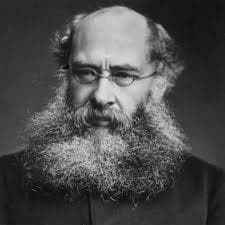
Anthony Trollope was an English novelist and civil servant of the Victorian era. Among his best-known works is a series of novels collectively known as the Chronicles of Barsetshire, which revolves around the imaginary county of Barsetshire. He also wrote novels on political, social, and gender issues, and other topical matters.