“There is no point in having a mind if you never change it.”
— Ada reflects on her growth and learning after escaping her abusive home.

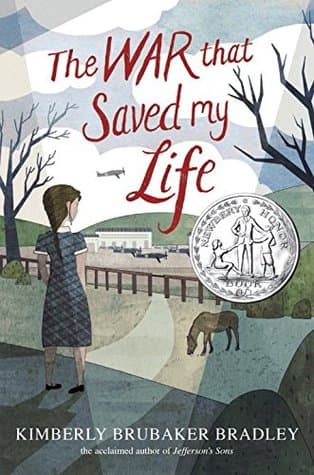
Kimberly Brubaker Bradley (2015)
Genre
Children's / Historical Fiction / Young Adult
Reading Time
360 min
Key Themes
See below
Sign in to track this book
A young girl with a clubfoot escapes abuse in WWII London, finds a new home, learns to ride a pony and read, and forms a loving family amidst the war.
Ada, a ten-year-old girl with an untreated clubfoot, has spent her entire life locked inside their single-room London apartment by her abusive mother, Mam. Mam is ashamed of Ada's foot and constantly punishes her, not allowing her outside or even to stand by the window. Ada's younger brother, six-year-old Jamie, is her only companion. When World War II intensifies and the government announces the evacuation of children from London, Mam decides to send Jamie away but intends to keep Ada imprisoned. Desperate for freedom, Ada secretly teaches herself to walk despite intense pain. On the morning of the evacuation, she sneaks out with Jamie, determined not to be left behind, and they join the line of children boarding trains to the countryside.
Ada and Jamie arrive in the small village of Kent with other evacuated children. They are dirty, underfed, and Ada's foot causes her great pain and embarrassment. When the local women come to choose children, no one wants to take Ada because of her visible disability and unkempt appearance. Eventually, a woman named Susan Smith, who at first refused to take any children, is made by Miss Emmeline Thornton, the local organizer, to take Ada and Jamie. Susan is a quiet, reclusive woman still grieving the death of her close friend, Becky. She states she does not want the children and warns them she is 'not a nice person,' but she reluctantly gives them a home.
Life with Susan is very different from their life with Mam. Susan gives them food, clean clothes, and a warm bed. For the first time, Ada is allowed outside and experiences the world beyond a single room. She feels the grass, sees the sky, and breathes fresh air. Susan, though at first distant, begins to show small acts of kindness, like bathing Ada's foot and giving her crutches she finds in the shed. Ada, at first cautious and expecting abuse, slowly starts to relax. She learns to ride Susan's pony, Butter, a skill that gives her great joy and a sense of accomplishment, despite her clubfoot.
Susan, seeing Ada's desire for knowledge, begins to teach her to read and write. Ada, having never been to school, eagerly learns every lesson. She also works hard at learning to ride Butter, the pony Susan inherited. Despite her disability, Ada forms a strong bond with Butter and becomes a confident rider, finding freedom and power on the pony's back. These new skills open new worlds for Ada and build her self-esteem. Jamie, meanwhile, thrives in the countryside, making friends and attending school, though he sometimes struggles to understand Ada's past trauma.
The war continues to be part of their lives. Air raids become more frequent, and the village prepares for possible invasion. Ada, having heard adult conversations, becomes sure there are German spies in the village and patrols the coast on Butter, searching for them. This pursuit gives her purpose and a sense of control, though it also shows her strong imagination and lasting worries. Susan often finds Ada's spy-hunting amusing but understands it is Ada's way of dealing with the unpredictable world. One day, while on patrol, Ada sees a German plane crash into the sea, bringing the war's reality close.
Seeing the severity of Ada's clubfoot and the pain it causes, Susan talks to a doctor and arranges for Ada to have surgery in London. This act of care deeply moves Ada, who has never experienced such selfless love. The surgery is successful, though Ada still needs time to recover, and her foot will not be perfectly 'normal.' During her recovery, Susan's affection for both Ada and Jamie becomes clear, and Ada, in turn, begins to truly love Susan, calling her 'Susan' rather than 'Miss Smith.' The three of them form a real family, celebrating holidays and sharing daily life.
Just as Ada is recovering and their new family feels secure, Mam unexpectedly arrives in Kent. She says she wants her children back, but her real reason seems to be the government allowance she would get for them. Ada and Jamie are terrified, remembering Mam's cruelty and the life of confinement. Susan, though heartbroken, understands that legally, Mam has the right to take her children. Ada is especially devastated, fearing a return to her dark, abusive past and the loss of her freedom and the love she has found with Susan. The children try to hide and resist, but Mam's legal claim is strong, and Susan must comply.
Mam takes Ada and Jamie back to their old, dirty apartment in London. The return is a nightmare for Ada, who is again confined and subjected to Mam's verbal and physical abuse. Jamie also suffers. Ada realizes that Mam only wants them for the money and has no real affection for them. During a severe air raid, a bomb hits a nearby building, causing their apartment block to shake violently. Seizing the opportunity amid the chaos and fear, Ada, despite her recovering foot, gathers Jamie, and they manage to escape the collapsing building and their mother, fleeing into the bombed streets.
After escaping Mam, Ada and Jamie are alone and lost in war-torn London. They wander through the damaged streets, seeing the destruction. Jamie is very frightened. They eventually meet a kind air raid warden who helps them find a train back to Kent. Their journey is full of fear and uncertainty, but Ada's determination to return to Susan drives them. They arrive back in the village, exhausted and still in shock, going directly to Susan's cottage, hoping she will still take them in.
Ada and Jamie arrive at Susan's cottage, scared but hopeful. Susan, overjoyed and relieved to see them alive, immediately hugs them. She had been upset since Mam took them, fearing for their safety. The children tell about their difficult escape from London. Susan, now fully committed to them, promises to do everything to keep them safe and with her. Ada, finally feeling truly loved and secure, realizes she has found her real home and family with Susan. The war still goes on, but within their small cottage in Kent, Ada, Jamie, and Susan have built a strong, loving family, ready to face whatever comes next together.
The Protagonist
Ada transforms from a physically and emotionally crippled child into a confident, loved, and hopeful girl, finding her voice and a true family.
The Supporting
Jamie blossoms from a fearful child into a more carefree and happy boy, embracing a stable and loving environment.
The Supporting
Susan transforms from a solitary, grieving woman into a loving, maternal figure, finding purpose and happiness with Ada and Jamie.
The Antagonist
Mam remains static in her cruelty, her actions serving as the catalyst for Ada's escape and the ultimate symbol of the past Ada must overcome.
The Supporting
Miss Thornton's role is largely functional; she facilitates the children's placement and later supports Susan's efforts.
The Supporting
Colonel McPherson serves as a consistent, positive adult influence, validating Ada's intelligence and observations.
The Supporting
Butter helps Ada gain physical skills and emotional confidence, acting as a catalyst for her personal growth.
The Mentioned
Stephen's role is minor, primarily to illustrate Jamie's social integration.
Ada's journey is about discovering who she is beyond her clubfoot and her mother's abuse. Confined for so long, she at first defines herself by her disability and her mother's cruel words. By learning to read, riding Butter, and experiencing kindness from Susan, Ada begins to shed the shame and adopt a new, positive self-image. She learns that her worth is not defined by her physical appearance or her past. Her quest to find German spies is also a way of self-discovery, allowing her to feel capable and brave. She discovers she is worthy of love and can achieve great things.
“My foot was a clubfoot. It was a badge of shame, a mark that I was bad. My mam had told me so.”
The novel directly shows the severe physical and emotional abuse Ada suffers from her mother. This abuse, including confinement, starvation, and verbal degradation, shapes Ada's initial view of the world and her deep fear. However, the story also shows human resilience. Despite her trauma, Ada's spirit remains strong. Her determination to walk, to escape, and to protect Jamie shows great inner strength. Her ability to eventually trust and love Susan, despite her past, shows her capacity for healing and overcoming difficulty.
“I was ten years old. I'd never been outside. Not ever. My mam said it was because of my foot. My clubfoot. She said I was a cripple.”
The idea of family is central to the story, exploring the difference between biological ties and chosen bonds. Ada and Jamie's biological family is one of cruelty and neglect. In contrast, their relationship with Susan becomes a true family, built on love, care, and mutual respect. Susan, at first an unwilling guardian, becomes a devoted adoptive mother, giving the children a stable and loving home. The book suggests that family is not just about blood, but about who nurtures, protects, and loves you unconditionally. The climax, with Mam's return, shows the clear difference between these two definitions of family.
“I had a home. It wasn't my mam's home, and it wasn't London. It was Susan's home, and it was mine.”
A core theme is the contrast between freedom and confinement, both physical and emotional. Ada's early life is defined by literal imprisonment in a single room. Her escape to the countryside represents a deep liberation, allowing her to experience the natural world and the simple joys of movement for the first time. However, she also carries emotional confinement from her past trauma, struggling to trust and express herself. As she heals, she gains emotional freedom. The war itself represents a form of global confinement and threat, yet within this context, Ada finds personal liberation and an expansion of her world.
“The wind was a living thing. It pushed against my face, tugged at my hair. It was freedom.”
Set during World War II, the novel shows the impact of war on ordinary civilians, especially children. The evacuation of children from London is a direct result of the bombing raids, forcing families apart. The constant threat of air raids, the presence of soldiers, and the scarcity of resources are part of the daily lives of the characters in Kent. The bombing of London and Ada and Jamie's difficult escape during a raid show the immediate and devastating physical dangers. The war acts as a catalyst for Ada and Jamie's journey, forcing them into a new life that ultimately saves them, yet its constant threat shows the fragility of their newfound peace.
“The sirens wailed. It was a sound that meant danger, a sound that meant death.”
Provides intimate access to Ada's thoughts, feelings, and experiences.
The story is told entirely from Ada's point of view, allowing readers to experience her confinement, pain, fear, and eventual joy directly through her eyes. This narrative choice creates a deep sense of empathy for Ada, making her struggles and triumphs incredibly personal. We understand her confusion, her initial distrust of kindness, and her gradual emotional awakening because we are privy to her innermost thoughts, especially her unique perspective on the world, having never seen it before. It makes her journey of self-discovery all the more poignant.
Represents Ada's physical and emotional confinement, shame, and eventual healing.
Ada's clubfoot is a central symbol throughout the novel. Initially, it represents her physical imprisonment, her mother's cruelty, and Ada's deep-seated shame and feeling of being 'bad.' It is the literal chain that keeps her confined. As the story progresses, the foot symbolizes her journey of healing: learning to walk on it, riding Butter despite it, and finally undergoing surgery. While never perfectly 'normal,' the foot's healing represents Ada's broader emotional and psychological recovery, her acceptance of herself, and her ability to move forward, both literally and figuratively, into a life of freedom and love.
Symbolizes freedom, independence, and Ada's connection to the natural world.
Butter, Susan's pony, is a powerful symbol for Ada. For a child who has spent her life confined indoors, riding Butter represents ultimate freedom and movement. It's an activity where her clubfoot doesn't hinder her, but rather, she excels, gaining confidence and a sense of power. Butter connects Ada to the natural world she was denied, and their bond is one of trust and mutual respect. The pony helps Ada build physical strength and emotional resilience, becoming a tangible representation of her ability to overcome her limitations and embrace a life beyond her past.
A historical event acting as the catalyst for Ada's escape and new life.
The historical event of the evacuation of children from London during WWII serves as the crucial plot device that sets Ada's story in motion. Without the evacuation, Ada would likely have remained imprisoned by her mother. It provides the external force that allows Ada to escape her abusive home and embark on her journey of self-discovery and healing. The war, while a backdrop of danger, paradoxically creates the opportunity for Ada and Jamie to find safety, love, and a new family in the Kent countryside. It highlights how major historical events can profoundly alter individual lives.
“There is no point in having a mind if you never change it.”
— Ada reflects on her growth and learning after escaping her abusive home.
“I was not what she wanted, but I was what she had.”
— Ada thinks about her relationship with her mother, who abuses and neglects her.
“Sometimes you have to do things you don't want to do, to get to where you want to be.”
— Ada pushes through physical pain to learn to walk and escape her confinement.
“It's not what you look at that matters, it's what you see.”
— Susan, Ada's caretaker, teaches Ada to appreciate the world beyond her past limitations.
“You can't be brave if you're not scared.”
— Ada realizes that courage comes from facing fears, like her journey during World War II.
“I had been invisible for so long, I didn't know how to be seen.”
— Ada struggles with her newfound freedom and attention after leaving London.
“The war that saved my life was the war that took everything from me.”
— Ada reflects on the paradox of World War II bringing her both loss and salvation.
“Love isn't about what you get. It's about what you give.”
— Susan shows Ada unconditional care, contrasting with her mother's abuse.
“I learned that the world is big, and I am small, but I matter.”
— Ada gains a sense of self-worth through her experiences in the countryside.
“Sometimes the hardest battles are the ones we fight inside ourselves.”
— Ada overcomes internal struggles with trust and self-doubt.
“A home isn't a place. It's the people who make you feel safe.”
— Ada finds a true home with Susan, despite the upheaval of war.
“You don't have to be perfect to be loved.”
— Susan reassures Ada that her worth isn't tied to her physical disability or past.
“The past is a story we tell ourselves. We can choose to rewrite it.”
— Ada begins to reframe her traumatic childhood as she heals.
“Freedom is a heavy burden, but it's one worth carrying.”
— Ada grapples with the responsibilities that come with her new independence.
Ready to see how well you understood this book? Take our interactive quiz with 10 questions.

Biography coming soon.

Dan Gemeinhart
4.5

Kate O'Hearn
4.4

Jeanne Birdsall
4.4

Jen Wang
4.4
Wendelin Van Draanen
4.3

John Marsden
4.3

Chris Van Allsburg
4.3
Jennifer A. Nielsen
4.2