BookBrief
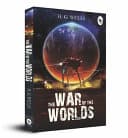
The War of the Worlds cover
Archivist's Choice

The War of the Worlds

H.G. Wells (2018)

Genre

Fantasy / Science Fiction

Reading Time

142 min

Key Themes

See below

Track Your Reading

Sign in to track this book

When towering tripods descend from Mars, humanity's dominion is shattered, revealing the terrifying fragility of civilization against an alien invasion armed with heat-rays and black smoke.

Synopsis

When a mysterious cylinder crashes in Horsell Common, near London, an unnamed narrator's quiet life is shattered. Curious locals gather, only to be incinerated by a heat-ray as a towering, three-legged Martian fighting machine emerges. This is just the first of many cylinders to land across England, unleashing an invasion force. The Martians, grotesque tentacled creatures piloting colossal tripods, systematically destroy towns and cities with their heat-rays and poisonous black smoke, reducing humanity to a panicked, fleeing mass. The narrator, separated from his wife, desperately navigates the devastated land, witnessing horror and the collapse of civilization. He encounters a delusional curate and a pragmatic, but ultimately broken, artilleryman, each offering different views on humanity's demise and future. As the Martians spread their crimson 'red weed' across the country, transforming Earth, the narrator believes all hope is lost. Then, the invaders suddenly and mysteriously perish, succumbing to Earth's common bacteria to which they have no immunity. The narrator eventually reunites with his wife, and humanity begins the slow process of rebuilding, changed by the brief but devastating war.
Reading time
142 min
Difficulty
Medium
Pacing
Fast
Mood
Apocalyptic, Suspenseful, Bleak, Thought-provoking
✓ Read this if...
You enjoy classic science fiction, tales of alien invasion, or stories about humanity facing an existential threat and the collapse of society.
✗ Skip this if...
You prefer modern, character-driven narratives, or find Victorian prose difficult to engage with.

Plot Summary

The Cylinder Falls

The Narrator, a philosophical writer, sees a strange, green meteor fall onto Horsell Common near his home in Maybury, Surrey. Initially mistaken for a meteor, it soon reveals itself to be a large, cylindrical object. A crowd gathers, including Ogilvy, an astronomer, who dismisses the idea of life on Mars. The Narrator visits the site and sees the cylinder embedded in the sandy pit. He describes the growing public curiosity and the general excitement mixed with slight unease, as people from Woking and other nearby towns flock to witness the spectacle.

The Martians Emerge

The top of the cylinder unscrews, and a terrifying creature, a Martian, slowly emerges. The Narrator describes them as large, greyish, oily bodies, with V-shaped mouths and prominent eyes, lacking lungs or digestive systems. Three men, including Ogilvy, approach the pit with a white flag, trying to communicate. Suddenly, a blinding flash erupts, and a Heat-Ray incinerates them and the surrounding trees. The Narrator, witnessing this horror from a safe distance, realizes the danger and flees, narrowly escaping the initial destruction and the alien's aggression.

The Martian Offensive Begins

More cylinders land across the English countryside, and from them, the Martians build massive, three-legged 'fighting-machines' or tripods. These metallic giants, armed with the Heat-Ray and later, the Black Smoke, begin destroying towns and military forces. The Narrator, after a harrowing journey home and a brief reunion with his wife, understands the scale of the invasion. He sends his wife to safety in Leatherhead, believing she will be safer there, while he returns to his home in Maybury to observe the catastrophe, driven by curiosity and a sense of duty to document events.

Flight and the Curate

London falls into chaos as the Martians advance. The Narrator, after a desperate search for his wife, joins the mass exodus from the city. He encounters a terrified and increasingly deranged Curate, whom he takes under his protection. The Curate's religious fanaticism and constant pronouncements of divine judgment become a burden. They witness horrific scenes of destruction and human desperation, including the 'Fighting Machine' on the road to London, and the destruction of Weybridge. The Narrator struggles to maintain his sanity and pragmatism amidst the Curate's escalating hysteria and the widespread devastation.

Trapped in the Ruined House

While seeking shelter, the Narrator and the Curate become trapped in a ruined house in Sheen, after a Martian cylinder crashes nearby. They hide in the scullery for days, observing the Martians' activities through a crack in the wall. The Martians establish a base, constructing a huge gantry and other machinery, and begin to harvest human blood. The Curate's increasingly loud and irrational behavior puts them both in peril, as his cries threaten to expose their hiding place. The Narrator is forced to knock him unconscious to silence him, an act of self-preservation.

Escape and the Artilleryman

After the Curate's death – presumably from Martian detection or starvation – the Narrator escapes the ruined house. He wanders through a desolate, Martian-ravaged land, encountering an artilleryman. The artilleryman, initially appearing resourceful, outlines a plan to rebuild civilization underground, but his talk quickly becomes vague and impractical. The Narrator recognizes the man's delusion and, disheartened by his lack of true pragmatism, leaves him to continue his solitary journey through the devastated countryside, further cementing his sense of isolation.

Journey to London and the Red Weed

The Narrator makes his way back to London, finding the city eerily silent and deserted. The Martians have introduced a crimson alien vegetation, the 'Red Weed,' which spreads rapidly across the land, turning the Thames a bloody red. He sees the Martians' discarded fighting machines, now inert, and observes the widespread devastation. The silence of the city and the alien flora create a chilling atmosphere of post-apocalyptic desolation. He is struck by the complete absence of human life and the overwhelming dominance of the alien presence.

The Martians' Demise

To the Narrator's astonishment, he discovers that the Martians are dying. Their fighting machines are motionless, and the creatures themselves lie lifeless. The cause of their demise is not human resistance, but Earth's microscopic bacteria, to which the Martians, having no natural immunity, are vulnerable. This revelation highlights the planet's own defense mechanisms and the unpredictable nature of biological warfare. The Narrator reflects on the irony of humanity's helplessness against the invaders, only for a microscopic force to achieve what no weapon could.

Reunion and Aftermath

The Narrator, weakened and traumatized, makes his way to his cousin's house in Putney, where he is unexpectedly reunited with his wife, who had safely reached Leatherhead. Their reunion is emotional and filled with relief, but also tinged with the lingering trauma of their experiences. In the aftermath, humanity begins the slow process of rebuilding, but the world is changed. The invasion is a stark reminder of humanity's vulnerability and the potential for life beyond Earth. The Narrator contemplates the lessons learned and the shift in human perspective caused by the alien encounter.

The Brother's Account

Interspersed throughout the Narrator's account are chapters detailing the experiences of his younger brother in London. The brother witnesses the panic and chaos as the Martians approach the city, describing the mass evacuations and the breakdown of order. He joins a desperate throng attempting to escape by sea from the east coast. He describes the harrowing journey, the Martian attack on refugee ships, and his eventual escape to the continent, highlighting the widespread nature of the invasion and the desperate measures people took to survive. His perspective offers a broader view of the national catastrophe.

Principal Figures

The Narrator (George)

The Protagonist

Transforms from an intellectual observer into a hardened survivor, deeply traumatized but profoundly changed by the experience.

The Narrator's Wife

The Supporting

Her journey, though not directly narrated, represents the widespread civilian experience of fleeing and seeking safety.

The Curate

The Supporting

Begins as a man of God, descends into madness and fanaticism, ultimately leading to his demise.

The Artilleryman

The Supporting

Starts with a seemingly practical outlook, but quickly reveals a slide into wishful thinking and idleness.

The Martians

The Antagonists

Arrive as conquerors, dominate Earth, and are ultimately defeated by microscopic life.

The Narrator's Brother

The Supporting

Navigates the chaos of London's fall and successfully escapes the country by sea.

Ogilvy

The Mentioned

Introduced as a skeptical scientist, becomes an early casualty, signifying the immediate danger.

Henderson

The Mentioned

A minor character who quickly perishes, illustrating the Martians' immediate threat.

Themes & Insights

Colonialism and Imperialism Reversed

The novel directly mirrors the colonial practices of Victorian Britain, but with humanity as the colonized. Wells critiques the arrogance of European powers by showing how helpless humans are when faced with a technologically superior invader, just as indigenous populations were against European colonizers. The Martians' ruthless efficiency in clearing Earth for their own use, without regard for human life, parallels historical accounts of imperial expansion. This is evident in their use of advanced weaponry to displace and destroy, much like European powers did with their superior arms. The Narrator often reflects on humanity's prior belief in its own dominance, now shattered.

And we men, the creatures who inhabit this Earth, must be to them at least as alien and remote as they are to us. This was the beginning of the rout of civilisation, of the massacre of mankind.

The Narrator

The Fragility of Civilization and Human Arrogance

Wells shows the rapid collapse of human society in the face of an unprecedented threat. The novel explores how quickly order becomes chaos, panic, and self-preservation when confronted with an existential crisis. Before the invasion, humanity is depicted as complacent and arrogant, believing itself to be the dominant species. The Martians' arrival shatters this illusion, revealing humanity's vulnerability and the thin veneer of its technological and social advancements. The breakdown of infrastructure, the mass hysteria, and the individual acts of desperation, like the Curate's madness, all show this fragility. The irony of humanity's defeat by bacteria further emphasizes this theme.

No one gave a thought to the Martians coming. It seemed to me that we were all too busy with our own affairs.

The Narrator

Survival and Adaptation

The Narrator's journey shows the human will to survive, even in the most dire circumstances. He adapts to a world turned upside down, constantly seeking shelter, food, and safety. His experiences with the Curate and the Artilleryman highlight different, often flawed, human coping mechanisms in crisis. Humanity's eventual survival, not through its own might but through biological adaptation, shows that survival often depends on unforeseen factors and the ability to adapt to new environments. The novel suggests that true resilience lies not just in strength, but in the inherent biological and psychological capacity to endure.

I was a man of peace, but I knew now that I had to fight for my life.

The Narrator

The Indifference of the Universe and Nature's Power

The Martians arrive not out of malice, but out of necessity, driven by their dying planet. Their actions are portrayed as a natural, if brutal, extension of their will to survive, mirroring natural selection. The Martians' defeat by Earth's microscopic bacteria emphasizes the power of nature and the universe's indifference to the struggles of any single species. Humanity's technological prowess is useless against the most fundamental biological forces. This theme suggests that despite humanity's advancements, it remains subject to natural laws and the vast, uncaring cosmos, reminding readers of their humble place in the grand scheme.

By the toll of a billion deaths, man has bought his birthright, and paid for it. But the Martians were not to be deterred by a few million human lives.

The Narrator

Plot Devices & Literary Techniques

First-Person Narration (Unreliable)

The story is told from the subjective and often traumatized perspective of the Narrator.

The entire novel is recounted by an unnamed Narrator, primarily from his personal experiences and observations. This first-person perspective creates immediacy and tension, drawing the reader directly into his fear and confusion. However, it also means the information is limited to what he sees, hears, or infers, making his account inherently subjective and at times unreliable, especially when he's under extreme stress or isolated. The inclusion of his brother's account provides a crucial, albeit still personal, counterpoint, broadening the scope of the invasion's impact beyond a single individual's experience.

The Heat-Ray

The Martians' primary weapon, capable of instant incineration.

The Heat-Ray is the Martians' initial and most terrifying weapon. Described as an invisible beam that generates intense heat, it instantly incinerates anything in its path, from trees to humans. This device symbolizes the Martians' overwhelming technological superiority and their ruthless efficiency. Its sudden and devastating deployment in the opening chapters immediately establishes the Martians as an unstoppable force, shattering human complacency and rendering conventional weaponry useless. It's a stark representation of the destructive potential of advanced, alien technology.

The Black Smoke

A poisonous gas used by the Martians for widespread extermination.

The Black Smoke is another devastating Martian weapon, a heavy, poisonous gas that rolls across the landscape, suffocating all organic life. Unlike the precise Heat-Ray, the Black Smoke is a weapon of mass extermination, creating vast areas of death and desolation. It represents the Martians' systematic approach to clearing Earth of its native inhabitants, highlighting their alien cruelty and efficiency. Its deployment further underscores humanity's helplessness against the invaders, as even hiding provides little defense against its pervasive reach.

The Tripods (Fighting-Machines)

Massive, three-legged Martian war machines that dominate the landscape.

The Martian Tripods are colossal, three-legged walking machines that serve as the primary vehicles for the Martians and their weaponry. They are described as metallic, agile, and terrifying, moving with an alien grace and power. These machines are a potent symbol of Martian technological might and their complete dominance over the battlefield. Their height and mobility allow them to stride over human defenses, firing the Heat-Ray and deploying the Black Smoke from above. They embody the overwhelming and alien nature of the invasion, making human resistance seem futile.

Critical analysis

Notable Quotes

Quiz

Test Your Knowledge

Ready to see how well you understood this book? Take our interactive quiz with 10 questions.

10
Questions
~5
Minutes
?
Best Score

Key Questions (FAQ)

The novel recounts the invasion of Earth, specifically southern England, by Martians who arrive in large cylinders. These extraterrestrial beings, equipped with advanced weaponry like the Heat-Ray and poisonous Black Smoke, systematically destroy human civilization and attempt to terraform the planet, all from the perspective of an unnamed narrator struggling to survive.

About the author

H.G. Wells

Herbert George Wells was an English writer. Prolific in many genres, he wrote more than fifty novels and dozens of short stories. His non-fiction output included works of social commentary, politics, history, popular science, satire, biography, and autobiography. Wells' science fiction novels are so well regarded that he has been called the "father of science fiction".






