“The world is not a place for cowards, but for those who are willing to fight for what they believe in, even if it means dying for it.”
— A central theme reflecting the fanaticism and unwavering belief of the Conselheiro's followers.

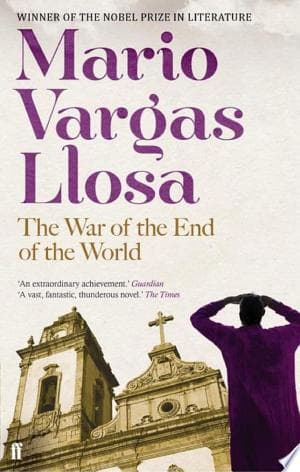
Mario Vargas Llosa (1984)
Genre
Historical Fiction
Reading Time
1136 min
Key Themes
See below
Sign in to track this book
In the arid Brazilian backlands, a prophet ignites an apocalyptic rebellion, forming a utopian republic of outcasts that challenges the new Brazilian state, ending in a devastating war.
The story begins with the Counselor, a gaunt, charismatic prophet, arriving in the impoverished sertão of Bahia, Brazil. He preaches an apocalyptic vision, denouncing the new Brazilian Republic, its secular laws, and its 'devilish' inventions like the metric system and civil marriage. He gathers followers among the region's outcasts: jagunços (bandits), former slaves, prostitutes, and poor peasants. They settle in an abandoned fazenda called Canudos, making it a self-sufficient, communal village that rejects the Republic's authority and awaits the end of the world. The Counselor's growing influence and Canudos's rapid expansion alarm local landowners, the Church, and state authorities in Salvador.
Alarmed by Canudos's rising power and the increasing number of peasants leaving their lands to join the Counselor, the Bahian state government decides to act. Initially, a small police detachment led by Lieutenant Pires is sent to investigate the 'fanatics.' This force is ambushed and defeated by the jagunços, strengthening the Canudenses' belief in divine protection. Later, larger expeditions, including one led by Major Febrônio de Brito, also fail. The repeated defeats of government troops by Canudos's seemingly disorganized army create panic and outrage in the Republic, fueling propaganda that portrays the Canudenses as monarchist rebels supported by British interests.
Among the Counselor's most capable followers is the notorious jagunço, the Lion of Natuba. He, along with others like João Grande and Pedrão, forms Canudos's military core, organizing its defenses and leading attacks against Republican forces. The novel explores their motivations, showing a mix of religious fervor, a desire for a different life, and deep distrust of the government. The Counselor remains an enigmatic figure, his past mysterious, his power coming from his unwavering faith and his ability to voice the grievances and hopes of the impoverished sertanejos. His sermons and prophecies strengthen the community's resolve as the Republic intensifies its efforts.
Galileo Gall, a Scottish anarchist journalist, arrives in Bahia, drawn by news of the Canudos uprising. He believes it is a genuine peasant revolution against the oppressive state and seeks to report on it, though with his own ideological viewpoint. At the same time, Baron de Canabrava, a powerful Bahian landowner and politician, becomes deeply involved. Initially concerned about the disruption to his labor supply, he later finds himself caught between the military's aggressive tactics and his own attempts to understand the movement. His interactions with the Intellectual and the Journalist show the complex political situation and the conflicting interpretations of Canudos.
The Intellectual, an unnamed, myopic former teacher, initially supports the Republican ideal but has growing doubts about the government's handling of Canudos. He provides a voice of reason and skepticism, questioning the official story that calls the Canudenses monarchist conspirators, secretly funded by British imperialists to restore the monarchy. This propaganda, spread through newspapers like the *Jornal de Notícias*, demonizes the community and justifies increasingly brutal military actions. The Intellectual's attempts to understand the conflict often clash with the prevailing political climate, showing the dangers of unchecked state narratives.
After the humiliating defeats of the first two expeditions, the Republic sends its esteemed general, Antônio Moreira César, a veteran known for his ruthlessness. He arrives in Bahia with a much larger, better-equipped army, determined to crush Canudos quickly. Moreira César's forces initially win a major victory, capturing the strategic plateau of Favela, which overlooks Canudos. This success fills the Republican camp with confidence, believing the rebellion's end is near. However, the Canudenses, despite their losses, refuse to surrender, retreating into their settlement and preparing for a desperate, final stand.
Under the leadership of the Lion of Natuba and other jagunços, the Canudenses launch a fierce counterattack against Moreira César's forces. The battle is brutal and chaotic, fought hand-to-hand in Canudos's narrow streets and houses. Despite superior weaponry, the Republican soldiers are overwhelmed by the jagunços' determined will and knowledge of the terrain. In a key moment, Moreira César is mortally wounded. His death breaks his troops' morale, leading to a complete rout of the third expedition. This catastrophic defeat shocks Brazil, further solidifying the myth of Canudos's invincibility.
Humiliated by repeated failures, the Republican government organizes an unprecedented fourth expedition. It includes thousands of soldiers, heavy artillery, and machine guns, under General Artur Oscar. This time, the strategy is relentless siege and attrition. Canudos is surrounded, its water sources cut off, and bombarded day and night. The Canudenses, led by the ailing Counselor and the Lion of Natuba, defend their settlement with great ferocity, even as their numbers shrink from disease, starvation, and constant shelling. The novel graphically depicts the horrors of the siege, the defenders' desperation, and the gradual destruction of their 'holy city.'
As Canudos crumbles under the assault, the Counselor, weakened by illness and his people's suffering, dies. His death, though kept secret for a time, demoralizes many but also inspires others to fight with even greater resolve for their paradise. The remaining defenders, including women and children, make a desperate last stand in the central church and final strongholds. The Republican forces, hardened and brutalized by the long conflict, show no mercy. The fighting becomes a massacre, with the last few hundred Canudenses, including the Lion of Natuba, fighting to the death against overwhelming odds. The Journalist witnesses the horrific final moments.
After the last Canudense is killed, the Republican army systematically razes Canudos, burning every building and desecrating graves, including the Counselor's. The goal is to erase all traces of the rebellious settlement and its dangerous ideas. The heads of key figures, including the Counselor, are severed and sent to Salvador as proof of victory. The novel ends with a deep sense of loss and the Republic's attempt to control the narrative, portraying the Canudos War as a triumph of order over barbarism. However, the events leave a lasting mark on all who witnessed them, and Canudos's memory, though suppressed, continues to haunt the sertão.
The Protagonist/Mystical Leader
From an enigmatic wanderer, he becomes the spiritual and de facto political leader of Canudos, his authority growing until his death by natural causes during the final siege.
The Supporting/Military Leader
Transforms from a feared bandit into the courageous and central military leader of Canudos, fighting to the very end.
The Supporting/Observer
Begins as an ideological observer, gradually becomes a more empathetic witness, losing his detached objectivity as he experiences the horrors of the war firsthand.
The Supporting/Politician
Starts as a detached, self-interested observer, but becomes increasingly disturbed and disillusioned by the escalating violence and the Republic's brutality.
The Supporting/Skeptic
Evolves from a loyal Republican to a disillusioned critic, grappling with the moral compromises and brutality of the state.
The Supporting/Canudense
Undergoes immense suffering and loss, yet her spirit remains unbroken, fighting for her community until the very end.
The Antagonist/Military General
Arrives as an undefeated hero, suffers a humiliating defeat and death, which ironically intensifies the Republican resolve to destroy Canudos.
The Supporting/Canudense
From a life of destitution and exploitation, she finds spiritual purpose and unwavering devotion in Canudos, fighting for its survival until the very end.
The novel's central conflict is the clash between the fervent, millenarian faith of the Canudenses, led by Antônio Conselheiro, and the secular authority of the new Brazilian Republic. The Canudenses see the Republic as an anti-Christ entity, while the state views Canudos as a dangerous, archaic rebellion threatening its modernity and unity. This theme explores how deep beliefs, especially when tied to promises of salvation or the end of the world, can empower a marginalized community to defy overwhelming force. The Republic's inability to understand the Canudenses' religious motivations leads to its brutal, genocidal response, showing the tragic results when ideological differences are irreconcilable.
“What had begun as a mere police action against a band of fanatics was now a war, a national tragedy.”
The novel shows how 'truth' is created and manipulated by both sides, especially the Republican government. Propaganda demonizes the Canudenses as monarchist conspirators, funded by foreign powers, to justify their extermination. Characters like Galileo Gall and the Intellectual try to find reality amid official lies and sensationalized newspaper reports. The narrative often exposes the gap between the official version of events and individuals' complex, often contradictory, experiences. This theme highlights the power of stories in shaping public opinion and the bias in historical accounts, especially those written by the victors.
“The newspapers wrote lies, lies about everything, lies about the war, lies about the Counselor, lies about Brazil.”
The Canudenses come from the poorest and most marginalized parts of Brazilian society: former slaves, landless peasants, jagunços, and prostitutes. Canudos offers them not just spiritual salvation but also community, dignity, and economic self-sufficiency that the Republic has not provided. The war can be seen as a desperate call for social justice and recognition from a people ignored and exploited. Their rebellion, born from suffering and a desire for a different world, forces the Republic to confront the deep inequalities in the sertão. The novel implicitly criticizes the Republic's failure to address these basic issues, which led to such a violent uprising.
“They were the abandoned, the forgotten, the wretched of the earth, and the Counselor offered them a kingdom.”
Vargas Llosa clearly portrays the horror, chaos, and senselessness of the Canudos War. The repeated, disastrous defeats of Republican forces, despite their superior weaponry, show the futility of conventional warfare against a determined enemy fighting on home ground. The novel spares no detail in depicting the violence, starvation, disease, and psychological toll on both sides. The final siege, ending in the massacre of every man, woman, and child in Canudos, shows the extreme brutality that can result when ideological conflict goes beyond reason. The war is presented as a tragic, almost farcical, cycle of misunderstanding, hubris, and vengeance.
“War was a machine, and once it started, it ground everything to dust, without mercy, without reason.”
The story is told from the shifting viewpoints of various characters.
The novel employs a kaleidoscopic narrative structure, constantly shifting between the perspectives of numerous characters: the Canudenses (the Lion of Natuba, Jurema), the Republican observers (Galileo Gall, the Intellectual, Baron de Canabrava), and the military commanders. This allows for a multifaceted, often contradictory, understanding of the events, preventing a single 'truth' from dominating. It highlights the subjective nature of perception and the difficulty of truly comprehending a complex historical event, especially one obscured by propaganda and personal bias.
Based on the real War of Canudos, but heavily fictionalized with invented characters and events.
While rooted in the historical War of Canudos (1893-1897) in Brazil, Vargas Llosa takes significant artistic liberties. He incorporates real figures like Antônio Conselheiro and Moreira César but invents a vast cast of characters (Galileo Gall, the Baron, the Intellectual, the Lion of Natuba) and fictionalizes many events and their motivations. This device allows the author to explore the underlying themes and psychological dimensions of the conflict more deeply than a strict historical account would permit, blending factual accuracy with imaginative interpretation to create a richer, more universal narrative about faith, power, and human folly.
Characters' visual acuity often reflects their understanding or lack thereof.
Many characters exhibit varying degrees of sight or blindness, which often mirrors their ability to comprehend the complex realities of the war. The Intellectual is profoundly myopic, struggling to see clearly but possessing keen intellectual insight. Galileo Gall, the Journalist, also wears glasses, symbolizing his ideological filter. In contrast, the jagunços, often described with sharp, piercing eyes, possess an intuitive understanding of their environment and the conflict. This device subtly underscores the theme of truth and perception, suggesting that literal sight does not always equate to true understanding, and that ideological or emotional 'blindness' can distort reality.
The narrative incorporates elements of oral storytelling and legend.
The novel often weaves in elements of oral tradition, legend, and rumor, particularly when describing the Counselor and the origins of Canudos. The stories passed among the sertanejos, often exaggerated or mythologized, contribute to the almost mythical status of the Counselor and the perceived invincibility of Canudos. This device reflects the way history is often transmitted in oral cultures and highlights how narratives, even fantastical ones, can shape belief and action. It also contrasts with the 'official' written history presented by the Republican newspapers, showing competing versions of truth.
“The world is not a place for cowards, but for those who are willing to fight for what they believe in, even if it means dying for it.”
— A central theme reflecting the fanaticism and unwavering belief of the Conselheiro's followers.
“The cause of man is the cause of God, and the cause of God is the cause of man.”
— Attributed to the Conselheiro, encapsulating his messianic vision and the fusion of spiritual and earthly struggle.
“History is a whore. She gives herself to the highest bidder.”
— A cynical observation on how historical narratives are manipulated by those in power.
“In the face of eternity, what are the struggles of man but a fleeting breath?”
— A philosophical musing on the insignificance of human conflict in the grand scheme.
“The greatest tragedy is not death, but life without purpose.”
— Reflects the motivations of many characters, particularly the outcasts who find purpose in Canudos.
“Truth is a chameleon, changing its colors to suit the landscape of the powerful.”
— Another quote highlighting the subjective and manipulated nature of truth, especially in political conflict.
“Fear is the most potent weapon of all, for it turns men against themselves.”
— Observing how fear is used by authorities to control and divide the populace.
“To be truly free, one must first be willing to lose everything.”
— Emphasizes the radical freedom sought by the inhabitants of Canudos, who have abandoned societal norms.
“The desert swallows all, dreams and bones alike.”
— A vivid description of the harsh, unforgiving sertão and its role as a graveyard for ambitions.
“Blind faith is a double-edged sword; it can save and it can destroy.”
— A commentary on the nature of the Conselheiro's followers and the consequences of their absolute devotion.
“Every revolution devours its own children.”
— A classic observation on the cyclical nature of political upheaval and its inevitable betrayals.
“The world is full of miracles, for those who have eyes to see them.”
— A more hopeful, yet still complex, perspective on the possibility of wonder amidst suffering.
“There are no innocent bystanders in a war of principles; only those who choose a side, or have one chosen for them.”
— Reflecting the absolute nature of the conflict and the impossibility of neutrality.
Ready to see how well you understood this book? Take our interactive quiz with 10 questions.
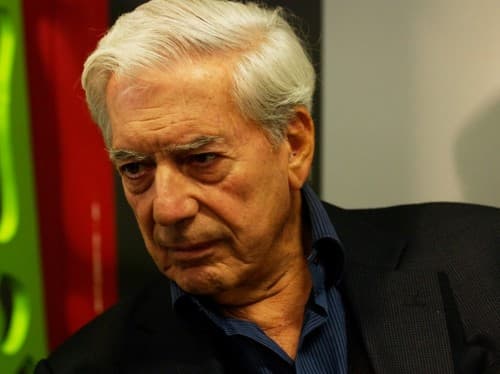
Jorge Mario Pedro Vargas Llosa, 1st Marquess of Vargas Llosa, more commonly known as Mario Vargas Llosa, is a Peruvian novelist, journalist, essayist and former politician, who also holds citizenship of Spain and the Dominican Republic. Vargas Llosa is one of Latin America's most significant novelists and essayists, and one of the leading writers of his generation. Some critics consider him to have had a larger international impact and worldwide audience than any other writer of the Latin American Boom. In 2010 he won the Nobel Prize in Literature, "for his cartography of structures of power and his trenchant images of the individual's resistance, revolt, and defeat." He also won the 1967 Rómulo Gallegos Prize, the 1986 Prince of Asturias Award, the 1994 Miguel de Cervantes Prize, the 1995 Jerusalem Prize, the 2012 Carlos Fuentes International Prize, and the 2018 Pablo Neruda Order of Artistic and Cultural Merit. In 2021, he was elected to the Académie française.