“I was not a horse to be broken. I was a girl who had been broken, and I was putting myself back together.”
— Ada reflects on her journey of healing from abuse and disability.

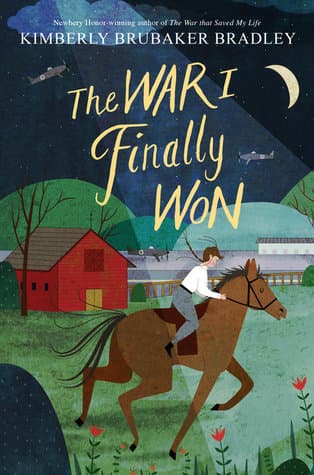
Kimberly Brubaker Bradley (2017)
Genre
Children's / Historical Fiction / Young Adult
Reading Time
450 min
Key Themes
See below
Sign in to track this book
During World War II, Ada navigates her new life, confronting past trauma, unexpected friendships, and war's moral dilemmas while protecting loved ones and finding her place in a healing world.
Ada, with her younger brother Jamie, lives with Susan Smith in an English village during World War II. They moved into a cottage Susan inherited, and Ada is now a legal family member. Despite this security and Susan's love, Ada struggles with her past. Her clubfoot, though improved by surgery, still causes pain and self-consciousness. She also has trouble with basic social norms and showing affection, often misunderstanding Susan's kindness. Jamie, being younger, adjusts well, making friends and enjoying school, while Ada remains cautious, especially in new social situations or when reminded of her past.
The war impacts their village, and a new evacuee, Ruth, a ten-year-old German-Jewish girl, arrives at Susan's cottage. Ada is immediately suspicious, having been taught to hate Germans, and finds it hard to reconcile Ruth's pleasant manner with her nationality. Ruth speaks English with an accent and carries a worn doll, reminding Ada of her own time as an evacuee. Susan welcomes Ruth warmly, offering her the same care she gives Ada and Jamie. This new situation creates tension; Ada feels her fragile sense of belonging threatened by Ruth. She watches Ruth constantly, looking for signs of an 'enemy,' but also quietly notices Ruth's own struggles and fears.
German air raids become a frightening reality. Susan, Ada, Jamie, and Ruth often spend nights in their Anderson shelter, a cramped, damp space that worsens Ada's claustrophobia and fear. During one intense raid, their cottage is damaged, forcing them to move in with Maggie Thornton's family at the manor house. This move puts Ada close to Lady Thornton, Maggie's stern mother, whom Ada has always disliked. Despite the discomfort, the shared war experience starts to build unexpected connections within the community and the household. Ada, still guarded, begins to see how different people handle loss and fear.
Life at the manor house contrasts sharply with their simple cottage. Ada struggles with the strict rules and Lady Thornton's constant presence and comments about Ada's appearance. However, she finds comfort in her friendship with Maggie and a surprising connection with Miss Rosie, Lady Thornton's maid, who shares her own war stories. Ada also sees Lady Thornton's sadness over her son, Jonathan, a pilot missing in action, which makes the stern woman seem more human. Ruth remains quiet and watchful, often withdrawn, and Ada, despite her initial prejudice, starts to feel protective of the younger girl, especially when Lady Thornton is harsh.
At the manor, Ruth tells Ada that her family is Jewish and her parents were taken by the Nazis. She fears being discovered and sent back. This revelation deeply affects Ada, forcing her to confront her own biases and to see Ruth as a vulnerable child who has suffered greatly, not 'the enemy.' Ada's empathy for Ruth grows, and she decides to protect her. This shared secret strengthens their bond, and Ada begins to understand that war's divisions are not always simple. She sees the war through Ruth's eyes, adding another layer of horror to her understanding.
After their cottage is repaired, Susan, Ada, Jamie, and Ruth return home. Ada, learning that Ruth lacks formal education due to persecution in Germany, takes on teaching Ruth to read and write. This role gives Ada confidence and helps her process her own learning difficulties and past struggles. She enjoys helping Ruth, and their shared lessons strengthen their bond. Ada also feels more comfortable with herself, participating more in community life and thinking about a future after the war. The cottage, though simple, feels more like a true home, a safe place where they can rebuild their lives.
Jonathan Thornton, Lady Thornton's son, is found alive after being presumed dead. He is severely injured and deeply traumatized from being a prisoner of war. His return is not the happy reunion Lady Thornton expected; it brings new challenges. Jonathan is withdrawn, suffering from what is now known as PTSD, and struggles to reconnect with his family. Ada sees Lady Thornton's pain and frustration, witnessing the lasting impact of war on individuals and families. This further deepens Ada's understanding of suffering, extending beyond her own trauma to the collective anguish of wartime.
As the war continues, the danger to Ruth, as a German Jew, increases. The government starts rounding up German nationals, including refugees. Susan, realizing Ruth's danger, makes the difficult decision to send Ruth to a safer location, arranged by a network of compassionate people. This decision devastates Ada, who has grown to love Ruth and feels responsible for protecting her. The departure is heartbreaking, a harsh reminder of the war's cruelty and the constant threat of loss. Ada struggles with the unfairness, questioning why Ruth, who has suffered so much, must endure another separation.
Finally, the war ends, bringing widespread relief. However, for Ada and those around her, the end of fighting does not erase the scars. Jonathan Thornton continues to struggle with his trauma, and Lady Thornton remains burdened by her son's condition. Ada still carries the emotional weight of her past, though she has made significant progress in healing and self-acceptance. Ruth's absence is a constant ache, a reminder of those lost or separated by the conflict. The victory is bittersweet, showing human resilience but also acknowledging the deep and permanent changes caused by war.
After the war, Ada continues to grow. She embraces her improved clubfoot, learning to ride a bicycle and feeling a freedom she never thought possible. She strengthens her bond with Susan, truly seeing her as a mother. While Ruth's return is uncertain, Ada holds onto hope and the lessons from their friendship. She has become more confident, empathetic, and strong, no longer defined by her past trauma but by her capacity for love, learning, and self-discovery. The future is still uncertain, but Ada faces it with new strength, ready for challenges, marked by the war but ultimately strong in her own spirit.
The Protagonist
Ada transforms from a guarded, traumatized child into a more confident, empathetic, and self-aware young woman, accepting love and embracing her own worth.
The Supporting
Jamie continues to grow into a well-adjusted child, serving as a contrast to Ada's slower healing process and a source of unwavering sibling loyalty.
The Supporting
Susan solidifies her role as a loving, adoptive mother, finding purpose and family amidst the chaos of war.
The Supporting
Ruth finds temporary safety and a loving connection with Ada, though her future remains uncertain due to the war's ongoing threats.
The Supporting
Maggie remains a loyal friend to Ada, navigating their differing backgrounds and the challenges of wartime together.
The Supporting
Lady Thornton evolves from a judgmental figure to one of complex empathy, as her own suffering humanizes her in Ada's eyes.
The Supporting
Jonathan's arc shows the lasting and debilitating effects of war trauma, even after physical survival.
The Supporting
Miss Rosie serves as a consistent, kind presence, offering quiet wisdom and support to Ada.
Ada's journey focuses on defining herself beyond her clubfoot and abusive past. She struggles with feelings of inadequacy and shame, especially when comparing herself to others or facing Lady Thornton's judgment. Learning to ride a bicycle, teaching Ruth, and accepting Susan's love are key moments where Ada sheds old perceptions and embraces her worth. Her emotional healing connects with her physical recovery, leading to her acceptance of her body and spirit. The war, ironically, forces her to look inward and find her own strength.
“My foot was better, but it still felt like the most important thing about me. It wasn't. I was. And I was more than a foot.”
Beyond air raids and rationing, the novel explores the psychological and emotional cost of war. Ada's past trauma worsens with the constant threat of bombings. Ruth's story of family loss and persecution highlights the war's impact on civilians and minorities. Jonathan Thornton's return, injured and with PTSD, shows that survival does not mean being untouched. The war's end brings relief, but characters deal with grief, fear, and changed realities, showing that some wounds never fully heal.
“The war was over, but it wasn't. Not for Jonathan. Not for Ruth. Not for me.”
Ada's initial prejudice against Ruth, simply because she is German, is a central conflict. Taught to hate all Germans, Ada struggles to reconcile this with Ruth's kind nature. Ruth's revelation about being Jewish and her family's fate shatters Ada's simple view, forcing her to confront prejudice and develop empathy. This theme extends to Lady Thornton, whom Ada initially dislikes but later understands through shared grief. The novel shows the importance of looking past labels and finding common humanity.
“I had hated her because she was German. But she wasn't just German. She was Ruth. And she was Jewish. And she had lost everything.”
A main theme is Ada's search for a true family and belonging. Never having known a loving home, she initially struggles to accept Susan's unconditional love, always fearing abandonment. Ruth's arrival and their shared experience as evacuees strengthen Ada's understanding of chosen family. The cottage, even damaged, symbolizes their sanctuary. Ada learns that family is about love, trust, and support, not just blood, solidifying her place in Susan's loving household.
“I didn't have to be perfect to be loved. I just had to be Ada. And that was enough.”
Provides intimate access to Ada's internal thoughts and emotional struggles.
The story is told entirely from Ada's point of view, allowing readers to experience the world through her unique lens of trauma, fear, and gradual healing. This device is crucial for understanding her misinterpretations of social cues, her internal battles with self-worth, and her evolving empathy. It makes her journey deeply personal and allows the reader to witness her growth from the inside out, making her triumphs and setbacks feel profoundly real and immediate.
A physical symbol of Ada's past abuse, vulnerability, and eventual liberation.
Ada's clubfoot is more than a physical ailment; it's a powerful symbol of her past confinement, abuse, and deep-seated feelings of shame and inadequacy. Its surgical improvement and Ada's efforts to walk, run, and eventually ride a bicycle, directly mirror her emotional healing and growing self-acceptance. It represents the visible scars of her past, but also her incredible resilience and her journey towards physical and emotional freedom. The foot is a constant reminder of where she came from and how far she has come.
A recurring setting symbolizing the constant threat of war and forced intimacy.
The Anderson shelter, a cramped and damp underground bunker, serves as a recurring setting during air raids. It symbolizes the constant, inescapable threat of the war and the forced intimacy it creates among the characters. For Ada, it exacerbates her claustrophobia and fears, making her confront her vulnerability. It's a place where secrets are sometimes shared, fears are voiced, and the bonds between the family members are tested and strengthened under extreme duress, highlighting their shared ordeal.
A poignant symbol of childhood innocence, loss, and the enduring power of comfort.
Ruth's simple, well-worn doll is a powerful symbol throughout the narrative. It represents her lost childhood, the innocence shattered by the war, and her deep-seated emotional pain. Like Ada's own memories of her past, the doll is a tangible link to what Ruth has lost. It also serves as a source of comfort for Ruth, much like Ada's own experiences with objects that provided solace. Ada's observation of and interaction with the doll helps her to empathize with Ruth's plight and the universal need for comfort amidst trauma.
“I was not a horse to be broken. I was a girl who had been broken, and I was putting myself back together.”
— Ada reflects on her journey of healing from abuse and disability.
“Sometimes the bravest thing you can do is ask for help.”
— Ada learns to accept support from others after years of isolation.
“War changes everything, even when it's over.”
— Observation about the lasting impacts of World War II on characters' lives.
“Love isn't something you earn. It's something you're given.”
— Ada comes to understand unconditional love through her relationships.
“My clubfoot didn't define me, but it was part of my story.”
— Ada acknowledges her disability without letting it limit her identity.
“Home isn't a place. It's the people who make you feel safe.”
— Ada realizes what truly constitutes a home after displacement.
“Words have power. They can hurt or heal.”
— Reflection on how language affected Ada's past and present.
“Fear is a cage, but courage is the key.”
— Ada describes overcoming her anxieties and past trauma.
“We all carry scars. Some you can see, some you can't.”
— Observation about the invisible wounds of war and abuse.
“Learning isn't just about books. It's about understanding the world.”
— Ada values education beyond formal schooling.
“Sometimes the hardest battles are the ones we fight within ourselves.”
— Ada confronts her internal struggles and self-doubt.
“Family is who you choose to stand by you, not just who you're born to.”
— Ada redefines family through her found relationships.
“You don't have to be perfect to be loved.”
— Ada accepts that she is worthy of love despite her flaws.
“The past can haunt you, but it doesn't have to hold you.”
— Ada learns to move forward from her traumatic childhood.
Ready to see how well you understood this book? Take our interactive quiz with 10 questions.

Biography coming soon.

Dan Gemeinhart
4.5

Kate O'Hearn
4.4

Jeanne Birdsall
4.4

Jen Wang
4.4

Wendelin Van Draanen
4.3

John Marsden
4.3

Chris Van Allsburg
4.3

Jennifer A. Nielsen
4.2