“A man must make his own opportunities, and, if they do not come, then he must make them.”
— Mathurin's early philosophy on ambition.

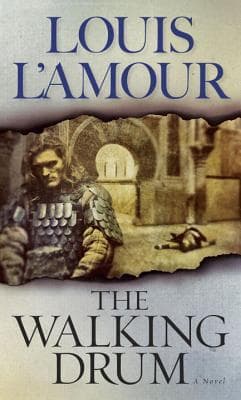
Louis L'Amour (1984)
Genre
Fantasy / Historical Fiction
Reading Time
1200 min
Key Themes
See below
Sign in to track this book
In a 12th-century epic, Mathurin Kerbouchard, a man of intellect and combat, seeks revenge and discovery through European courts, Russian steppes, and Constantinople, ending in a quest to the Valley of Assassins.
The story begins in twelfth-century Brittany. Young Mathurin Kerbouchard's peaceful life ends when his family's estate is attacked by raiders led by Baron de Tournemine. Mathurin's mother is killed, and his father, a scholar and warrior, is captured. Mathurin, trained by his father, escapes the burning estate. He sees the violence and, holding a hidden pouch of gold and a small dagger, promises to find his father and get revenge. His journey starts as a lone wanderer, driven by grief and a desire for justice.
After months of wandering and learning to survive, Mathurin is captured by Barbary pirates while trying to sail the Mediterranean. He is sold into slavery and rows in galleys, enduring harsh conditions. As a slave, he sees the different cultures and languages of his fellow captives and captors, gaining knowledge and building his physical strength. He also learns about seamanship and naval warfare. His time in the galley hardens him, but his spirit stays strong, fueled by his family's memory and his search for his father. He plans his escape carefully, waiting for the right moment.
Mathurin escapes the galley during a storm and a battle. He finds himself in North Africa, where his skills and intelligence quickly get him noticed. He takes the name 'Kerbouchard' and starts to learn in the intellectual centers of the Islamic world, especially in places like Cordoba and Cairo. He studies philosophy, medicine, mathematics, and military strategy, becoming good at many languages and martial arts. His sharp mind and desire for knowledge lead him to seek out scholars and teachers, improving his abilities and understanding of the world, all while remembering his main goal.
Kerbouchard travels across deserts, meeting tribes and learning their ways of survival and fighting. He gets involved in local conflicts, often using his strategic mind and fighting skills to gain favor and information. During this time, he meets Princess Zarah, a beautiful and smart woman caught in her family's politics. Their paths cross, leading to a romance and a complex alliance. Zarah sees Kerbouchard's talents and spirit, becoming important in his life by offering love and strategic help, and showing him the high stakes of royal courts.
Kerbouchard's search eventually brings him to Constantinople, the capital of the Byzantine Empire. Here, he navigates the politics of the imperial court, where plots, betrayal, and power struggles are common. He uses his intellect and combat skills to survive assassination attempts and political schemes, often caught between groups. He earns a reputation as a warrior and a diplomat, gaining allies and powerful enemies. His time in Constantinople gives him insights into broader politics and refines his understanding of human nature and power.
Guided by rumors and his search for his father, Kerbouchard goes into the vast Russian steppes. He meets nomadic tribes, learning their customs, languages, and fighting methods. He sees the beginning of the Mongol Empire's expansion, observing their cavalry and strategy. He often finds himself in fights and battles, improving his leadership and combat skills. This part of his journey has harsh survival conditions and constant watchfulness, as he moves through a world about to change greatly, all while gathering information that might lead him closer to his father.
Following clues, Kerbouchard's journey ends in the Valley of the Assassins, the stronghold of the Nizari Ismaili order led by the Old Man of the Mountain. This fortress, Alamut, is said to hold secrets and important prisoners. Kerbouchard knows infiltrating this fortress will be his most dangerous challenge. He plans his approach carefully, using all the skills and knowledge he has gained, from disguise and stealth to combat and psychological manipulation, in his search for his father and the truth behind his family's destruction.
Kerbouchard infiltrates Alamut, moving through its defenses and the devotion of its people. He uncovers secrets within the fortress, including the identity of some captives. He confronts the Old Man of the Mountain, a powerful figure. During this confrontation, Kerbouchard's father is revealed to be alive, though imprisoned. The encounter is a battle of wits, where Kerbouchard must use his intelligence and courage to outsmart the leader and free his father, while facing the Assassin order.
Kerbouchard frees his father, who tells him about the conspiracy behind the attack on their estate. The attack was a calculated move by powerful figures to eliminate his father and take his knowledge. The Old Man of the Mountain, though a strong foe, was a tool in a larger plan. The reunion is emotional, as Mathurin learns about his father's past and the alliances that defined their family's place in the world. With his father safe, Kerbouchard's immediate rescue quest is done, but the larger quest for justice remains.
With his father safe, Kerbouchard and his father start to uncover the conspiracy, identifying the person behind the attack on their home. This person is a powerful European figure, connected to Baron de Tournemine. Kerbouchard, now a warrior, scholar, and diplomat, aims to bring this person to justice, not just with force, but through strategy and evidence. The story ends with Kerbouchard, having achieved revenge and a deeper understanding of himself and the world, looking to a future where his knowledge and experience will be used for broader purposes, possibly creating a new legacy for the Kerbouchard name.
The Protagonist
Transforms from a sheltered youth into a world-wise warrior and scholar, ultimately achieving his quest for family and justice.
The Supporting/Catalyst
Serves as the captive goal of Mathurin's quest, eventually reunited and revealing the full scope of the conspiracy.
The Supporting
Develops a deep romantic and strategic bond with Mathurin, aiding his journey and navigating her own political struggles.
The Antagonist
Serves as the initial face of evil and the first target of Mathurin's revenge, eventually revealed as a lesser player in a grander conspiracy.
The Antagonist/Supporting
A formidable obstacle and intellectual challenge for Mathurin, whose domain holds the key to his father's whereabouts.
The Mentioned/Supporting
Serves as an intellectual beacon and representative of the era's scholarly achievements that Mathurin aspires to and learns from.
The Supporting
Individually and collectively, they contribute to Mathurin's comprehensive education and skill development, enabling his transformation.
The Antagonist
The hidden antagonist whose exposure brings the full scope of the conspiracy to light, leading to Mathurin's final quest for ultimate justice.
Mathurin's journey is one of self-discovery. Without his home and family, he must create a new identity. He takes on new names, learns many skills, and adapts to different cultures, always changing who he is. His experiences as a slave, scholar, warrior, and diplomat all shape his evolving self, moving beyond his noble birthright to become a man defined by his intellect, courage, and wisdom. This theme is central as he loses his innocence and takes on his new roles in the world.
“He was Mathurin, a name given by his father, but he was also Kerbouchard, the name he would make his own, forged in the fires of adversity and knowledge.”
A main theme is Mathurin's desire for knowledge. From his early education by his father to his studies in Islamic centers, and his observations of different cultures, he always tries to learn about the world. This pursuit is not just academic; it is a tool for survival, strategy, and justice. His skill in languages, sciences, and martial arts, all gained through study and experience, shows how knowledge is the most powerful weapon and guide in his journey, setting him apart from many enemies.
“Knowledge was not merely power; it was the very air he breathed, the sword in his hand, the shield against his enemies.”
Mathurin's journey starts with a desire for revenge against those who destroyed his family. As the story goes on, his quest becomes a broader search for justice. While he wants to punish Baron de Tournemine, he also uncovers a larger plot, turning his personal vendetta into a quest to correct a greater wrong. The story explores the complexities of justice, showing that it often needs not just force, but also cleverness, diplomacy, and a deep understanding of the world's power structures.
“Revenge was a cold dish, but justice, he realized, was a tapestry woven with patience, cunning, and an unyielding will.”
Mathurin's survival in hostile places—slave galleys, deserts, treacherous courts, and battlefields—shows his adaptability and resilience. He moves between different cultures, languages, and social levels, always finding a way to survive, thrive, and learn. This theme highlights the human ability to overcome great difficulty with wit, physical skill, and a strong spirit, showing that true strength is being able to bend without breaking.
“He was a reed in the wind, but a reed that could become a spear, or a flute, or a pen, whatever the moment demanded.”
The novel shows the diverse cultures of the twelfth century, especially the interaction between Christian Europe and the Islamic world. Mathurin's journey takes him through these different but often connected civilizations. He observes their differences, learns their languages and customs, and often acts as a link between them. The book shows both the conflicts and the intellectual exchange between these worlds, especially in the advancements of Islamic scholarship that Mathurin embraces, suggesting a mix of knowledge rather than just a clash of civilizations.
“He had seen the grandeur of East and West, and knew that wisdom was not confined by creed or continent.”
Symbolizes Mathurin's restless, wandering nature and the spread of knowledge.
The 'walking drum' is a powerful metaphor for Mathurin himself. A drum is a tool of communication, calling people to action or conveying messages. 'Walking' signifies his constant movement, his journey across vast landscapes, and his refusal to settle. It symbolizes his role as a carrier of knowledge, a harbinger of change, and a man whose very existence creates ripples wherever he goes. It encapsulates his destiny as a wanderer who gathers and disseminates wisdom, much like a drum's rhythm travels far and wide.
The primary driving force behind Mathurin's epic journey.
The quest to find his captured father is the central plot device that propels Mathurin's entire adventure. This classic motif provides a clear, compelling goal that justifies his extensive travels, his encounters with diverse cultures, and his acquisition of myriad skills. It allows the narrative to explore various settings and introduce a wide cast of characters, all while maintaining a strong emotional core. The father's identity and past are gradually revealed, adding layers of intrigue to the overarching conspiracy.
The narrative structure detailing Mathurin's psychological and moral growth.
The entire novel functions as a Bildungsroman, chronicling Mathurin's transformation from a naive, sheltered youth into a seasoned, world-wise adult. His journey is not just physical but also intellectual, emotional, and moral. Each challenge, each new skill learned, and each cultural immersion contributes to his development. This device allows the author to explore themes of identity, resilience, and the acquisition of wisdom through lived experience, making Mathurin's personal growth as significant as the external plot events.
Mathurin's ability to learn multiple languages and diverse skills as a key to his survival and success.
Mathurin's extraordinary aptitude for learning and mastering multiple languages, combat forms, sciences, and diplomatic skills is a crucial plot device. His ability to speak and understand various tongues allows him to infiltrate different societies, gather intelligence, and communicate effectively across cultures. His diverse skill set, ranging from medicine and navigation to swordsmanship and strategy, consistently gets him out of perilous situations and earns him respect and opportunities, making him an almost superhuman figure of adaptability and intelligence.
“A man must make his own opportunities, and, if they do not come, then he must make them.”
— Mathurin's early philosophy on ambition.
“The world is a hard school, and experience is the only master.”
— Reflecting on life's lessons learned through hardship.
“Knowledge is power, but only if you know how to use it.”
— Mathurin's understanding of practical application of learning.
“Fear is a poor companion on any journey.”
— Facing dangerous situations and the need for courage.
“There are no friends like old friends, and no loyalty like that which has been tested by time.”
— Considering the value of long-standing relationships.
“A man who does not know where he is going will usually end up somewhere else.”
— Emphasizing the importance of purpose and direction.
“Life is a gamble, and the only way to win is to play.”
— Taking risks and engaging with life's challenges.
“The greatest weapon a man can carry is a quick mind and a ready wit.”
— Highlighting intelligence over brute force in conflicts.
“Every man has his price, but some men are not for sale.”
— Mathurin's observation on human nature and integrity.
“To be truly free, one must be able to walk away from anything at any time.”
— The concept of personal freedom and detachment.
“The past is a road already traveled; the future is a road yet to be built.”
— Looking forward and not dwelling on what has been.
“It is not the size of the dog in the fight, but the size of the fight in the dog.”
— A common adage about determination and spirit.
“There is always something to be learned, even from your enemies.”
— Finding lessons in unexpected places and from adversaries.
Ready to see how well you understood this book? Take our interactive quiz with 10 questions.
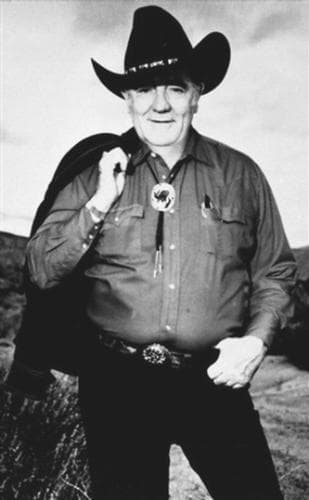
Biography coming soon.







