“I am the Lord of this world. I am the Lord of the dreaming, of all stories and all dreams and all nightmares. I am the Lord of Beginnings and of Endings. I am Morpheus, Lord of Dream.”
— Morpheus asserting his identity and domain.

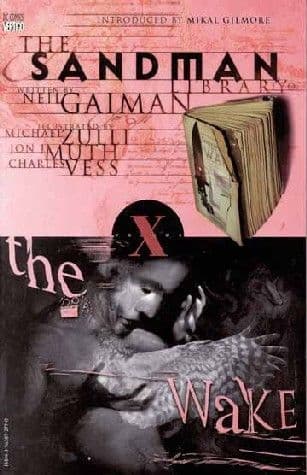
Sign in to track this book
After the dream king's death, the world of dreams feels his absence, and a bard learns the true price of his deepest wishes.
After Lord Morpheus's death, the Endless prepare for his wake. Death, his older sister, arranges things. Destiny arrives, watching the events. Despair is present, showing the shared sadness, while Delirium tries to stay focused through the grief. Destruction, long gone, does not appear. Meanwhile, Lyta Hall, still recovering from losing her son Daniel, does not know Daniel is now the new Dream, having taken on the essence of the Dreaming. Daniel, now with white skin and eyes, is confused and overwhelmed by his new duties and the size of his realm, trying to understand his predecessor's legacy and his own place.
The Necropolis Litharge, a large, old city of the dead, becomes the meeting place for beings from all existence. Gods, demons, mythical figures, and abstract ideas arrive to mourn Dream. Among them are Bast, Odin, Loki, Azazel, and even the Corinthian, now brought back and serving the new Dream. Each arrival shows Lord Morpheus's great influence and the many relationships he had. The diverse attendees highlight the universal effect of his death, showing that his realm and actions touched almost every part of creation, from the highest heavens to the deepest hells.
During the wake, various beings give eulogies and personal memories of Lord Morpheus. Some speak of his strictness, while others remember unexpected kindness or deep wisdom. Loki tells a tale of cleverness, while Bast speaks of old agreements and how their realms connect. Even the Corinthian, surprisingly, offers a unique view of Dream's role as creator and punisher. These different accounts paint a varied picture of the dead Dream, showing how he was seen differently by those who met him, often reflecting their own experiences and interpretations of his cosmic duties and personal qualities.
Daniel Hall, as the new Dream, struggles to understand the size of the Dreaming and his responsibilities. He feels the collective dreams of all beings, the endless libraries, the creatures of nightmare and fantasy, all within him. He is still a child, yet he has the power of an Endless. He watches the wake, a quiet and somewhat distant figure, trying to connect his former life as Lyta Hall's son with his current cosmic existence. The change is overwhelming, and he finds comfort only in the quiet advice of Matthew, the raven, who acts as a guide and a link to his predecessor's legacy, helping him through his new reality.
As the wake ends, the many mourners begin to leave the Necropolis Litharge, returning to their own realms and duties. The Endless remain, thinking about the big change in their group. Death shows a quiet understanding of her brother's choice, while Destiny notes the certain progress of fate. Despair goes back to her realm of shadows, and Delirium, though still chaotic, seems to grasp the finality of the event. The guests' departure marks not just the end of the ceremony, but a turning point in the cosmic order, with a new Dream now in place and the universe slowly adjusting to the shift in power and presence.
Hob Gadling, the man Dream made immortal centuries ago, continues his long life through history. He thinks about his meetings with Lord Morpheus, their centuries of talks, and his unique existence. He has seen empires rise and fall, felt many joys and sorrows, and dealt with the loneliness that often comes with eternal life. His story contrasts Dream's death, showing the human wish for endless life versus the Endless's acceptance of their own cycles and duties. Hob's view offers a human way to see the cosmic events, highlighting how Dream's decisions affected individual lives.
The story moves to Joshua Abraham Norton, a real eccentric who declared himself Emperor of the United States and Protector of Mexico in 19th-century San Francisco. His story shows how belief, even in the most fantastical forms, can shape reality and give a kind of power. The citizens of San Francisco, by accepting his delusion, effectively gave him a kingdom. This comments on the nature of dreams, stories, and the shared unconscious, showing how human imagination can appear and influence the world, even without the direct help of the Endless.
William Shakespeare, now an old and famous playwright, thinks about the deal he made with Lord Morpheus years ago. Dream had given him the ability to write plays that would last through time, showing humanity's true nature, in exchange for two plays for the Dreaming. Shakespeare thinks about the fame and artistic fulfillment he gained, but also the great cost: a deeper understanding of human suffering and life's short nature, which often left him sad. He realizes that while he got what he wanted, the knowledge he gained also brought a heavy emotional weight, a common theme when dealing with the Endless.
Shakespeare stages his final play, 'The Tempest,' which is his second and last contracted work for Dream. The play, with its themes of magic, illusion, forgiveness, and giving up power, reflects many of the main themes of the Sandman saga. As Prospero gives up his magic, Shakespeare also feels a sense of release and completion. The new Dream (Daniel) and Matthew, among others, watch the performance. Through the play, Shakespeare deals with the nature of storytelling, the power of imagination, and the bittersweet acceptance of an ending, understanding that all dreams, even the greatest, must end.
After 'The Tempest,' Shakespeare finishes his work and prepares for the end of his own life. He has kept his promise, explored human experience through his art, and now accepts his death. The story then broadly considers stories, dreams, and the Endless. It highlights the repeating nature of existence – how old dreams die and new ones are born, how stories last even as their tellers fade. The ending suggests that while individuals may pass, the ideas they embody, like Dream itself, are eternal, constantly reborn and reinterpreted, ensuring that the Dreaming continues, always changing yet always present.
The Protagonist (deceased)
Morpheus undergoes a profound transformation, evolving from a rigid, unforgiving entity to one capable of understanding and accepting change, ultimately sacrificing himself for the good of his realm.
The Supporting
Death remains consistent in her role as a compassionate guide, offering solace and wisdom to her family and others.
The Protagonist
Daniel transitions from a human child to a cosmic entity, grappling with his new identity and the vast responsibilities of the Dreaming.
The Supporting
Matthew remains a loyal companion and observer, adapting to the change in Dream's identity while maintaining his core personality.
The Supporting
Hob continues his journey through immortality, reflecting on the value of life and the nature of time.
The Supporting
Shakespeare fulfills his bargain with Dream, achieving artistic immortality but also gaining a deeper, more melancholic understanding of life.
The Supporting
Destiny remains a constant, unchanging force, observing the predetermined course of events.
The Supporting
The Corinthian is reborn with a new purpose, serving the new Dream more faithfully than he did the old.
The volume focuses on Lord Morpheus's death and Daniel becoming the new Dream. This theme explores the idea that endings are not final but lead to new beginnings. The wake shows this, as mourners gather not just to mourn, but to recognize a shift in the cosmic order. William Shakespeare's story also reflects this, as his final play, 'The Tempest,' talks about giving up power and starting new journeys, marking the end of his creative deal and his life. Even Hob Gadling's immortality, in contrast, highlights how humans struggle with endings versus the cosmic acceptance of cycles.
“''Stories are like that. They don't end. They just change course.'”
This theme is clearest in William Shakespeare's story and his deal with Dream. Shakespeare achieved his wish for artistic lastingness and deep insight, but it came at the cost of a deeper, often sad, understanding of human suffering and life's short nature. Similarly, Lord Morpheus's great power and devotion to his duties eventually led to his own end and sacrifice. The various attendees at the wake also show this, as many recall Dream's power and its often-hard effects on their lives. Even Daniel, as the new Dream, immediately feels the great burden and responsibility that comes with his new power.
“''You got what you wanted, Will. That's the important thing. But it's never quite what you think it will be, is it?'”
The Sandman universe is built on the power of stories and dreams. The wake itself is a collection of stories and memories of Dream. The tale of Emperor Norton I shows how shared belief, a form of collective dream, can create a real world, even for a self-declared monarch. William Shakespeare's entire life is spent creating stories that shape and reflect humanity, influencing the Dreaming itself. The new Dream, Daniel, inherits a realm made of stories, nightmares, and fantasies, showing that these intangible creations are basic to existence and hold great power over reality and perception.
“''We are all of us, in the end, but stories. Just make sure yours is a good one.'”
Daniel Hall's change into the new Dream is the main example of this theme. He must leave his human identity and take on a cosmic one, dealing with his predecessor's legacy while making his own way. This is a big change, making him understand what it means to be an Endless. The Corinthian's return also speaks to change, as he comes back with a new purpose and more control. Even Hob Gadling, through his centuries of life, constantly changes his identity as he adapts to new times and experiences, while keeping his core self. Morpheus's death itself is a change of the Dream entity.
“''Who are you now? You are not him. And you are not the child you were.'”
A grand gathering that serves as a narrative framework for reflection and transition.
The wake for Lord Morpheus acts as a framing device for the first half of the volume. It allows for the introduction of a vast array of characters from across the Sandman universe, each offering a unique perspective on the deceased Dream. This gathering facilitates exposition through eulogies and personal recollections, filling in gaps about Morpheus's past and the complex web of his relationships. Crucially, it also serves as the formal transition point for Daniel Hall to assume his role as the new Dream, symbolizing the end of one era and the beginning of another within the Endless's existence.
Stories within the main story that provide context and thematic depth.
The volume frequently employs flashbacks and embedded narratives, such as the detailed accounts of Hob Gadling's long life, the story of Emperor Norton I, and the revisit to William Shakespeare's bargain. These stories serve to expand the thematic scope of the main plot, illustrating concepts like the nature of immortality, the power of belief, and the cost of ambition. They provide historical context for Dream's actions and influence, showing his impact on individual lives and the broader tapestry of reality. These narratives enrich the world-building and offer diverse perspectives on the central themes of the series.
Literary works that mirror and comment on the overarching narrative.
William Shakespeare's plays, particularly 'The Tempest,' function as a powerful plot device. 'The Tempest' specifically mirrors the themes of endings, transformation, the relinquishing of power, and the nature of illusion that are central to 'The Wake.' Prospero's decision to give up his magic reflects Morpheus's own sacrifice and the transition to the new Dream. The plays serve as a meta-commentary on the power of storytelling itself, blurring the lines between fiction and reality within the Sandman universe, and demonstrating how human art can reflect and even influence cosmic events and the Endless themselves.
The literal embodiment of fundamental concepts, driving their actions and influencing the universe.
The Endless – Dream, Death, Destiny, Despair, Delirium, and the absent Destruction – are not merely powerful beings, but the literal embodiment of the concepts they represent. This device dictates their personalities, motivations, and the scope of their influence. Dream's adherence to rules, Death's compassion, Destiny's unyielding knowledge of fate – these are inherent to their being. This device ensures that their individual stories are inextricably linked to universal truths, making their interactions and the cosmic shifts profoundly significant. Their nature explains why Dream's death is not just a personal tragedy but a fundamental alteration of reality itself, necessitating a new Dream.
“I am the Lord of this world. I am the Lord of the dreaming, of all stories and all dreams and all nightmares. I am the Lord of Beginnings and of Endings. I am Morpheus, Lord of Dream.”
— Morpheus asserting his identity and domain.
“The price of getting what you want, is getting what you once wanted.”
— Morpheus reflecting on the consequences of his desires.
“Dreams, you see, are not real, but they are true.”
— Morpheus explaining the nature of dreams to Daniel.
“You get what anybody gets. You get a lifetime.”
— Death responding to a man's question about what he gets after dying.
“Everything changes. Everything dies. Everything is born. Everything begins again.”
— Death's philosophy on the cycle of existence.
“Sometimes, you have to choose between what is right and what is easy.”
— Morpheus grappling with difficult decisions.
“To absent friends, lost loves, old gods, and the season of mists; and may each and every one of us always find ourselves safe home.”
— A toast offered by Morpheus.
“Things need to be done. And sometimes, you're the one who has to do them.”
— Morpheus accepting his responsibilities.
“It is a fool's errand to attempt to understand the ways of the Endless.”
— A character commenting on the inscrutability of the Endless.
“Stories are webs, to be woven and unweaved.”
— Morpheus describing the nature of narratives.
“The waking world is a dream from which we are trying to wake up.”
— A philosophical observation on the nature of reality.
“The stars are not alive, but they are eternal.”
— Morpheus pondering the nature of celestial bodies.
“There are no easy answers. Only choices.”
— Morpheus acknowledging the complexity of his situation.
“Every story is a journey, and every journey is a story.”
— A reflection on the interconnectedness of stories and life.
Ready to see how well you understood this book? Take our interactive quiz with 10 questions.
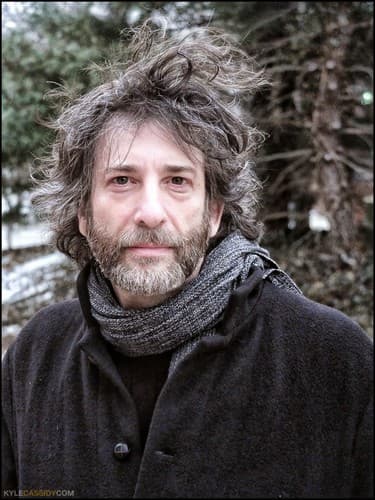
Neil Richard MacKinnon Gaiman is an English author of short fiction, novels, comic books, graphic novels, audio theatre, and a screenwriter. His works include the comic book series The Sandman and the novels Good Omens, Stardust, Anansi Boys, American Gods, Coraline, and The Graveyard Book. He has won numerous awards, including the Hugo, Nebula, and Bram Stoker awards, as well as the Newbery and Carnegie medals. He is the first author to win both the Newbery and the Carnegie medals for the same work, The Graveyard Book (2008). In 2013, The Ocean at the End of the Lane was voted Book of the Year in the British National Book Awards. It was later adapted into a critically acclaimed stage play at the Royal National Theatre in London.







