“The past is a foreign country; they do things differently there.”
— A classic opening line, establishing the historical and mysterious tone of the narrative.

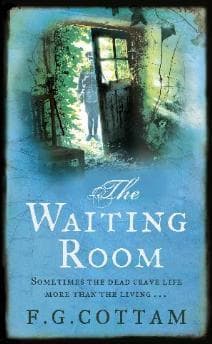
F.G. Cottam (2010)
Genre
Thriller / Fantasy / Historical Fiction / Mystery
Reading Time
6-8 hours
Key Themes
See below
Sign in to track this book
A retired rock star's quiet life ends when the old waiting room on his estate, once a WWI troop transport hub, comes alive with a malevolent presence, forcing him to face the supernatural with a fake ghost-hunter.
Martin Stride, a former rock star, lives a quiet life on his Edwardian estate with his wife, Sarah, and their children, Leo and Lily. The estate has an old Edwardian railway waiting room from World War I, which the children once played in. However, the children have recently become afraid of the building, refusing to go near it. Martin himself starts to notice strange things around the waiting room: cold spots, whispers, and a feeling of unease. He first dismisses these as imagination or the building's age, but the events' persistence and intensity make him consider a supernatural explanation.
Because of his children's fear and his own growing worry, Martin decides to get help. He contacts Julian Creed, a famous television ghost hunter known for his investigations. Unknown to the public, Creed is a skeptic and a fraud, faking evidence and using people's beliefs for ratings and money. He sees his work as a show, a planned illusion. Initially, Creed dismisses Martin's claims, seeing it as another easy case to make dramatic for his show. He agrees to visit the Stride estate, expecting a simple, profitable production, unprepared for what he will find.
Julian Creed, with his cynical crew, sets up his equipment in the waiting room, intending to stage a convincing 'haunting' for his show. But as night comes, the atmosphere in the waiting room changes. Doors slam, objects move, and the temperature drops. Creed, at first thinking it's his crew's pranks, quickly realizes these events are beyond his control. He feels real terror as he hears voices, feels unseen presences, and sees things that defy logic. His skepticism breaks down, replaced by the realization that the supernatural is real.
Shaken by his experience, Julian Creed stops his usual tricks and genuinely tries to understand the waiting room's secrets. He and Martin research the building's history, finding its origins as a temporary casualty station and embarkation point for soldiers during World War I. They learn that many young men, wounded or facing death, passed through its doors. The waiting room was a place of suffering, fear, and final goodbyes. This history explains the intense spiritual activity, suggesting the building holds the despair and trauma of those who were there.
As Julian and Martin continue their investigation, they experience stronger and more disturbing visions in the waiting room. They see spectral soldiers, hear their cries, and even smell blood and mud. These are not just quick glimpses but immersive experiences that blur past and present. They see frantic nurses, stoic officers, and terrified recruits. The waiting room acts as a channel, making them relive its wartime past, especially the anguish of those waiting for transport to or from the front.
The spiritual disturbances are no longer only in the waiting room. Martin's children, Leo and Lily, start having frightening encounters in their home. They report seeing shadowy figures and hearing whispers, similar to what Martin experienced earlier. The entity's focus on the children grows, suggesting a more malevolent intent. Martin and Sarah worry more about their family's safety, realizing the waiting room's influence is spreading and directly threatens their loved ones. This forces them to consider that the spirits are not just residual but intelligent and actively seeking to interact, or worse, harm them.
During one of their searches in local archives, Julian finds a hidden journal belonging to a nurse named Eleanor, who worked in the waiting room during the war. Her entries describe life and death in that makeshift hospital. She details the horrors she saw, her despair at the constant flow of dying men, and her personal struggles. The journal reveals a tragic love story with a young soldier named Thomas. His death, witnessed by Eleanor in the waiting room, left her heartbroken and consumed by grief. This discovery adds a personal layer to the haunting.
Nurse Eleanor's journal entries show a love affair with a soldier named Thomas, who passed through the waiting room. Their secret meetings and hopes for a future are described. The journal ends with the entry detailing Thomas's return, severely wounded, and his death in the waiting room where their love began. Eleanor's grief is clear, her entries filled with anguish and injustice. It becomes clear that Eleanor's spirit, with Thomas's, is among those trapped, her unresolved grief and love keeping her tied to the place of their final moments.
Seeing the emotional core of the haunting, Julian proposes a plan: to help Eleanor and Thomas's spirits find peace. He believes that by acknowledging their tragic love and helping a moment of resolution, they might move on. The plan involves recreating parts of their last encounter in the waiting room, hoping to give closure to their anguish. Martin, though skeptical, agrees, knowing his family's safety depends on resolving the spiritual unrest. They gather historical items and prepare the waiting room for a final attempt to communicate with the beyond.
Julian and Martin carry out their plan, recreating the scene of Thomas's death as best they can, using items from the era. The waiting room becomes a storm of spiritual energy. Eleanor and Thomas's spirits appear powerfully, their anguish nearly overwhelming. Julian, now a true believer, speaks words of comfort and acknowledgment to the spectral couple. In an emotional moment, he helps them to 'reconnect' and express their love. The intense energy slowly calms, replaced by peace. The visions fade, and the cold disappears, suggesting that Eleanor and Thomas, and perhaps other trapped souls, have found peace and moved on from the waiting room.
After the confrontation, the waiting room is quiet. The heavy atmosphere is gone, replaced by stillness and peace. Martin's children no longer fear the building, and the strange events stop throughout the estate. The Stride family can finally enjoy their home without the threat of the paranormal. Julian Creed, changed by his experiences, leaves his television career. He is no longer a skeptic but a believer, helping others understand and resolve similar supernatural events, driven by a new purpose and respect for the unseen world.
The Protagonist
From a skeptical, detached observer, Martin transforms into a courageous protector of his family, willing to confront the supernatural head-on.
The Co-Protagonist
Julian undergoes a dramatic transformation from a fraudulent skeptic to a true believer and a genuine paranormal investigator, finding purpose beyond fame.
The Supporting
Remains a constant source of support and concern, experiencing fear but maintaining strength for her family.
The Supporting
Experiences growing fear and becomes a target, ultimately finding peace after the haunting is resolved.
The Supporting
Experiences growing fear and becomes a target, ultimately finding peace after the haunting is resolved.
The Antagonist/Supporting
Her spirit, initially trapped by grief and contributing to the haunting, finds peace and moves on after her story is acknowledged.
The Antagonist/Supporting
His spirit, trapped by his tragic death and love, finds peace and moves on after his story is acknowledged.
The Mentioned
Their initial skepticism is challenged and ultimately broken by the genuine paranormal activity, leading to their withdrawal.
The waiting room symbolizes the lasting psychological and emotional scars of conflict. The spirits of soldiers and nurses, especially Eleanor and Thomas, show the suffering, fear, and loss of World War I. The visions and sensations Martin and Julian experience are not just spooky events but echoes of the human cost of war, showing how trauma can affect a place and future generations. The book shows that war's impact goes beyond the battlefield, staying with places and people long after the fighting ends.
“The waiting room was a vessel, not just for men, but for their fear, their pain, their last desperate hopes.”
This theme is mainly seen through Julian Creed. Initially a skeptic and a fraud, Julian's journey from disbelief to conviction is key to this theme. The novel challenges the reader's skepticism, showing evidence of the supernatural. It suggests that some truths are beyond rational explanation and that a closed mind can prevent understanding. Martin also changes, though less dramatically. The story argues that sometimes, one must set aside disbelief to truly understand the world's deeper, more mysterious realities.
“He'd spent a lifetime faking it, only to find the real thing was far more terrifying than anything he could conjure.”
The haunting is caused by Nurse Eleanor's unresolved grief and her tragic love story with Thomas. Their spirits are tied to the waiting room by the strong emotions around Thomas's death and their unfulfilled future. The novel shows how powerful emotions, especially love and loss, can cross death and influence the living. Resolving the haunting depends on acknowledging these emotions, allowing the spirits to find peace. This theme highlights the lasting nature of human connection and the need for closure.
“Their love, a fragile bloom in the shadow of war, had become the anchor of their eternal sorrow.”
Martin Stride's main reason throughout the ordeal is to protect his family. The waiting room, part of his estate, becomes a direct threat to his home's safety and peace. The haunting's escalation to affect his children shows the violation of this sanctity. The theme explores how far a parent will go to defend loved ones from unseen dangers, turning a family life into a battle against the supernatural. Ultimately, the haunting's resolution restores peace and safety to the Stride home.
“His children's fear was a weapon, sharper and more potent than any ghost could wield.”
A derelict Edwardian railway waiting room serves as the epicenter of paranormal activity.
The waiting room itself is the primary plot device, acting as a focal point and catalyst for all the supernatural occurrences. Its specific historical context as a World War I casualty station imbues it with a deep sense of tragedy and unresolved trauma. The building isn't just a backdrop; it's a character in itself, actively generating the haunting and influencing the living. Its decaying state symbolizes the forgotten past, and its inherent liminality (a place of transition) makes it a perfect conduit for lingering spirits. The waiting room's physical presence grounds the fantastical elements in a tangible, historical reality.
Julian Creed's dramatic character arc from fraud to genuine believer.
This device is embodied by Julian Creed's transformation. It serves several narrative functions: it provides an initial voice of reason and doubt that the audience can relate to, allowing the supernatural to be gradually revealed and validated through his experience. His initial cynicism makes his eventual belief more impactful and convincing. This arc also allows for exposition on the mechanics of 'ghost hunting' (both fraudulent and genuine) and provides a strong character development journey, adding depth beyond mere horror.
Nurse Eleanor's journal provides crucial backstory and emotional context for the haunting.
The discovery of Nurse Eleanor's journal is a classic literary device. It allows for the unfolding of critical backstory (the love story with Thomas, the wartime experiences) in an intimate, personal voice. This not only explains the 'why' behind the haunting but also humanizes the spirits, transforming them from generic scary ghosts into tragic figures deserving of empathy. The journal provides the emotional core needed for Martin and Julian to devise a plan for resolution, moving beyond mere confrontation to understanding and healing.
The increasing intensity and spread of the paranormal activity.
The haunting begins subtly (cold spots, whispers) and gradually escalates to terrifying visions, physical manifestations, and eventually, the direct targeting of Martin's children. This escalating pattern builds suspense and fear, continuously raising the stakes for the characters. It demonstrates the growing power and malevolence of the entity (or entities) and forces the protagonists to take increasingly desperate measures. This device keeps the narrative dynamic and ensures that the threat never becomes stagnant, pushing the characters towards a final confrontation.
“The past is a foreign country; they do things differently there.”
— A classic opening line, establishing the historical and mysterious tone of the narrative.
“Some doors, once opened, can never truly be closed again.”
— Reflecting on the irreversible consequences of certain discoveries or actions within the plot.
“Fear has a way of making even the most rational mind see ghosts.”
— Describing a character's psychological state as they confront unexplained phenomena.
“The truth, like a buried secret, always finds a way to surface.”
— Hinting at the slow unveiling of a long-hidden mystery.
“There are shadows in history that refuse to be forgotten.”
— Referring to the lingering influence of past events and historical figures.
“Sometimes the greatest monster is the one you cannot see.”
— Exploring the unseen threats and psychological horror present in the story.
“Belief is a powerful weapon, for good or ill.”
— Discussing the role of faith and superstition in driving characters' actions.
“The line between sanity and madness is often thinner than we dare to admit.”
— As a character grapples with the terrifying implications of what they are experiencing.
“Every old house has its stories, but some whisper them louder than others.”
— Setting the scene for a haunted or historically significant location.
“What we don't know can hurt us far more than what we do.”
— Highlighting the danger of ignorance and the unknown in the face of a threat.
“Time has a way of eroding everything but the deepest scars.”
— Reflecting on the lasting impact of traumatic events across generations.
“The world is full of things that defy explanation, if only we are brave enough to look.”
— Encouraging a willingness to confront the supernatural and inexplicable.
“Silence can be the most terrifying sound of all.”
— Building suspense during a particularly tense moment of quiet anticipation.
“Some questions are better left unanswered, for the sake of one's peace of mind.”
— A character's internal debate about pursuing a dangerous truth.
Ready to see how well you understood this book? Take our interactive quiz with 10 questions.

Biography coming soon.







