“She felt as if she had been plunged into a cold bath. It was a shock, but a pleasant one.”
— Rachel Vinrace's initial impressions upon arriving at theelms in Richmond.

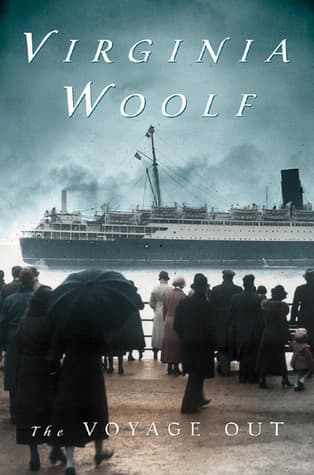
Virginia Woolf (2018)
Genre
Literary Fiction / Romance
Reading Time
500 min
Key Themes
See below
Sign in to track this book
A young Englishwoman's sea voyage to a South American resort explores self-discovery, love, and the societal expectations for women in early 20th-century England.
Rachel Vinrace, a 24-year-old, lives a quiet life in Richmond with her two unmarried aunts. One day, her aunt Helen Ambrose and uncle Ridley Ambrose arrive from their country home, on their way to sail to Santa Marina, a resort town in South America, where Ridley plans to write. Helen, seeing Rachel's life as dull, invites Rachel to join them on the 'Euphrosyne'. Rachel, at first unsure and not used to making her own choices, accepts, leaving her familiar life for an unknown adventure.
On the 'Euphrosyne', Rachel's sheltered life is challenged by the more experienced passengers. She plays piano, reads, and watches the people around her. She becomes friends with Mrs. Dalloway, a social woman who tries to teach Rachel about manners and marriage, which Helen finds amusing and slightly disapproving. Rachel also meets Richard Dalloway, Mrs. Dalloway's husband, who kisses her without her consent in the dark. This event deeply disturbs and confuses Rachel, her first real encounter with male desire and her own developing sexuality.
The 'Euphrosyne' arrives in Santa Marina, a fictional South American coastal town. The Ambroses and Rachel get off the ship and move into their rented villa, a somewhat old but charming house with a garden, surrounded by tropical plants. Moving from the ship's closed world to the new, isolated resort town is another change for Rachel. The new place feels strange, and Richard Dalloway's advance still bothers her, keeping Rachel somewhat quiet, but she starts to feel drawn to nature and the chance for new experiences.
In Santa Marina, Rachel and the Ambroses meet the small English community. This group includes Mr. Pepper, Mr. Grice, and Miss Allan. Later, younger English visitors arrive: Hewet, Hirst, Perrott, and Arthur. Rachel likes the intellectual talks among these new friends, especially with Terence Hewet, a young writer, who seems to understand her in a way others have not. This starts an immediate intellectual and emotional connection.
Rachel and Terence Hewet spend more time together, having long talks about life, art, and what is real. Their discussions often cover abstract ideas, and Rachel, though still somewhat shy, finds her thoughts and feelings sparked by Terence's curiosity. They share moments of deep connection and understanding, exploring the jungle and beaches together. Helen and others notice their growing romance, though Rachel herself is somewhat unaware of how serious their bond is.
The English group plans a picnic and trip into the jungle. In the new setting, Rachel feels both excited and uneasy. During a private moment, Terence Hewet proposes marriage to Rachel. Overwhelmed by the moment and her mixed feelings, Rachel accepts his proposal. Her acceptance is not entirely happy; she feels confused, afraid, and strangely detached, grappling with the sudden change in her future and what such a promise means.
After their engagement, Rachel and Terence spend their days in a new relationship. They continue their long talks, trying to understand each other better. However, Rachel struggles with being engaged. She often feels separate from herself and from Terence, having moments of deep loneliness and worry about the future. Their strong emotional and intellectual bond is clear, but Rachel's inner world remains troubled, with a sense of dread and a feeling that something inside her is wrong, despite her feelings for Terence.
As the tropical heat grows, Rachel suddenly becomes ill with a fever that quickly gets worse. Her symptoms are severe, including confusion, seeing things that are not there, and great weakness. The others in the English community, especially Helen Ambrose and Terence Hewet, worry and then become upset as her condition worsens. Despite the local doctor's efforts, who seems unable to diagnose or treat her illness, Rachel's health declines quickly. The lively Santa Marina suddenly feels threatening, showing Rachel's internal struggle.
Despite constant care from Helen and Terence, and their hopes for her recovery, Rachel's fever continues. She goes in and out of awareness, having vivid, often disturbing, visions. The novel ends with her death. Her passing leaves Terence Hewet devastated and Helen Ambrose deeply sad. The sudden loss of Rachel, just as she was starting to grow and understand herself, makes everyone in the community sad, showing how fragile life is and how human plans can fail in the face of nature.
After Rachel's death, a deep silence and sadness fill the villa. Helen Ambrose and Terence Hewet are left to deal with their grief and the questions about Rachel's short, unfulfilled life. The other English community members offer their sympathy, but their usual words seem not enough for the tragedy. The novel closes with a sense of quiet sadness, showing the emptiness left by Rachel's absence and the lasting effect of her life and death on those who knew her, especially on Terence, whose future is now changed forever.
The Protagonist
Rachel begins as a sheltered, unexamined individual and slowly awakens to her own identity and the complexities of human relationships, only for her journey of self-discovery to be tragically cut short.
The Supporting
Helen acts as a catalyst for Rachel's journey and a supportive, though sometimes distant, observer, ultimately experiencing profound grief at Rachel's death.
The Supporting
Terence moves from an intellectual observer to a deeply emotional lover, only to suffer the tragic loss of his beloved Rachel, leaving him heartbroken.
The Supporting
Ridley remains largely static, serving as a scholarly backdrop to the emotional drama unfolding around him.
The Supporting
Richard serves as a catalyst for Rachel's sexual awakening, his brief appearance leaving a lasting psychological impact on her.
The Supporting
Mrs. Dalloway acts as a social mentor figure to Rachel, embodying conventional societal expectations.
The Supporting
Hirst begins as a cynical observer and becomes a grieving friend, witnessing the tragedy unfold.
The Supporting
Mr. Pepper remains a static background character, embodying the more settled, less dramatic aspect of the expatriate community.
The novel follows Rachel Vinrace's journey from a sheltered life to an understanding of her identity, desires, and place in the world. Her trip is both real and symbolic, as she leaves her upbringing to explore new ideas and feelings. She deals with social expectations, artistic goals, and human connections, especially through her interactions with Helen Ambrose and Terence Hewet. Her struggle to express her inner life and her tragic awakening show how fragile and often incomplete self-discovery is.
“She had a profound, if vague, conviction that she was a failure, and not only a failure, but a fraud. What was it that she was always trying to express and always failing to express?”
Woolf explores different aspects of love and marriage through the relationships shown. Mrs. Dalloway represents the common, social view, seeing marriage as practical and respectable. In contrast, Helen and Ridley Ambrose's marriage is one of intellectual partnership and quiet understanding. Rachel and Terence's developing love is a deep intellectual and emotional connection, from shared talks and a desire for understanding. However, Rachel's worry and confusion about her engagement show the fear of losing oneself in a relationship and the uncertainties of such a commitment.
“She felt for him an extraordinary sense of familiarity, as if they had known each other for years, and yet with it a sense of distance, as if they were strangers.”
The novel quietly criticizes the male-dominated society of the early 20th century and its effect on women's lives. Rachel's early sheltered life, her aunts' unmarried state, and Mrs. Dalloway's focus on social rules all show the limited roles for women. Richard Dalloway's uninvited kiss reminds Rachel of male power and its ability to confuse and violate. Helen Ambrose, though more independent, still lives within these limits. Rachel's struggle to express herself and her inner conflict over marriage show the difficulties women faced in stating their own desires in a male-dominated world.
“It was not her body, but her soul that was revolted. She felt as if she had been flung into the dirt.”
A main theme is how hard, and sometimes impossible, it is for people to truly communicate and understand each other. Rachel often struggles to express her complex inner world, which makes her feel isolated and misunderstood. Even with Terence, despite their deep connection, there are times of disconnect and unsaid thoughts. The characters often talk past each other, or their words fail to show the depth of their feelings. This theme becomes stronger with Rachel's delirium, where language itself breaks down, further showing the limits of spoken words.
“She felt as if she were speaking in a foreign language, and not only speaking, but thinking in a foreign language.”
The South American setting is important, first seeming exotic and freeing, but eventually becoming a force of indifferent power. The journey, the sea, and the wild jungle of Santa Marina are described with strong details, showing Rachel's inner awakenings. However, nature also brings danger and death, as the tropical climate leads to Rachel's fatal illness. This dual nature shows nature's beauty and its unpredictability, suggesting that while it can inspire, it also does not care about human desires and weaknesses.
“The jungle was alive with sound; the air was thick with the scent of unknown flowers; and a thousand strange shapes of leaves and branches seemed to beckon her deeper into its heart.”
The physical journey mirrors Rachel's internal journey of self-discovery.
The 'voyage out' itself is a central metaphor. Rachel's physical journey from the familiar, staid environment of London to the exotic, unknown shores of South America directly parallels her internal journey of awakening and self-discovery. The ship, the 'Euphrosyne', acts as a transitional space where she begins to shed her old self and encounter new ideas and experiences. The arrival in Santa Marina signifies her deeper immersion into the complexities of life, love, and human relationships, before her journey is tragically cut short.
Rachel's piano playing represents her inner world and means of expression.
Rachel's talent for playing the piano is a significant symbol. Music serves as her primary means of self-expression, particularly in the early parts of the novel when she struggles to articulate her thoughts and feelings verbally. Her improvisations often reflect her emotional state and her burgeoning inner life. It is through her music that others, especially Terence, first glimpse the depth and complexity of her soul. The piano also symbolizes her artistic sensibility and her capacity for profound, non-verbal communication.
Narrative technique used to delve into characters' internal thoughts and feelings.
Woolf employs stream of consciousness, a narrative technique that blurs the lines between internal thought, external observation, and dialogue. This allows the reader direct access to the characters' subjective experiences, particularly Rachel's, revealing her fragmented thoughts, fleeting impressions, and deep emotional states. This device highlights her struggle for self-definition and the often inchoate nature of her inner world, making her a complex and psychologically rich character, even when she is unable to articulate her feelings verbally.
The exotic, yet ultimately dangerous, setting influences the characters' development and fate.
The fictional South American resort of Santa Marina is more than just a backdrop; it is a vital element influencing the plot and characters. Its exotic beauty, lush jungle, and oppressive heat contribute to the sense of liberation and heightened emotion, fostering the intense connections between characters like Rachel and Terence. However, the untamed nature of the tropics also harbors danger, ultimately leading to Rachel's mysterious and fatal illness. The setting thus symbolizes both the allure of the unknown and the indifferent, sometimes destructive, power of nature.
“She felt as if she had been plunged into a cold bath. It was a shock, but a pleasant one.”
— Rachel Vinrace's initial impressions upon arriving at theelms in Richmond.
“It was as if the surface of the world had been cracked, and for a moment she looked into the abyss.”
— Rachel's reaction to Helen Ambrose's blunt assessment of marriage.
“She had a profound, if vague, sense of the beauty of the world.”
— Rachel contemplating the sea and nature during the voyage.
“The world was a great workshop, and she felt like a useless tool.”
— Rachel's feeling of inadequacy and uncertainty about her purpose.
“It seemed to her that she was watching a play, and the actors were very good, but she was not part of it.”
— Rachel observing the social interactions of the other passengers on the ship.
“The truth was, that she was profoundly ignorant of the world.”
— Rachel's internal realization about her sheltered upbringing.
“She felt a sudden conviction that if she could only discover the truth about love, she would be happy.”
— Rachel's nascent desire to understand human relationships and emotions.
“For a moment she felt that she was about to be told something of immense importance.”
— Rachel's anticipation during a conversation with Richard Dalloway.
“The past, she thought, was like a long corridor, and at the end of it was a door.”
— Rachel's reflection on her life and future.
“It was impossible to say whether she liked him or not; she felt nothing but curiosity.”
— Rachel's initial impressions of Terence Hewet.
“The whole world, she thought, was a conspiracy to make one feel small and insignificant.”
— Rachel's feelings of being overwhelmed by the grandness and complexity of life.
“She could not help feeling that there was something profoundly absurd in the spectacle of human beings.”
— Rachel's detached observation of human behavior and social conventions.
“It was as if she had been born again, but this time with a full knowledge of her own insignificance.”
— Rachel's developing self-awareness and understanding of her place in the world.
“The air was full of the sound of people talking, but no one seemed to be saying anything of importance.”
— Rachel's perception of the superficiality of social conversation.
Ready to see how well you understood this book? Take our interactive quiz with 10 questions.
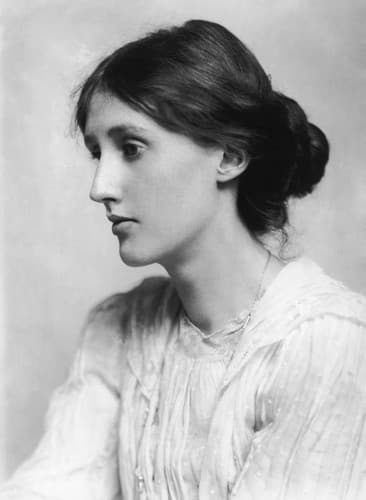
Adeline Virginia Woolf was an English writer. She is considered one of the most important modernist 20th-century authors and a pioneer in the use of stream of consciousness as a narrative device.







