“Courage, dear heart.”
— Aslan whispers this to Lucy when she feels afraid during the dark island sequence.

C.S. Lewis (1952)
Genre
Fantasy / Children's / Young Adult
Reading Time
250 min
Key Themes
See below
Sign in to track this book
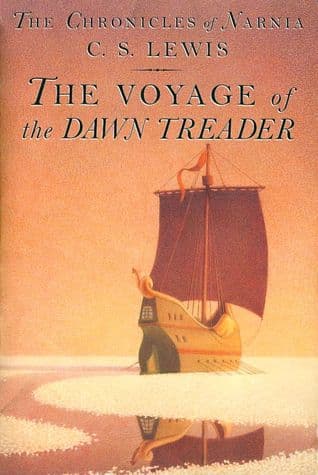
Join Edmund, Lucy, and Eustace aboard the Dawn Treader as they sail to the world's end, encountering dragons, magic, and their deeper selves on a quest to find lost lords and reach Aslan's country.
Edmund and Lucy Pevensie are staying with their cousin, Eustace Scrubb, during the summer. Lucy finds a painting of a Narnian ship, the Dawn Treader, in her room. As they look at it, the painting comes to life, water fills the room, and the three children are pulled into the Narnian sea. They are rescued by the ship in the painting, the Dawn Treader, captained by King Caspian X. Caspian explains he is looking for the seven Narnian Lords—Lord Revilian, Lord Argoz, Lord Mavramorn, Lord Octesian, Lord Restimar, Lord Rhoop, and Lord Bern—who his uncle, Miraz, banished years ago. Reepicheep the mouse is also aboard, determined to reach Aslan's Country in the far East.
The Dawn Treader first sails to the Lone Islands. These are Narnian lands but have corrupt leaders. They find that Governor Gumpas, the greedy governor, is selling slaves, including Narnians, to Calormene merchants. Edmund, Lucy, and Eustace are captured and almost sold as slaves. Caspian, using his authority as King of Narnia, arrives and frees them. He removes Gumpas and names Lord Bern, one of the lost lords they were looking for, as the new Duke of the Lone Islands. This restores Narnian law. Lord Bern gives important information about the other lords and dangers further east.
After leaving the Lone Islands, the ship meets a bad storm and is damaged. They land on an unknown, volcanic island. Eustace at first thinks it is empty. While the others fix the ship, Eustace wanders off, looking for treasure. He finds a dying dragon and a lot of gold and jewels. Overcome by greed, he falls asleep on the treasure. When he wakes, he has turned into a dragon, a result of his selfish nature. Horrified, he tries to talk to his confused friends, who eventually recognize him. Eustace, as a dragon, helps gather wood and provides warmth.
Eustace, as a dragon, is sad and alone. He sees his mistakes and truly regrets his past actions. One night, Aslan appears to him in a vision, leading him to a magic pool. Aslan tells Eustace to shed his dragon skin. Eustace tries to pull it off himself, but the skin underneath is still dragon-like. Aslan then gently but firmly peels off several layers of skin, a painful but needed process. Finally, Aslan throws Eustace into the pool, and he comes out as a boy again. He is changed, now kind, humble, and helpful. His transformation is a big change in his character.
The Dawn Treader next lands on an island with invisible creatures called Dufflepuds. These one-legged, clumsy beings ask Lucy to make them visible again, saying a magician, Coriakin, cast the spell. They threaten the crew if Lucy refuses. Lucy, following a spell book, goes into Coriakin's house alone. She finds a spell to make the invisible visible and reads it. Coriakin, a kind but strict star sent to govern the Dufflepuds, says he made them invisible for their own good because they were too ugly to be seen. He makes them visible again, turning them into Monopods, and the Dufflepuds like their new look.
The ship reaches an island with a clear lake. Reepicheep tests the water and finds it ordinary. However, Eustace, now more watchful, sees that objects in the lake do not reflect on its surface. They soon find that anything touching the water turns into solid gold. Horrified, they find the body of one of the lost lords, Lord Restimar, perfectly kept at the bottom of the lake, turned into a golden statue. The island is named Deathwater Island. The discovery of Restimar's fate warns about the dangers of greed and false beauty.
The Dawn Treader approaches a place of complete darkness, the Island of the Dark. Coriakin had warned them that dreams come true here. Despite the crew's fear, Caspian sails through it to find Lord Rhoop, who was last seen going this way. As they sail through the darkness, each character faces their deepest fears and worst nightmares. They find Lord Rhoop, a broken and scared old man, who begs them to take him away from the island and its visions. The experience is unsettling for everyone, showing the power of inner demons.
After escaping the darkness, they arrive at an island where they meet Ramandu, a retired star, and his daughter. Ramandu explains he is waiting for rejuvenation, which happens every thousand years. On the island, they find three more lost lords—Lord Revilian, Lord Argoz, and Lord Mavramorn—all in an enchanted sleep around a stone table with a feast. Ramandu says they fell asleep after arguing and drawing their swords in Aslan's table, a sacred place. The only way to break the enchantment is to sail to the World's End and return one of the crew to Aslan's Country. Reepicheep eagerly volunteers.
The Dawn Treader sails further east, entering a sea where the water becomes clearer, sweeter, and shallower. They pass through the Silver Sea, where the water is so pure it seems to hold light. The air becomes fragrant and sweet, and the light grows brighter, though there is no visible sun. They see strange, beautiful creatures in the clear water. The crew feels wonder and peace, and a growing sense of their destination's sacredness. Caspian, though wanting to continue, decides he must return to Narnia to rule. He is king and cannot leave his duties.
The water becomes too shallow for the ship to go further. Caspian, with sadness, says goodbye to Edmund, Lucy, Eustace, and Reepicheep, who continue in a small boat. They row through a sea of lilies until they reach a wall of water, the 'end of the world.' Reepicheep, full of joy, paddles over the wall and disappears, having reached his dream of Aslan's Country. Edmund, Lucy, and Eustace then meet a lamb, which turns into Aslan. Aslan tells them they cannot stay in Narnia, but that they will know him in their own world by another name. He sends them back to England, changed by their journey.
The Protagonist
Lucy learns to trust her inner compass and resist vanity, solidifying her compassionate and faithful nature.
The Protagonist
Edmund's journey reinforces his growth into a wise and just king, proving his redemption is complete.
The Protagonist
Eustace transforms from a selfish, spoiled boy into a kind and brave individual through a literal and metaphorical shedding of his old self.
The Protagonist
Caspian solidifies his role as a just and responsible king, learning to balance personal desire with duty.
The Supporting
Reepicheep achieves his lifelong spiritual quest, demonstrating unwavering faith and courage to the very end.
The Supporting
Aslan maintains his role as the eternal, guiding force, facilitating growth and revealing deeper truths.
The Supporting
Coriakin's role is to maintain order and guide the Dufflepuds, revealing his wise and benevolent nature.
The Supporting
Ramandu serves as a wise oracle, providing crucial guidance and revealing a path forward for the quest.
The Supporting
Lord Bern is restored to his rightful place, symbolizing the triumph of justice and loyalty.
The most clear theme is transformation, especially for Eustace Scrubb. His change into a dragon, a sign of his inner greed, makes him feel humble and sorry. Aslan's painful but cleansing act of removing his dragon skin means spiritual rebirth. This theme also shows in the restoration of the Lone Islands from corruption and the journey of the lost lords, suggesting that lost individuals can find their way back to goodness. The journey itself changes all the characters, though less dramatically than Eustace.
“"The very first tear he made was so deep that he thought it had gone right into his heart. And when he tried to pull the next bit, it was worse still. By the time he had pulled the third, he was so sore and raw that he could not bear it: and he lay down and cried."”
The voyage tests faith, especially as the crew sails east towards Aslan's Country. Reepicheep's strong belief in Aslan's Country and his will to reach it inspire the others. Lucy's faith allows her to see and interact with magic and to trust Aslan's guidance. The journey into the far East, where light grows brighter and water sweeter, represents a spiritual trip. It requires belief in what cannot be fully seen or understood. The final meeting with Aslan shows that true faith leads to fulfillment.
“"Further up and further in!"”
This theme is central to King Caspian's story. While he is drawn to the far East and Aslan's Country, he chooses his duty as King of Narnia over his personal wish to continue the journey. He knows his place is to rule his kingdom. Similarly, the Pevensie children, though they love Narnia, understand they must return to their own world. This theme explores the responsibilities of leadership and the self-sacrifice needed to do one's job. It shows that true kingship means putting the kingdom's needs before personal desires.
“"A King's son, that's what I am, and I must not forget my father's kingdom."”
Several islands offer temptations that test the characters. Eustace's change into a dragon happens because of his greed for gold on Dragon Island. Deathwater Island, with its lake that turns everything to gold, warns about the destructive nature of greed, seen in the golden statue of Lord Restimar. Lucy briefly struggles with vanity on the Dufflepud island, almost wanting to become beautiful. These events show how desires for wealth or superficial beauty can lead to moral problems.
“"The water of the lake was so perfectly clear that one could see the bottom as if it were air. And there, on the bottom, were statues... all of pure gold. And what was stranger still, they were not statues of imaginary things but of men."”
The entire voyage of the Dawn Treader is a metaphor for life's spiritual journey and finding oneself. Each island represents a different challenge or lesson—the Lone Islands for justice, Dragon Island for facing inner demons, the Dufflepuds for seeing past appearances, Deathwater for the dangers of greed, the Dark Island for facing fears, and Ramandu's Island for wisdom and redemption. The end in the far East and Aslan's Country symbolizes the ultimate goal of spiritual growth and meeting the divine. The physical journey reflects the characters' inner growth.
“"You have come to the end of the world, and you are to go no further."”
A magical portal bridging the worlds of Narnia and England.
The painting of the Dawn Treader serves as the primary magical portal that transports Edmund, Lucy, and Eustace from their world into Narnia. It is not merely a picture but a living gateway, signifying the porous boundary between the ordinary and the magical. This device immediately immerses the characters and readers into the fantastical setting, establishing the magical realism inherent in the Narnia series. It also highlights the idea that Narnia can call to those who believe, drawing them in when their presence is needed.
A literal manifestation of character flaws leading to profound change.
Eustace's transformation into a dragon is a powerful magical realism device. It is a direct, physical manifestation of his internal character flaws—his greed, selfishness, and unpleasantness. This literal change forces him to experience the consequences of his nature in a visceral way, leading to genuine remorse and a desire to change. The process of shedding his dragon skin, facilitated by Aslan, is a symbolic act of spiritual cleansing and rebirth, making his character arc one of the most impactful examples of redemption in the series.
A symbolic representation of spiritual ascent and closeness to the divine.
As the Dawn Treader sails further east, the sea itself undergoes a magical transformation: the water becomes clearer, sweeter, and eventually turns into a field of lilies. This environmental progression is a powerful symbolic device, representing the approach to a sacred, divine realm (Aslan's Country). The increasing beauty and purity of the surroundings mirror the spiritual purification and enlightenment of the characters as they near their ultimate destination, creating a sense of wonder and reverence that culminates in the encounter with Aslan.
A quest MacGuffin driving the plot and revealing Narnian history.
The quest to find the seven lost Narnian Lords serves as the primary MacGuffin for the Dawn Treader's voyage. While the discovery of each lord (or their fate) is important, the true significance lies in the journey itself and the lessons learned along the way. Each encounter with a lord or their island reveals a piece of Narnian history, exposes different moral challenges, or provides a stepping stone towards the ultimate destination of Aslan's Country. The quest provides a tangible goal that propels the narrative forward.
A psychological trial manifesting deepest fears and nightmares.
The Dark Island is a potent psychological device that serves as a trial for the characters. It is a place where 'dreams come true,' but in its terrifying manifestation, it brings forth the deepest fears and worst nightmares of those who sail through it. This challenges the characters' courage, faith, and mental fortitude. It forces them to confront their inner demons and the darkness within themselves, rather than an external enemy, making it a powerful test of their individual and collective resilience.
“Courage, dear heart.”
— Aslan whispers this to Lucy when she feels afraid during the dark island sequence.
“This was the very reason why you were brought to Narnia, that by knowing me here for a little, you may know me better there.”
— Aslan explains to Lucy and Edmund that their time in Narnia has prepared them for life in their own world.
“In our world, a star is a huge ball of flaming gas.”
— Ramandu's daughter explains the nature of stars to Eustace, contrasting Narnia's magical reality with Earth's scientific one.
“Sleeping on a dragon's hoard with greedy, dragonish thoughts in his heart, he had become a dragon himself.”
— Narrator describes how Eustace's greed transformed him into a dragon.
“It isn't Narnia, you know. It's you. We shan't meet you there. And how can we live, never meeting you?”
— Lucy expresses her sadness to Aslan about leaving Narnia and possibly never seeing him again.
“But who said anything about safe? 'Course he isn't safe. But he's good.”
— Mr. Beaver describes Aslan's nature to the Pevensie children in an earlier book, but this idea resonates throughout the series.
“I am a star at rest, my daughter.”
— Ramandu explains his current state as a retired star who now guards the edge of the world.
“Do not dare not to dare.”
— Reepicheep challenges Eustace to be brave when facing danger.
“This is the very end of the world.”
— Caspian and the crew reach the edge of Narnia's world where the water becomes sweet.
“You come of the Lord Adam and the Lady Eve. And that is both honor enough to erect the head of the poorest beggar, and shame enough to bow the shoulders of the greatest emperor on earth.”
— Aslan explains to Edmund the dual nature of human heritage.
“I was the dragon. I was the dragon. I was the dragon.”
— Eustace repeats this realization after Aslan helps him shed his dragon skin.
“But I will not tell you how long or short the way will be; only that it lies across a river. But do not fear that, for I am the great Bridge Builder.”
— Aslan speaks to the children about their journey back to their own world.
“It would have been better if you'd woken me up before you made a fool of yourself.”
— Reepicheep chides Eustace after one of his many blunders early in the voyage.
“The spell which I put on you may work differently with different people. It is not in the power of man to alter fate.”
— Coriakin explains to Lucy about the magic of the Duffers' island.
Ready to see how well you understood this book? Take our interactive quiz with 10 questions.
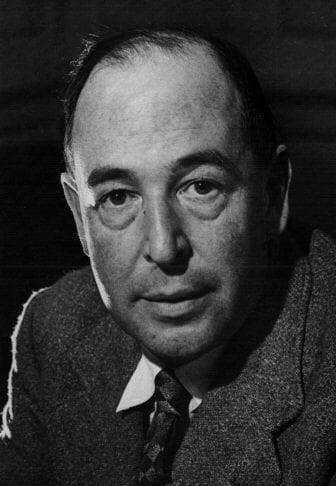
Clive Staples Lewis was a British writer, literary scholar, and Anglican lay theologian. He held academic positions in English literature at both Oxford University and Cambridge University. He is best known as the author of The Chronicles of Narnia, but he is also noted for his other works of fiction, such as The Screwtape Letters and The Space Trilogy, and for his non-fiction Christian apologetics, including Mere Christianity, Miracles, and The Problem of Pain.







