“The darkness wasn't just an absence of light; it was a hungry, living thing.”
— Describing the oppressive nature of the Void itself.

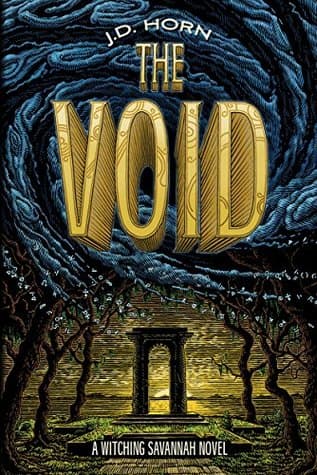
J.D. Horn (2014)
Genre
Fantasy / Young Adult / Romance
Reading Time
320 min
Key Themes
See below
Sign in to track this book
As Savannah's calm is shattered by severed limbs, a witch must protect her unborn child from an ancient enemy wielding dark magic, or lose everything to a growing threat.
Mercy Taylor, pregnant with her first child, Colin, enjoys a peaceful time with her husband, Peter Maxwell, in Savannah. Their calm is broken when horrific discoveries begin to plague the city: dismembered body parts appear in various public places. This macabre event frightens Savannah and immediately puts Mercy on edge, as she senses a magical element to the violence. She and Peter try to live normally, but the increasing brutality and her magical sensitivity tell her that something far more sinister than a serial killer is at work, directly threatening her and her unborn child.
Amidst the growing chaos, Mercy receives an unwelcome visit from Miss Amelia, a powerful and manipulative witch from her past. Miss Amelia, despite their history, approaches Mercy not as an enemy but with a grave warning. She reveals that the scattered body parts are not random acts but part of a dark ritual. More alarmingly, Miss Amelia tells Mercy that a powerful entity, 'The Void,' is after her and her unborn child, Colin. The Void seeks to prevent Colin's birth because his immense latent magical power threatens its existence or plans. This revelation forces Mercy to accept the supernatural origins of the attacks and the direct threat to her family.
With Miss Amelia's warning, Mercy and Peter begin a desperate search for information. They consult magical allies and look through ancient texts and forgotten lore in Savannah's magical archives. Their research points to an ancient evil, 'The Void,' a parasitic entity that feeds on magic and tries to prevent the birth of powerful magical children. They learn that the dismembered body parts are sacrifices meant to weaken the city's magical defenses and target Mercy and her unborn child, who is prophesied to have an unprecedented level of magical energy. The urgency of their search grows as the attacks become more focused.
The Void's presence becomes stronger, and its attacks more direct. Mercy experiences disturbing visions and sees shadowy figures, all designed to terrorize and weaken her. Her magical abilities, usually a strength, become unpredictable due to her pregnancy and The Void's interference. Peter, though not a witch, uses his resources and protective instincts to shield Mercy, but he feels increasingly helpless against the supernatural threat. The Void shows its reach by subtly influencing people around them, creating an atmosphere of paranoia and isolation. Mercy realizes the entity is not just after her child's power, but her will to fight.
Through continued research and further revelations, Mercy uncovers the full prophecy surrounding her unborn son, Colin. He is not just a powerful witch; he is destined to be a source of immense magical energy, capable of either bringing a new era of magical balance or, if corrupted, causing great destruction. The Void fears Colin's potential because it represents a threat to its parasitic existence, which thrives on imbalance and chaos. This understanding strengthens Mercy's resolve: protecting Colin is not just about maternal love, but about safeguarding the future of the magical world itself. The stakes are higher than she ever imagined.
Despite her deep distrust of Miss Amelia, Mercy realizes that The Void is too great a threat to face alone. Miss Amelia, driven by her own reasons and a grudging respect for Mercy's power, offers a dangerous alliance. She has knowledge and access to ancient rituals that might be crucial in fighting The Void, but her methods are often morally ambiguous and risky. Mercy struggles with working with someone who has caused her so much pain, but Colin's impending birth and the escalating danger force her to consider all options, even those she finds unpleasant. Peter advises caution but supports Mercy's difficult decision.
Under Miss Amelia's guidance, Mercy begins preparing for a powerful, ancient ritual designed to either banish The Void or create a protective shield around Colin. The ritual is complex and dangerous, requiring rare ingredients and immense magical focus, especially from a pregnant witch. Miss Amelia explains the sacrifices and risks involved, warning Mercy that failure could mean the loss of her child or her own life. The tension builds as they gather the necessary components, performing smaller spells to prepare for the main event. Mercy feels the strain on her body and magic, but her determination to protect Colin overcomes all fear.
The climax arrives as Mercy, supported by Peter and Miss Amelia, starts the ritual to confront The Void. The entity appears as a terrifying, formless darkness, trying to break Mercy's will and consume her magic. The battle is not just physical or magical, but psychological, as The Void tries to exploit Mercy's fears as a new mother. Mercy, drawing on her ancestral power and fierce love for her unborn child, unleashes a torrent of magic, guided by Miss Amelia's instructions. Peter, though unable to fight directly, provides crucial emotional support and protection, keeping Mercy grounded during the intense magical assault.
Through great effort and a critical, unexpected sacrifice from Miss Amelia, The Void is defeated, or at least repelled. The victory is hard-won, leaving Mercy emotionally and magically drained, but Colin is safe. Miss Amelia's sacrifice, though unexpected, shows a hidden depth to her character, suggesting that even antagonists can be motivated by more than pure malice when faced with a greater evil. The cost of victory is clear, and Mercy understands that while The Void is gone for now, its influence might linger, and the magical world is changed by this confrontation. Her bond with Peter is strengthened by the shared ordeal.
After The Void's defeat, Savannah slowly begins to heal, though the city and its magical inhabitants are forever marked by the ordeal. Mercy, now fully understanding the immense power and destiny of her son, Colin, embraces her role as his protector and guide. She and Peter prepare for Colin's birth, knowing that their lives will be filled with both joy and constant vigilance. The experience has matured Mercy, deepening her understanding of magic, sacrifice, and the complex nature of good and evil. They look forward to their future as a family, but with a new awareness of the lurking dangers in the magical world and their responsibility to it.
The Protagonist
Mercy evolves from an amateur witch seeking domestic bliss to a powerful, self-sacrificing mother who fully embraces her magical destiny to protect her child and the world.
The Supporting
Peter's arc shows him moving from a supportive husband to an active, courageous partner willing to face unimaginable dangers to protect his family, even without magic.
The Antagonist/Supporting
Miss Amelia's arc is one of surprising redemption, moving from a self-interested antagonist to making a critical sacrifice for the greater good, revealing a hidden moral compass.
The Supporting
Colin's arc is entirely potential-based; his very existence and the prophecy surrounding him drive the entire conflict, setting him up as a future key figure in the magical world.
The Antagonist
The Void's arc is one of aggressive expansion and eventual, though perhaps temporary, defeat, driven by its singular goal of self-preservation through magical consumption.
The Mentioned
The ancestors' arc is static, serving as a constant source of power and wisdom for Mercy, reinforcing the theme of inherited destiny.
The main theme is a mother's fierce, protective love for her child and the sacrifices she will make. Mercy, as an expectant mother, faces a threat to her unborn son, Colin. Her entire journey is driven by her determination to protect him, even if it means confronting ancient evils and making difficult alliances. This theme is clear in every scene where Mercy risks her life, magic, and principles to safeguard Colin's future, such as when she agrees to work with Miss Amelia despite their past (Plot Summary, Section 6) or during the climactic ritual where she pushes her magical limits (Plot Summary, Section 8).
“"There was no power in the world, no ancient evil, no dark magic, that could stand against the fierce, unyielding love of a mother for her child."”
The story explores the tension between a predetermined destiny and character choices. Colin is prophesied to be a powerful being, a threat to The Void, suggesting a fixed future. However, Mercy actively fights to shape that future, making choices that defy expectations and change events. Her struggle is not just to fulfill a prophecy, but to ensure her son's safety and determine the *nature* of his power. This theme is highlighted by Mercy's efforts to understand and fight The Void, rather than passively accept her son's fate (Plot Summary, Section 5), and by Miss Amelia's unexpected sacrifice (Plot Summary, Section 9), which shows that even established characters can change their paths.
“"Prophecy was a map, not a chain. It showed the destination, but the path was ours to forge."”
The book explores the complex and often blurred lines between good and evil. While The Void is a clear, evil entity, characters like Miss Amelia challenge simple definitions. Miss Amelia, a former enemy, becomes a crucial, if morally ambiguous, ally. Her actions, though often self-serving, help defeat a greater evil, suggesting that 'good' can come from unexpected sources and that 'evil' characters can have complex reasons beyond pure malice. This is most clear in Miss Amelia's sacrifice (Plot Summary, Section 9), which redefines her character from a simple villain to a more complex figure.
“"Sometimes, the darkest hands are needed to fight the deepest shadows."”
Mercy's strong connection to her powerful witch lineage and the ancestral magic of Savannah is a repeated theme. She constantly uses the strength and knowledge of her ancestors, showing that power is not just personal but inherited, coming with a deep sense of responsibility. This responsibility extends beyond her immediate family to the entire magical community. The plot emphasizes how Mercy must not only master her own abilities but also understand and use the legacy passed down through generations to protect the future, especially in understanding Colin's destiny (Plot Summary, Section 5) and in performing ancient rituals (Plot Summary, Section 7).
“"The power of our blood isn't just a gift, child. It's a burden, a promise to those who came before and those who will follow."”
A divine or mystical prediction that foretells future events.
The prophecy surrounding Colin's birth and his immense magical power serves as a primary driver of the plot. It establishes the high stakes and explains The Void's relentless pursuit of Mercy and her unborn child. The prophecy functions not as an unchangeable fate, but as a crucial piece of information that guides Mercy's actions, forcing her to confront the threat and make difficult choices to either fulfill or circumvent aspects of it. It creates a sense of urgency and destiny, raising the stakes for the entire magical world.
An object or character that serves as a focal point for the plot.
While Colin is a character, his extraordinary, latent magical power functions as a MacGuffin. It is the central object of desire and conflict, driving The Void's actions to prevent his birth and Mercy's actions to protect him. The exact nature of his power is less important than its immense potential and the threat it poses to The Void, making it the primary catalyst for the entire narrative. The pursuit and protection of this power propel the plot forward, uniting disparate characters against a common enemy.
A character who, despite past conflicts, aids the protagonist for a greater cause.
Miss Amelia embodies the reluctant ally trope. Despite being a former antagonist and having a history of animosity with Mercy, she joins forces with her to combat The Void. This device adds complexity to the narrative, blurring the lines between good and evil and forcing Mercy to make morally challenging decisions. Miss Amelia's knowledge and power are essential for the protagonist's success, but her presence introduces tension and unpredictability, enriching the plot with an element of distrust and uneasy collaboration.
An old, powerful, and malevolent force that threatens the world.
The Void is a classic example of an ancient evil. Its vast power, mysterious origins, and existential threat to the magical world provide a formidable antagonist that transcends personal vendettas. This device elevates the stakes beyond individual characters, implying a threat to the entire fabric of existence. The ancient nature of The Void also allows for the exploration of forgotten lore, prophecies, and ancient rituals, enriching the world-building and providing the means for its eventual, albeit difficult, confrontation and defeat.
“The darkness wasn't just an absence of light; it was a hungry, living thing.”
— Describing the oppressive nature of the Void itself.
“Some secrets are meant to stay buried, no matter how much you want to dig them up.”
— A warning about uncovering dangerous truths.
“Love isn't about finding someone perfect. It's about finding someone who makes your imperfections feel less lonely.”
— A reflection on the nature of love and acceptance.
“Fear can be a compass, pointing you towards what truly matters.”
— A character realizing the motivating power of fear.
“The past isn't a cage, it's a foundation. You decide what you build on it.”
— Encouragement to move past past mistakes and build a future.
“Magic isn't just spells and incantations. It's the spark of possibility in the impossible.”
— Defining magic beyond its typical manifestations.
“Even in the deepest shadows, a single flame can cast a long, defiant light.”
— A metaphor for hope in despair.
“Sometimes the bravest thing you can do is ask for help.”
— A character overcoming their pride to seek assistance.
“The line between hero and villain is often just a matter of perspective.”
— Questioning moral absolutes.
“You can't truly appreciate the light until you've known the dark.”
— Reflecting on the contrast between good and bad experiences.
“Destiny isn't a road map, it's a compass. You still have to choose your path.”
— Emphasizing free will within a predetermined fate.
“The greatest battles are often fought not with swords, but within the heart.”
— Highlighting internal struggles over external conflicts.
“Every ending is just a new beginning, if you're brave enough to see it.”
— A hopeful outlook on transitions and change.
“To truly know someone, you must see them not just in their strength, but in their vulnerability.”
— A lesson about understanding and empathy in relationships.
Ready to see how well you understood this book? Take our interactive quiz with 10 questions.







