“She was like a nun who has left her cloister and is peering into the world, with a touch of the nun's fastidiousness and the nun's deep, if unconscious, sensuality.”
— Describing Yvette's initial state and character.

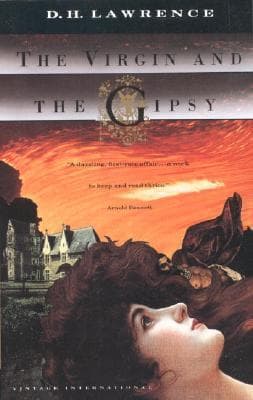
Genre
Literary Fiction / Romance
Reading Time
180 min
Key Themes
See below
Sign in to track this book
In a quiet English village, a sheltered rector's daughter finds her desires awakened by a charismatic gipsy, before a catastrophic flood shatters her world and unleashes forbidden passion.
Yvette and Lucille, two sisters, return to their family rectory in the English countryside after several years at a finishing school in Switzerland. They are the daughters of the Reverend Saywell, a widower who has grown remote and self-absorbed since his wife's death. The girls meet their domineering, puritanical grandmother, who tightly controls the household and her grandchildren's lives, and their blind, dependent grandfather. The rectory is a place of stifling convention and emotional repression, a sharp contrast to the freedom and intellectual stimulation they had abroad. Yvette, the more sensitive and questioning sister, immediately feels the weight of this oppressive atmosphere.
Life at the rectory quickly falls into a monotonous routine dictated by the grandmother. The girls must follow strict social and religious codes, and their every move is watched. Their father, Reverend Saywell, offers little emotional support or guidance, often retreating into his studies or his own self-pity. He has also taken a mistress, Mrs. Fawcett, a coarse woman who further disrupts the household's strained dynamics, though the girls only vaguely understand their father's relationship. Yvette grows increasingly restless and frustrated by the lack of genuine connection and the pervasive hypocrisy she sees.
During a walk, Yvette finds a gypsy encampment. She is immediately drawn to the raw, untamed presence of the gypsies, especially a young, dark-haired man. This encounter contrasts sharply with the constrained world of the rectory and awakens a sense of forbidden excitement and longing within her. The gypsy's direct, uninhibited gaze unnerves and fascinates her. She feels a deep connection to the wildness and freedom he embodies, a freedom she desperately wants but has never known. This first glimpse plants a seed of rebellious desire in her heart.
The Saywell family hosts a formal dinner party with local gentry, including the wealthy Major Eastwood and his wife. Yvette finds the conversation superficial and the people uninteresting, feeling a deep sense of alienation from their conventional world. She struggles to engage in polite chatter, her mind drifting back to the gypsy and the authenticity she felt in his presence. Her quiet rebelliousness is noted by her grandmother, who disapproves of Yvette's lack of enthusiasm for social graces. The evening only reinforces Yvette's feeling of being trapped in a life that does not align with her true self.
Yvette deliberately seeks out the gypsy encampment again, driven by curiosity. She meets the young gypsy man, referred to simply as 'the gipsy'. They share a brief, intense moment of eye contact and unspoken understanding. The gipsy's piercing gaze seems to strip away her conventional facade, seeing her true, yearning self. This encounter is unsettling and exhilarating for Yvette, intensifying her growing desire for something beyond her restrictive existence. She feels a powerful, almost primal attraction to his wildness and his apparent freedom from societal constraints, a feeling both terrifying and alluring.
Reverend Saywell's mistress, Mrs. Fawcett, becomes more openly present in the rectory, much to the grandmother's disgust and the girls' quiet discomfort. Mrs. Fawcett is portrayed as vulgar and self-serving, further highlighting the hypocrisy and decay within the Saywell family. Her presence is a constant source of tension and a symbol of the Reverend's moral failings, which the grandmother tolerates for appearances. Yvette observes this with a mixture of revulsion and a growing awareness of the complex, often sordid, realities of adult relationships.
Yvette is consumed by thoughts of the gypsy. She dreams of him and feels an overwhelming pull towards the freedom and passion he represents, a sharp contrast to the emotional sterility of her home. However, she is also deeply ingrained with the social conventions and moral codes taught by her grandmother, leading to intense inner conflict. She longs for liberation but fears the consequences of defying her family and society. Her desire is forbidden, and she struggles with the guilt and fear associated with these growing feelings, unsure how to reconcile her inner desires with her outer reality.
A sudden, torrential rainstorm leads to a devastating flood that engulfs the village and threatens the rectory. The river bursts its banks, and the water level rises rapidly, trapping the inhabitants of the rectory. The event is chaotic and terrifying, forcing everyone to face their vulnerability. The physical destruction mirrors the emotional and moral decay within the Saywell household, symbolizing a cleansing or a breaking point. The flood is a powerful, uncontrollable force of nature that disrupts the established order, creating an atmosphere of impending change and crisis.
Amidst the chaos of the flood, the gypsy appears, having come to help those in danger. He rescues Yvette from the rising waters, carrying her to safety through the dangerous currents. In this moment of extreme vulnerability and shared ordeal, their connection deepens. The gypsy's strength, courage, and primal connection to life are emphasized, contrasting sharply with the helplessness of the rectory's inhabitants. This act of heroism solidifies Yvette's feelings for him, seeing him as a protector and a symbol of life force in the face of death and destruction.
After the flood subsides, leaving behind devastation, Yvette finds herself changed. The experience has shattered her old world and its conventions. She seeks out the gypsy, and in the raw, elemental aftermath of the disaster, they share a powerful, intimate moment. This encounter is not explicitly detailed but suggests a profound physical and emotional awakening for Yvette, a liberation from her virginity and the societal constraints that bound her. The flood has acted as a catalyst, allowing her to embrace her true desires and connect with a primal life force represented by the gypsy.
The Protagonist
Yvette transforms from a repressed, questioning girl into a woman who embraces her desires and the raw force of life, catalyzed by her encounter with the gypsy and the flood.
The Supporting/Love Interest
The gypsy remains a consistent symbol of untamed life force, acting as a catalyst for Yvette's transformation.
The Antagonist
The grandmother remains a static force of repression, ultimately unable to prevent the changes initiated by the flood and Yvette's awakening.
The Supporting
The Reverend remains largely unchanged, a symbol of moral and emotional impotence within the crumbling family structure.
The Supporting
Lucille remains largely a static character, her experiences serving to highlight Yvette's more profound journey.
The Supporting
Mrs. Fawcett serves primarily to expose the moral failings of the Reverend and the hypocrisy of the family, without a significant personal arc.
The Mentioned
The grandfather remains a static figure, symbolizing the decay of the old order.
This is the novel's central theme, explored through Yvette's struggle against the stifling conventions of her family and society. The rectory, dominated by the puritanical grandmother, symbolizes emotional, sexual, and intellectual repression. Yvette's yearning for the gypsy represents her desire for liberation, for a life lived authentically and passionately, free from social morality. The flood acts as a powerful catalyst, literally sweeping away the old world and allowing Yvette to break free from her internal and external bonds, embracing a more liberated existence.
“She felt as if she were in a tomb, a tomb of conventionality, while the real life flowed on outside, unknown to her.”
Lawrence contrasts the artificiality and decay of human society with the raw, vital force of nature. The gypsy, with his untamed spirit and connection to the earth, embodies this primal life force. He represents instinct, passion, and a connection to the natural world, in sharp opposition to the intellectual and spiritual sterility of the rectory. The catastrophic flood is a powerful display of nature's indifference and destructive power, but also its ability to cleanse and create space for new beginnings, directly leading to Yvette's awakening and her embrace of her own natural instincts.
“His dark eyes, like a hawk's, seemed to look through her, to her very soul.”
The novel critiques the hypocrisy and moral decay of the English middle class and the established church. Reverend Saywell's emotional detachment, his affair with Mrs. Fawcett, and the grandmother's obsession with appearances despite the underlying dysfunction, all expose the hollowness of their conventional lives. The rectory, outwardly respectable, is inwardly rotting. This societal decay creates the repressive environment from which Yvette longs to escape, highlighting Lawrence's broader critique of a society that has lost touch with genuine passion and vitality.
“The rectory was a tomb of conventions, where the dead lived on.”
At its core, the story explores a young woman's sexual awakening. Yvette's 'virginity' is not just physical but also symbolic of her unawakened self. Her encounters with the gypsy stir a deep, forbidden desire within her, challenging the puritanical suppression of sexuality in her upbringing. The novel's climax, following the flood, represents a symbolic and likely literal deflowering, a moment where Yvette embraces her own sensuality and the powerful, transformative force of sexual passion, moving from innocence to experience.
“She was like a bud that refused to open, yet longed to burst into flower.”
The rectory represents social and emotional repression.
The rectory is a potent symbol of the suffocating, conventional, and hypocritical world from which Yvette longs to escape. Its decaying structure, the oppressive presence of the grandmother, and the moral failings of the Reverend all contribute to its symbolic weight as a 'tomb' of life and passion. It embodies the rigid social structures and moral codes that stifle individual freedom and authentic human connection, standing in stark contrast to the wildness and freedom represented by the gypsy.
The gypsy embodies primal nature, freedom, and forbidden passion.
The gypsy is not a deeply psychological character but rather a powerful symbolic figure. He represents the untamed, instinctual, and natural forces that are repressed by society. For Yvette, he is the embodiment of forbidden passion, sexual vitality, and a direct, uninhibited connection to life. His presence acts as a catalyst for her own awakening, drawing her towards a more authentic and liberated existence, away from the artificiality of her upbringing. He is a force of nature, much like the flood itself.
A catastrophic natural event that acts as a cleansing and transformative force.
The flood is a crucial plot device, serving as both a literal and symbolic event. Literally, it creates chaos and danger, forcing the characters into extreme circumstances. Symbolically, it functions as a 'deus ex machina' that literally sweeps away the old world – the rectory and its oppressive conventions – allowing for a new beginning. It is a cleansing force, washing away the stagnant and decaying elements of Yvette's life and paving the way for her profound personal transformation and sexual awakening, a powerful manifestation of nature's indifference and transformative power.
Lucille and the Grandmother highlight Yvette's unique qualities.
Lucille, Yvette's sister, acts as a foil by being more pragmatic and less rebellious, thus emphasizing Yvette's deeper sensitivity and yearning for something beyond their confined existence. Similarly, the Grandmother serves as a rigid, puritanical foil, embodying the very forces of repression and societal convention that Yvette struggles against. These contrasts highlight Yvette's singular journey towards self-discovery and liberation, making her awakening more pronounced and significant.
“She was like a nun who has left her cloister and is peering into the world, with a touch of the nun's fastidiousness and the nun's deep, if unconscious, sensuality.”
— Describing Yvette's initial state and character.
“The great mass of the world was like a husk, and inside it was a small, vivid, dangerous kernel, and that kernel was her own heart.”
— Yvette's internal reflection on her feelings and desires.
“He was like a wild animal, and she was like a little bird, fascinated by the snake.”
— Yvette's perception of the gipsy man.
“She felt as if her soul had come out of her and was standing there naked, with him.”
— Yvette's intense emotional connection with the gipsy.
“The world was a prison, and she was a prisoner, and he was the only key.”
— Yvette's feeling of entrapment in her family life and the gipsy as her escape.
“Life was a great, dark, surging river, and she was caught in it, and he was a rock.”
— Yvette's overwhelming emotions and the gipsy's grounding presence.
“And now she felt she was going to die, or else be born into a new life.”
— Yvette's emotional climax during the flood, facing a profound change.
“The gipsy was like a dark, strong root, and she was like a flower that wanted to open to him.”
— A metaphor for the natural, powerful connection between Yvette and the gipsy.
“She had always been afraid of life, but now she was afraid of not living.”
— Yvette's shift in perspective and newfound courage.
“The world was full of eyes, but she only saw his.”
— Yvette's singular focus and intense attraction to the gipsy.
“He was a man who lived in the raw, and she, a girl who lived in the refined.”
— Highlighting the contrast between the gipsy and Yvette's backgrounds.
“Her body was a prison, and she longed to break out of it.”
— Yvette's feeling of being constrained by her physical self and societal expectations.
“He was the dark gate, and she was the light that was drawn to it.”
— Another symbolic representation of their magnetic and contrasting relationship.
“It was not love, it was something deeper, more elemental, like the earth itself.”
— Describing the profound, instinctual connection between Yvette and the gipsy.
“The flood was like a cleansing, washing away the old life and making way for the new.”
— The symbolic significance of the climactic flood.
Ready to see how well you understood this book? Take our interactive quiz with 10 questions.

D.H. Lawrence was a prominent English novelist, poet, playwright, and essayist whose works explored themes of sexuality, industrialization, and the human condition. His most controversial and famous novel, "Lady Chatterley's Lover," challenged societal norms and censorship. Other notable works include "The Rainbow," "Women in Love," and "Sons and Lovers," solidifying his place as a significant figure in modernist literature.







