“Magic is in the soil, in the air, in the very heart of the vines. You just have to know how to listen.”
— Elena's grandmother teaching her about vine magic.

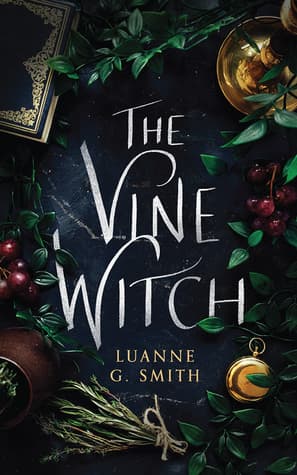
Luanne G. Smith (2019)
Genre
Fantasy / Historical Fiction / Romance
Reading Time
300 min
Key Themes
See below
Sign in to track this book
A cursed vine witch returns to her ancestral French vineyard, masquerading as a mortal to uncover the betrayal that stole seven years of her life and now threatens the man who inherited her legacy.
Elena Boureanu awakens in a marsh, disoriented and weak. She just broke a powerful curse that held her captive for seven long winters. Her magic, once strong as a vine witch, is now a mere flicker. She remembers only fragments of her past: her name, her identity as a vine witch of the Chanceaux Valley, and the betrayal that led to her imprisonment. Her first instinct is to return to Château Renard, the vineyard she was meant to inherit. She wants to reclaim what was hers and find the witch who cursed her. The world has moved on, and Elena feels like a ghost in her own life.
Upon reaching the Chanceaux Valley, Elena discovers Château Renard, her family's vineyard, is no longer hers. Jean-Paul Martel, a handsome, practical vigneron from Bordeaux, owns it. He dismisses local stories about vine witches. He struggles to revive the vineyard, which has produced poor harvests for years. Elena senses a powerful hex on the land. She realizes her mission has two parts: reclaim her legacy and find the truth behind the vineyard's decline and her own curse. She decides to pose as a simple vineyard worker, hiding her true identity and weakened magical abilities from Jean-Paul.
Working among the vineyard staff, Elena observes the vines at Chยteau Renard. Despite Jean-Paul's scientific methods, the grapes are sickly, and the wine is consistently bad. Using her developing magical senses, she confirms her suspicions: the entire vineyard has a complex and malevolent hex. This is not bad luck or poor soil; it is a deliberate act of dark magic. The hex drains life from the vines and ruins the vineyard's reputation. Elena knows this relates to her curse and that the witch responsible is still active in the valley.
To understand the hex and her curse, Elena seeks out Madame Clouet, the oldest and wisest vine witch in the valley and her former mentor. Madame Clouet, initially hesitant, recognizes Elena despite her changed appearance. She reveals that Elena's disappearance was a mystery, and many believed her dead. Madame Clouet confirms that a powerful witch, likely one of their own, was responsible for the curse. She warns Elena that the witch is dangerous and has been weakening the valley's magic. Madame Clouet begins to help Elena regain her magical strength and recall her lost memories.
Through Madame Clouet and her own investigations, Elena learns about Odette. Odette was a former apprentice vine witch who grew envious of Elena's natural talent and position. Odette's ambition led her to dark magic, corrupting the traditional ways of the vine witches. Odette has been spreading hexes across the Chanceaux Valley, weakening the magic of other witches and ruining vineyards, all while gaining power. Elena realizes Odette is responsible for her curse and a direct threat to the entire vine-witch legacy and the valley's prosperity.
Jean-Paul Martel, a man of science, initially dismisses Elena's quiet observations and 'intuition' about the vines. However, as Elena discreetly applies small counter-spells and works with a deep, almost magical understanding of the vineyard, he notices improvements. The vines show signs of health, and the first small batches of wine produced under Elena's influence are surprisingly good. He feels drawn to her quiet strength and deep connection to the land, despite not understanding her methods. A hesitant trust begins to form between them, blurring the lines between employer and employee.
As Elena's magic strengthens, so do her memories. She experiences vivid flashbacks, revealing the moment Odette cursed her and a past romantic connection with Jean-Luc Martel, an ancestor of Jean-Paul. This revelation deepens her understanding of the vineyard's history and her family's connection to the Martels. The flashbacks show Jean-Luc as a kind and supportive figure, hinting at a generational bond between their families. This makes her current relationship with Jean-Paul feel more fated and complex. She realizes the curse was not just about her, but about severing that connection.
With renewed magic and full knowledge of Odette's treachery, Elena confronts her rival. The confrontation becomes a magical duel at Chยteau Renard. Odette, using dark, corrupted magic, tries to overpower Elena. She reveals her deep jealousy and desire for ultimate control over the valley's wine and magic. Elena, using her ancestral power and the support of the land she loves, fights to protect the vineyard and the vine witches' legacy. The battle is fierce, testing Elena's limits and forcing her to embrace her true power.
With determination and a surge of her rekindled vine-witch power, Elena defeats Odette. As Odette's dark magic unravels, the hexes on Chยteau Renard dissipate. The vines, once sickly and barren, visibly regain their vitality, their leaves turning green. The air in the vineyard feels lighter, cleansed of the malevolent influence. Defeating Odette means Elena's personal triumph and the restoration of balance and health to the entire Chanceaux Valley. The vineyard is saved, and its future looks brighter than it has in years.
With the hex broken and Odette defeated, Elena finally reveals her true identity as a vine witch to Jean-Paul Martel. He is initially shocked and struggles to reconcile his scientific worldview with Elena's magical reality. However, having seen the inexplicable improvements in his vineyard and the strange events around Elena, he cannot deny the truth. His skepticism turns into understanding and a deeper appreciation for Elena and her connection to the land. They acknowledge their growing feelings for each other, recognizing that their destinies and the future of Chยteau Renard are intertwined.
Elena reclaims her rightful place as the vine witch of Chยteau Renard. With her magic fully restored and her identity openly acknowledged by Jean-Paul, she nurtures the vineyard. She works in harmony with Jean-Paul, blending her ancient magic with his modern winemaking knowledge. Their combined efforts bring the vineyard to new prosperity, producing exceptional wines again. Elena embraces her legacy, not just as an individual, but as part of a continuing tradition, ensuring the magic and success of Chยteau Renard for future generations. The valley's magic is rejuvenated.
With the past reconciled and the threats vanquished, Elena and Jean-Paul look towards a shared future. Their relationship deepens, built on mutual respect, love, and a shared passion for Chยteau Renard. Elena has not only reclaimed her identity and magic but has also found a partner who understands and accepts her completely. They envision a life together, tending the vines, making wine, and preserving the unique magical heritage of the Chanceaux Valley. The story concludes with hope and the promise of enduring love and prosperity for the vineyard and its guardians.
The Protagonist
Elena transforms from a vengeful victim to a powerful, self-assured vine witch who embraces both her magic and her love for Jean-Paul, reclaiming her identity and legacy.
The Supporting/Love Interest
Jean-Paul evolves from a staunch skeptic to a believer in magic, accepting Elena's true identity and falling in love with her, embracing a future that blends science and magic.
The Antagonist
Odette remains unrepentant in her villainy, ultimately being defeated by Elena, representing the vanquishing of dark ambition.
The Supporting
Madame Clouet provides consistent wisdom and support, helping Elena reclaim her power and fulfill her destiny, ensuring the continuation of the vine-witch legacy.
The Mentioned
While not a character in the present narrative, his memory helps Elena understand her past and her connection to Jean-Paul.
Elena's journey is about reclaiming what was stolen from her: seven years of her life, her magic, her ancestral vineyard, and her sense of self as a vine witch. Her struggle to remember her past and defeat Odette links to restoring her identity and upholding the ancient legacy of the vine witches at Chยteau Renard. This is clear in her immediate return to the vineyard after breaking the curse, and her determination to find the truth and restore the land's health, as seen when she works to break the hex on the vines.
“Seven winters were stolen from me, and seven more I will not give. This land is mine, and I will have it back.”
The novel explores the tension and eventual harmony between scientific understanding and magical intuition. Jean-Paul Martel represents the scientific, modern approach to winemaking, initially dismissing any notion of magic. Elena, as a vine witch, embodies the ancient, mystical connection to the land. Their initial interactions highlight this divide, with Jean-Paul questioning Elena's unconventional methods. However, as the vineyard heals under Elena's influence, and Jean-Paul sees inexplicable improvements, he begins to bridge this gap, ultimately accepting the magic. This theme is central to their developing relationship and the future of Chยteau Renard.
“He saw the soil, the graft, the sun. I saw the spirit, the song, the heart of the vine.”
The entire plot starts with betrayal: Odette's jealous curse on Elena. This betrayal stole years of Elena's life and threatened the vine-witch tradition. Elena's initial motivation is revenge against the witch who wronged her. This theme drives her investigations and confrontations, especially her magical duel with Odette. However, as the story progresses, her motivation changes from revenge to a broader sense of justice and a desire to protect the valley and the man she comes to love, showing the transformative power of healing.
“Revenge was a bitter wine, but one I was determined to drink.”
The deep, almost sentient connection between the vine witches and the land is a core theme. The vineyard's health directly reflects the magical balance and the well-being of its guardian witch. Elena's weakened state after emerging from the marsh mirrors the hexed, sickly condition of Chยteau Renard. Her healing and the restoration of her magic intertwine with the revival of the vines. This connection is not just symbolic; it is a tangible, magical bond that allows the vine witches to communicate with and influence the growth and quality of the grapes, emphasizing the sacred relationship between humanity and nature.
“The vines were my blood, and their suffering was my own.”
A magical imprisonment that initiates Elena's journey and creates the central mystery.
The curse that traps Elena for seven years in a marsh is the primary inciting incident. It not only establishes her backstory and her weakened state but also creates the central mystery of who cast it and why. The curse functions as a 'sleep' that allows the antagonist, Odette, to rise to power and hex Château Renard. Breaking the curse sets Elena's quest for revenge and reclamation in motion, serving as a powerful narrative driver throughout the story, fueling her desire to uncover the truth and restore her magic.
Elena's fragmented memories serve as a narrative tool for revealing past events and building suspense.
Elena's initial amnesia and fragmented memories are a crucial plot device. They allow the author to gradually reveal the backstory of her curse, her relationship with Odette, and the historical connection to the Martel family, building suspense and keeping the reader engaged. As Elena regains her magical strength, her memories return in vivid flashbacks, providing crucial pieces of the puzzle. This device effectively controls the flow of information, ensuring key revelations are impactful and propel the narrative forward, rather than being given all at once.
The sickly state of Château Renard's vines is a physical manifestation of the magical hex and plot conflict.
The consistently poor harvests and general ill-health of the vines at Château Renard serve as a clear, tangible manifestation of the magical hex placed by Odette. This 'illness' of the vineyard acts as a central conflict point, driving both Jean-Paul's scientific efforts and Elena's magical intervention. It creates a common goal for the two protagonists, despite their differing beliefs, forcing them to interact and eventually cooperate. The restoration of the vineyard's health directly parallels Elena's own healing and the resolution of the magical conflict, making it a powerful visual metaphor for the story's progression.
Past relationships and events influence the present narrative and character connections.
The novel utilizes historical echoes, particularly through Elena's recovered memories of Jean-Luc Martel, Jean-Paul's ancestor. This device establishes a multi-generational connection between the Boureanu and Martel families and their shared history with Château Renard. It adds depth to Elena and Jean-Paul's developing relationship, suggesting a fated romance that transcends time. These echoes also highlight the enduring nature of the vine-witch legacy and the long-term impact of past events, providing a rich historical context for the present-day magical conflicts and resolutions.
“Magic is in the soil, in the air, in the very heart of the vines. You just have to know how to listen.”
— Elena's grandmother teaching her about vine magic.
“A woman who understands the earth and its seasons is a woman who understands herself.”
— Elena reflecting on her connection to the land.
“Some secrets are best left buried, like old roots. But others need to be brought to light, for the health of the vine.”
— Elena contemplating the mysteries surrounding her family and the vineyard.
“Love, like a good vintage, takes time and care to develop its full flavor.”
— Elena's thoughts on her burgeoning feelings for Jean-Luc.
“There's a difference between being alone and being lonely. One is a choice, the other a burden.”
— Elena, having returned to her home, finding solace in her solitude.
“The past is never truly gone. It lingers, a ghost in the cellars, a whisper in the leaves.”
— Elena sensing the history and unresolved issues at the Chateau.
“Beauty can be a powerful disguise, hiding both good intentions and dark ones.”
— Elena observing the deceptive charm of a character.
“To truly heal, you must first acknowledge the wound.”
— Elena realizing the need to confront past traumas.
“A witch's power is not in her spells alone, but in her will, her connection to the living world.”
— Elena understanding the source of her own strength.
“Sometimes, the greatest strength lies in knowing when to ask for help.”
— Elena learning to trust and rely on others.
“Every vine has a story, a history etched in its bark, a promise in its fruit.”
— Elena's deep appreciation for the vineyards.
“Fear can be a useful servant, but a terrible master.”
— Elena confronting her anxieties and doubts.
“The heart of a vineyard beats with the rhythm of the seasons, and so does the heart of a witch.”
— Elena feeling the deep, cyclical connection between herself and her land.
“Justice, like a fine wine, may take time to mature, but its flavor is worth waiting for.”
— Elena's resolve to uncover the truth and seek retribution.
Ready to see how well you understood this book? Take our interactive quiz with 10 questions.







