“The sea was a vast, indifferent presence, always there, always changing, always the same.”
— Describing the constant backdrop of the children's lives in Thul.

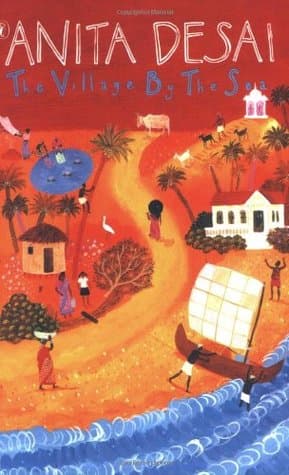
Anita Desai (1982)
Genre
Children's / Historical Fiction / Young Adult
Reading Time
272 min
Key Themes
See below
Sign in to track this book
In the timeless fishing village of Thul, two children, Hari and Lila, grapple with their parents' despair and the encroaching modern world as their family teeters on the brink of collapse.
The story begins in the small fishing village of Thul, near Bombay. Thirteen-year-old Hari and his twelve-year-old sister, Lila, deal with their family's problems. Their father drinks often, is absent, and is abusive. Their mother is sick in bed with an unspecified illness. The children manage the house and care for their two younger sisters, Bela and Kamal. Hari, though young, feels great pressure to provide for the family, often fishing or looking for food. Lila does the housework, but the constant stress and lack of money make their lives feel trapped and without hope.
Hari, upset by the family's poverty and his father's actions, dreams of leaving Thul. He sees Bombay, the busy city across the bay, as a place of opportunity and a way to solve their problems. He often looks at the city lights, imagining a life beyond the village. Lila, however, feels a strong connection to Thul and its familiar ways. Despite the difficulties, she finds beauty in the sea and simple village life, and the thought of leaving worries her. Their different views show their different ways of coping, with Hari wanting change and Lila holding onto what she knows.
Hari cannot stand the worsening conditions at home—his mother's health declining and his father drinking more. He decides to leave Thul and find work in Bombay. He tells no one, fearing they will stop him, and slips away one night with only a few things. His departure leaves Lila as the only one to care for their sick mother and younger sisters. Hari's journey to Bombay is uncertain, a desperate jump into the unknown, driven by duty and a desire for a better life for his family.
When he arrives in Bombay, Hari is overwhelmed by the city's size, noise, and indifference. The concrete city is very different from Thul's quiet, natural setting. He struggles to find his way, facing homelessness and hunger. The initial excitement of the city soon turns to disappointment as he realizes how hard it is to find work without connections or skills. He walks the crowded streets, seeing the clear differences between rich and poor, and begins to feel lonely and small among millions of people. His hopeful view of Bombay slowly breaks down under the harsh reality.
After days of wandering and sadness, Hari finds a small, busy tea stall run by an old, kind man named Jagu. Jagu sees Hari's desperation and honesty, and offers him a job washing dishes and sweeping floors in exchange for food and a place to sleep. The tea stall becomes Hari's safe place, a small spot of stability in the chaotic city. He quickly learns the work, putting in long hours but appreciating the security and the friendship of Jagu and the other workers. This new environment, though demanding, gives Hari a needed sense of purpose and belonging, and he slowly begins to adapt to city life.
Back in Thul, Lila takes on the heavy load of her brother's absence. She carefully cares for her increasingly weak mother, feeding her and keeping her comfortable, while also looking after Bela and Kamal. The family's money situation becomes even worse, forcing Lila to be clever. She sells coconuts and other small items to earn tiny amounts, always worrying about their survival. Despite the huge responsibilities and her loneliness, Lila shows great strength and maturity, a quiet force that holds her broken family together while Hari is away. Her deep connection to the village and its people gives her a sense of continuity.
While Hari is away, a rich Bombay family, the Panwallahs, comes to Thul to build a holiday home. Mr. Panwallah, a kind but somewhat odd man, takes an interest in the village and its people. His arrival signals a possible change in Thul's traditional life, bringing both chances and new problems. The villagers are at first cautious but also curious about the new arrivals and their modern ways. Lila watches the Panwallahs with a mix of interest and worry, feeling that their presence could change the community's delicate balance, for better or worse.
After several months, Hari, having saved some money and gained experience, decides to return to Thul. He has grown a lot, his early innocence replaced by quiet confidence. He returns not as a failure, but with a renewed purpose and a clear idea of how he can help his family and possibly the village. His reunion with Lila is emotional, and he is relieved to find his mother still alive, though her condition remains serious. Hari's return marks a turning point, bringing a spark of hope and a practical way to deal with their ongoing struggles, fueled by his exposure to the outside world.
Inspired by his time in Bombay and seeing the changing world, Hari talks to Mr. Panwallah with an idea: to start a poultry farm or another sustainable business in Thul. He believes that relying only on fishing is no longer enough and that the village needs more ways to make money. Mr. Panwallah, impressed by Hari's drive and foresight, agrees to help, offering money and advice. This partnership bridges the traditional and the modern, with Hari driving the change, aiming to bring progress to his beloved but struggling village.
With Hari's return and the new project starting, the family's situation begins to improve. Hari's earnings and Mr. Panwallah's help ease their most urgent financial problems. While their mother's illness remains a constant worry, the children can afford better care and food. Lila, though still responsible for much, feels relieved and hopeful. The new opportunities bring purpose and dignity back to the family, allowing them to imagine a future beyond just surviving. The village also begins to stir with the possibilities of change, though slowly and with some resistance from those who prefer old ways.
As the poultry farm project moves forward, the village of Thul begins to feel the subtle changes from modernization. While some villagers accept the new opportunities, others hold onto their traditional ways, wary of change. Hari, having seen the benefits of progress, supports adapting to the times, but he also understands the importance of keeping their culture. Lila, with her deep connection to the village, observes these changes thoughtfully, recognizing the need for balance. The story explores the delicate balance between holding onto the past and carefully moving into the future, a challenge for many communities entering development.
By the end of the story, Hari and Lila, through their efforts and strength, have set the stage for a more hopeful future for their family and the village of Thul. Their mother's condition becomes stable, and the younger sisters are better cared for. The poultry farm, though small, shows a real step towards having more ways to make money. Hari, having understood both city and village life, is now better prepared to lead. Lila, with her steady spirit, remains the family's emotional center. The village, still rooted in its traditions, is now open to the possibilities of a sustainable future, mixing old with new in a way that keeps its essence while accepting progress.
The Protagonist
Hari transforms from a desperate, naive boy into a mature, confident young man who understands the complexities of development and returns to his village with a practical vision.
The Protagonist
Lila develops from a burdened child into a strong, self-reliant young woman who maintains her connection to her roots while adapting to new challenges.
The Supporting
His arc is largely static; he remains trapped in his addiction, serving as a catalyst for his children's actions rather than undergoing significant personal change.
The Supporting
Her physical condition slowly declines but stabilizes towards the end, providing a glimmer of hope for the family's overall well-being.
The Supporting
Their arc is minimal, serving primarily as a motivation for Hari and Lila's actions and representing the future the older siblings are striving to secure.
The Supporting
Jagu remains a steady, supportive figure, providing a stable foundation for Hari's initial growth in the city.
The Supporting
He serves as a catalyst for change, his presence bringing new ideas and resources to the village.
The novel shows the tension between Thul's unchanging, traditional life and the growing influence of modern Bombay. Hari's trip to the city shows the appeal of progress and money, while Lila represents the deep connection to the village's heritage and natural rhythms. Mr. Panwallah's arrival and Hari's ideas for development make the villagers face the need to adapt to new ways while trying to keep their culture. This theme is clear when Hari returns, suggesting a poultry farm, which challenges the traditional fishing economy.
“The village was an old, old place, its houses leaning together like old men gossiping, their roofs covered with moss, their walls streaked with the monsoon rains. But across the bay, Bombay glittered, a siren call to those who dreamed of change.”
The children, Hari and Lila, show great strength despite extreme poverty, parents who neglect them, and their mother's illness. Lila's steady care for her family and her ability to manage the house while Hari is away show lasting strength. Hari's courage to go to the unknown city, endure hardships, and return with a plan shows his strong will to improve their situation. Their ability to find hope and solutions amid despair is central to the story, highlighting the human spirit's power to overcome difficulty.
“Lila, though small, carried the weight of the house on her narrow shoulders, a burden she never complained about, only bore with a quiet, determined grace.”
Despite the family's problems, the bond between Hari, Lila, and their younger sisters is the story's emotional core. Hari's main reason for going to Bombay is to provide for his family, and Lila's constant dedication to caring for her mother and siblings highlights her deep sense of family duty. Their actions are always driven by a desire to protect and help each other, showing that even in bad situations, family ties can be a strong source of motivation and support. The children's efforts to keep their family together prove this theme.
“He knew he had to go, not just for himself, but for Lila, for Bela, for Kamal, for the small, silent figure of his mother in the dark hut.”
The novel shows how poverty and family duties force Hari and Lila to grow up too soon, taking away their normal childhood. They lose the carefree innocence of youth, instead burdened with adult worries like survival, caregiving, and earning money. Hari's trip to Bombay exposes him to the world's harsh realities, while Lila's household duties are endless. This theme highlights the unfairness of children having to take on such heavy responsibilities, forcing them to mature quickly and give up their own desires for their family.
“They were children still, but the light in their eyes had been dimmed by the shadows of their parents' lives, by the constant gnawing of hunger and worry.”
Hari's journey to Bombay is not just about money but also about finding his place. He first feels disconnected from Thul's stagnant life and seeks a new identity in the busy city. However, his experiences in Bombay lead him to understand himself and his connection to his roots better. Lila, on the other hand, finds her identity firmly in Thul, representing the village's spirit. The story explores how people form their identities through their origins and new experiences, ultimately finding belonging through purpose and contribution.
“He had left Thul to find himself, and in the noise and anonymity of Bombay, he had discovered that a part of him would always belong to the quiet village by the sea.”
Represents both sustenance and the unchanging nature of life.
The sea surrounding Thul is a powerful symbol throughout the novel. For the fishermen, it is their primary source of livelihood, representing life and sustenance. However, it also symbolizes the unchanging, cyclical nature of their existence, hinting at the lack of progress and the village's isolation. For Hari, the sea represents the boundary between his stagnant home and the distant, promising city of Bombay. For Lila, it embodies the beauty and familiarity of her home, a constant presence despite their hardships. The sea's duality reflects the complex relationship the villagers have with their environment.
Highlights the stark differences between rural tradition and urban modernity.
The stark contrast between the quiet, traditional fishing village of Thul and the bustling, modern metropolis of Bombay is a central plot device. Thul represents poverty, tradition, and a slower pace of life, while Bombay symbolizes opportunity, modernity, and a fast-paced, often indifferent, existence. This contrast drives Hari's initial motivation to leave and shapes his character development. His experiences in Bombay give him a new perspective that he brings back to Thul, acting as a bridge between these two contrasting worlds and fueling the theme of tradition versus modernity.
A classic coming-of-age journey of self-discovery and growth.
Hari's physical and emotional journey from Thul to Bombay and back serves as a classic bildungsroman. His departure is a desperate act, but his time in the city exposes him to new experiences, challenges his naive perceptions, and forces him to grow. The journey away from home allows him to gain maturity, practical skills, and a broader understanding of the world. His return is not a defeat but a conscious choice to apply his newfound knowledge to his home village, demonstrating his transformation and the completion of his personal arc.
Represents the external influence of wealth and modernization.
The arrival of the wealthy Panwallah family in Thul acts as a catalyst for change and introduces an external perspective to the isolated village. They symbolize the encroaching world of urban development and tourism, bringing both potential benefits and the threat of disrupting traditional ways of life. Mr. Panwallah's interest in the village provides Hari with the opportunity to implement his ideas for development, thus directly influencing the plot's resolution and highlighting the theme of modernity's impact on tradition.
“The sea was a vast, indifferent presence, always there, always changing, always the same.”
— Describing the constant backdrop of the children's lives in Thul.
“It was impossible to live in Thul and not be aware of the sea, its smell, its sound, its ceaseless movement.”
— Emphasizing the pervasive influence of the ocean on the village.
“Hope was a fragile thing, easily broken, easily lost, but sometimes, just sometimes, it could be found again.”
— Reflecting on the struggles and resilience of the characters.
“The city was a monster, devouring lives, spitting out fragments.”
— Bim's initial perception of Bombay, a place of fear and overwhelming scale.
“Even in the midst of squalor, there was a strange beauty, a tenacity of life.”
— Describing the vibrant, if chaotic, life in the poorer parts of Bombay.
“He understood then that freedom was not just about going away, but about finding a place where you truly belonged.”
— Hari's realization about his journey and search for belonging.
“The silence of the sea was never truly silent; it was filled with the whispers of waves and the cries of gulls.”
— A poetic description of the seemingly quiet but active ocean.
“To be alone was not necessarily to be lonely. Sometimes, it was to be free.”
— Bela's internal thoughts on her independence.
“Change came slowly to Thul, like the tide, inexorable and constant.”
— Commenting on the gradual but inevitable modernization affecting the village.
“The taste of salt was in everything – the air, the food, even their dreams.”
— Illustrating the pervasive influence of the sea on the villagers' lives.
“Children were like small boats, setting out on the vast ocean of life, sometimes adrift, sometimes guided.”
— A metaphor for the children's journey and vulnerability.
“The future was a dark, unknown path, but one had to walk it, step by hesitant step.”
— Reflecting on the uncertainty faced by the young protagonists.
“There was a rhythm to life in the village, a slow, enduring beat that the city could never replicate.”
— Contrasting the pace of life in Thul with that of Bombay.
“Home was not just a place, but a feeling, a memory, a scent carried on the wind.”
— Hari's evolving understanding of what 'home' means to him.
Ready to see how well you understood this book? Take our interactive quiz with 10 questions.

Dan Gemeinhart
4.5

Kate O'Hearn
4.4

Jeanne Birdsall
4.4

Jen Wang
4.4

Wendelin Van Draanen
4.3

John Marsden
4.3

Chris Van Allsburg
4.3

Jennifer A. Nielsen
4.2