“All for one, one for all.”
— A familiar motto that is reiterated as the musketeers prepare for new adventures and challenges.


Alexandre Dumas (1966)
Genre
Historical Fiction
Reading Time
1500 min
Key Themes
See below
Sign in to track this book
In 17th-century France, Raoul de Bragelonne, son of Athos, navigates love, loyalty, and betrayal, shaping his destiny with kings and the legendary Musketeers.
The novel opens years after 'Twenty Years After,' finding the musketeers in different stages of life. D'Artagnan, a captain in the King's Musketeers, feels restless and unappreciated in Louis XIV's peaceful court. Athos, the Comte de la Fère, is a nobleman devoted to his son Raoul. Porthos, now Baron du Vallon de Bracieux de Pierrefonds, enjoys his wealth but wants adventure. Aramis, now Bishop of Vannes, is involved in politics and secretly plotting against the current government. Their paths start to cross as D'Artagnan considers leaving his position, feeling held back by the court's inactivity and the King's youth.
Raoul de Bragelonne, Athos's son, loves Louise de la Vallière, a lady-in-waiting to the Duchess of Orléans. They hope to marry, but King Louis XIV begins to notice Louise. His interest grows, fueled by her innocence and her devotion to Raoul. To remove Raoul from court, the King, influenced by his advisor Colbert, sends Raoul on an expedition to England. This forced separation begins Raoul's heartbreak and sets the stage for future betrayals.
D'Artagnan, tired of court life, is given a secret mission by Cardinal Mazarin (shortly before his death) and then by King Louis XIV. He is to go to England to help restore King Charles II. This mission revives D'Artagnan's adventurous spirit and lets him show his skill. He navigates English politics, outwitting Cromwell's forces and ensuring Charles II's return to the throne. This success raises D'Artagnan's standing with Louis XIV, and shows the King's growing reliance on his own authority.
Nicolas Fouquet, the Superintendent of Finances, is a powerful and ambitious man, known for his lavish life and support of the arts. He is also Aramis's friend. Aramis, now a Jesuit, sees Fouquet as an ally in his plan to place a secret prisoner on the French throne. Unbeknownst to Fouquet, Aramis uses his influence and resources for a larger, more dangerous plot. Aramis believes Fouquet's wealth and power make him a useful tool, and he cultivates their friendship for his own ends, ready to betray him if needed. Colbert, Louis XIV's finance minister, sees Fouquet as a rival and works to undermine him, increasing the King's suspicions.
King Louis XIV's interest in Louise de la Vallière grows. He openly flirts with her, sending gifts and giving her special attention, to Raoul de Bragelonne's dismay, who is still serving abroad. The court notices, and Louise, despite her initial loyalty to Raoul, is drawn to the King's power and charm. Athos, seeing his son's suffering and the King's actions, tries to intervene, but the King ignores him. This affair becomes a central conflict, straining loyalties and love in the court.
Aramis, now General of the Jesuits, tells Porthos the full extent of his political plans. Porthos remains loyal, though he understands little. Aramis reveals his secret: a prisoner in the Bastille, an identical twin brother of King Louis XIV. This prisoner, Philippe, was secretly held since birth to prevent a challenge to the throne. Aramis plans to replace Louis XIV with Philippe, believing he can control the new king and bring in Jesuit influence. He unknowingly enlists Fouquet to help with the plan, using Fouquet's fortress of Belle-Île-en-Mer as a potential stronghold and source of funds.
Fouquet, guided by Aramis, begins to fortify his island fortress of Belle-Île-en-Mer. He thinks these fortifications are for his protection against enemies, especially Colbert, and to show his wealth. However, Aramis plans for Belle-Île to be the base for his coup, a secure place for Philippe and a strategic point for his takeover. D'Artagnan, observant, grows suspicious of Fouquet's military preparations after inspecting the island. His reports increase Louis XIV's distrust of Fouquet, further fueling Colbert's schemes.
Fouquet hosts a fête at his château, Vaux-le-Vicomte, to honor King Louis XIV. The party shows off wealth, art, and entertainment, with Molière, La Fontaine, and Le Nôtre. While meant to impress the King and show Fouquet's loyalty, it backfires. Louis XIV, already suspicious of Fouquet's fortune, is angered by the superintendent's display, which seems to rival his own royal splendor. Colbert skillfully uses the King's jealousy, whispering accusations of treason. The fête, meant to secure Fouquet's position, instead seals his fate, as Louis XIV decides to bring him down.
Aramis, with Porthos's loyalty, carries out his plan. They abduct King Louis XIV, replace him with his twin brother, Philippe, and imprison the true King, masked, in the Bastille. Philippe, initially confused, is coached by Aramis to impersonate Louis XIV. The switch is almost perfect, thanks to their resemblance. However, the true King's character, his temper and regal manner, are hard to perfectly copy. D'Artagnan, despite his initial confusion, soon senses a difference in the 'King's' demeanor, especially his unusual kindness towards Fouquet, which raises his suspicions.
D'Artagnan's intellect and loyalty lead him to uncover Aramis's deception. He notices inconsistencies in the 'King's' behavior and speech, particularly the 'King's' leniency towards Fouquet, which goes against Louis XIV's known animosity. Following his instincts, D'Artagnan investigates and finds the true King, Louis XIV, imprisoned and masked in the Bastille. With Athos's help, he rescues the true King and recaptures Philippe. The true Louis XIV is restored to the throne, while Philippe returns to his masked imprisonment. Aramis and Porthos flee, becoming fugitives.
With the true King restored, Louis XIV turns his anger on Fouquet. Despite Fouquet's loyalty and his unwitting involvement in Aramis's plot, Colbert convinces the King of Fouquet's treason. D'Artagnan reluctantly arrests Fouquet, a task he performs with a heavy heart, recognizing Fouquet's good qualities. The Musketeers are now scattered, their loyalties tested. Athos remains loyal to the King but disapproves of his treatment of Raoul and Fouquet. Aramis and Porthos, now fugitives, try to escape, with D'Artagnan reluctantly pursuing them, torn between duty and friendship. The old bonds of the musketeers are strained.
Raoul de Bragelonne, devastated by Louise de la Vallière's public betrayal and her affair with King Louis XIV, is broken. His father, Athos, tries to comfort him and asks the King for justice, but Louis XIV ignores Raoul's suffering. Unable to bear the shame, Raoul volunteers for a dangerous military expedition to Africa, seeking an honorable death. His departure is a tragic turn for Athos, who sees his son's life destroyed by the King's selfishness. This deeply affects Athos, solidifying his disappointment with the young monarch.
D'Artagnan, tasked with pursuing Aramis and Porthos, faces a moral dilemma. He is bound by his oath to the King but saddened by the need to hunt his old friends. He tracks them to Belle-Île, where they try to escape. A siege follows, and Porthos, showing his strength and loyalty to Aramis, fights bravely. However, during their escape through a grotto, Porthos is crushed by falling rocks. His death is a blow to D'Artagnan and Aramis, marking the end of an era for the friends. Aramis escapes, heartbroken and alone, leaving D'Artagnan to mourn his friend.
Athos, heartbroken by the King's treatment of Raoul and the loss of his friends, receives news of his son's death in battle in Africa. Raoul found the death he sought. This final blow is too much for Athos. Overwhelmed by grief and disillusionment with the world and monarchy he served, Athos dies peacefully at his estate. His death signifies the passing of the old guard and the end of an era of honor and chivalry that struggled in Louis XIV's cynical court. D'Artagnan is left to mourn another dear friend.
After the deaths of Porthos and Athos, and Raoul's tragic fate, D'Artagnan is the only original musketeer still serving the King. Despite his losses and sadness over the King's actions and betrayals, D'Artagnan remains loyal to Louis XIV. He continues to serve, though with a heavy heart, upholding his duty and honor. The novel ends with D'Artagnan reflecting on the changing times and the cost of loyalty, setting the stage for his continued service and the King's growing absolutism. Aramis, though a fugitive, continues his political plans from the shadows.
The Protagonist
He transitions from a restless captain contemplating retirement to the King's indispensable agent, ultimately bearing the heavy cost of loyalty and loss.
The Supporting
He begins as a respected nobleman, but his unwavering honor leads to disillusionment and ultimately, a tragic end, unable to reconcile with the new moral order.
The Supporting
He remains steadfastly loyal to his friends, particularly Aramis, culminating in a heroic, self-sacrificing death.
The Antagonist/Supporting
He transforms from a cunning cleric to the mastermind of a daring political coup, eventually becoming a fugitive.
The Supporting
He journeys from an innocent, hopeful lover to a heartbroken man seeking death, reflecting the destruction of purity by courtly corruption.
The Supporting
She transforms from an innocent lover to the King's mistress, losing her purity and bringing heartbreak to Raoul.
The Antagonist
He develops from a somewhat immature monarch to a powerful, absolute ruler, consolidating his power through ruthlessness and self-interest.
The Supporting
He rises to immense power and influence, only to be brought down by the King's jealousy and Aramis's manipulation, leading to his downfall.
The Supporting
He briefly experiences freedom and the throne, only to be returned to his masked imprisonment.
The Supporting
He successfully undermines his rival, Fouquet, and consolidates his own power and influence with the King.
This theme explores the conflicts characters face, especially D'Artagnan, when personal loyalty to friends clashes with duty to the King. D'Artagnan's pursuit of Aramis and Porthos shows this struggle. He is heartbroken, but his honor and oath to Louis XIV compel him. Athos's loyalty to the crown is tested by the King's treatment of Raoul and Fouquet, leading to his disillusionment. The novel questions serving both personal bonds and an increasingly tyrannical state.
““I am the King's man, but I am also your friend. My heart is torn.””
The novel shows the rise of absolute monarchy under Louis XIV and its human cost. The King's unchecked power destroys individuals like Raoul and Fouquet, whose lives are sacrificed for his whims and political goals. Louis's self-interest, seen in his affair with Louise and his envy of Fouquet, shows how unchecked power corrupts. Philippe's imprisonment also highlights the ruthlessness needed to maintain absolute power, where even family ties are sacrificed. The characters' suffering comments on the dangers of a monarch who believes himself above all laws.
““Kings are like the sun; they darken all who stand near them.””
This theme is most clearly seen through Raoul de Bragelonne and Louise de la Vallière. Raoul's pure love is shattered by Louise's betrayal and the King's pursuit. Louise, initially innocent, succumbs to the allure of power, losing her innocence. The novel depicts how the corrupting influence of the court and the pursuit of power can destroy genuine affection and moral purity. Betrayal extends beyond romance, as Aramis betrays Fouquet's trust for political gain, and Louis XIV betrays the social contract with his loyal subjects.
““There are some hearts so noble that they break rather than bend.””
The novel is an elegy for the fading ideals of chivalry, honor, and personal loyalty, represented by the aging musketeers. Athos, with his strict honor code, feels out of place in Louis XIV's pragmatic court. The deaths of Porthos and Athos, and Raoul's tragic fate, symbolize the end of an older, more romantic age. D'Artagnan, the sole survivor, carries the weight of these losses, recognizing that the world has changed. The novel mourns a time when personal valor and friendship mattered more than political schemes and royal decrees.
““The age of gold is past, and the age of iron has begun.””
Despite political intrigues and betrayals, the bonds of friendship among the musketeers remain a central emotional core. Porthos's loyalty to Aramis, even to his death, and D'Artagnan's agonizing pursuit of his friends, highlight these strong ties. Sacrifices made for friendship, whether Porthos giving his life or D'Artagnan struggling with duty, show the depth of their connection. Even when fractured, their shared history and affection are clear, making their losses all the more tragic.
““We are four, and we shall always be four, even if we are but one.””
A hidden identical twin brother of the King, used as a political pawn.
This device is the central mechanism of Aramis's grand conspiracy. The existence of Philippe, an identical twin of Louis XIV, provides the means for a seamless royal substitution. It creates immense dramatic tension and allows for exploration of themes such as legitimacy, identity, and the ruthlessness of power. The secret twin's imprisonment since birth highlights the extreme measures taken to secure the throne and sets up the audacious plan to replace the King, driving a significant portion of the plot and leading to a major climax.
Raoul, Louise, and King Louis XIV form a destructive romantic entanglement.
This classic device fuels much of the personal drama and reveals the King's character flaws. It creates immediate sympathy for Raoul and highlights the vulnerability of individuals against royal power. The King's pursuit of Louise, despite her engagement to Raoul, serves as a catalyst for Raoul's despair, Athos's disillusionment, and Louise's moral compromise. It demonstrates the destructive impact of royal caprice on innocent lives and underscores the theme of lost innocence and betrayal within the court.
The intense competition between Fouquet and Colbert for the King's favor.
This device drives the political intrigue and contributes significantly to Fouquet's downfall. Colbert's relentless undermining of Fouquet, fueled by genuine policy differences and personal ambition, provides the constant pressure that makes Fouquet vulnerable. It illustrates the cutthroat nature of court politics and the manipulation of a monarch's insecurities. This rivalry also provides the backdrop against which Aramis's plot unfolds, as Fouquet's vulnerability makes him an unwitting tool for Aramis's greater scheme.
Fouquet's lavish party, intended to impress the King, but which seals his doom.
This dramatic set-piece serves as a pivotal moment, showcasing Fouquet's immense wealth and taste while simultaneously highlighting King Louis XIV's growing jealousy and desire for absolute control. The fête, meant to be a demonstration of loyalty and splendor, instead becomes the ultimate evidence of Fouquet's perceived insolence and power, triggering the King's wrath and solidifying Colbert's accusations. It's a classic example of dramatic irony, where an act intended for one purpose achieves the exact opposite, serving as a direct catalyst for Fouquet's arrest.
“All for one, one for all.”
— A familiar motto that is reiterated as the musketeers prepare for new adventures and challenges.
“Youth is a flower, and old age is a fruit; the one has the perfume, the other the savor.”
— Athos reflecting on the passage of time and the different qualities of youth and old age.
“The greatest misfortune that can happen to a man is to know himself to be unworthy.”
— A philosophical thought expressed by Aramis, touching upon self-worth and integrity.
“What is life but a series of deaths?”
— Porthos, in a moment of unexpected profundity, contemplating the nature of existence and loss.
“Kings are but men, and often, less than men.”
— D'Artagnan's cynical observation about the nature of power and the fallibility of monarchs.
“Hope is a tree that bears its fruit in winter.”
— A poetic reflection on the enduring nature of hope even in difficult times.
“There are some men who are born to command, and others to obey.”
— A statement reflecting the hierarchical views of the time, particularly concerning leadership.
“Friendship is a plant of slow growth, and must undergo and withstand the shocks of adversity before it is entitled to the appellation.”
— Athos speaking about the true test of friendship through hardship.
“The past is a phantom, the future a dream; the present is the only reality.”
— A musing on the nature of time and the importance of living in the present moment.
“A man without a country is a man without a soul.”
— A strong statement emphasizing the importance of national identity and belonging.
“To govern is to choose, and to choose is to displease.”
— Mazarin's pragmatic view on the challenges and unpopularity inherent in leadership decisions.
“Happiness is a sunbeam, which the least cloud can intercept.”
— A melancholic reflection on the fleeting and fragile nature of happiness.
“The heart has reasons that reason knows nothing of.”
— A thought exploring the irrationality of human emotions and desires, particularly in matters of love and loyalty.
“It is not by flying from misfortune that we can surmount it, but by facing it with courage.”
— A lesson in resilience and bravery in the face of life's difficulties.
Ready to see how well you understood this book? Take our interactive quiz with 10 questions.
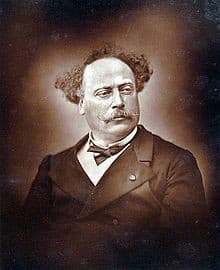
Alexandre Dumas, also known as Alexandre Dumas père, was a French novelist and playwright.







