“She had only one thought: to make the gappers go away. Not for herself, but for her mother, and her father, and the other people of Frip.”
— Capitola's initial motivation to deal with the gappers.

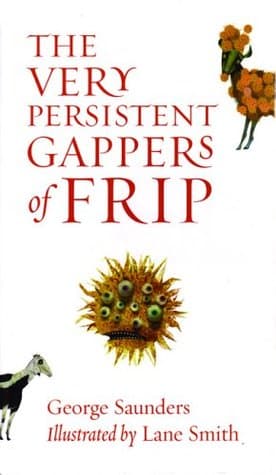
George Saunders (2000)
Genre
Fantasy / Children's / Young Adult
Reading Time
60-90 min
Key Themes
See below
Sign in to track this book
In the quirky seaside village of Frip, a young girl named Capable must confront her neighbors' selfishness when a swarm of milk-stopping, orange gappers decide to exclusively plague her family's goats.
The quaint, isolated seaside village of Frip relies entirely on its goats for milk, their only source of income. However, Frip is bothered by 'gappers' – small, bright orange, many-eyed creatures that attach to goats and shriek with joy. These shrieks prevent the goats from giving milk. The children of Frip, including Capable and the Romo and Ronsen families, constantly brush the gappers off and throw them into the sea. This chore, while annoying, is a shared burden and a regular part of life in Frip, keeping a fragile balance in their community.
One morning, the gappers, previously scattered among all the village's goats, show a new, more intelligent strategy. Instead of spreading out, they all gather on Capable's goats. Capable, a young girl living with her father, is suddenly overwhelmed by the sheer number of gappers. Her father, a kind but somewhat ineffective man, tries to help, but the task is too great for two people. This change in gapper behavior drastically alters the dynamic in Frip, as the problem, once shared, now affects only Capable and her family.
With all the gappers now on Capable's goats, the Romo and Ronsen families find their own goats entirely free of the creatures. They enjoy their new freedom, with uninterrupted milk production and a significant increase in their wealth and leisure time. Mrs. Romo, in particular, becomes quite boastful and self-satisfied. Capable, meanwhile, is exhausted and desperate, her family's livelihood collapsing under the gappers. She and her father work tirelessly but cannot keep up, leading to a stark difference in fortunes within the small community.
Overwhelmed and despairing, Capable approaches Mrs. Romo and Mrs. Ronsen, explaining her problem and asking for their help. She reminds them that the gappers used to be everyone's problem and that they are now benefiting at her expense. However, Mrs. Romo, now comfortable and prosperous, dismisses Capable's pleas. She suggests it is Capable's own problem and that perhaps her goats are simply 'more attractive' to gappers. Mrs. Ronsen, though less openly cruel, also declines to help, prioritizing her own family's comfort and prosperity over Capable's situation.
The Romos and Ronsens begin to create elaborate reasons for Capable's misfortune and their own inaction. They claim that Capable's father is lazy, that Capable herself must be doing something wrong, or that their family simply has a 'gapper problem' that is not contagious. They invent stories and spread rumors to explain why the gappers are only on Capable's goats. This creates a story that frees them from responsibility and allows them to enjoy their prosperity without guilt, further isolating Capable and her father.
As days turn into weeks, Capable and her father continue their struggle against the gappers. Capable's exhaustion is made worse by a growing sense of injustice and resentment towards her neighbors. She sees their carefree lives, their new clothes, and their abundant milk, all while her family faces ruin. The kindness and community she once believed in seem to have vanished, replaced by selfishness and indifference. This emotional toll adds to her physical burden, making her situation even more unbearable.
One day, an old woman, unnamed but a wise, almost mystical figure, observes Capable's struggle. She approaches Capable and, instead of offering physical help, gives her unexpected advice: to love the gappers. She tells Capable to embrace them, to treat them with kindness and affection, rather than fighting them. This advice seems absurd and counterproductive, given the gappers' destructive nature, but Capable, desperate and having tried everything else, decides to follow it.
Following the old woman's peculiar counsel, Capable begins to interact with the gappers differently. Instead of angrily brushing them off, she starts to gently pick them up, talk to them, and even pet them. She treats them not as a nuisance but as creatures deserving of a strange kind of affection. Her father, initially confused, supports her. This radical change in behavior is difficult, requiring immense patience and a deep shift in Capable's view of her tormentors. She truly tries to 'love' them.
To Capable's astonishment, and eventually her father's, the gappers respond to her kindness. Their high-pitched shrieks of joy, which previously stopped the goats from giving milk, soften and become quieter, almost purring sounds. Some gappers even begin to move off the goats on their own, or allow Capable to gently place them on a nearby shelf, where they seem content to observe. The goats, no longer distressed, start producing milk again. This remarkable transformation is a direct result of Capable's compassionate approach.
With the gappers no longer a problem, Capable's goats produce abundant milk, and her family becomes prosperous. They have more milk than they can use, and Capable even starts making cheese. The Romos and Ronsens, seeing Capable's sudden success, grow increasingly envious and uncomfortable. They cannot understand how Capable, whom they had dismissed, is now thriving. Their previously clear conscience, built on the idea of Capable's inherent 'gapper problem,' begins to crack, replaced by unease and suspicion.
As Capable's gappers become increasingly docile and well-behaved, they eventually start to wander off her goats entirely, having seemingly fulfilled their purpose with her. To the horror of the Romos and Ronsens, these 'reformed' gappers, or perhaps new ones drawn by the original, begin to reappear on their own goats, resuming their shrieking and milk-stopping behavior. The problem, which they had so gleefully abandoned to Capable, now returns to them, even more persistent than before, as the gappers are now 'smarter' and more determined.
The Romos and Ronsens are once again plagued by the gappers, just as Capable was. They are now the ones struggling, while Capable, having learned compassion, continues to thrive. The story implies that the gapper problem reflects the community's capacity for kindness and shared responsibility. The cycle suggests that indifference leads to suffering, and only through collective compassion, as Capable showed, can the community truly overcome its challenges. The villagers are left to consider Capable's lesson.
The Protagonist
Capable transforms from a struggling, abandoned child into a compassionate leader who demonstrates an alternative, more effective way to deal with adversity.
The Supporting
He remains largely static, serving as a supportive figure who witnesses Capable's transformation and benefits from her wisdom.
The Antagonist/Supporting
She begins in a state of shared struggle, transitions to self-satisfied prosperity built on Capable's suffering, and eventually returns to struggle, seemingly unchanged in her self-centered outlook.
The Supporting
Like Mrs. Romo, she experiences a temporary relief from gappers, only to have them return, seemingly learning little from the experience.
The Supporting
She appears, offers wisdom, and disappears, her role being to initiate Capable's transformative journey.
The Antagonist/Symbolic
They evolve from a general nuisance to a targeted tormentor, then become docile and even helpful under Capable's care, before reverting to their tormenting ways for the other villagers.
The story explores what it means to be a community, especially when facing shared hardship. Initially, the gappers are everyone's problem, creating a sense of shared burden. When they target Capable alone, the community breaks, with the Romos and Ronsens abandoning her for their own gain. This shows how easily self-interest can erode community bonds and shared responsibility. The gappers' return to the indifferent neighbors highlights that ignored problems often resurface, needing a collective, compassionate response. Capable's isolation shows the cost when a community fails its members.
““The gappers were everyone’s problem. But now they were only Capable’s problem.””
A central conflict in the book is between empathy and self-interest. The Romos and Ronsens, once free from the gappers, quickly prioritize their own comfort and prosperity, explaining away Capable's suffering. They actively choose to ignore her plight, inventing reasons why she deserves her fate. Capable, however, shows empathy by extending kindness even to her tormentors, the gappers. Her success, contrasted with her neighbors' renewed struggle, illustrates that genuine empathy and compassion, even towards an 'other,' ultimately lead to a more harmonious and prosperous existence than selfish indifference.
““Perhaps, Capable, your goats are simply more attractive to the gappers,” Mrs. Romo said.”
The old woman's advice to 'love the gappers' is the story's turning point. It represents a radical shift from conventional problem-solving. While the villagers try to fight and eliminate the gappers, Capable's kindness fundamentally changes the creatures' behavior. This theme suggests that some problems cannot be overcome through force or avoidance, but rather through a change in perspective, empathy, and even love. It challenges the reader to consider that seemingly absurd solutions, rooted in kindness, can be more effective than logical, yet uncompassionate, approaches.
““Love them,” the Old Woman said. “Love them with all your heart.””
The story examines how people explain away their lack of empathy and justify their actions (or inactions) when it benefits them. The Romos and Ronsens quickly invent elaborate reasons for Capable's situation, blaming her father's supposed laziness or her goats' 'attractiveness' to gappers. This moral relativism allows them to maintain a clear conscience while enjoying their new freedom at Capable's expense. Their justifications create a false narrative that frees them from responsibility, showing humanity's tendency to construct convenient truths to avoid uncomfortable moral obligations.
““It was just a gapper problem. Not contagious. Just Capable’s problem.””
The gappers and the villagers' reactions serve as a symbolic representation of societal problems and human nature.
The entire narrative functions as an allegory. The 'gappers' represent persistent societal problems, challenges, or even marginalized groups that a community might face. The villagers' initial collective struggle, their subsequent abandonment of Capable, and their rationalizations symbolize human selfishness, the breakdown of community, and the tendency to blame victims. Capable's compassionate response and the gappers' transformation allegorically suggest that kindness, empathy, and collective responsibility are the true solutions to many of life's 'gapper problems,' rather than indifference or exclusion.
A short story, typically with animals as characters, conveying a moral.
The book is explicitly structured as a modern fable. It features fantastical creatures (gappers) and a simple, isolated setting, leading to a clear moral lesson about kindness, community, and the dangers of selfishness. The characters, while human, often embody specific traits (e.g., Mrs. Romo's greed, Capable's compassion), which is characteristic of fables. The narrative's straightforward progression and the explicit contrast between Capable's outcome and her neighbors' reinforce the didactic nature, making the moral clear without being overly preachy.
The gappers symbolize external problems, 'others,' and the community's response to adversity.
Beyond being a literal nuisance, the gappers are rich in symbolism. They first represent a shared burden, then become a symbol of targeted suffering when they afflict only Capable. Their orange color and many eyes make them distinct and somewhat alien, allowing them to symbolize 'the other' or any group that can be easily ostracized. Their ability to respond to kindness and their 'return' to the indifferent villagers further symbolize that problems, or 'others,' are often a reflection of how they are treated and that unresolved issues tend to resurface.
The unexpected outcome of Capable's kindness and the neighbors' selfishness.
Situational irony is evident in the reversal of fortunes. The Romos and Ronsens, by abandoning Capable, expect to secure their own lasting prosperity and freedom from gappers. However, their selfish actions ultimately lead to the gappers returning to them, more persistent than ever, while Capable, through her counter-intuitive act of kindness, achieves lasting peace and prosperity. This ironic twist underscores the story's moral, showing that what seems like a logical, self-serving choice can lead to worse outcomes, while compassion, even in the face of adversity, can bring unexpected rewards.
“She had only one thought: to make the gappers go away. Not for herself, but for her mother, and her father, and the other people of Frip.”
— Capitola's initial motivation to deal with the gappers.
“The gappers, it turned out, were not evil. They were just very, very persistent.”
— A key realization about the nature of the gappers.
“There were, she discovered, many ways to do a thing, and not all of them involved yelling.”
— Capitola learns about different approaches to problem-solving.
“For years the people of Frip had lived with the gappers, accepting them as a fact of life, like the tides or the wind.”
— Describes the villagers' long-standing resignation to their problem.
“A good idea, like a good fish, often took time to catch.”
— A thought from Capitola's father about problem-solving.
“If you wanted to solve a problem, you had to first understand it, not just yell at it.”
— Capitola's developing understanding of effective problem-solving.
“And sometimes, the biggest problems were not the ones that made the most noise.”
— A reflection on the subtle nature of some difficulties.
“The world, she was beginning to see, was full of things that seemed impossible until someone actually did them.”
— Capitola's growing realization about human potential.
“It was one thing to complain about a problem, and quite another to actually do something about it.”
— A contrast between passive complaining and active solution-seeking.
“She learned that kindness, even to something as annoying as a gapper, could sometimes open doors that anger kept shut.”
— Capitola's discovery of the power of empathy.
“The gappers were not evil, but they were certainly a nuisance. And sometimes, a nuisance was just a problem waiting for a solution.”
— Capitola reframes the gappers from a natural disaster to a solvable issue.
“It wasn't about getting rid of them, but about finding a way to live with them, in peace.”
— Capitola's ultimate goal shifts from eradication to coexistence.
“Sometimes, the best solution wasn't to fight the current, but to learn how to swim with it.”
— A metaphor for adapting to difficult circumstances.
Ready to see how well you understood this book? Take our interactive quiz with 10 questions.
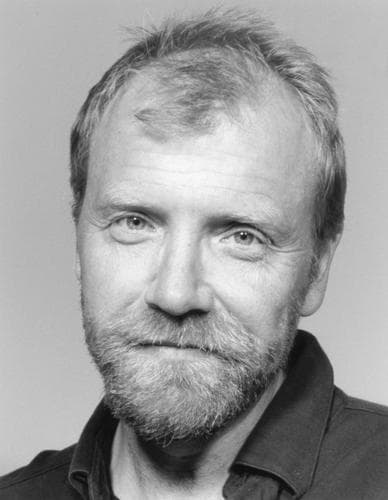
George Saunders is an American writer of short stories, essays, novellas, children's books, and novels. His writing has appeared in The New Yorker, Harper's, McSweeney's, and GQ. He also contributed a weekly column, American Psyche, to The Guardian's weekend magazine between 2006 and 2008.







