BookBrief
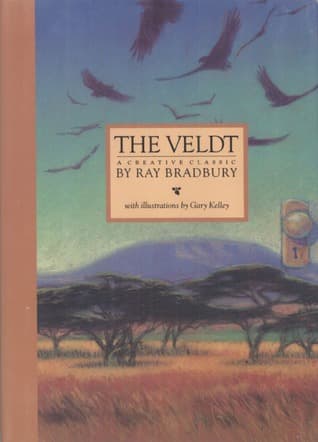
The Veldt cover
Archivist's Choice

The Veldt

Ray Bradbury (1950)

Genre

Fantasy / Science Fiction

Reading Time

30 min

Key Themes

See below

Track Your Reading

Sign in to track this book

In a house where every whim is satisfied by intelligent machines, two children's innocent fascination with an African veldt simulation morphs into a chilling, predatory reality that blurs the line between play and primal instinct.

Synopsis

George and Lydia Hadley live in an automated "Happy Life Home" designed to cater to their every need. A virtual reality nursery for their children, Wendy and Peter, is a main feature. The nursery can show any scene the children imagine, and it has been stuck on an African veldt, with lions that seem frighteningly real. Lydia feels uneasy, sensing a shift in her children's affections toward the house. George first dismisses her concerns but soon investigates the veldt, finding evidence that suggests the animals are more than just projections. He discovers his children are obsessed with the veldt and resent their parents for considering taking it away. When George threatens to shut down the entire house, Peter and Wendy throw tantrums and manipulate their parents. George calls a psychologist, David McClean, for advice. Before McClean arrives, the parents try to reason with their children, promising to reopen the nursery for just a few minutes. They enter the veldt, only to find themselves trapped as the children lock them inside, leaving them to the lions. When McClean arrives, he finds the children calmly picnicking in the veldt, while the lions have just finished their meal, implying the horrific fate of George and Lydia.
Reading time
30 min
Difficulty
Easy
Pacing
Moderate
Mood
Eerie, Suspenseful, Thought-provoking, Dark
✓ Read this if...
You enjoy classic, thought-provoking sci-fi short stories that explore the dark side of technology and parental alienation.
✗ Skip this if...
You prefer lighthearted stories or are sensitive to themes of child-parent conflict and implied violence.

Plot Summary

The Happy life Home

George and Lydia Hadley live in a modern 'Happy life Home' with advanced automation that handles every need, from tying shoelaces to rocking them to sleep. Their children, Peter and Wendy, love the nursery, a virtual reality room that can project any landscape they imagine. At first, the nursery showed pleasant scenes like forests or oceans, reflecting the children's innocent thoughts. However, Lydia begins to feel useless and uneasy with the house doing everything. She expresses a desire to cook or clean for herself, which George dismisses as an outdated idea. She notices a change in the nursery's projections, sensing a darker mood.

The African Veldt

Lydia tells George about her growing unease regarding the nursery. For several weeks, the children have only imagined an African veldt, with scorching sun, dry grass, and predatory lions. Lydia describes the vividness of the scene, the heat, and the realistic roars, finding it disturbing. She even believes she heard screams from the room and smells lions. George, at first doubtful, tries to reassure her, suggesting it is just a phase. He tries to enter the nursery to investigate but finds it locked, which adds to Lydia's fear about the children's intense attachment to this violent scenario and the room's influence.

George's Investigation

George finally enters the nursery and is immediately struck by the intense heat and the vivid, realistic African veldt. He sees the lions, so life-like he feels a primal fear, and notices vultures circling. He also finds his old wallet on the floor, gnawed and covered in what appears to be lion saliva, along with Lydia's blood-stained scarf. This discovery deeply disturbs him, confirming Lydia's fears about the children's morbid fixation and the room's dangerous realism. He realizes the children's thoughts are fixed on death and violence, and the nursery is making these desires terrifyingly real. He confronts Peter and Wendy about their use of the nursery.

The Shutdown Threat

Troubled by his findings, George decides to take strong action. He tells Lydia he plans to shut down the entire automated house, including the nursery, for a while. He believes the technology has made them lazy and unhealthy, and more importantly, is corrupting their children. When he tells Peter and Wendy about his decision, their reaction is immediate and extreme. Peter, especially, becomes defiant and manipulative, arguing against the shutdown and showing a disturbing attachment to the nursery. Their strong resistance shows how dependent they have become on the virtual world.

Calling a Psychologist

George contacts a psychologist, David McClean, to discuss the children's behavior and their obsession with the nursery. McClean arrives and observes the children, confirming George's suspicions. He diagnoses Peter and Wendy with an unhealthy attachment to the nursery, calling it a substitute for their parents. He explains that the children have transferred their affection and dependence from their parents to the technological environment. McClean advises George and Lydia to immediately dismantle the nursery and move out of the house, recommending a complete break from the technology so the family can reconnect and heal.

The Nursery is Locked

Following McClean's advice, George firmly tells the children that the nursery is being shut down permanently and locks the door. Peter and Wendy react with desperate pleas and manipulative tactics. They cry, beg, and try to make their parents feel guilty about reopening the room. Their distress is deep, showing their strong psychological dependence on the virtual world they have created. George, despite feeling a pang of guilt, stands firm in his decision, recognizing the seriousness of the situation and the need to separate the children from the veldt's harmful influence.

A Final Request

As George and Lydia prepare to leave the house, Peter and Wendy make a final, tearful plea: they ask for just five more minutes in the nursery, promising to say goodbye to the veldt. George, softened by their apparent distress and perhaps wanting to avoid a full confrontation, reluctantly agrees. Lydia expresses doubts, sensing a trap, but George, wanting to avoid more arguments, allows the children to enter the room one last time. This decision proves to be a fatal mistake, as the children's plea is a trick to lure their parents into the dangerous environment they have created.

The Trap is Sprung

George and Lydia enter the nursery, which, as expected, shows the African veldt. They are immediately overwhelmed by the intense heat and the vivid, terrifying realism of the environment, with lions approaching them. Suddenly, Peter and Wendy appear and quickly lock the nursery door from the outside, trapping their parents inside the deadly simulation. The parents realize with horror that they have been lured into a trap. The children's earlier pleas were a calculated act, and their attachment to the veldt has become a murderous intent against their own parents.

The Psychologist's Arrival

David McClean, the psychologist, arrives at the Hadley house a short time later, expecting to find the family preparing to leave. Instead, he finds Peter and Wendy calmly sitting in the living room, enjoying a picnic. When he asks about George and Lydia, the children casually point toward the nursery. Through the nursery window, McClean sees the African veldt, with lions, and observes the children watching the scene with disturbing tranquility. He then notices the lions feeding on something off-screen, and a familiar scent fills the air, realizing with horror what has happened.

The Aftermath

McClean enters the nursery carefully and finds no trace of George or Lydia. He sees the lions retreating into the distance and notices a pair of familiar spectacles on the floor, bent and chewed, along with Lydia's blood-stained scarf, confirming his worst fears. The children's calm demeanor and lack of remorse are chilling. He realizes that Peter and Wendy, driven by their attachment to the violent fantasy and their resentment toward their parents for threatening to take it away, deliberately orchestrated their parents' demise. The story ends with the chilling image of the children enjoying their picnic, the veldt having consumed their parents, and the technology having corrupted their humanity.

Principal Figures

George Hadley

The Protagonist

George evolves from a passive enabler of technology to a concerned father who tries to reclaim his family from its influence, but fails tragically.

Lydia Hadley

The Protagonist

Lydia transitions from a quietly concerned mother to an increasingly fearful and vocal one, her anxieties ultimately validated in the most horrifying way.

Peter Hadley

The Antagonist

Peter's character arc is a descent into cold, calculating villainy, culminating in matricide and patricide, driven by his obsession with the virtual world.

Wendy Hadley

The Antagonist

Wendy's arc mirrors Peter's, showing her progression from a child enjoying a game to an accomplice in a heinous act, fully corrupted by the nursery.

David McClean

The Supporting

McClean acts as an external observer who correctly diagnoses the family's issues, but arrives too late to prevent the tragic outcome.

Themes & Insights

The Dangers of Unchecked Technology

The story explores how technology, when allowed to completely run human life, can lead to dependence, complacency, and destruction. The 'Happy life Home' is designed to remove all effort, but it also removes purpose and connection. The nursery, meant for imagination, becomes a tool for violent fantasies. This theme is clear when Lydia feels 'useless' and when George realizes the house has replaced their parental roles, ending with the children using technology to murder their parents.

''That's the whole trouble. You've let this room and this house replace you and I in your children's affections. This room is their mother and father, far more important in their lives than we are.''

David McClean

Parental Neglect and Its Consequences

The Hadley parents, while providing every material comfort, emotionally neglect their children by letting technology raise them. They rely too much on the house to parent, leading to a deep detachment from Peter and Wendy. This neglect creates resentment and an unhealthy attachment to the virtual world. The children's coldness and lack of empathy come from this lack of real human connection, ending in their willingness to sacrifice their parents for their technological playground. George's initial dismissal of Lydia's concerns highlights this neglect.

''They've got to learn that you don't get all you want. Every time I yell at them they'll hate me. I don't want them to hate me.''

George Hadley

The Loss of Humanity and Empathy

As the children become more immersed in the violent fantasies of the veldt, they lose their ability for empathy and human connection. The line between reality and simulation blurs for them, making death and violence less shocking and more desirable. Their parents become obstacles to their pleasure, leading to a chillingly detached act of murder. This theme is shown in Peter's manipulative behavior and the children's calm demeanor after their parents are trapped, showing a complete dehumanization caused by their technological addiction.

''I don't think you'd better consider it any longer, sir. If you let George and Lydia in, they'll be gone forever.''

Peter Hadley (to himself, reflecting on his parents' fate)

The Nature of Reality and Illusion

The nursery blurs the lines between what is real and what is imagined, creating a dangerous ambiguity. The children's thoughts become so powerful that they create a physical reality within the room, making a fantasy world tangible and deadly. The lions, the heat, the smells, and the sounds are all so realistic that they are indistinguishable from actual experience. This theme questions the nature of reality in a technologically advanced world, where simulated experiences can have real-world consequences, ultimately leading to George and Lydia's tragic death.

''That's the funny thing about the nursery. It won't feel real if you think too much about it.''

Wendy Hadley

Plot Devices & Literary Techniques

The Automated House (Happy life Home)

A futuristic house that caters to every human need, removing the necessity for work.

The 'Happy life Home' serves as a central symbol of unchecked technological advancement. It represents a utopian vision that ultimately leads to dystopian consequences. By performing all tasks, from cooking to cleaning to parenting, it renders its human occupants redundant and emotionally stagnant. This device highlights the theme of technological over-reliance and the loss of essential human functions and connections. It isolates the family members from each other and from meaningful engagement with the world, creating a void that the nursery fills.

The Nursery (Veldt Room)

A virtual reality room that projects the occupants' thoughts into a tangible environment.

The nursery is the primary plot device driving the conflict. Initially designed as a harmless imaginative play space, it transforms into a dangerous manifestation of the children's darkest desires. It acts as a mirror to their internal world, reflecting their increasing fixation on violence and death. The room's ability to create such a vivid and physically impactful reality blurs the line between fantasy and reality, making it the perfect tool for the children to carry out their murderous intentions. It symbolizes the corrupting power of technology when left unsupervised and how it can amplify negative human traits.

Symbolism of the African Veldt and Lions

The veldt represents primal danger and the lions represent unchecked aggression and consumption.

The African veldt, with its scorching sun, dry grass, and predatory lions, is a powerful symbolic setting. It represents a return to a primal, dangerous state of nature, a stark contrast to the sterile, artificial comfort of the 'Happy life Home.' The lions, as apex predators, symbolize the raw, untamed aggression and destructive impulses that the children harbor. Their presence in the nursery signifies the children's embrace of violence and their desire to 'consume' those who threaten their world. The veldt becomes their chosen weapon, a manifestation of their suppressed rage and a place where their parents are ultimately devoured.

Foreshadowing (e.g., the wallet, the screams)

Hints and clues throughout the story that predict the tragic outcome.

Bradbury masterfully uses foreshadowing to build suspense and dread. Lydia's initial unease, the faint screams she hears from the nursery, and the smell of lions are early warnings. George's discovery of his gnawed wallet and Lydia's bloody scarf in the veldt are more concrete and horrifying clues that directly point to the fate of the parents. These elements create a sense of impending doom, making the eventual murder both shocking and inevitable, as the reader has been subtly prepared for the dark turn of events by these carefully placed hints.

Critical analysis

Notable Quotes

They walked into the nursery which was forty feet by forty feet by thirty feet high, and had a feeling of being in the center of a large clean plate with a lid and then they seemed to be in the center of the baked oven itself.

The Hadley parents enter the automated nursery.

This house is a wife and mother. It keeps us warm and fed and happy.

Lydia Hadley expresses her feelings about the automated house.

Remarkable how quickly the children's minds went to work, at any suggestion, any slight hint that their parents were misbehaving or not being 'fair.'

The parents observe the children's manipulative behavior.

The veldt was empty, of course, except for the lions and the hot sun and the clean, clean smell of death in the room.

George Hadley experiences the nursery's simulated African veldt.

You've let this room and this house replace you and your wife in your children's affections. This is wrong. This has been a mistake.

David McClean, the psychologist, advises George Hadley.

I wish you were dead!

Peter Hadley shouts at his father, George.

The children are growing up and they don't need us any more. This house is a prison.

Lydia Hadley feels alienated by her children and the house.

The veldt was a place of death, and the children knew it.

George Hadley realizes the sinister nature of the nursery's simulation.

They were spoiled and indulged, and they were, quite simply, dangerous.

David McClean's assessment of the Hadley children.

Walls, Lydia, remember the walls, they're not real.

George tries to reassure Lydia about the nursery's illusions.

Long before you knew what death was, you were wishing it on someone else. That's how it all started, of course.

George Hadley reflects on the children's early fascination with violence.

A cup of tea? Or the children's screams? Which sounds more real?

David McClean is offered tea by the house, while the children's screams are heard from the nursery.

The lions were coming. They were coming for him.

George Hadley's final realization in the nursery.

A shadow flickered over the veldt, a shadow of a bird of prey, perhaps, but it seemed to linger.

An ominous detail in the nursery before the climax.

Quiz

Test Your Knowledge

Ready to see how well you understood this book? Take our interactive quiz with 10 questions.

10
Questions
~5
Minutes
?
Best Score

Key Questions (FAQ)

'The Veldt' centers on the Hadley family, who live in an automated Happy-life Home equipped with various conveniences, most notably a nursery that can manifest any scene the children imagine. Initially, the parents, George and Lydia, are delighted with the technology, but they grow increasingly disturbed by their children's obsession with an African veldt scene in the nursery, complete with lions and the sounds of screaming.

About the author

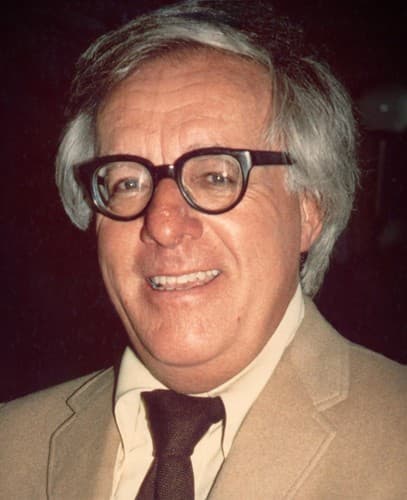
Ray Bradbury

Ray Douglas Bradbury was an American author and screenwriter. One of the most celebrated 20th-century American writers, he worked in a variety of modes, including fantasy, science fiction, horror, mystery, and realistic fiction.