“Before my wife turned vegetarian, I'd always thought of her as completely unremarkable in every way.”
— Opening line of the novel, from the husband's perspective.

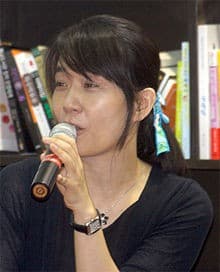
Han Kang (2016)
Genre
Literary Fiction
Reading Time
208 min
Key Themes
See below
Sign in to track this book
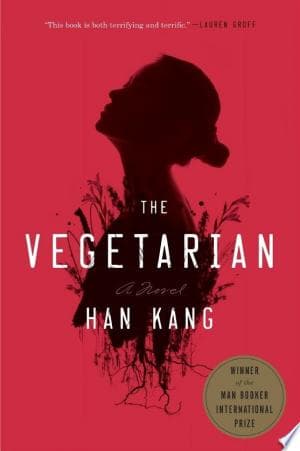
A woman's choice to stop eating meat upends her ordinary life, leading to a disturbing change in her body and mind as her family tries to control her defiance.
Yeong-hye, a quiet and obedient wife, lives a routine life with her husband, Mr. Cheong. He describes her as ordinary, even dull, and their marriage lacks passion. One night, Yeong-hye has vivid, disturbing nightmares with images of blood, violence, and animal slaughter. These dreams are so intense that she empties her refrigerator of all meat and says she will become a vegetarian. This sudden, unexplainable decision upsets Mr. Cheong, who sees it as an act of defiance and a disruption of their organized, traditional life. He struggles to understand her change, seeing it as an inconvenience and an embarrassment.
Yeong-hye's vegetarianism grows into a complete refusal to eat any animal products, making her thin and withdrawn. Worried about her declining health and social implications, her family holds an intervention at her parents' house. Her father, a strict man, becomes angry at her refusal to eat meat, seeing it as a personal insult and extreme disrespect. He physically attacks her, hitting her head against the table and trying to force-feed her pork. In an act of rebellion, Yeong-hye cuts her wrist with a fruit knife, shocking everyone and confirming her family's belief that she is mentally unwell.
After the violent family dinner and Yeong-hye's continued refusal to eat, Mr. Cheong decides to divorce her. He cannot tolerate her changed behavior and the social stigma it brings. Yeong-hye moves in with her older sister, In-hye, and In-hye's husband, also named Mr. Cheong. In-hye's husband, an artist who makes video installations, becomes fascinated by a Mongolian birthmark on Yeong-hye's buttock. He sees it as a symbol of innocence and a powerful artistic inspiration. He starts to imagine painting flowers on her body, especially her birthmark, in a sexually charged art project.
Mr. Cheong, the artist, convinces Yeong-hye to be part of his art project. This involves painting her naked body with flowers, focusing on her birthmark. Yeong-hye, increasingly distant from reality and seemingly uncaring about social rules, agrees. The project ends with a video shoot where she is painted and then has a sexually explicit scene with her brother-in-law, both covered in paint. In-hye finds the footage and the affair, which leads to a violent fight between the sisters and In-hye's husband. The incident shatters In-hye's view of her sister and her marriage, showing the deep tensions and unspoken desires in the family.
After the art project scandal, Yeong-hye's condition gets much worse. She stops eating completely, believing she is turning into a tree, and says she wants to live only on sunlight and water. Her body wastes away, and she becomes increasingly delusional, speaking in broken, poetic sentences about roots and leaves. Worried for her life, In-hye and her family admit Yeong-hye to a psychiatric hospital. Despite the doctors' efforts, Yeong-hye refuses to eat, rejecting all food. This solidifies her symbolic transformation and her rejection of human consumption.
The story then shifts to In-hye's perspective, showing her heavy burden and growing sadness as she cares for her sister in the hospital. In-hye, a seemingly strong and practical woman, finds her life falling apart because of Yeong-hye's illness, her husband's infidelity, and society's judgment of their family. She struggles to understand Yeong-hye's transformation, moving between pity, frustration, and a faint, unsettling hint of understanding. In-hye tries different ways to get Yeong-hye to eat, including force-feeding, but all attempts fail against Yeong-hye's firm belief in her change into a plant.
Inside the psychiatric hospital, Yeong-hye's delusion of becoming a tree reaches its peak. She spends her days standing still, looking out the window, convinced that she is growing roots into the ground and that leaves are sprouting from her body. She refuses clothes, preferring to be naked, and shivers constantly from the cold. Yet, she expresses a deep sense of peace in her imagined transformation. She speaks only in metaphors about plants, sun, and water, completely separate from human society and its demands. Her body continues to weaken, but her spirit, in its own way, seems to find a kind of freedom.
As Yeong-hye's condition gets worse, In-hye decides to move her to a different, more specialized hospital. During the car ride, Yeong-hye's extreme thinness and pale skin make her look almost transparent. In-hye, overcome with grief and the sheer impossibility of her sister's situation, starts to cry uncontrollably. Yeong-hye, in a rare moment of clarity or perhaps empathy, reaches out and wipes away In-hye's tears. This small gesture shows the deep, though broken, bond between the sisters and In-hye's growing understanding of Yeong-hye's desire to escape the human condition. The drive represents In-hye's final, desperate attempt to save her sister, while also showing her own vulnerability and breakdown.
The Protagonist
From a compliant, ordinary woman, she transforms into a radical vegetarian, then a delusional individual who believes she is a tree, ultimately achieving a form of liberation through self-annihilation.
The Supporting
Starts as a conventional husband, becomes increasingly frustrated and disgusted by Yeong-hye's changes, and eventually divorces her, remaining unchanged in his conventionality.
The Supporting
Begins as a critical and frustrated older sister, gradually unravels under the stress of caring for Yeong-hye, and ultimately finds a fragile empathy and shared vulnerability.
The Supporting
His artistic fascination with Yeong-hye escalates into a sexual exploitation, ultimately destroying his marriage and revealing his morally ambiguous character.
The Supporting
Remains consistently authoritarian and unyielding, serving as a symbol of the oppressive societal forces that Yeong-hye rejects.
The Supporting
Remains a passive observer, unable to significantly influence the events or Yeong-hye's trajectory.
The Mentioned
Attempts to treat Yeong-hye but is ultimately defeated by her unwavering will and unique form of illness.
Yeong-hye's decision to become a vegetarian, caused by violent nightmares, is her first act of rebellion against a life defined by passivity and societal expectations. This seemingly small act grows into a search for independence, rejecting not only meat but eventually her entire human identity. Her refusal to eat, her wish to become a tree, and her embrace of an existence beyond human suffering are all desperate attempts to control her own body and spirit in a patriarchal and violent world. This theme appears when she cuts her wrist after her father tries to force-feed her, a violent claim of self-ownership.
““I’m not an animal anymore,” she said. “I don’t need meat.””
Violence is present throughout the novel, both directly and indirectly. Yeong-hye's nightmares are full of animal slaughter, showing a deeper societal cruelty. Her father's physical abuse, her husband's emotional neglect, and her brother-in-law's sexual exploitation are all forms of violence against her. Even In-hye's attempts to force-feed her sister can be seen as a form of well-meaning violence. Yeong-hye's vegetarianism and desire to become a tree are direct responses to this widespread violence, a desperate attempt to escape a world she sees as brutal. The novel suggests that the human condition itself includes various forms of cruelty.
““What kind of animal dreams are those? You’re not a dog or a pig or anything.””
Yeong-hye is repeatedly treated as an object and controlled by the men in her life. Her husband sees her as a domestic convenience, her father as a disobedient child, and her brother-in-law as an artistic inspiration and sexual object. Her body is a point of conflict, with others trying to dictate what she eats, wears, and how she acts. Her refusal to eat and her desire to turn into a plant are radical rejections of this objectification, an attempt to reclaim her body and mind from outside control. The body art project with flowers clearly shows this objectification, reducing her to a canvas for someone else's idea.
““Her body was a mere convenience for him, a tool for his own comfort.””
The novel explores the changing and delicate nature of identity through Yeong-hye's radical change. Her journey from 'ordinary wife' to 'vegetarian' to 'tree' is a deep transformation, challenging common ideas of selfhood. Her physical wasting and mental delusions are tied to a spiritual search for a new, non-human identity free from the limits and violence of her human existence. This transformation is deeply unsettling to those around her, who struggle to recognize or accept her changing self, showing society's pressure to conform to a fixed identity. Her belief in growing roots and leaves is the clearest expression of this theme.
““I was a tree. I had roots, deep in the earth.””
Yeong-hye's behavior, while seen by her family as mental illness (schizophrenia, anorexia), can also be seen as a radical response to trauma and societal oppression. The novel criticizes how society labels those who deviate from the norm as sick, failing to understand the reasons for their distress. Her family and doctors try to 'cure' her with standard methods, but these approaches fail because they do not address the deep, existential nature of her rebellion. Her hospitalization and forced feeding show how inadequate institutional responses are to deep psychological and spiritual crises.
““She’s gone completely insane. She’s starving herself.””
The story is told through the eyes of three different characters, each offering a limited and subjective view of Yeong-hye.
The novel is divided into three parts, each narrated from a different character's perspective: Yeong-hye's husband, her brother-in-law, and her sister, In-hye. This narrative technique prevents the reader from ever fully understanding Yeong-hye directly, mirroring the other characters' inability to truly comprehend her. Each narrator's biases, desires, and limitations color their perception of Yeong-hye, highlighting her enigmatic nature and the theme of objectification. This structure emphasizes that Yeong-hye is largely seen through the lens of others' expectations and projections, rather than as an autonomous subject.
Vegetarianism and the transformation into a tree symbolize Yeong-hye's rejection of violence and her quest for purity.
Yeong-hye's vegetarianism is not merely a dietary choice but a symbolic act of renouncing the inherent violence of the human world, particularly the consumption of flesh. As her transformation progresses, her desire to become a tree symbolizes a complete escape from human suffering, a return to a pure, non-violent, and self-sustaining state. Trees represent rootedness, stillness, and a connection to nature, offering a stark contrast to the volatile and destructive human society she seeks to abandon. Her emaciated body and belief in growing roots are literal manifestations of this symbolism.
Yeong-hye's body becomes the central battleground for her autonomy and others' attempts to control her.
Throughout the novel, Yeong-hye's body is the primary medium for her rebellion and the target of others' control. Her refusal to eat, her self-harm, her participation in the art project, and her physical deterioration all represent her struggle for agency. Her body is force-fed, painted, and institutionalized, demonstrating how external forces try to impose their will upon her. Ultimately, her body's transformation into a tree-like state is her final, desperate act of reclaiming herself, even if it leads to self-annihilation. The birthmark on her buttock, for example, becomes a focal point of artistic and sexual obsession.
Vivid and violent dream sequences act as catalysts for Yeong-hye's initial transformation.
The novel opens with Yeong-hye's disturbing nightmares of blood, animal slaughter, and brutality. These dreams are not merely psychological manifestations but potent symbolic catalysts that trigger her radical shift to vegetarianism. They represent a deep-seated revulsion against the violence she perceives in the world, both literal and metaphorical. The dreams are so visceral that they force her to confront a primal truth about existence, leading her to reject the 'normal' human condition and embark on her transformative journey. They are the genesis of her rebellion.
“Before my wife turned vegetarian, I'd always thought of her as completely unremarkable in every way.”
— Opening line of the novel, from the husband's perspective.
“I want to swallow you, have you melt into me and flow through my veins.”
— Yeong-hye's sister In-hye recalls her husband's disturbing words.
“All I want is to not eat meat.”
— Yeong-hye's simple, defiant explanation for her vegetarianism.
“I'm not doing this because I want to die. I'm doing it because I want to live.”
— Yeong-hye explains her refusal to eat during a hospital stay.
“The dream isn't inside me, it's outside, all around me.”
— Yeong-hye describes her recurring, violent nightmares.
“She had no blood on her hands, but she felt as though her whole body was steeped in it.”
— In-hye reflects on her sister's suffering and her own guilt.
“Plants don't scream. They don't have blood.”
— Yeong-hye's justification for her vegetarian choice.
“I'm a monster. From now on, I'm a monster.”
— Yeong-hye's husband after he violently assaults her.
“The world is a cruel place, and human beings are cruel creatures.”
— In-hye's bleak realization about existence.
“She wanted to become a tree. To have leaves instead of hair, branches instead of arms.”
— Describing Yeong-hye's desire to transcend her human form.
“There's no such thing as right or wrong in this world.”
— Mr. Cheong, Yeong-hye's husband, justifying his indifference.
“I'm not doing this to be difficult. I'm doing it because I can't do anything else.”
— Yeong-hye's explanation to her family about her vegetarianism.
“Her body was a door, and she was trying to close it.”
— Metaphor for Yeong-hye's attempt to shut out the world.
“Sometimes I think that human beings are just animals pretending not to be.”
— In-hye's reflection on the primal nature beneath social facades.
Ready to see how well you understood this book? Take our interactive quiz with 10 questions.
Han Kang is a South Korean writer. She won the Man Booker International Prize for fiction in 2016 for The Vegetarian, a novel about a woman's descent into mental illness and neglect from her family. The novel is also one of the first of her books to be translated into English.







