“The thing about history, though, is that it's not a story. It's just one damn thing after another.”
— Jude's thoughts on history and the past.

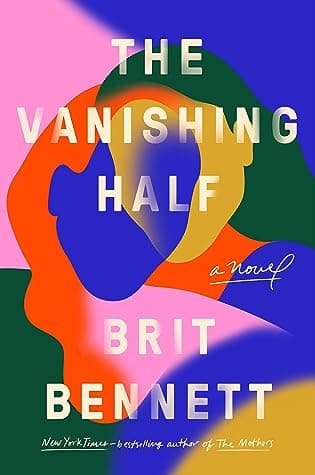
Brit Bennett (2020)
Genre
Literary Fiction / Historical Fiction
Reading Time
572 min
Key Themes
See below
Sign in to track this book
Twin sisters, separated by race and identity, find their lives and their daughters' futures linked across generations.
Stella and Desiree Vignes are identical twin sisters in Mallard, Louisiana, a small community founded by a light-skinned Black man for light-skinned Black people. The town values its residents' ability to 'pass' for white, though most do not. The twins are close. Their father, Leon, is murdered by white men when they are young. This event leaves them scarred and makes them want to leave Mallard. They see racial injustices firsthand, which shows them how uncertain their lives are in the segregated South.
At sixteen, Stella and Desiree feel limited and want more than Mallard offers, so they run away to New Orleans. They find work in a laundry and live in a small apartment. This is their first taste of independence and the world outside their hometown. While working, Stella, who has lighter skin than Desiree, realizes she can easily pass for white. This idea gives her a potential path to a different life, even as Desiree remains committed to their shared Black identity.
One day, Stella disappears, leaving Desiree in New Orleans. Stella has decided to pass as white, moving to Los Angeles and creating a new identity. She marries Blake Sanders, a wealthy white man, and has a daughter named Kennedy. Stella lives in fear of her past being discovered. She cuts all ties with her family and former life, including her twin sister, to keep her deception. Her new life is one of privilege but also great anxiety and loneliness.
After Stella's disappearance, Desiree stays in New Orleans for a time before marrying Sam Winston, a dark-skinned Black man. They move to Washington D.C., where Sam is a successful doctor. Desiree is unhappy and unfulfilled despite her husband's success. She eventually leaves Sam, taking their dark-skinned daughter, Jude, and returns to Mallard, the town she and Stella once swore to leave. Her return causes curiosity and judgment from the townspeople, especially since Jude's dark skin contrasts with Mallard's light-skinned population.
Jude grows up in Mallard, feeling like an outsider because of her darker skin. She is often teased and excluded by other children due to the town's colorism. Her mother, Desiree, works at the local diner, and Jude spends time with her grandmother, Adele. Jude is curious about her missing aunt, Stella, whose existence is a secret. This feeling of being different and the unspoken family history makes Jude want to leave Mallard and find her own place, like her mother and aunt did when they were young.
After high school, Jude gets a track scholarship to UCLA in Los Angeles, fulfilling her dream of leaving Mallard. In L.A., she searches for her missing aunt, Stella. She is driven by curiosity and a need to understand her family's broken history. She works several jobs to support herself, including catering. This eventually leads her to an unexpected meeting that changes her search. Her journey to L.A. is a new chapter of self-discovery and a direct link to her forgotten family.
While catering at a Hollywood party, Jude sees a woman who looks like her mother, Desiree. This woman is Kennedy Sanders, Stella's daughter and Jude's cousin. Jude recognizes a Vignes family resemblance and approaches Kennedy, who is initially dismissive. Jude later finds Kennedy again, at an audition, and they become friends. Jude does not yet know Kennedy is Stella's daughter. This growing relationship brings Jude closer to solving the mystery of her aunt.
Through her friendship with Kennedy and some investigating, Jude learns that Kennedy's mother, Stella, is her long-lost aunt. She learns about Stella's life passing as white and her carefully built existence. Jude is deeply affected by this and returns to Mallard to tell her mother, Desiree, the truth. Desiree is devastated and conflicted, dealing with the shock of her sister's deception and the pain of their long separation. This discovery breaks the silence around Stella's disappearance and brings the past into the present.
Stella continues to live as a white woman, terrified of being exposed. Her husband, Blake, eventually learns about her true racial identity from a former acquaintance, a Black woman who recognized Stella from her past. Blake is shocked and angry but stays with Stella, though their relationship now has new tension. Stella's world, though still looking normal, is now broken inside. The constant threat of her secret being fully exposed hangs over her. She lives in constant anxiety, even as she keeps up her facade.
Years after Jude's discovery and the revelation to Desiree, the twins have a hesitant reunion. Desiree travels to Stella's home in Los Angeles. The meeting is filled with unspoken pain, resentment, and deep, lingering love. Stella's life of passing has created a gap between them, yet their sisterly bond remains. They discuss their lives, their choices, and the consequences. The reunion is more about acknowledging their shared past than fully closing the gap Stella's decision created.
Kennedy, after learning the truth about her mother, Stella's, racial identity and Black heritage, has an identity crisis. She feels betrayed and confused, questioning everything she thought she knew about herself and her family. She struggles to reconcile her privileged upbringing with her newly discovered Black ancestry. Kennedy begins to explore her heritage, seeking information and connecting with Jude, her cousin, in a more meaningful way. She begins her own journey of self-discovery.
The story ends with the lasting effects of Stella and Desiree's choices on their daughters, Jude and Kennedy. Jude finds love and stability with her boyfriend, Reese, a trans man, embracing her identity and creating her own family. Kennedy, while still navigating her complex identity, is on a path toward self-acceptance. The twins, though still living separate lives, have acknowledged their past. The novel shows that while choices can divide, family ties, identity, and the past shape future generations, and the search for belonging continues.
The Protagonist
Stella transforms from a curious, adventurous girl into a woman living a lie, burdened by the weight of her secret, and eventually facing the consequences of her choices.
The Protagonist
Desiree moves from a hopeful escapee to a disillusioned returnee, ultimately finding strength and purpose in her identity and family, and confronting the truth about her sister.
The Supporting
Jude evolves from an ostracized child in Mallard to an independent young woman who uncovers her family's hidden truths and finds her own path in Los Angeles.
The Supporting
Kennedy transforms from an unaware, privileged young woman into one grappling with a profound identity crisis, eventually seeking to understand her complex heritage.
The Supporting
Adele endures significant loss and waits for decades for her daughter's return, ultimately finding a measure of peace in the continued presence of Desiree and Jude.
The Supporting
Reese finds love and stability with Jude, embodying self-acceptance and providing a grounding force in her life.
The Supporting
Blake transitions from an unknowingly privileged husband to one who grapples with his wife's profound secret and its implications.
The Mentioned
The community of Mallard remains largely static in its colorist beliefs and practices, serving as a constant backdrop for the characters' struggles with identity.
The novel explores racial identity, especially 'passing.' Stella's choice to pass as white highlights societal pressures and perceived advantages of whiteness in mid-20th century America. It also shows the psychological cost of living a lie. Desiree's return to Mallard, a town focused on lightness, and Jude's experiences as a darker-skinned Black girl there, show colorism within the Black community. The theme questions what defines race—appearance, heritage, or choice—and its impact on individuals and families. For example, Stella's constant fear of being discovered (Chapter 3) and Jude's feeling of being an outsider in Mallard (Chapter 5) are direct examples.
“A person could leave the South, but it was impossible to leave a race. They took up space in the world, and there was no hiding from it.”
Secrets and the past are a main theme. Stella's decision to pass is a secret that controls her adult life, leading to loneliness and fear. Her father, Leon's, murder is a traumatic past event that makes the twins want to leave Mallard. Desiree's inability to move on from Stella's disappearance, and Jude's search for her aunt, show how unresolved histories affect the present. The novel suggests that the past influences the future, affecting individuals and later generations, as seen in Kennedy's identity crisis (Chapter 11).
“It wasn't a question of if your past would catch up to you. It was a question of when.”
The bond between Stella and Desiree is the emotional center of the novel, even when they are apart. Their initial closeness shows the pain of their separation. Stella's choice to abandon Desiree is a betrayal that affects both their lives. Despite decades apart and different lives, the sisters are connected by memory, longing, and their daughters' lives. Their reunion (Chapter 10), though brief, highlights their complex sisterhood, marked by love and damage. The theme explores how identity choices can break strong family bonds.
“Even with Stella gone, Desiree still felt the phantom limb of her twin, a dull ache where her sister used to be.”
The search for identity and belonging drives many characters. Stella seeks belonging in a white world, at the cost of her true self. Desiree, after searching, finds a complicated belonging back in Mallard, embracing her identity despite its limits. Jude struggles to belong in Mallard because of her skin color but finds a sense of self and belonging in Los Angeles with Reese. Kennedy's journey shows what it means to belong when one's understanding of identity is broken. The novel suggests that identity is not fixed but changes, shaped by choices, circumstances, and the communities one lives in or creates. Reese's character, a trans man, expands this theme beyond race (Chapter 6).
“She understood that identity was a performance, that she was just playing a role.”
Mother-daughter relationships are central to the story, showing legacies passed down through generations. Desiree's protection of Jude and her desire for a better life for her daughter contrasts with Stella's conflicted motherhood, where her deception creates a different burden for Kennedy. Stella and Desiree's choices affect their daughters' understanding of themselves and their place in the world. The novel highlights how mothers' decisions about identity, race, and family shape their children's experiences, as seen in Kennedy's identity crisis after learning the truth about Stella (Chapter 11) and Jude's search for her aunt (Chapter 6).
“The past was a thread, invisible but strong, connecting mother to daughter, even when they didn't know it.”
Alternating perspectives and timelines following the twin sisters and their daughters.
The novel employs a dual narrative, primarily focusing on the lives of Stella and Desiree Vignes, and later their respective daughters, Kennedy and Jude. This structure allows the author to explore the divergent paths of the twins simultaneously, highlighting the stark contrasts in their experiences and the consequences of their choices. By jumping between their stories and timelines, the narrative builds suspense, reveals connections gradually, and offers a comprehensive view of how their individual lives and decisions ripple across generations and influence each other, even when separated. This device is key to showing the 'vanishing half' and the enduring half.
Hints and unanswered questions that propel the plot and build suspense.
From the outset, the novel establishes a central mystery: what happened to Stella Vignes? The narrator frequently alludes to past events and the twins' eventual separation, creating a sense of anticipation. Jude's childhood curiosity about her missing aunt, and the unspoken secrets within the Vignes family, serve as powerful motivators for both characters and readers. This device keeps the reader engaged, eager to uncover the truth behind Stella's disappearance and the subsequent impact on her family, particularly as Jude actively seeks answers in Los Angeles.
The fictional town functions as a symbolic representation of broader societal issues.
The town of Mallard, founded by a light-skinned Black man for light-skinned Black people, serves as a powerful microcosm for the complex and often painful realities of race and colorism in America. Its insular nature and obsession with skin tone reflect broader societal hierarchies and prejudices. The town's existence itself is a commentary on the desire for self-determination within a segregated society, while simultaneously showcasing the internal divisions within the Black community. Mallard is not just a setting; it's a character that shapes the Vignes twins' identities and their motivations to escape or return, embodying the very issues the novel explores.
The physical and metaphorical representations of identity and self-perception.
Given the identical twins at the story's heart, mirrors and reflections serve as recurring symbols. They represent the initial inseparability of Stella and Desiree, their shared identity. However, as Stella chooses to pass, the mirror becomes a symbol of her fractured self, reflecting a false identity. The idea of seeing oneself, or a version of oneself, in another (as Jude sees Desiree in Kennedy) emphasizes the deep, often unconscious, connections between family members and the enduring impact of genetics and shared history, even across racial lines and years of separation.
“The thing about history, though, is that it's not a story. It's just one damn thing after another.”
— Jude's thoughts on history and the past.
“You could disown your past, but you couldn't escape it.”
— Stella's internal struggle with her identity.
“A person could leave home, but that didn't mean home ever left them.”
— Desiree's reflections on her life away from Mallard.
“The real danger in lying, she'd learned, was that you started to believe your own lies.”
— Stella's experience living under a false identity.
“It wasn’t a question of if your past was going to catch up to you. It was a question of when.”
— Kennedy's understanding of the consequences of secrets.
“People thought that being white meant being white. But it was more than that. It was about belonging.”
— Stella's internal thoughts on the social advantages of passing.
“She imagined that she was two people, a twin, but also a stranger to herself.”
— Stella contemplating her dual identity.
“Maybe you could never truly outrun your memories, but you could outrun the people who remembered them.”
— Desiree considering her return to Mallard.
“She understood that the world was bigger than Mallard, but Mallard was still the center of it.”
— Desiree's enduring connection to her hometown.
“There was a difference between being seen and being known.”
— Jude's thoughts on her relationship with Reese.
“The past was a living thing, a shadow that stretched and shrank with the light.”
— Stella's ongoing struggle with her origins.
“She’d spent her whole life trying to outrun her past, and now she was back in it.”
— Desiree's feelings upon returning to Mallard.
“It was impossible to be truly free when you were constantly trying to escape yourself.”
— Stella's internal conflict regarding her identity.
“Some secrets were so heavy they could sink you.”
— Stella's realization about the weight of her deception.
Ready to see how well you understood this book? Take our interactive quiz with 10 questions.

Brit Bennett is a critically acclaimed author known for her insightful explorations of race, identity, and family. Her novels, including the bestselling 'The Vanishing Half' and the debut 'The Mothers,' have garnered widespread praise for their compelling narratives and nuanced characters. Bennett's work often delves into the complexities of the African American experience, earning her a place as a significant voice in contemporary fiction.







