“The van was his. He bought it. He owned it. It was his. He knew it was his. He knew it was his because he had bought it.”
— Jimmy Rabbitte Sr.'s initial pride and ownership over the chip van.

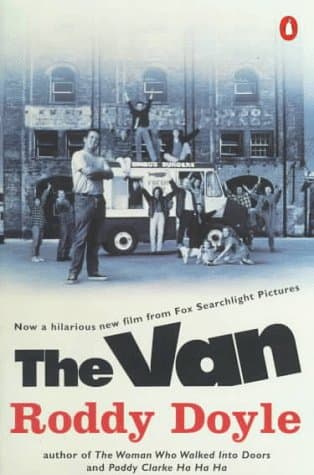
Roddy Doyle (1991)
Genre
Literary Fiction
Reading Time
640 min
Key Themes
See below
Sign in to track this book
In late 1980s Dublin, two unemployed, middle-aged men find purpose (and a lot of grease) selling fish and chips from a run-down van, navigating the humor and challenges of friendship, entrepreneurship, and food inspectors.
Jimmy Rabbitte Sr., a man in his forties, is unemployed and feels increasingly alone and without purpose in his Dublin home. His wife, Veronica, works, and his children are growing up, creating a distance he struggles with. He often goes to the local pub, The Submarine, finding less and less comfort there. His best friend, Brendan 'Bimbo' Reeves, also a working-class Dubliner, loses his job. Their shared situation strengthens their bond. They spend afternoons commiserating over drinks, lamenting their lack of prospects and the changing world, often returning home to their families' quiet judgment.
One evening, watching a football match at the pub, Bimbo sees a mobile chip van doing good business outside the stadium. He realizes there is a need for late-night food, especially for pub-goers and the public after events. Excited to regain some independence and income, Bimbo tells Jimmy his idea. Jimmy, at first doubtful and tired from his own unemployment, slowly agrees because of Bimbo's enthusiasm and their desperate situation. The idea, though simple, represents a bit of hope in their otherwise grim lives.
Pooling their small savings and borrowing a little from Veronica, Jimmy and Bimbo begin looking for a suitable vehicle. They find a run-down, rusty, and generally unappealing fish-and-chip van for sale. Despite its many flaws and the work needed to make it run, they see its potential. They bargain over the price and finally buy it. With a mix of worry and excitement, they name their new business 'The Van'. The purchase marks a real step toward their dream, though the reality of the work ahead quickly becomes clear as they start the hard task of cleaning and repairing it.
Renovating 'The Van' becomes a demanding, all-consuming project for Jimmy and Bimbo. They spend hours scrubbing away years of grease and dirt, fixing broken equipment, and trying to make the mobile kitchen clean enough for food. This time is full of small disagreements, frustrations, and moments of despair as they see how bad the van truly is. Their wives, Veronica and Maggie, offer varying support and doubt. Despite problems, their shared goal and the friendship born from their long history keep them going, slowly turning the old vehicle into a working, though still modest, business space.
Finally, after weeks of preparation, 'The Van' is ready for its grand opening. Jimmy and Bimbo choose a busy spot near a pub, hoping to attract the late-night crowd. The first night is a chaotic mix of excitement and panic. They struggle with the fryer, the till, and the large number of orders. The first customers are a mix of curious people and hungry revelers, and demand is higher than expected. They quickly learn how to serve greasy chips and battered sausages, deal with drunk customers, and manage their limited supplies. It is a tough start, but by the end of the night, despite their exhaustion, they realize they might have a viable business.
The Van quickly becomes a regular sight in the local late-night scene. Jimmy and Bimbo settle into a demanding routine: getting ingredients, preparing food, and operating the van well into the early morning. They face job challenges with humor and acceptance: difficult equipment, loud customers, and the constant struggle to keep hygiene standards in a small space. Small successes, like a busy night or a customer compliment, keep them going. However, a big worry is the looming threat of environmental health officers, whose surprise visits could shut down their operation if they do not meet regulations.
As 'The Van' becomes more popular, so do the demands on Jimmy and Bimbo. The business thrives, drawing long lines of hungry customers, especially after pubs close. However, the non-stop work schedule, financial pressures, and stress of managing a popular business start to affect their long friendship. Small disagreements turn into arguments, and the initial joy of their shared business begins to fade. Their personal lives also suffer; Jimmy's relationship with Veronica becomes strained due to his long hours and focus on the business, and Bimbo also feels the pressure. The success they wanted brings its own problems.
The inevitable happens: an environmental health officer makes a surprise visit to 'The Van'. The officer finds several hygiene violations and gives a strict warning, setting a deadline for Jimmy and Bimbo to bring their operation up to standard or face closure. This incident increases their stress and exposes the flaws in their informal business model. It also worsens the tension between them, as they argue over who is more responsible for the problems and how to fix them. The threat of losing their livelihood, just as they have achieved some success, casts a dark shadow over their business.
The pressure from the health inspector, combined with their ongoing tiredness and growing frustrations, leads to a fierce argument between Jimmy and Bimbo. Accusations are made, old resentments surface, and their friendship seems about to end. The fight shows their shared history, their vulnerabilities, and their different approaches to the business. However, after the initial anger, a deep loyalty and understanding return. They realize how much they rely on each other and how important their friendship, and 'The Van', has become. They make up, agreeing to work together to overcome the challenges.
Despite their renewed efforts to clean and repair 'The Van' and improve hygiene, the environmental health officer returns for the final inspection. While they have made improvements, it is not enough to meet the strict regulations. The officer gives them the bad news: 'The Van' must be shut down. This marks the end of their business journey. Jimmy and Bimbo are disappointed, but there is also a sense of relief. The intense pressure is gone. They reflect on their experience, the lessons learned, and the lasting strength of their friendship. Though the van is gone, their bond remains, and they face the future, again unemployed but not entirely broken, ready for what comes next.
The Protagonist
From a despondent, unemployed man, Jimmy finds purpose and a renewed sense of self-worth through 'The Van', even as the business strains his relationships and ultimately fails.
The Protagonist
Bimbo's initial enthusiasm for 'The Van' fuels the venture, but he learns the harsh realities of business and the strain it puts on friendship, ultimately finding a more grounded perspective.
The Supporting
Veronica remains a steadfast anchor for Jimmy, adapting to his changing circumstances while maintaining her pragmatic outlook on life and their family's well-being.
The Supporting
Maggie consistently offers support and a dose of reality to Bimbo, witnessing his journey with 'The Van' and remaining a stable presence in his life.
The Antagonist
The health officer serves as the external force that ultimately brings 'The Van' to its close, embodying the inescapable reality of regulations.
The Supporting
The regulars provide a consistent social environment, reflecting the community's reaction to Jimmy and Bimbo's venture.
The novel shows how unemployment affects working-class male identity. Jimmy and Bimbo's sense of purpose, self-worth, and ability to provide for their families are greatly hurt by joblessness. Buying and running 'The Van' becomes a desperate attempt to reclaim their masculinity and dignity, offering them a new 'job' and a sense of contribution. The pub is a refuge where they can talk about their problems and affirm their bond, but also a place where their worries grow. The struggle to maintain their pride and identity during economic hardship is central to their story.
“What was he going to do? Fuck all. That was it. Fuck all. And that was the problem.”
The strong friendship between Jimmy and Bimbo forms the emotional core of the novel. Their bond is tested by unemployment, the difficulties of starting a business, and constantly working together. Despite arguments, frustrations, and different personalities, their loyalty to each other stays strong. 'The Van' venture, born from shared desperation, ultimately strengthens their connection, proving resilient even when the business itself fails. Their camaraderie and mutual support are vital for their survival and well-being.
“They were like two old married men, except they didn't have to have sex. Or didn't.”
The story highlights the human need for meaningful work and the dignity it brings. For Jimmy and Bimbo, 'The Van' is more than just a source of income; it is a way to regain purpose and structure in their lives. The everyday tasks of frying chips, cleaning, and serving customers, though physically demanding and often thankless, restore a sense of contribution that unemployment had taken away. Even the business's eventual failure does not erase the dignity they found in the effort and the enterprise itself.
“It was work. And that was all that mattered.”
Roddy Doyle clearly shows the realities of working-class life in Dublin, especially its vulnerability to economic changes. The book is set against high unemployment and limited opportunities, forcing characters like Jimmy and Bimbo to find ways to survive. Their struggle to make 'The Van' a success represents the wider challenges their community faces. The novel subtly critiques the system that leaves men like them feeling useless, showing their resourcefulness and resilience in the face of hardship, even as they deal with bureaucracy (the health officer) and their social environment.
“They were the men who built the houses, who drove the trucks, who kept the city working. Now they were on the dole.”
The physical vehicle represents hope, independence, struggle, and ultimately, the fragility of their dreams.
The decrepit fish-and-chip van is more than just a business asset; it's a powerful symbol throughout the novel. Initially, it represents hope and the possibility of escaping unemployment and regaining dignity. As they work on it, it embodies their shared effort and the challenges they face. Its eventual closure symbolizes the harsh realities of bureaucracy and the often-fragile nature of working-class entrepreneurial dreams. It becomes a character in itself, a focal point for their aspirations and frustrations.
Authentic, witty, and often coarse Dublin speech drives character and atmosphere.
Doyle's masterful use of realistic, colloquial Dublin dialogue is a defining feature. The characters' conversations are filled with local slang, dark humor, and an unvarnished honesty that reveals their personalities, relationships, and social class. The dialogue doesn't just advance the plot; it creates a strong sense of place and authenticity, allowing readers to deeply connect with Jimmy and Bimbo's struggles and their enduring friendship. It's through their banter, arguments, and shared silences that their true selves are revealed.
The local pub serves as a social hub, a refuge, and a reflection of the community's state.
The Submarine, the local pub, functions as a crucial setting throughout the novel. It's where Jimmy and Bimbo initially commiserate about their unemployment, where the idea for 'The Van' is born, and where they later find many of their customers. It acts as a social hub, a place of shared experience, and a mirror reflecting the economic and social changes impacting their community. It symbolizes both the comfort of routine and the stagnation that can accompany unemployment, later transforming into a marketplace for their new venture.
A bureaucratic figure representing the impersonal forces that threaten small-scale, informal enterprises.
The environmental health officer serves as an external antagonist, embodying the impersonal, regulatory forces that can crush small, ad-hoc businesses. This character is not malicious but represents the unyielding rules and standards that Jimmy and Bimbo, in their desperation and lack of formal training, struggle to meet. The threat of the officer's inspection and subsequent closure creates significant tension and highlights the precariousness of their venture, adding a layer of realism to their entrepreneurial struggle.
“The van was his. He bought it. He owned it. It was his. He knew it was his. He knew it was his because he had bought it.”
— Jimmy Rabbitte Sr.'s initial pride and ownership over the chip van.
“It was a business. It was a proper business. Like a shop. Or a pub. Or a bank.”
— Jimmy Rabbitte Sr. trying to legitimize his new venture.
“They were out of their depth. That was the problem. They were two lads from Barrytown trying to run a business.”
— The realization of the challenges Jimmy and Bimbo face.
“He didn't want to be a chipper. He didn't want to be known as the chipper fella. He wanted to be Jimmy Rabbitte.”
— Jimmy's internal conflict about his new identity.
“The smell of chips. It was everywhere. It was in his clothes. It was in his hair. It was in his dreams.”
— The pervasive nature of their work.
“They were mad. They were absolutely mad to think they could do it.”
— A reflection on the audacity of their venture.
“It was hard work. Harder than he'd ever imagined. But there was a satisfaction to it.”
— Jimmy's mixed feelings about the demands of the business.
“The queue. It was always there. Like a living thing. Growing. Shrinking. Waiting.”
— The constant presence of customers, symbolizing demand and pressure.
“He looked at Bimbo. Bimbo looked at him. They were in this together.”
— The bond between Jimmy and Bimbo, facing challenges as a team.
“It was a good van. A good, honest van. It worked. It did what it was supposed to do.”
— Jimmy's appreciation for the van itself, despite the problems.
“They were making money. Real money. Not much, but enough to keep going.”
— The modest success that keeps their spirits up.
“He missed the band. He missed the music. He missed being Jimmy Rabbitte, manager.”
— Jimmy's nostalgia for his previous life and identity.
“The smell of vinegar and salt. It was the smell of success. Or something like it.”
— The defining aroma of their business, imbued with their hopes.
“It was just chips. But it was their chips. And that made all the difference.”
— The personal investment and pride in their product.
Ready to see how well you understood this book? Take our interactive quiz with 10 questions.

Roddy Doyle is an Irish novelist, dramatist and screenwriter. He is the author of eleven novels for adults, eight books for children, seven plays and screenplays, and dozens of short stories. Several of his books have been made into films, beginning with The Commitments in 1991. Doyle's work is set primarily in Ireland, especially working-class Dublin, and is notable for its heavy use of dialogue written in slang and Irish English dialect. Doyle was awarded the Booker Prize in 1993 for his novel Paddy Clarke Ha Ha Ha.







