“There are no monsters. There are only people.”
— Floria's realization about the nature of the 'vampire'.

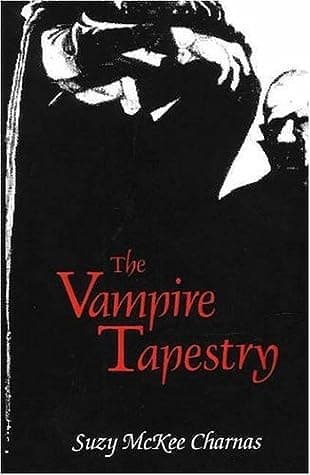
Suzy McKee Charnas (1980)
Genre
Fantasy / Science Fiction
Reading Time
300 min
Key Themes
See below
Sign in to track this book
A biologically-driven vampire professor navigates academia, his urges, and unexpected empathy, striving to remain undetected in a world that denies his existence.
The novel begins by introducing Dr. Edward Weyland, a distinguished anthropology professor known for his eccentricities and late-night work habits. Dr. Floria Landauer, a psychiatrist, contacts him. She is treating a student, Robert, who has terrifying, vivid nightmares involving a predatory figure. Floria suspects a connection to the university and possibly to Weyland, given his unusual schedule and Robert's descriptions. Weyland, a biological vampire, subtly feeds from the university's blood bank, maintaining a careful facade. He sees Floria's inquiry as a threat to his anonymity and begins to observe her, assessing the danger she poses. Floria becomes increasingly intrigued and disturbed by Weyland's mysterious aura.
Dr. Floria Landauer continues her sessions with Robert, who describes an 'ancient mind' invading his dreams and feeding on him. Floria, a rational scientist, struggles to reconcile Robert's descriptions with her understanding of psychology, yet the specificity and terror of his accounts compel her. She confronts Weyland, subtly asking about his knowledge of the occult or unusual phenomena. Weyland, maintaining his scholarly composure, gives evasive and philosophical answers, further increasing Floria's suspicion. He knows Robert's nightmares are a psychic echo of his own feeding, a side effect he usually avoids. Floria's determined investigation begins to chip away at Weyland's human identity, forcing him to consider his next move to protect his secret.
Floria's persistent investigation and unsettling observations eventually lead her to the horrifying realization that Dr. Weyland is the creature from Robert's nightmares, a vampire. She confronts him with evidence and growing terror. Weyland, seeing his carefully constructed life crumble, reveals his true nature and the biological basis of his vampirism. He explains his need for blood, his long periods of hibernation, and his sophisticated methods of survival, emphasizing his efforts to minimize harm. Floria, initially repulsed and terrified, is also a scientist, and the uniqueness of his condition fascinates her. A tense, uneasy truce forms, driven by Floria's scientific curiosity and Weyland's desperate need for an ally, or at least a non-hostile witness.
After his revelation to Floria, Weyland tries to sever the psychic link with Robert, which causes the student's nightmares. He explains that careless feeding can leave a psychic residue that manifests as such dreams. Weyland, acknowledging the harm he has caused, feels a rare flicker of guilt. He uses his mental abilities to enter Robert's dreams, not to feed, but to soothe and reshape them, aiming to erase the memory of the predatory encounters. This act is difficult and draining for Weyland, requiring a nuanced control he rarely uses, showing his internal conflict between his predatory nature and his intellectual, almost ethical, desire to minimize suffering.
After the university incident, Weyland enters a new phase of his existence, working in a traveling circus as 'Dr. Landauer,' a sideshow attraction performing hypnotism and mind-reading. This allows him to observe human behavior from a different perspective, blending into the transient community while subtly feeding from small animals or occasionally from unsuspecting audience members without leaving a trace. He finds a strange empathy for the performers, who are also outsiders. However, constant proximity to humans and the raw emotions of the circus heighten his predatory instincts, making self-control a constant battle. He is always aware of the thin line between his intellectual curiosity and his inherent need to feed.
While working at the circus, Weyland meets Darya, an elderly woman who recognizes him from decades ago, from a previous 'lifetime' when he was known by a different name. Darya, a fortune teller in the circus, remembers him from her youth, hinting at a past encounter where he had helped her or her family. This unexpected recognition deeply unsettles Weyland, as it breaches his anonymity and forces him to confront his long existence and the lingering effects of his past interactions. He is intrigued by her unusually vivid memory, and wonders if his unique nature left a deeper impression on her than he realized, or if she has some intuitive ability.
Weyland, having left the circus, finds himself in a remote artistic community where he becomes the unwitting muse for an reclusive and intense artist named Gena. Gena is captivated by Weyland's unique presence, his ageless eyes, and the subtle power she senses in him. She begins to sketch and paint him obsessively, trying to capture his essence, which she sees as both ancient and alien. Weyland allows this, finding a strange detachment in being observed, almost as if he is an object of study rather than a living being. However, Gena's artistic obsession gradually becomes more intrusive, and her insights into his nature become uncomfortably accurate, forcing Weyland to consider the danger of such intense scrutiny from a perceptive human.
Gena's art becomes increasingly disturbing, depicting Weyland with predatory features, fangs, and an ancient hunger in his eyes. Her final, most powerful painting explicitly portrays him as a vampire, capturing his true essence with terrifying accuracy. When she confronts him with her finished work, Weyland must acknowledge the depth of her perception. He is impressed by her artistic insight but also threatened by her unwitting revelation. The confrontation is charged with a complex mix of fear, admiration, and a deep sense of exposure for Weyland. He recognizes that Gena, through her art, has seen him more clearly than almost any other human, forcing him to consider the implications of such artistic truth.
After the intense encounters with Floria, Darya, and Gena, Weyland retreats to the desolate solitude of the desert. Here, among the stark landscape, he tries to shed the layers of human identity he has accumulated and reconnect with his fundamental, predatory self. He reflects on the unique burden of his existence: his biological need for blood, his long lifespan, and the constant struggle to maintain a semblance of humanity while being fundamentally alien. The desert becomes a sanctuary where he can be truly himself, free from human scrutiny and the need for elaborate deception. This period of isolation is important for his self-understanding and for recalibrating his perspective on his place in the world.
In the desert, Weyland deeply considers the ethics of his survival. He acknowledges his predatory nature but also his conscious choice to minimize harm, to feed without killing, and to avoid unnecessary suffering. He considers empathy, a feeling he rarely experiences but sometimes observes in humans, and how it complicates his existence. He reflects on his past interactions, particularly with Floria and Gena, and the unexpected connections he formed. This introspection leads him to a more nuanced understanding of his own 'humanity,' or lack thereof, and the constant tension between his primal needs and his intellectual capacity for self-awareness and restraint. He seeks a balance, a way to be a monster without being monstrous in his actions.
As the desert solitude ends, Weyland feels the familiar pull of his biological need for hibernation. He prepares for his long sleep, finding a secure and hidden place to enter his decades-long dormancy. This period is not merely sleep but a metabolic shutdown, a renewal. As he drifts into unconsciousness, he reflects on the 'lifetimes' he has lived, the knowledge he has accumulated, and the changes he has undergone. He anticipates his next awakening, his next 'rebirth,' and the new world he will emerge into, ready to once again observe, learn, and survive. The cycle of his existence, punctuated by these deep sleeps, shows his ancient and enduring nature.
The Protagonist
Weyland evolves from a purely detached observer to someone who occasionally grapples with the ethical implications of his existence and experiences rare flickers of empathy.
The Supporting
Floria's worldview is shattered and reformed as she grapples with the existence of the 'impossible,' leading her to a more open and complex understanding of reality.
The Mentioned
Robert's primary arc is to be a victim whose suffering triggers the main conflict, and then to be subtly healed by Weyland's mental intervention.
The Supporting
Darya's role is to provide a glimpse into Weyland's distant past, reminding him of his long history and the lasting impressions he can leave.
The Supporting
Gena's arc is to progressively uncover Weyland's true nature through her art, culminating in a powerful, exposing portrait.
The novel explores what it means to be a 'monster' versus 'human.' Weyland is biologically a predator, yet he follows a strict code of ethics to minimize harm, making him arguably more 'humane' than some humans. His internal conflict between his primal needs and his intellectual restraint questions the boundaries of these definitions. Scenes where he tries to soothe Robert's nightmares, or his self-imposed rules for feeding, show his unique moral compass, while his detached observation of human cruelty further blurs the lines.
“What does it mean to be a monster? To kill? To feed? Or to do so without thought or regret? He was a monster, yes, but he was also a mind.”
Weyland's entire existence is about survival and adaptation. Over centuries, he has refined his methods of feeding, blending into human societies, and managing his unique biological needs, including long periods of hibernation. Each 'lifetime' is a new adaptation to a changing world, whether as an anthropology professor or a circus performer. His ability to intellectualize his predatory nature and find ways to exist without causing widespread panic or death shows a sophisticated form of evolutionary success, emphasizing the drive to persist.
“He had survived because he understood them, because he became a part of their tapestry, however briefly, however superficially.”
A central tension in the novel is the interplay between Weyland's vast intellect and his biological instincts. He is a creature of ancient hunger, yet he uses his knowledge of human psychology and society to manage and conceal it. His academic pursuits help him understand the species he preys upon. The struggle to control his urges, to intellectualize his need for blood, and to observe human behavior with scientific detachment, all reflect this conflict. His moments of introspection in the desert are a prime example of him trying to reconcile these two opposing forces within himself.
“His mind was a library, his body a hunger. The two were eternally at war, yet eternally bound.”
Weyland embodies the theme of the 'alien among us,' a being that looks human but is fundamentally different. His internal world, his perception of time, and his biological needs set him apart from humanity, even as he lives within it. The novel explores the deep loneliness and detachment that comes with such an existence, and the difficulty of forming genuine connections. Floria's initial terror and Gena's artistic portrayal both highlight how humans perceive and react to this 'otherness,' emphasizing the inherent gap between Weyland's reality and human understanding.
“He moved through their lives like a ghost, an observer, never truly a part of their brief, vibrant dance.”
A scientific explanation for vampirism, devoid of supernatural elements.
Instead of traditional supernatural vampirism, the novel posits a biological explanation for Weyland's condition. This grounds his existence in a scientific framework, making him a unique species rather than a cursed being. This device allows for exploration of his physiological needs (blood, hibernation) and limitations, and how he uses intellect and adaptation to survive within human society. It reframes the vampire mythos, focusing on evolutionary biology and behavioral ecology rather than magic or religious connotations, giving the story a unique, almost science fiction feel within fantasy.
The unconscious mental connection left by Weyland's feeding.
This device explains how Weyland's feeding can leave a psychic imprint on his victims, manifesting as vivid, terrifying nightmares (as seen with Robert). It adds a layer of consequence to his actions beyond mere physical harm, suggesting a deeper, more subtle interaction between predator and prey. It also serves as a plot catalyst, as Robert's nightmares draw Floria Landauer's attention to Weyland, initiating the central conflict. This device highlights Weyland's control and occasional lack thereof over his impact on human minds.
The narrative is divided into distinct periods of Weyland's long life.
The novel's structure is episodic, presenting different 'lifetimes' or phases of Weyland's existence after his periods of hibernation. Each section places him in a new setting with new challenges and human interactions (e.g., university, circus, artist commune). This device allows the author to explore various facets of Weyland's character and his interactions with different types of humans, showcasing his adaptability and the cyclical nature of his long life. It also emphasizes the vast span of his existence and his continuous efforts to understand and survive within an ever-changing human world.
Weyland's internal monologue shapes the reader's perception of his actions and motivations.
While not overtly unreliable, Weyland's perspective, as the primary point-of-view character, filters the events through his unique, ancient, and predatory mind. His rationalizations for his feeding, his detached observations of humanity, and his internal struggles shape the reader's understanding of his 'ethics' and 'humanity.' This device encourages the reader to question their own definitions of good and evil, and to empathize with a character who is fundamentally 'other,' even as he commits acts that would typically be deemed monstrous. It allows for a nuanced exploration of morality from a non-human viewpoint.
“There are no monsters. There are only people.”
— Floria's realization about the nature of the 'vampire'.
“The greatest freedom is not to be free of chains, but to be free of the need for them.”
— Weyland's philosophical musing on true liberation.
“He understood that his own kind had not simply vanished, but had changed, adapted, become something else. And in that change, perhaps, lay a new kind of terror, and a new kind of beauty.”
— Weyland's contemplation of his species' evolution and isolation.
“The hunger was always there, a low thrum beneath the surface, a constant reminder of what he was.”
— Weyland's internal struggle with his vampiric nature.
“To be alone is to be utterly free, and utterly vulnerable.”
— Weyland's reflection on his solitary existence.
“She had always believed that evil was a choice, a deliberate act. Now she wondered if it was simply a condition, like hunger or thirst.”
— Floria's evolving understanding of evil after encountering Weyland.
“He was not a demon, not a devil, but something older, something that predated such concepts.”
— A character's attempt to categorize Weyland beyond conventional mythology.
“The world was full of shadows, and he was one of them, moving between the bright lights of human lives.”
— Weyland's self-perception as an outsider observing humanity.
“Memory was a fragile thing, easily twisted, easily lost, especially when it concerned things people didn't want to believe.”
— A thought on the unreliability of memory and human denial.
“It was not the fangs or the blood that made him terrifying, but the mind behind them, the alien intelligence that could comprehend, yet never truly belong.”
— A character's deeper insight into Weyland's true otherness.
“He had learned to live in the spaces between human understanding, to be a whisper rather than a shout.”
— Weyland's strategy for survival and concealment.
“Sometimes the greatest kindness was simply to leave someone alone with their illusions.”
— A cynical observation about human comfort in self-deception.
“The night held a different kind of truth, a raw, uncompromising honesty that the day often obscured.”
— Weyland's preference for the night and its revelations.
“Every act of survival was an act of violence, even against oneself.”
— Weyland's grim philosophy on the cost of existence.
Ready to see how well you understood this book? Take our interactive quiz with 10 questions.
Biography coming soon.







