“I am the vampire Lestat. I'm immortal. More or less. The light of the sun, the sustained heat of an intense fire—these things might destroy me. But then again, they might not.”
— Lestat introduces himself and his nature early in the book.

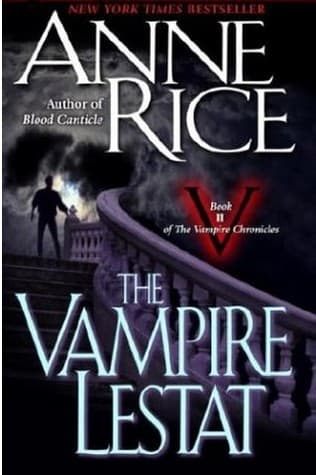
Anne Rice (1985)
Genre
Fantasy / Historical Fiction
Reading Time
540 min
Key Themes
See below
Sign in to track this book
From the decadent salons of pre-revolutionary France to the stages of 1980s rock, the vampire Lestat de Lioncourt navigates centuries of immortal existence, seeking the truth of his terrifying nature amidst a world both beautiful and monstrous.
After decades of sleep, Lestat de Lioncourt wakes up in 1980s New Orleans to a rock band. He dislikes the modern world and other vampires' perceived weakness, so he decides to use human technology and become a rock star. He forms a band called 'The Vampire Lestat' and writes a book, telling the world about vampires. This goes against old vampire rules and is meant to provoke powerful, hidden elders, especially Marius, whom he wants to find.
Lestat's story shifts to his human life in Auvergne, France, in the 1760s. He talks about his noble family: his blind father, his mother, Gabrielle, and his six brothers. Lestat feels like an outsider, wanting adventure beyond their castle. He hunts wolves with his dog, Remy, and dreams of leaving his small town. His mother, Gabrielle, is the only one who understands and supports his ambition, creating a strong bond. This part shows Lestat's rebellious nature and his wish for meaning and excitement.
Lestat, with Gabrielle, goes to Paris, where he becomes a successful actor. His life changes when the ancient vampire Magnus, a lonely and mad creature, kidnaps him. Magnus chooses Lestat as his successor. Magnus turns Lestat into a vampire, then kills himself by jumping into a fire, leaving Lestat to deal with his new, scary life alone. Lestat gets Magnus's money and secret lair, but also the burden of immortality and the need for blood.
At first, Lestat is horrified by his condition. He struggles to control his thirst and understand his new powers. He accidentally kills a street vendor but then learns to hunt more carefully. He finds comfort with Gabrielle, who is dying. To save her and make her immortal, Lestat turns her into a vampire, making their bond stronger. Together, they explore Paris, enjoying their secret and new abilities. They also meet the hidden Parisian vampires, led by Armand, who are suspicious of Lestat's independence.
Lestat and Gabrielle's showy presence in Paris attracts Armand and his coven, who are fanatical devil-worshippers. They try to make Lestat join them, but he rejects their old beliefs and challenges their power. During this time, Lestat starts to hear a strong, telepathic call from an ancient vampire, telling him to come to a distant island. This mysterious message, later found to be from Marius, hints at an older vampire world and a secret that his rock music is accidentally threatening.
Following the telepathic call, Lestat travels across Europe, eventually finding Marius on a remote Greek island. Marius, an ancient Roman vampire, tells him how vampires started: the first vampires, Akasha and Enkil, the 'Mother and Father,' are now still statues, holding the essence of vampire life. Marius explains he guards them and warns that if they are destroyed, all vampires will die. He also warns Lestat about telling humans about vampires, which Lestat's band is now doing.
Lestat's loud rock music, heard globally, reaches Akasha, waking her from her long sleep. Her awakening creates a psychic ripple, drawing ancient vampires from around the world to Lestat. These include Louis, Pandora, and other powerful beings who dislike Lestat telling the world about vampires. The music forces the hidden vampire world into a conflict with the modern era and Lestat's bold challenge to their secrecy. Akasha's reawakening means a dangerous change in the vampire world.
Lestat's concert in San Francisco is a big event, drawing human fans and many ancient vampires. During the show, Akasha appears, a beautiful and powerful figure. She easily kills attacking vampires who try to stop Lestat, showing her great power. Akasha then takes Lestat as her new partner, taking him from the concert. This dramatic event is a key moment, as Lestat is now directly involved with the oldest and most powerful vampire, his plan having worked better than he expected.
Akasha, with Lestat, starts her plan for the world. She says she will kill all human men, believing them to be the source of all evil, and create a female-led society with women and children. Lestat is shocked by her cruelty and the size of her plan, realizing he has unleashed a force he cannot control. He becomes a reluctant part of it, watching her brutal actions as she travels the world, carrying out her purge.
As Akasha's purge continues, the remaining ancient vampires, including Marius, Louis, Pandora, Maharet, and Mekare, meet in the desert. They are united against Akasha's madness. They discuss how to stop her, seeing the threat she poses to humanity and their own kind. Lestat, increasingly upset by Akasha's actions, is torn between his interest in her power and his strong moral objections to her genocide. He eventually joins the ancient vampires, getting ready for a final, desperate fight.
During the fight in the desert, Akasha is finally defeated. It is revealed that Mekare, Maharet's twin sister and one of the first humans to become vampires after Akasha, is the true heir to the first vampiric power. Mekare eats Akasha's brain and heart, taking the essence of the Mother and Father into herself, ending Akasha's rule. This act stabilizes the vampire race, ensuring their survival under a new, kinder, and ancient consciousness. Lestat thinks about what these events mean.
The Protagonist
From a provincial human yearning for escape, Lestat transforms into a powerful, defiant vampire who challenges ancient traditions, inadvertently awakens the Mother, and ultimately helps save humanity from her destructive vision.
The Supporting
Transforms from a dying human mother into a powerful, independent vampire who becomes Lestat's first companion and intellectual equal.
The Supporting
Maintains his ancient guardianship, enduring Lestat's provocations, and ultimately plays a crucial role in opposing Akasha's destructive plans.
The Antagonist
Awakens from a long slumber, attempts to enact a global purge, and is ultimately destroyed by Mekare.
The Supporting
Remains largely inert until his dramatic destruction by Akasha, signifying her complete break from the past.
The Supporting
From a leader of a superstitious coven, he is challenged by Lestat, leading to a later re-evaluation of his existence.
The Supporting
Initially critical of Lestat's actions, he is drawn into the larger conflict, maintaining his moral compass amidst ancient powers.
The Supporting
Reveals the ancient history of vampires and helps orchestrate Akasha's defeat, ensuring the survival of their kind.
The Supporting
Endures millennia of suffering and silence, only to emerge as the ultimate recipient of the primal vampiric power, ending Akasha's reign.
The Mentioned
Serves as the catalyst for Lestat's transformation, then immediately exits the narrative.
Lestat's journey is about self-discovery, both as a human wanting purpose and as a vampire dealing with his monstrous side. From his rebellious youth to his decision to become a rock star, Lestat constantly tries to define himself against social norms and other vampires' expectations. His search for knowledge about his origins, especially from Marius, helps him understand his place in the world. He thinks about the morality of his existence, the need for blood, and his role in the vampire hierarchy, always questioning what it means to be Lestat.
“I was a monster. I was a demon. I was a thing of the night. And I knew it, and I rejoiced.”
Lestat is always a rebel, challenging rules at every turn. As a human, he went against his family's expectations; as a vampire, he openly rejects the secrecy and old traditions of his kind, especially Armand's coven. His choice to tell the world about vampires through his rock band is the ultimate act of defiance, forcing a conflict between the hidden ancient world and modern society. This theme looks at the tension between individual freedom and the demands of group identity, showing Lestat's refusal to follow the rules of humans or vampires.
“I was going to give the world a shock. I was going to tell them everything.”
The book explores good and evil, especially through vampirism. Lestat, though a killer, often struggles with his actions' morality and tries to understand the 'purpose' of evil. Akasha's plan to purge humanity raises questions about using violence for a perceived greater good. Ancient vampires, like Marius and Maharet, offer different views on the world's balance and their kind's role. The story suggests that good and evil are not absolute but tied to power, survival, and personal choice, often blurring the lines between hero and monster.
“Evil is a point of view. We are immortal. And what you call evil, I call natural.”
Immortality is shown not as a gift but as a burden, leading to boredom, madness, and deep loneliness. Lestat at first embraces his new life with energy, but he also has times of despair and long sleep. Characters like Magnus and Enkil show the potential for madness that comes with endless centuries. Marius and Maharet, though old and powerful, carry the weight of much knowledge and the responsibility of guarding old secrets. The story explores how vampires handle time passing, losing loved ones, and trying to find meaning in an eternal life, often making them question if immortality is even good.
“To be immortal is to be eternal. And to be eternal is to be lonely.”
Art, in its various forms, is a strong force throughout the novel. Lestat's early love for acting hints at his later showmanship as a rock star. His autobiography is a deliberate act of storytelling, a way to reclaim his story and challenge his kind's secrecy. The rock music itself is a central plot device, able to wake old beings and bring vampires together. This theme shows how art can cross time, tell deep truths, cause change, and even hold immense, almost magical, power to shape reality and connect different beings across centuries.
“I was a creature of words, of music, of paint. I was an artist.”
The entire story is framed as Lestat's tell-all memoir.
The novel is presented as Lestat's autobiography, written in the first person. This allows for intimate access to his thoughts, motivations, and experiences, shaping the reader's perception of events through his unique, often flamboyant, and biased perspective. It also serves as a meta-narrative device, as the 'book' Lestat is writing within the story is the 'book' the reader is holding. This allows for his retrospective commentary on events, his interactions with other vampires (who read his book), and his direct address to the reader, creating a highly personal and engaging narrative voice.
The modern-day rock star plot is frequently interrupted by Lestat's life story.
While the overarching plot begins in the 1980s with Lestat's rock band, the majority of the novel consists of extensive flashbacks to Lestat's human life in 18th-century France and his early centuries as a vampire. This non-linear structure gradually reveals Lestat's origins, his 'Embrace,' and his early interactions with other vampires, providing crucial context for his present-day actions and motivations. The flashbacks are triggered by Lestat's decision to write his autobiography, allowing him to recount his history in vivid detail and build the world of vampires piece by piece for the reader.
The ancient, inert vampires who are the source of all vampiric life.
Akasha and Enkil are not just characters but a central plot device, representing the primal source of vampiric existence. Their inert, statue-like state for millennia is what keeps all other vampires alive. Their awakening, triggered by Lestat's music, is the catalyst for the entire climax of the novel. The threat of their destruction, or Akasha's destructive will once awakened, drives the ancient vampires to unite. They embody the profound mystery of vampiric origins and the terrifying fragility of their entire species, making them the ultimate MacGuffin and existential threat.
The means by which Lestat reveals vampires to the world and awakens Akasha.
Lestat's decision to form a rock band and write an autobiography about vampires is the primary inciting incident of the novel's modern-day plot. The music and the book are not merely expressions of his ego but powerful plot devices. They serve to break the ancient covenant of secrecy among vampires, drawing out both allies and enemies. Crucially, the sheer volume and psychic resonance of his music act as a direct summons to Akasha, awakening her from her millennia-long sleep and setting in motion the global crisis. It's a manifestation of Lestat's rebellious spirit with far-reaching, unforeseen consequences.
“I am the vampire Lestat. I'm immortal. More or less. The light of the sun, the sustained heat of an intense fire—these things might destroy me. But then again, they might not.”
— Lestat introduces himself and his nature early in the book.
“Evil is always possible. And goodness is eternally difficult.”
— Lestat reflects on the moral struggles of his existence.
“The world changes, we do not, therein lies the irony that finally kills us.”
— Lestat muses on the burden of immortality in a changing world.
“I wanted love and goodness in this which is living death. It was impossible from the beginning, because you cannot have love and goodness when you do what you know to be monstrous.”
— Lestat grapples with his desire for humanity despite his vampiric nature.
“To kill is to be a god. To kill is to be a devil. To kill is to be both.”
— Lestat describes the power and duality of taking life as a vampire.
“The only power that exists is inside ourselves.”
— Lestat asserts his philosophy of self-reliance and inner strength.
“We are the things that were once men, and we are the things that will never be men again.”
— Lestat reflects on the liminal state between humanity and monstrosity.
“Beauty is a savage garden.”
— Lestat describes the allure and danger of the vampire world.
“I never asked for life, I never asked to be what I am. But I have it, and I will use it.”
— Lestat accepts his fate and resolves to live fully as a vampire.
“The blood is the life, and it shall be mine.”
— Lestat declares his predatory nature and thirst for existence.
“We are the vampires, the damned, and we are beautiful.”
— Lestat embraces the aesthetic and tragic nature of vampirism.
“To be powerful is to be lonely. To be eternal is to be alone.”
— Lestat reflects on the isolation that comes with immortality and power.
“I have always been a rebel, even in death.”
— Lestat characterizes his defiant nature throughout his existence.
“The night is my kingdom, and I rule it with a velvet glove.”
— Lestat asserts his dominance and elegance in the nocturnal world.
Ready to see how well you understood this book? Take our interactive quiz with 10 questions.
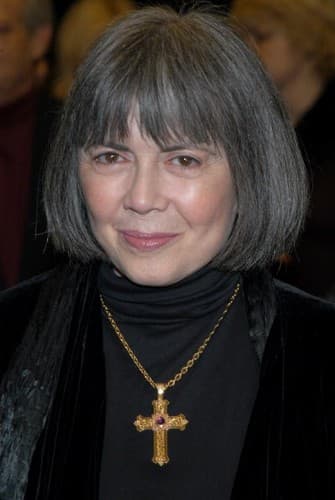
Anne Rice was an American author of gothic fiction, erotic literature, and Christian literature. She was best known for her series of novels The Vampire Chronicles. The first book became the subject of a film adaptation—Interview with the Vampire (1994).







