“I am Armand. I am a monster. I am a demon. I am a thing from the darkest dreams. And I am here to tell you my story.”
— Armand's self-introduction and declaration of his intent to narrate his life.

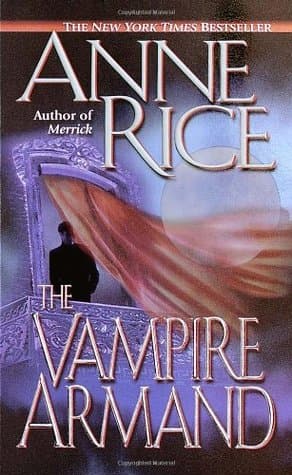
Anne Rice (1998)
Genre
Fantasy / Historical Fiction
Reading Time
540 min
Key Themes
See below
Sign in to track this book
Armand, a vampire with a youthful appearance, struggles with eternal life, slavery, and Marius's influence, ultimately choosing between immortality and his soul's salvation, from Mongol-era Kiev Rus to Renaissance Venice and beyond.
The novel starts with Armand, filled with guilt and despair after his actions in Merrick, asking Marius for the True Death. He feels he has lost his soul and should not exist. Marius, worried about his 'son,' refuses but insists Armand tell his entire life story. He hopes that by facing his past, Armand can find redemption or understanding. Daniel Molloy, Armand's mortal companion and lover, is also there, urging Armand to speak. This setup prepares for Armand's confession, which spans centuries and shows the deep influences that shaped his troubled immortal life, especially Marius's lasting impact.
Armand begins his story as Andrei, a young boy in a Christian monastery in Kiev Rus in the late 15th century. His city is under Mongol rule, a place of poverty and constant danger. Andrei is a skilled icon painter, deeply spiritual, and innocent. During a raid, Tartar raiders capture him and sell him into slavery. He experiences the horror of slave markets and is taken to Constantinople, a city that contrasts sharply with his simple upbringing. Here, a wealthy Venetian merchant buys him, leading to his meeting with Marius, who has been watching him.
Marius, a powerful and ancient vampire pretending to be a reclusive painter, buys Andrei in Constantinople. He brings the boy to his grand palazzo in Venice, renaming him Amadeo. Marius, drawn to Amadeo's beauty and innocence, becomes his mentor, lover, and father figure. He introduces Amadeo to Renaissance art, philosophy, and pagan sensuality, slowly changing Amadeo's strict Christian beliefs. Marius teaches Amadeo classical languages, history, and art, while subtly preparing him for the truth of his immortal nature. Amadeo becomes Marius's companion, living a life of luxury and intellectual growth.
Marius eventually makes Amadeo a vampire. Their life together is peaceful, full of love, art, and exploring their shared immortality. However, Santino and the Children of Darkness interrupt their peace. This fanatical vampire coven follows a strict, destructive view of their nature, believing Marius's humanistic approach is wrong. They attack Marius and Amadeo, severely injuring Marius and kidnapping Amadeo. This violent separation is a turning point, taking Amadeo from his mentor and forcing him into a new, terrifying existence.
Armand (as the coven now calls him) is taken to the Children of Darkness's hideout under Rome. He undergoes intense psychological and physical torture, meant to break his spirit and remove Marius's influence. Santino and his followers make Armand burn Marius's paintings and reject everything he learned from him, brainwashing him into their rigid, self-hating cult. Armand, young and vulnerable, eventually gives in to their teachings, adopting their beliefs about vampires as cursed, demonic beings. He becomes a leader among them, but at the cost of his identity and his memories of Marius.
Armand, now a leader of the Children of Darkness, moves his coven to Paris in the 18th century. Under his direction, they establish the Théâtre des Vampires, a theatrical group that performs gruesome plays for human audiences, secretly including real human sacrifice and feeding. Armand, despite outwardly following the coven's rules, struggles with inner conflict and a deep loneliness. He is drawn to art and intellect, remnants of Marius's influence, but his coven's rules stop him from fully embracing them, leading to a deep emptiness and a desire for something more.
Lestat and Louis arrive in Paris, and their different approach to vampirism and defiance of coven rules greatly disturbs Armand. Louis, with his sadness and moral questions, particularly affects Armand, reminding him of his own lost innocence and spiritual struggles. Lestat's open disregard for secrecy and his embrace of the modern world further challenge the strict beliefs Armand has lived by for centuries. These meetings make Armand question the Children of Darkness's teachings and his chosen path, bringing back his buried desire for truth and beauty.
Because of his growing disappointment and Louis's influence, Armand decides to disband his coven. He frees its members, encouraging them to find their own ways. This act is a major break from his past and the oppressive doctrines that defined him. Armand then travels alone, seeing different cultures and trying to understand his true nature outside the coven's limits. He deals with Marius's loss, the trauma of his brainwashing, and the search for a meaningful eternal life, often drawn to human art and spirituality.
After centuries, Armand finally meets Marius again. This reunion is full of complex emotions—love, resentment, regret, and a silent longing for their past. Marius, though he still loves Armand, is deeply hurt by Armand's past rejection and his involvement with Santino's coven. They try to rebuild their relationship, often through shared intellectual pursuits and an appreciation for art, but the scars of their separation and Armand's brainwashing run deep. They find a fragile peace, sometimes living together, but their bond remains complicated by the profound traumas they both experienced.
Armand finishes his confession, bringing his story up to the present, including his recent experiences with Merrick Mayfair and his subsequent deep despair. He describes feeling lost, unable to connect, and increasingly wanting oblivion. However, as he tells his story, a subtle change happens. The act of telling his story, of facing his past and the influences that shaped him, starts to offer a form of healing. With Marius and Daniel by his side, Armand, though still deeply wounded, finds a glimmer of hope that he might yet accept his past and find a way to live with his immortality, rather than just endure it.
The Protagonist
From an innocent, devout human, he is transformed into a sophisticated vampire by Marius, then brutally brainwashed into a fanatical coven leader, eventually seeking redemption and a renewed understanding of his true self.
The Supporting
A wise and powerful ancient, he suffers the profound loss of his beloved Amadeo, only to eventually reunite with a changed Armand, carrying the burden of their shared history.
The Supporting
From an inquisitive reporter, he becomes a devoted companion to Armand, providing stability and love, and acting as a witness to Armand's journey towards self-acceptance.
The Antagonist
A static character representing dogmatic evil, he continues to exert influence over Armand's psyche long after their direct interactions.
The Supporting
His persistent moral questioning and melancholy continue to influence other vampires, particularly Armand, inspiring him to seek a different path.
The Supporting
Continues to be a disruptive force, challenging ancient traditions and inadvertently pushing other vampires, like Armand, towards introspection and change.
The Mentioned
Her story is complete before the main narrative, serving as a point of comparison for Marius's later relationship with Amadeo.
The Mentioned
Her influence on Armand is crucial in understanding his present state of despair, though her direct actions occur before this book's timeline.
Armand's journey is a search for who he is, stripped of his human identity (Andrei), changed by Marius (Amadeo), and then reshaped by Santino (Armand). His confession is an act of putting these fragmented selves together to find an authentic identity. He deals with the conflicting influences of his devout human past, Marius's pagan humanism, and Santino's self-hating beliefs. The novel explores how mentorship, trauma, and love deeply affect the formation and re-formation of self, suggesting that true identity comes from accepting and combining one's entire history.
“''I was a mosaic of all I had been and all I had been forced to be. How could I ever be whole again?''”
The novel explores good and evil through Marius's and Santino's opposing philosophies. Marius represents a pagan, humanistic view of immortality, embracing beauty, intellect, and the sensual world, seeing vampirism as a powerful, dark gift. Santino, in contrast, embodies a rigid, self-hating Christian belief, viewing vampires as cursed devils deserving of torment and secrecy. Armand is caught between these two, experiencing the spiritual joy of his youth, the intellectual freedom of Marius's world, and the crushing guilt and fear instilled by Santino. The story questions whether evil lies in a being's nature or in the destructive beliefs and actions it takes.
“''We were not devils, Marius had taught me. We were simply what we were, ancient and powerful, and beautiful in our own way.''”
At its core, the book explores love in its various forms—paternal, romantic, and spiritual—and the deep trauma caused by its loss. Armand's love for Marius is central to his life, and their brutal separation by Santino creates a lasting wound that shapes centuries of his existence. The novel looks into the long-term psychological effects of abuse and brainwashing, showing how trauma can twist identity and prevent true connection. Armand's despair comes from a history of loss, ending with his guilt over Merrick's fate. His confession is an attempt to heal these wounds and find a way to live with the pain of his past.
“''How could a heart break for so many centuries, and still beat?'”
Art is a theme, both as a reflection of beauty and as a way for immortals to connect with humanity and express their timeless experiences. Marius, a painter, surrounds Amadeo with art, using it to teach and inspire him. Andrei's early skill as an icon painter connects him to a spiritual artistic tradition. Even in his despair, Armand is drawn to art, establishing the Théâtre des Vampires, though in a twisted form. Art provides purpose and a way to overcome the boredom of immortality, offering a bridge between the eternal and the temporary.
“''Art was the solace, the constant, the only thing that spoke of eternity without the curse.''”
The novel is Armand's confession, an act of telling his memories to Marius and Daniel. This act of speaking his past, no matter how painful, helps him find redemption and healing. By facing his trauma, acknowledging his choices, and expressing his despair, Armand begins to process centuries of his life. The story's structure shows the power of memory, not just as a record of events, but as a force that shapes the present and offers a path toward understanding and, perhaps, forgiveness—from others and from himself.
“''To speak it all, to give it form and sound, was to begin to make it real, and in its reality, perhaps, to find its end.''”
Armand's entire life story told directly to Marius and Daniel.
The novel is primarily a first-person narrative from Armand's perspective, framed as a lengthy confession to Marius and Daniel Molloy. This device allows for deep psychological insight into Armand's tormented mind, enabling the reader to experience his memories, emotions, and internal conflicts directly. It also creates a sense of intimacy and urgency, as Armand's very existence hangs in the balance. The confessional nature emphasizes themes of memory, guilt, and the search for absolution, as Armand attempts to make sense of his sprawling, often contradictory, past.
Armand's life unfolds chronologically from his human childhood to the present.
The entire plot relies on an extensive flashback structure. While the framing device is set in the present, the vast majority of the novel details Armand's life in chronological order, starting from his childhood in Kiev Rus, through his time with Marius in Venice, his indoctrination by Santino, his leadership of the Paris coven, and his subsequent wanderings. This allows for a comprehensive understanding of how Armand became the being he is in the present, highlighting the formative experiences and traumas that shaped his identity over centuries.
The transformative relationship between Marius and Amadeo/Armand.
The dynamic between Marius and Amadeo (Armand) is a central plot device. Marius acts as the ultimate mentor, educating Amadeo in art, philosophy, and the world, and eventually bestowing immortality upon him. This relationship is foundational to Armand's development, providing him with a profound love and a humanistic worldview. The tragic disruption of this dynamic by Santino and the subsequent perversion of Armand's development underscore the immense power of mentorship and the devastating consequences when it is corrupted. Armand's journey is largely about reconciling the conflicting influences of his two 'makers.'
Represents Armand's early faith, artistic talent, and the sacred.
Andrei's early skill as an icon painter is a powerful symbol. Icons in his devout Christian upbringing represented the sacred, a direct connection to the divine. This talent signifies his innocence, spiritual purity, and artistic potential. When Santino forces Armand to burn Marius's paintings, it's not just an act of destruction, but a symbolic severing of his connection to Marius's world and an attempt to erase his past. The recurring image of icons reminds the reader of Armand's lost innocence and his enduring, albeit buried, spiritual yearning.
“I am Armand. I am a monster. I am a demon. I am a thing from the darkest dreams. And I am here to tell you my story.”
— Armand's self-introduction and declaration of his intent to narrate his life.
“There is no truth. There is only perception. And perception is a choice.”
— Armand reflecting on the nature of reality and belief after centuries of existence.
“To be loved is to be changed. And to love is to change.”
— Armand's understanding of the transformative power of love, particularly in his relationships with Marius and Daniel.
“The world is a stage, and we are merely players. But what if the play never ends?”
— A reflection on the eternal nature of vampiric existence and its dramatic implications.
“I was born to be loved, and I was born to love. The tragedy is that I was also born to destroy.”
— Armand's internal conflict between his capacity for affection and his vampiric nature.
“Beauty is a mask. It can hide the most terrible things.”
— Armand's observations on the deceptive nature of physical beauty, often associated with vampires.
“Every century is a new skin. You shed the old one, but the scars remain.”
— Armand's perspective on the accumulation of experiences and memories over a long lifespan.
“The greatest sin is not to live, but to live without passion.”
— Armand's fervent belief in the importance of intense emotion and experience.
“I wanted to be human again, but I was too far gone. And perhaps, I never truly was.”
— Armand's longing for his lost humanity and the realization of his inherent otherness.
“To remember everything is a curse, but to forget is to die a thousand deaths.”
— Armand grappling with the burden of an eternal memory and the fear of losing his past.
“We are all prisoners of our past, no matter how long we live.”
— A general reflection on the inescapable influence of one's history, even for immortals.
“The world is a tapestry woven with threads of belief and disbelief, and I am one of the darker threads.”
— Armand's metaphorical description of his place within human history and belief systems.
“Sometimes, the only way to save someone is to let them go.”
— Armand's painful realization about his relationship with Daniel and the nature of selfless love.
“Art is the only immortality worth having, for it speaks to the soul across the ages.”
— Armand's deep appreciation for art, especially painting, as a lasting legacy.
Ready to see how well you understood this book? Take our interactive quiz with 10 questions.

Anne Rice was an American author of gothic fiction, erotic literature, and Christian literature. She was best known for her series of novels The Vampire Chronicles. The first book became the subject of a film adaptation—Interview with the Vampire (1994).







