“The Valley of the Moon, to Billy, was more than a name. It was a promise, a vision of the good life, a place where a man could be free and make his own way.”
— Billy Roberts's longing for a rural, self-sufficient life away from city struggles.

Jack London (1900)
Genre
Historical Fiction / Romance
Reading Time
10-12 hours (based on 404 pages at average reading speed)
Key Themes
See below
Sign in to track this book
In turn-of-the-century Oakland, a working-class couple seeks liberation and love, leaving the city's labor strife for a new life in California's wild landscapes.
The story begins in turn-of-the-century Oakland, introducing Billy Roberts, a teamster and former boxer, and Saxon Brown, a laundry girl. They are drawn to each other amidst their working-class lives. Billy is strong but prone to drinking and fighting, reflecting his environment. Saxon, more thoughtful, dreams of a better life. Their courtship shows both tender moments and the constant threat of industrial conflict and poverty, setting the scene for their journey. Their initial happiness is fragile, based on the uncertain conditions of an industrial city.
Billy and Saxon marry, moving into a small house in Oakland. Their early married life is happy, filled with simple joys and affection. However, labor tensions in the city soon interfere. Billy, a union man, becomes involved in strikes and conflicts between workers and employers. His quick temper and loyalty often lead to fights and arrests, causing Saxon worry. She sees the futility and violence of the strikes, which bring hardship and danger instead of improving their lives. This period starts their shared struggle against outside forces and internal frustrations.
The ongoing cycle of strikes, violence, and poverty severely affects the Roberts' marriage. During a particularly bad strike, Billy is in a violent fight, leading to his arrest and more despair for Saxon. The stress and hardship result in Saxon's miscarriage, a loss that breaks her spirit and deepens her disappointment with city life. To make things worse, their home burns down, leaving them without a place to live or prospects. These tragedies push them to see that happiness or stability in Oakland is impossible.
After the miscarriage and losing their home, Saxon reaches her limit. She expresses her strong desire to escape the destructive cycle of industrial conflict and find a simpler life in the country. Billy, at first resistant due to his working-class identity, is eventually convinced by Saxon's belief and his own weariness with the city's struggles. They decide to leave Oakland, selling what they have and setting out on foot with little money. This marks the start of their long journey across California in search of a 'valley of the moon' – a fertile, peaceful place of their own.
Their journey takes them through Oakland's rural edges and into wilder parts of California. They quickly learn the difficulties of life on the road, including hunger, exposure, and strangers' suspicion. Yet, they also receive unexpected kindness from people they meet, who offer food, shelter, and advice. Billy's strength and Saxon's resourcefulness are very valuable. They begin to shed city habits, adapting to a more basic existence. This period tests their endurance and commitment to their dream, strengthening their bond as they face the unknown together.
As Billy and Saxon travel through central California's diverse landscapes – from fertile valleys to rugged hills – they observe and learn about farming, livestock, and self-sufficiency. They work odd jobs, picking hops and fruit, and doing manual labor, all while learning from experienced farmers and homesteaders. Saxon, with her sharp mind, often takes notes and makes plans, while Billy uses his strength and practical sense. Their vision for their ideal farm becomes clearer, moving from an abstract dream to a concrete plan, informed by the realities of rural life. They look for specific conditions: good soil, water, and isolation.
During their travels, Billy and Saxon meet various people who influence their journey. They encounter struggling farmers, wealthy landowners, artists, and those living more self-sufficient lives. Notably, they spend time with a group of artists and intellectuals, including the writer, Jack Hastings (a version of London himself), who introduces them to ideas of simple living, craftsmanship, and appreciating nature. These encounters broaden their views, reinforcing their desire for an independent, land-based life and giving them practical advice and philosophical insights into their quest.
The search for their 'valley of the moon' is not without its difficulties. Billy and Saxon inspect many properties, only to find them unsuitable due to poor soil, lack of water, or high cost. They face moments of despair, but their determination is renewed by their shared dream and Saxon's optimism. They learn to identify the key elements of a viable farm and become good at assessing land. Each disappointment, though discouraging, refines their criteria and strengthens their resolve, pushing them further north into less developed regions of California.
After months of searching, they find a secluded, fertile valley in Sonoma County that perfectly matches their vision. It is a beautiful, untouched piece of land with a spring, good soil, and ample space for farming and livestock. The valley, which they name 'The Valley of the Moon,' feels like destiny. They are drawn to its natural beauty and potential for self-sufficiency. This discovery marks the end of their physical journey, signaling the end of their wandering and the start of their new life as independent homesteaders. It is the realization of their long-held dream.
With their land secured, Billy and Saxon immediately begin the hard task of building their home and farm. They work tirelessly, clearing land, planting crops, building fences, and constructing a small house with their own hands. Billy's strength and practical skills are fully used, while Saxon shows resilience and organizational ability. They embrace the physical labor, finding deep satisfaction in their creation. This period highlights their resourcefulness, their growing connection to the land, and their strong partnership as they work together to achieve their vision, embodying self-reliance and hard work.
As their farm develops, Billy and Saxon gradually become part of the local rural community. They learn to trade, interact with neighbors, and participate in local events. They acquire livestock and expand their crops, slowly becoming economically independent. Their farm shows their perseverance. While they value their independence, they also find a sense of belonging in the cooperative spirit of the rural community, a contrast to the divisive atmosphere of Oakland. They finally experience the peace and stability they wanted, having built a new life away from industrial strife.
The novel ends with Billy and Saxon having lived for several years in their Valley of the Moon. Their farm is successful, their home is comfortable, and they have found contentment and peace. They have children, showing the success of their chosen lifestyle. They reflect on their journey from the city to their homestead, appreciating the sacrifices that led them to this fulfilling life. They have achieved true independence, not just financially, but spiritually, showing the power of their shared dream and the rewards of hard work and connection to the land. They prove that escape from industrialism is possible.
The Protagonist
Transforms from an impulsive city worker trapped by industrialism to a self-reliant, peaceful farmer finding fulfillment in nature.
The Protagonist
Evolves from a hopeful but overwhelmed city girl into a strong, independent, and fulfilled homesteader.
The Supporting
Serves as a catalyst for Billy and Saxon's understanding of their desired lifestyle, rather than having a personal arc.
The Supporting
Remain static, representing the unchanging conditions that Billy and Saxon ultimately reject.
The Supporting
Provide various models of rural life for Billy and Saxon to observe and learn from.
The Antagonist
Remains an unchanging symbol of the problems they leave behind.
A main theme is the romanticized idea of returning to the land to escape the dehumanizing effects of industrial society. Saxon, in particular, believes in this ideal, seeing the country as a source of health, peace, and true independence. The novel contrasts Oakland's squalor and conflict with the natural beauty and self-sufficiency of rural California. The 'Valley of the Moon' symbolizes this pastoral dream, where hard work directly leads to tangible rewards and spiritual fulfillment, as seen in their efforts to build their farm.
“And it was into the country that we turned our faces, into the country, always the country, which was the antithesis of the city, and which, therefore, must be the ideal.”
The novel criticizes the early 20th-century industrial system, showing it as exploitative and destructive to individuals and communities. The strikes, violence, and economic insecurity Billy and Saxon experience in Oakland illustrate the suffering caused by class struggle. London suggests that the industrial system traps workers in poverty, making happiness and self-determination impossible within it. Their escape is presented as the only solution, rather than direct political action.
“We were not fighting for anything. We were fighting against everything. We were fighting against being starved, against being clubbed, against being shot.”
Billy and Saxon's journey is a quest for economic and personal independence. They reject the city's wage-slavery, where their labor benefits others, for a life where they work for themselves. Their goal is not just land, but a life free from employers, landlords, and market changes. Their tireless work on their farm, from building their house to cultivating crops, embodies this pursuit, leading to a sense of ownership and control over their lives that was impossible in Oakland.
“We wanted to own the land, not just to rent it. We wanted to make it yield to us, not to a landlord.”
The strength of Billy and Saxon's relationship is central to the novel. Their shared dream of a better life, driven by Saxon's vision and embraced by Billy, sustains them through immense hardship. Their partnership is balanced, with Saxon providing intellectual and emotional drive, and Billy contributing physical strength and practical skills. Their ability to work together, support each other, and adapt to challenges as a unified front is crucial to their success, showing how a strong marriage can help achieve common goals.
“It was her dream as much as mine, and more, for she had dreamed it first, and it was her dream that had made it mine.”
A physical and spiritual quest for a better life.
The entire novel functions as a picaresque journey or odyssey, with Billy and Saxon traveling across California in search of their ideal home. This device allows London to showcase various landscapes, social strata, and philosophies. The physical act of moving from place to place mirrors their internal transformation, as they shed urban conditioning and gain knowledge about self-sufficiency. The road itself becomes a teacher, forcing them to adapt, learn, and rely on each other, ultimately leading them to their promised land.
A metaphorical and literal representation of an idyllic escape.
The 'Valley of the Moon' is both a specific geographic location (Sonoma County) and a powerful symbol. It represents the utopian ideal of a peaceful, self-sufficient life, free from the industrial strife and social decay of the city. It is the antithesis of Oakland, embodying health, fertility, and independence. The arduous search for this valley underscores its value and the difficulty of achieving such an ideal, making its eventual discovery and cultivation a profound triumph for Billy and Saxon.
Contrasting characters and environments highlight the central themes.
London uses various characters and settings as foils to emphasize the novel's core themes. The violent, desperate teamsters of Oakland contrast sharply with the self-reliant, peaceful farmers and homesteaders they meet on the road. The polluted, noisy city itself is a foil to the pristine, quiet natural landscapes they traverse. These contrasts highlight the detrimental effects of industrialization and the redemptive qualities of a life lived in harmony with nature, reinforcing the protagonists' choice to abandon urban existence.
The protagonists' journey of self-discovery and moral development.
The novel contains strong elements of a Bildungsroman, tracing the moral and psychological growth of both Billy and Saxon. They begin as relatively unformed individuals, shaped by their environment. Through their hardships, their travels, and their learning experiences on the road, they mature significantly. Billy sheds his impulsiveness and develops a deep connection to the land, while Saxon evolves from a dreamer into a capable and resilient homesteader. Their journey is as much about internal transformation as it is about finding a physical home.
“The Valley of the Moon, to Billy, was more than a name. It was a promise, a vision of the good life, a place where a man could be free and make his own way.”
— Billy Roberts's longing for a rural, self-sufficient life away from city struggles.
“It was the land that called them, the land that whispered of peace and plenty, the land that promised an end to their weary wanderings.”
— The driving motivation for Billy and Saxon's journey across California.
“They were pioneers, not of a new continent, but of a new way of life, a way that was old as the hills and new as the morning sun.”
— Reflecting on Billy and Saxon's decision to embrace a simpler, agricultural existence.
“Love, Saxon had learned, was not a thing of words, but of deeds, of shared burdens and whispered confidences, of hands that met and held fast.”
— Saxon's evolving understanding of love within her marriage to Billy.
“The city was a monster, a devourer of men, a place where dreams died and spirits withered.”
— Billy's strong negative feelings about Oakland and industrial urban life.
“Work was a sacrament, a holy thing, when it was for oneself, for one's own land, for one's own future.”
— Billy's changed perspective on labor once he works for himself on his own land.
“There was a rhythm to the land, a slow, patient beat that he was only beginning to understand, a rhythm that promised abundance to those who listened.”
— Billy's growing connection to nature and agriculture.
“They had escaped the cage, but the scars of the bars remained, visible only to themselves.”
— Even after leaving the city, the psychological impact of their past struggles lingers.
“Happiness, like a wild bird, could not be caged. It had to be free, to soar and sing in its own time and place.”
— A philosophical reflection on the nature of true happiness.
“It was not enough to dream of a better life; one had to build it, brick by brick, furrow by furrow, with the sweat of one's brow and the strength of one's heart.”
— Emphasizing the effort and dedication required to achieve their ideal life.
“The road was long, and sometimes dusty, but it led them ever onward, towards the sun and the promise of a new day.”
— Describing their journey across California, full of challenges but also hope.
“They had found their valley, not of the moon, but of the sun, where life was real and true, and love was the strongest harvest of all.”
— Concluding their search, finding their ideal home and reflecting on their achievements.
“Man was a creature of the earth, and to the earth he must return to find his peace.”
— A fundamental belief driving Billy's desire for an agrarian existence.
“The wind sang through the eucalyptus, a song of wildness and freedom, a song that filled their hearts with courage.”
— Experiencing nature's influence during their travels.
Ready to see how well you understood this book? Take our interactive quiz with 10 questions.
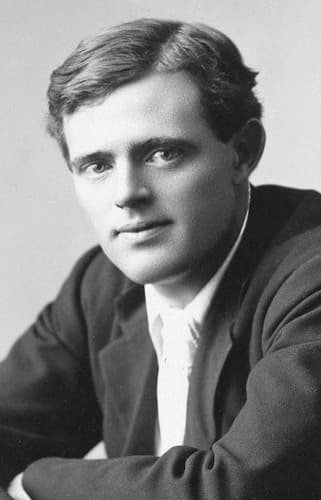
John Griffith Chaney, better known as Jack London, was an American novelist, journalist and activist. A pioneer of commercial fiction and American magazines, he was one of the first American authors to become an international celebrity and earn a large fortune from writing. He was also an innovator in the genre that would later become known as science fiction.