“All my life I have been a lady of leisure, and now I must exert myself.”
— Lulu's mother, a courtesan, reacts to the changing political landscape in Shanghai and the need for her daughter to learn a new skill.

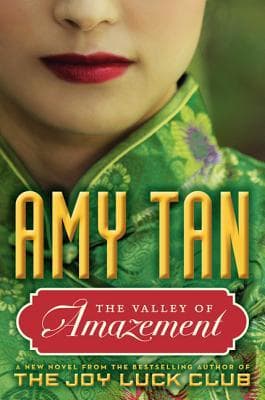
Amy Tan (2013)
Genre
Historical Fiction
Reading Time
12-15 hours
Key Themes
See below
Sign in to track this book
In 1930s Shanghai and remote Chinese villages, a mother and daughter navigate imperial collapse and personal betrayals in a quest for identity and the enduring power of love.
In 1912 Shanghai, Violet Minturn, a young girl of mixed Chinese and American heritage, lives a privileged life within the House of Heavenly Virgins, a high-class courtesan establishment run by her mother, Lucia. Violet believes her father, Edward Minturn, is an American artist who left them. When Lucia suddenly disappears, Violet is left with the house's madam, Auntie Du. Violet struggles with her identity, feeling neither fully Chinese nor fully American. She longs for her mother's return, often visiting the last place she saw her, holding a small wooden box Lucia gave her. She is mostly protected from the harsh courtesan life, but her mother's absence creates a deep void and curiosity about her origins.
As Violet gets older, Auntie Du begins her training in the arts needed for a high-ranking courtesan. She learns calligraphy, painting, music, poetry, and social interaction, all meant to charm wealthy patrons. Despite her talent and beauty, Violet resists fully embracing this life, seeing it as a performance. She observes other courtesans, like the beautiful but sad Precious Orchid, and understands their unstable lives, where reputation and beauty fade. Her inner conflict grows as she wants a different path, one that would let her be true to herself and her American heritage.
Violet's life changes with the arrival of Edward, an American artist who often visits the House of Heavenly Virgins. He is captivated by Violet's beauty and intelligence, and a forbidden love grows between them. Edward offers Violet a glimpse of a life beyond the courtesan house, promising to take her to America and marry her. Their secret meetings and shared dreams fill Violet with hope, making her more determined to escape her fate. She believes Edward is her true father, but their romantic relationship develops assuming he is not, adding an ironic complexity to her search for freedom and identity.
Just as Violet believes her escape with Edward is near, she is betrayed. Auntie Du, perhaps fearing loss of control or influenced by others, arranges Violet's kidnapping. Violet is drugged and taken to a remote, hidden village in the 'Valley of Amazement' (also known as the Valley of the Jade Cloud), far from Shanghai. Here, she is sold into sexual slavery, her dreams of freedom and love shattered. The harsh, primitive reality of her new life contrasts sharply with the luxury she left. She endures hardships, her spirit tested, as she tries to survive and keep a part of her former self amidst the degradation.
In the Valley of Amazement, Violet struggles to survive the harsh conditions and brutal captors. She forms a bond with a fellow captive, a kind and strong man named Feng, who offers her companionship and protection. Their shared suffering leads to love, and Violet becomes pregnant. The birth of her daughter, Flora, gives Violet renewed purpose and a reason to fight for freedom. Motherhood changes her, giving her a fierce protective instinct and a determination to ensure Flora does not suffer the same fate. She learns to adapt to mountain life, improving her survival skills and observing local customs.
The story shifts to Lucia's perspective, showing her life before becoming a courtesan. Born Lu Ling, a talented young woman in a traditional Chinese family, she has a keen intellect and artistic sense. Her family's fortunes decline, and she faces an arranged marriage she dreads. Lu Ling's story explores the societal limits on women in early 20th-century China, where personal desires often clashed with family duty. This part helps explain Lucia's later actions and her complex relationship with Violet, showing generational patterns of sacrifice and rebellion.
Lu Ling, determined to escape her unwanted arranged marriage, decides to run away. She eventually reaches the bustling city of Shanghai. Without family or resources, she enters the world of courtesans, a path that offers some independence and financial security, though at a great personal cost. She takes the name Lucia and quickly learns the refined arts of the trade, using her intelligence and charm to rise in the House of Heavenly Virgins. Her journey to becoming a courtesan is one of survival and adaptation, where she learns to navigate a world built on illusion and desire.
As Lucia, she meets Edward Minturn, an American artist, and they fall deeply in love. Their relationship is passionate but marked by cultural differences and societal disapproval. Edward, though loving, is often unreliable and conflicted about his commitment. Lucia becomes pregnant with Violet, a child who represents their forbidden love and the blending of two worlds. Violet's birth brings Lucia immense joy but also deep fear for her daughter's future, knowing the stigma of her mixed heritage and the instability of their lives in Shanghai. This period is marked by both great happiness and underlying anxiety for Lucia.
The truth behind Lucia's disappearance is finally revealed. Facing a serious threat to Violet's safety and her own, possibly from powerful enemies or debts, Lucia makes the agonizing decision to fake her own death and flee Shanghai. This extreme act comes from a desperate desire to protect Violet from a fate worse than being left behind, though it causes her daughter immense pain. Lucia's 'disappearance' is a profound sacrifice, showing the depth of a mother's love and the extreme measures she takes to ensure her child's survival, even if it means living a life of separation and secrecy.
Years later, Violet, with her daughter Flora, escapes the Valley of Amazement during a time of upheaval. Their journey is dangerous, but Violet's strength and love for Flora drive them. They eventually make their way back to Shanghai, a city greatly changed by time and the threat of war. Violet finds the House of Heavenly Virgins in ruins and the city she once knew altered. She is now a woman hardened by experience, but still hoping to find her mother and understand her past. She must now navigate a new, more dangerous Shanghai.
Against all odds, Violet and Lucia finally reunite. The reunion is full of emotion — relief, anger, confusion, and overwhelming love. Lucia, now living a quiet, hidden life, must confront the daughter she left. Through their heartfelt and often painful talks, the full truth of Lucia's past, her reasons for leaving, and her sacrifices are revealed to Violet. Violet, in turn, shares the details of her own life in the Valley of Amazement and Flora's birth. This reunion allows both women to finally understand the forces that shaped their lives and the deep connection that binds them as mother and daughter.
With the truth known, Violet and Lucia begin the difficult process of forgiveness and reconciliation. They acknowledge the pain and trauma they both endured, understanding that their lives were shaped by circumstances beyond their control and by their shared desire for survival and love. The novel ends with them finding a fragile peace, accepting their intertwined fates and the strength of their bond. They look towards a new future together, with Flora representing hope for the next generation, free from the past's shadows. Their story shows resilience, the power of love, and the complex nature of family.
The Protagonist
Violet transforms from a sheltered, curious girl into a strong, resourceful woman and mother, ultimately finding peace and understanding with her rediscovered mother.
The Protagonist/Supporting
Lucia's arc reveals her transformation from a rebellious young woman to a sacrificing mother, culminating in a reunion where she finally finds forgiveness and peace.
The Supporting
Edward remains largely static, serving as a catalyst for the main characters' journeys rather than undergoing significant personal change.
The Antagonist/Supporting
Auntie Du's character remains consistent, embodying the unchanging power dynamics of her world.
The Supporting
Feng provides stability and love to Violet during her captivity, embodying resilience and hope.
The Supporting
Flora represents the future and the breaking of generational cycles, inspiring Violet's journey for freedom.
The Supporting
Precious Orchid's arc highlights the inherent tragedy and limited agency within the courtesan system.
The Mentioned
Old Man Wei serves as a looming threat, his influence shaping the decisions of others.
At its heart, the novel explores the complex, often difficult, but ultimately strong connection between mothers and daughters. Both Violet and Lucia make sacrifices and endure hardships, often with the other's well-being in mind. Lucia's 'abandonment' of Violet is an act of love and protection, while Violet's search for her mother shows her deep need for connection and understanding. Flora's birth further emphasizes this theme, showing how motherhood changes Violet and gives her purpose. Even through separation and misunderstanding, the mother's love and influence are deeply felt in the daughter's life, as seen in Violet's artistic inclinations mirroring Lucia's.
“A mother’s love is a dangerous thing, not because it is a love, but because it is a mother’s.”
Violet's mixed heritage leaves her feeling caught between Chinese and American cultures, and she struggles to define herself. Her courtesan upbringing further complicates her sense of self, as she is trained to perform a role rather than express her true nature. Lucia also grapples with identity, changing her traditional Chinese name, Lu Ling, to Lucia, a courtesan, in Shanghai. Both women constantly navigate societal expectations versus personal desires, seeking a place where they can truly belong. Their journeys are searches for self-discovery amidst cultural change and personal trauma, finding identity through their shared history and strength.
“I was neither Chinese nor American, but something in between, a shadow with two sets of eyes, seeing two different truths.”
The lives of both Violet and Lucia are defined by their ability to survive extreme hardships. From Lucia's escape from an arranged marriage and her rise as a courtesan, to Violet's enslavement in the Valley of Amazement and her escape with her daughter, the novel shows the human spirit's capacity to endure. They adapt to harsh environments, learn new skills, and find inner strength even when faced with betrayal, violence, and despair. Their resilience is not just about physical survival, but also about maintaining their spirit, hope, and the will to find meaning in their suffering.
“We are all made of stories, and some of them are so terrible, they must be told to be believed.”
Both Violet and Lucia believe they are seeking freedom, whether it's Lucia escaping an arranged marriage or Violet trying to leave the courtesan house with Edward. However, their choices often lead to new forms of entrapment or come at a high cost. Lucia finds a form of independence as a courtesan but is still bound by her profession's expectations and dangers. Violet's pursuit of love with Edward leads to her betrayal and enslavement. The novel explores how love, while powerful, can also be a source of vulnerability and sacrifice, often demanding a high price from those who seek it in a world of limited choices.
“Freedom was a cage of one’s own making, sometimes more beautiful, sometimes more cruel.”
Set in early 20th-century China, the novel portrays a time of great cultural and political change. The clash between traditional Chinese customs and Western influence in Shanghai is constant. Violet's mixed heritage directly shows this clash. The fall of the Qing Dynasty, the rise of the Republic, and the presence of foreign 'Shanghailanders' all create a volatile environment where personal destinies are tied to historical forces. The characters navigate a rapidly changing world, where old traditions are challenged and new, often dangerous, opportunities arise.
“Shanghai was a city of ghosts, of forgotten promises and stolen dreams, built on the foundations of a dying empire.”
Alternating chapters between Violet and Lucia's first-person accounts.
The novel employs a dual first-person narrative, alternating between Violet's story in the early 20th century and her mother Lucia's (Lu Ling's) earlier life. This structure slowly unveils the mysteries surrounding Lucia's disappearance and her past, creating suspense and allowing the reader to understand the motivations and experiences of both women independently before their eventual reunion. It highlights the generational trauma and the cyclical nature of their struggles, while also providing distinct voices and perspectives on the same historical period and themes.
A small, symbolic object left by Lucia to Violet.
The small wooden box, given by Lucia to Violet before her disappearance, serves as a powerful symbol throughout the novel. It represents Violet's longing for her mother, her connection to her past, and the unresolved mysteries of her identity. Violet carries it with her, often revisiting it, as a tangible link to her lost parent. While initially empty, its symbolic weight is immense, embodying hope, memory, and the eventual revelations that will fill the void of her mother's absence. It's a physical manifestation of the emotional baggage and enduring love between mother and daughter.
A remote, isolated village that serves as a place of both captivity and transformation.
The Valley of Amazement, also known as the Valley of the Jade Cloud, functions as a symbolic and literal plot device. It is a place of brutal enslavement and profound suffering for Violet, representing the deepest betrayal and loss of freedom. However, it also becomes a crucible for her transformation, where she learns resilience, finds love with Feng, and becomes a mother to Flora. The valley's isolation underscores Violet's complete separation from her former life and forces her to confront her inner strength, making it a pivotal setting for her character development.
A setting that symbolizes both allure and entrapment.
The House of Heavenly Virgins is more than just a setting; it's a symbolic institution that represents the complex realities of women's lives in early 20th-century Shanghai. For Lucia, it offers a form of independence and power, albeit within a gilded cage. For Violet, it is her childhood home, a place of luxury and artistic refinement, but also a looming threat to her autonomy and identity. It embodies the illusion of choice, where beauty and talent are commodities, and personal freedom is often sacrificed for survival or perceived security. It sets the stage for betrayal and the characters' longing for a different life.
“All my life I have been a lady of leisure, and now I must exert myself.”
— Lulu's mother, a courtesan, reacts to the changing political landscape in Shanghai and the need for her daughter to learn a new skill.
“A woman's beauty is a dangerous gift, easily stolen, often misused.”
— Lulu reflects on her own experiences and the fate of her mother, both beautiful women in a challenging world.
“The past is like a string of firecrackers. One goes off, then another, until you have a whole chain of explosions.”
— Lulu contemplates how past events continue to influence and shape her present life.
“In a world of men, a woman learns to use her wits, or she perishes.”
— Lulu's early life lessons from her mother about survival and strategy in a patriarchal society.
“Love is a dangerous thing. It makes you weak, makes you foolish, makes you blind.”
— A character warns Lulu about the perils of romantic love, particularly in her profession.
“Sometimes the greatest strength is in knowing when to surrender.”
— Lulu learns the difficult lesson of accepting circumstances beyond her control.
“Secrets are like anchors. They hold you down, but they also keep you from drifting away entirely.”
— Lulu considers the complex role of secrets in her family and her own identity.
“To live without regret is to live without having loved.”
— A character reflects on the bittersweet nature of life and relationships.
“The world is always changing, and we must change with it, or be left behind.”
— A recurring theme as characters navigate political upheaval and personal transformations.
“A mother's love is a fierce and complicated thing, capable of both great sacrifice and great harm.”
— Lulu's nuanced understanding of her relationship with her own mother.
“We are all prisoners of our own making, and sometimes, the bars are invisible.”
— Lulu's introspection about the constraints on her life, both societal and self-imposed.
“Memory is a trickster. It shows you what it wants, not always what was.”
— Lulu grapples with unreliable memories and the subjective nature of her past.
“There are some things a woman must do for herself, even if it means breaking every rule.”
— Lulu's journey towards self-determination and agency in a restrictive society.
“Grief is like a river. It flows, sometimes raging, sometimes calm, but it always carves a new path.”
— A character's reflection on the enduring and transformative nature of loss.
Ready to see how well you understood this book? Take our interactive quiz with 10 questions.
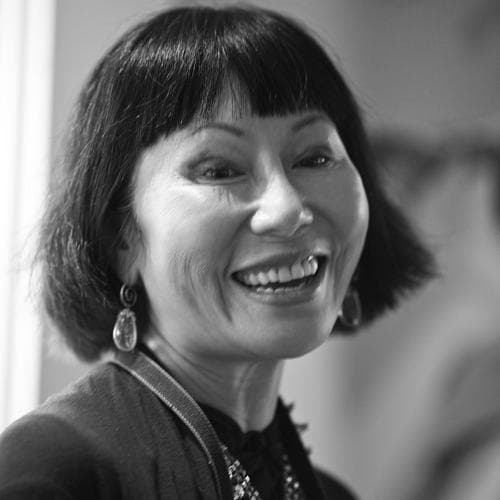
Amy Ruth Tan is an American author of Chinese heritage, best known for the novel The Joy Luck Club (1989), which was adapted into a 1993 film. She is also known for other novels, short story collections, children's books, and a memoir.







