“The past is never truly gone; it merely waits for the right moment to re-emerge.”
— A recurring theme about the lingering effects of past events on the present.

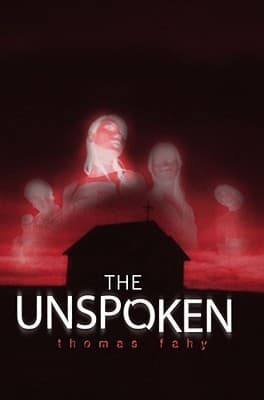
Thomas Fahy (2008)
Genre
Thriller / Spirituality / Mystery / Young Adult
Reading Time
150 min
Key Themes
See below
Sign in to track this book
Five years after escaping a cult, six teens are hunted by a prophecy, each facing their deepest fear as a premonition of death comes true.
Five years after escaping the Divine Path cult by setting its compound ablaze, the six surviving children—Sarah, Sam, Maria, Nick, Ben, and Harold—reunite for Harold's funeral. Harold, Jacob Crawley's son, died mysteriously. Harold, who feared drowning, was found dead miles from any water, seemingly consumed by his greatest phobia. The reunion is tense, marked by their shared trauma and Harold's unsettling death. Sarah, living with her aunt and uncle, feels a deep unease, suspecting Harold's death is not an accident but a premonition of the cult leader's prophecy.
During the funeral, the group remembers Jacob Crawley's prophecy: each of them would die consumed by their greatest fear, exactly five years after their escape. Harold's death, drowning despite being far from water, fulfills this prediction. Sarah, Sam, Maria, Nick, and Ben must confront the possibility that Crawley's words hold supernatural power. Fear begins to enter their lives, as they realize their escape may have only delayed an inescapable fate. They recall the oppressive atmosphere of the Divine Path and Crawley’s manipulative control.
After Harold's death, Sam's acrophobia (fear of heights) becomes crippling. He experiences vivid, terrifying hallucinations of falling. Sarah, seeing Sam's deteriorating state, tries to help, but the prophecy seems to take hold. One day, Sam is drawn to a tall construction site. Despite his terror, he feels compelled to climb. He is found precariously balanced on a high beam, about to fall, his mind manipulated by an unseen force. Sarah and Nick talk him down, but the incident leaves Sam shaken, convinced the prophecy is targeting them.
Maria, plagued by severe claustrophobia, experiences her own terrifying encounter. While shopping with Sarah, they enter a department store elevator. Suddenly, the elevator stops between floors, plunging them into darkness. Maria's panic is immediate, her breathing ragged as the walls seem to close in. The air grows thin, and she feels an invisible pressure squeezing her. Sarah tries to comfort her, but the terror is palpable. Though rescued, Maria is traumatized, reinforcing the group's belief that an external force is orchestrating these events, targeting their deepest fears.
Ben, who suffers from nyctophobia (fear of darkness), becomes the next target. He is alone in his house when the power goes out. The darkness is absolute, and Ben's anxiety spirals into terror. He feels an oppressive presence, whispering his name, making shadows writhe. Objects move, and the temperature drops. He tries to reach his phone for light but feels an invisible hand pushing him back. When Sarah and Nick arrive, they find him huddled in a corner, hyperventilating, convinced something evil was in the room, solidifying the group's belief in the prophecy's power.
Nick, who has an intense ophidiophobia (fear of snakes), is the next victim. Alone in his room, he hears a slithering sound. To his horror, he sees snakes emerging from every corner. The snakes, seemingly materialized, coil around his legs and arms, their scales cold against his skin. He thrashes and screams, fighting against the unseen, though to an observer, he struggles with nothing. Sarah, sensing something is wrong, rushes to his aid and finds him in extreme terror, on the verge of collapse, confirming the prophecy's relentless progression.
With her friends falling prey, Sarah realizes she cannot simply wait for her own fear to consume her. Driven by a desperate need for answers, she investigates Jacob Crawley and the Divine Path cult more deeply. She visits the charred remains of the compound, sifting through rubble for clues. She also tries to locate former cult members or associates who might explain Crawley’s powers or the prophecy's nature. Sarah believes there must be a logical explanation or a way to break the curse, rather than accepting a supernatural fate, even as evidence mounts against her.
Sarah's investigation leads her to a hidden compartment within the cult compound's ruins, where she discovers Jacob Crawley's personal journal. The journal details Crawley's descent into darkness, his obsession with ancient rituals, and his belief in using fear as a weapon. It reveals the prophecy was not just a prediction, but a ritual, a spiritual tether he forged between himself and the children. He used their shared fears, amplified by his teachings, to bind them to him, ensuring his influence would consume them even in death. The journal also hints at a counter-ritual or a way to break the bond.
Armed with knowledge from Crawley's journal, Sarah understands the entity tormenting them is Crawley's lingering spiritual presence, empowered by their fear. She learns the only way to sever the connection and save herself and her remaining friends is to perform a counter-ritual at the site of the original prophecy, the heart of the burned compound. This ritual requires a strong will and a complete rejection of fear, something Crawley had instilled in them. Sarah, despite her own deep-seated fear of isolation, prepares for a final confrontation, knowing failure means succumbing to Crawley's dark power.
Sarah's deepest fear is isolation, of being utterly alone. As she performs the counter-ritual at the desolate, burned-out compound, Crawley's spiritual presence manifests, trying to break her. She experiences terrifying illusions of being alone in an infinite void, her friends abandoning her, and all hope fading. Whispers tell her she is insignificant and will die alone. The spectral presence tries to isolate her mind, making her believe the ritual is futile. She must draw upon her inner strength and the memory of her friends to resist the overwhelming loneliness and push through the torment to complete the counter-ritual.
Despite the intense torment and the manifestation of her greatest fear, Sarah holds firm. She recites the counter-incantations described in Crawley's journal, focusing her will on severing the spiritual tether. She visualizes the bond breaking, the dark energy dissipating. A powerful surge of energy erupts from the compound as she completes the ritual, and the oppressive atmosphere lifts. The spectral presence of Crawley screams in agony before vanishing. Sarah feels immense relief and liberation, realizing she has saved herself and potentially freed her friends from the insidious prophecy.
After the ritual, the remaining survivors—Sarah, Sam, Maria, Nick, and Ben—begin to recover. The terrifying manifestations of their fears cease, and they slowly process the trauma. While the immediate threat is gone, the experience leaves a mark. They are changed by their time in the cult and the battle against Crawley's influence. Sarah, though triumphant, carries the weight of her leadership and the horror they faced. The group understands that while the supernatural bond is broken, the psychological scars will take time to heal, and they must now forge a new path free from the shadow of the Divine Path.
The Protagonist
From a traumatized survivor, Sarah evolves into a courageous leader who actively confronts and ultimately breaks the spiritual curse of Jacob Crawley.
The Supporting
Sam succumbs to his fear initially but is ultimately saved by Sarah's actions, beginning a slow recovery from his trauma.
The Supporting
Maria is a victim of her fear but is eventually freed from the spiritual threat by Sarah's actions.
The Supporting
Nick is targeted by his fear but ultimately survives due to Sarah's intervention.
The Supporting
Ben is consumed by his fear of darkness but is ultimately saved by Sarah's successful counter-ritual.
The Mentioned
Harold's death marks the beginning of the prophecy's fulfillment and drives the plot forward.
The Antagonist
Crawley's influence acts as the primary antagonist, a spectral force that Sarah must ultimately defeat to free her friends.
The novel explores how past trauma, specifically from cult abuse, can haunt survivors for years. The children's escape from the Divine Path cult did not free them from Jacob Crawley's psychological and spiritual grip. Harold's death, followed by the terrifying manifestations of each survivor's deepest fear, shows how unresolved trauma and deep-seated fears, instilled by a manipulative figure, can allow a 'curse' to take hold. Sarah's journey to uncover the truth about Crawley and the prophecy is a quest to confront and sever the traumatic ties to their past. True freedom requires facing and overcoming these past shadows.
“In five years' time, your greatest fear will consume you. It will rob you of your last breath.”
A central theme is the destructive power of fear and how it can be manipulated for control. Jacob Crawley deliberately identified and amplified the children's greatest fears, not just as predictions, but as a way to bind them to him even after death. The manifestations of these fears—Sam's acrophobia, Maria's claustrophobia, Ben's nyctophobia, Nick's ophidiophobia, and Harold's fear of drowning—are not merely supernatural events, but a direct result of Crawley's understanding of their vulnerabilities. The book suggests that true liberation comes from confronting and rejecting fear, rather than letting it control one's life. Sarah's ability to overcome her own fear of isolation is key to breaking the cycle.
“He didn't just predict our fears, he created them. He nurtured them, like a farmer tending to his crops.”
Despite the terrifying prophecy, the bond between the survivors proves to be a source of strength. While individual fears are exploited, the group's shared history and mutual concern drive Sarah to find a solution. Their friendships provide a vital support system against the isolating effects of fear and trauma. Sarah's determination to save her friends, even at great personal risk, shows that connection and solidarity can be powerful antidotes to fear and manipulation. Saving each other, even indirectly, reinforces the strength found in human connection against a supernatural threat.
“We were bound by a shared horror, but also by a silent promise to look out for each other.”
The novel presents a clear conflict between good and evil, shown as a spiritual battle. Jacob Crawley represents a dark, manipulative spiritual force, almost a malevolent entity, even after his physical disappearance. His prophecy is not just a psychological trick but a ritualistic curse. Sarah's quest becomes a form of spiritual warfare, using a 'counter-ritual' to sever the dark bond. This theme highlights that evil can leave a lasting, almost tangible footprint, and overcoming it requires courage and an understanding of spiritual forces. The climax at the burned compound is a direct confrontation of these opposing spiritual powers.
“This wasn't just a prophecy. It was a tether. A dark, spiritual thread binding us to him.”
A chilling prediction that sets the central conflict in motion.
Jacob Crawley's prophecy—that each cult survivor would die consumed by their greatest fear exactly five years after their escape—serves as the primary inciting incident and driving force of the plot. It creates immediate suspense and a ticking clock element. The prophecy is not merely a prediction but a mechanism of spiritual manipulation, a 'curse' that actively manifests the children's fears. It provides a clear antagonist (Crawley's lingering influence) and a specific goal for Sarah: to break the prophecy's hold.
Individual fears used as weapons against the characters.
The distinct phobias of each character (acrophobia, claustrophobia, nyctophobia, ophidiophobia, fear of drowning, fear of isolation) are crucial plot devices. They personalize the horror for each survivor and provide unique, terrifying scenarios that demonstrate the prophecy's power. By targeting each character's specific vulnerability, the story creates a sense of inescapable dread and highlights the psychological depth of Crawley's manipulation, making the manifestations of fear highly visceral and impactful for the reader.
A hidden document revealing the truth behind the prophecy.
Jacob Crawley's journal acts as the key to unraveling the mystery and understanding the true nature of the prophecy. Discovered by Sarah, it provides exposition about Crawley's dark rituals and his method of binding the children through their fears. Crucially, it also contains the instructions for the counter-ritual needed to break the curse. This device moves the plot from passive victimhood to active resistance, empowering Sarah with the knowledge required to confront the antagonist.
The physical setting representing the trauma and the site of confrontation.
The ruins of the Divine Path cult compound serve as a symbolic and literal plot device. It is the origin point of the trauma, the place where the children escaped, and the site where the prophecy was conceived. Later, it becomes the location where Sarah finds Crawley's journal and, ultimately, where she performs the counter-ritual. The charred remains constantly remind the characters and the reader of their past horror and provide a tangible, eerie backdrop for the spiritual confrontation, making the setting integral to the plot's resolution.
“The past is never truly gone; it merely waits for the right moment to re-emerge.”
— A recurring theme about the lingering effects of past events on the present.
“Sometimes, the greatest darkness hides in the most familiar places.”
— A character's realization about the true nature of their seemingly safe surroundings.
“Fear is a powerful weapon, but hope is an even stronger shield.”
— An internal monologue during a moment of intense danger.
“The truth is rarely simple, and often, it's the last thing we want to hear.”
— A detective reflecting on the complexities of a case.
“To truly understand, you must first be willing to question everything you believe.”
— A spiritual guide advising a protagonist on their journey of discovery.
“The whispers of the past are not always ghosts; sometimes, they are warnings.”
— A character interpreting strange occurrences as messages.
“What remains unspoken often causes the most profound echoes.”
— A reflection on the impact of secrets and unaddressed issues.
“The line between sanity and madness is thinner than most dare to admit.”
— A character struggling with psychological distress.
“Every choice we make carves a path, and sometimes, those paths lead to shadows we never anticipated.”
— A character contemplating the repercussions of a past decision.
“There's a kind of peace in acceptance, even when acceptance means acknowledging the unbearable.”
— A character coming to terms with a tragic event.
“The world is full of hidden meanings, if only you know how to listen with more than just your ears.”
— A spiritual mentor teaching a student to perceive deeper truths.
“Silence isn't always empty; sometimes, it's filled with what we refuse to hear.”
— A character avoiding a difficult conversation or truth.
“Even in the darkest night, a single spark of courage can ignite a revolution.”
— A moment of bravery in the face of overwhelming odds.
“The greatest mysteries are not found in ancient scrolls, but in the depths of the human heart.”
— A character musing on the nature of mystery and human psychology.
Ready to see how well you understood this book? Take our interactive quiz with 10 questions.







