“The world is not what it seems, but what we make of it.”
— Reflection by the protagonist on perception and reality.

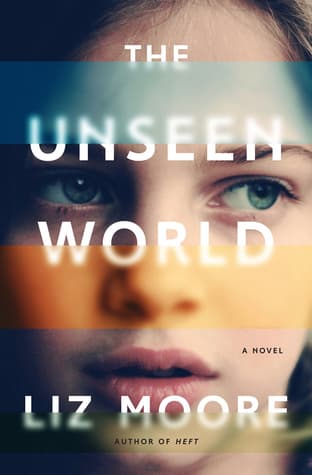
Liz Moore (2016)
Genre
Literary Fiction / Mystery / Science Fiction
Reading Time
900 min
Key Themes
See below
Sign in to track this book
A brilliant daughter works through her enigmatic father's deteriorating mind and hidden past, starting a virtual quest that blurs the lines between memory, identity, and the digital world he helped create.
Ada Sibelius spends her early childhood in the 1980s, home-schooled and with her brilliant but socially awkward single father, David Sibelius. David directs a computer science lab in Boston, and Ada becomes a fixture there, absorbing information and developing an understanding of technology. She learns to program at a young age, often helping her father with tasks in the lab. David's research focuses on creating an advanced artificial intelligence capable of learning and interacting, which he names 'Eliza'. Despite her isolation from peers, Ada finds belonging and purpose within the intellectual world of the lab, forming close bonds with the adult researchers who become her extended family.
As Ada enters her pre-teen years, David's lab, particularly the 'Eliza' project, begins to attract attention and funding. However, David's behavior becomes erratic and forgetful, signaling a decline in his cognitive abilities. He starts to lose track of conversations, repeat himself, and show signs of dementia, despite being relatively young. This decline coincides with growing scrutiny from the university and the public regarding David's personal history, which he has always kept vague. Ada, only twelve, struggles to comprehend the changes in her father while trying to protect him and continue his work.
David's condition worsens to the point where he can no longer effectively lead the lab. A university intervention happens, and David is removed from his position and his home at the lab. In a moment of clarity and desperation, David confesses to Ada that his real name is not David Sibelius, but Jonathan de Groot. He reveals he assumed David's identity after David's accidental death years ago, fearing his own past would prevent him from pursuing his scientific work. He gives Ada a coded message, hinting at the true nature of his identity and the 'Eliza' project, before he is institutionalized, leaving Ada an orphan.
Following David's institutionalization, twelve-year-old Ada is taken in by one of David's loyal colleagues, Melissa. Melissa gives Ada a stable home and a more conventional upbringing, enrolling her in school for the first time. Ada struggles to adjust to a normal life, feeling like an outsider among her peers and constantly wanting the intellectual stimulation of the lab and the presence of her father. She clings to the coded message David gave her, believing it holds the key to understanding his true identity and the secrets he hinted at, fueling her determination to one day uncover the full truth.
As Ada grows into adulthood, she pursues a career in computer science, driven by her father's legacy and the unresolved mysteries of his life. She studies the coded message David left her, as well as his research papers and the data related to 'Eliza'. Her dedication leads her to understand that 'Eliza' is not just an AI, but a virtual world, a digital recreation of a real place or person. She realizes that the key to unlocking her father's secrets lies within this program, and she dedicates her professional life to understanding and accessing it.
Ada begins to systematically track down and interview the former members of David's lab, including figures like Bob, who worked closely with David. Through these conversations, she gathers fragmented memories and anecdotes about David's eccentricities, his brilliance, and the subtle hints he occasionally dropped about a hidden past. These interactions help Ada paint a clearer picture of her father's life, both before and during his time at the lab, and provide context for the cryptic clues he left behind. She learns about the care David put into the 'Eliza' project, sensing a deeper personal significance to it.
After years of work, Ada cracks the complex algorithms and security protocols of 'Eliza'. She discovers that 'Eliza' is not merely an AI conversationalist but a fully immersive, detailed virtual reality environment. It is a digital replica of a specific house and its surroundings. Ada explores this virtual world, realizing it must be a place of immense personal significance to her father. The level of detail and emotional investment in its creation moves her, solidifying her belief that this virtual space holds the answers to his true identity and past.
By cross-referencing details from the virtual house in 'Eliza' with historical records and the clues David left, Ada uncovers the full, tragic story of Jonathan de Groot. She learns that Jonathan was a child prodigy who grew up in a wealthy but emotionally distant family. He had a beloved younger sister, Elara, who suffered from an illness. The virtual house is their childhood home. Jonathan poured his grief and love for Elara into creating 'Eliza' as a memorial and a way to preserve her memory and their shared world, after Elara's untimely death and the breakdown of his family.
Ada further discovers that after Elara's death, Jonathan de Groot, consumed by grief and a desire to escape his past and his family's expectations, engineered his disappearance. He met the real David Sibelius, a fellow brilliant but reclusive scientist, and they became friends. One day, during an experimental procedure or accident, the real David Sibelius died. Jonathan, seeing an opportunity for a fresh start and a way to pursue his research unburdened by his past, assumed David's identity. This explains his secrecy and his later cognitive decline, which was likely made worse by the psychological burden of maintaining a false identity.
Armed with the complete truth, Ada visits her father, Jonathan de Groot, in the care facility. Although his mind is far gone, she feels a profound sense of understanding and connection. She realizes that 'Eliza' was not just an AI project, but a personal act of love and remembrance, a digital sanctuary for his lost sister and his own fractured identity. Ada embraces her dual heritage, understanding the brilliance and the pain that shaped her father. She dedicates herself to preserving his work and story, carrying forward his legacy as a daughter who finally understands the unseen world he tried to create and protect.
The Protagonist
From a sheltered, dependent child, Ada transforms into an independent, accomplished woman who finds peace and understanding through uncovering her father's hidden life.
The Protagonist (past)
His arc is revealed posthumously and through Ada's investigation, showing his transformation from a grieving prodigy to a man living a borrowed life, ultimately succumbing to the strain.
The Supporting
From a supportive colleague, she becomes a nurturing surrogate parent, providing Ada with stability and unconditional love.
The Supporting
His role is primarily as a source of information, representing the past and helping Ada reconstruct it.
The Mentioned
Her existence and tragic death are the inciting incident for Jonathan's life choices and Ada's quest.
The Mentioned
His death allows Jonathan de Groot to create a new life, setting the stage for the novel's central mystery.
The Supporting
His role is to represent the external pressures and the eventual administrative intervention in David's life.
The Supporting/Plot Device
Eliza evolves from a mysterious AI project to the ultimate revelation of the novel, becoming a digital sanctuary and a symbol of enduring love.
The novel explores identity, both personal and inherited. Jonathan de Groot lives under an assumed identity for decades, showing how trauma and ambition can lead one to shed their past. Ada's journey is a quest for self-discovery through understanding her father's true identity. By uncovering his secrets, she learns who he was and comes to terms with her own place in his complex legacy, shaping her understanding of herself as a daughter and a scientist. The 'unseen world' her father created is a reflection of his hidden self.
““Perhaps all lives are like this, a series of rooms, and we are forever walking through them, leaving one for the next, only to find the next one is just the same as the last.””
Grief is an undercurrent throughout the narrative, particularly in Jonathan de Groot's motivation for creating 'Eliza'. His inability to process the loss of his sister, Elara, leads him to construct an elaborate digital memorial, attempting to preserve her memory and their shared world. This act of digital preservation is a manifestation of prolonged grief. Ada, in turn, processes her own grief for her 'lost' father by reconstructing his past, using her scientific skills to understand and honor his memory and the sorrow that shaped his life choices.
““He had built a world for her, a place where she could still exist, even if only in code.””
The novel considers philosophical questions about what is 'real' and 'unreal' through the 'Eliza' project. Initially appearing as a simple AI, it is revealed to be an immersive virtual reality, a 'unseen world'. This challenges characters and readers to consider if a digitally replicated environment, imbued with emotional significance, can hold a form of reality. It explores technology's potential not just for communication or data processing, but for creating personal, almost sacred, spaces of memory and existence, blurring the lines between the physical and the virtual.
““What if the unseen world was the real one, and this, the world of flesh and bone, was merely a shadow?””
At its core, The Unseen World is a story about the power of familial love. David's (Jonathan's) life's work, the creation of 'Eliza', is an elaborate, technologically advanced expression of his love and grief for his lost sister, Elara. This love drives his deception and his scientific pursuit. Similarly, Ada's quest to uncover her father's past is fueled by her love for him and her desire to truly know and understand the man who raised her. The novel shows how love, even when complicated by secrecy and tragedy, remains a powerful, shaping force across generations.
““Love, she thought, was the ultimate algorithm, the most complex and beautiful code.””
A groundbreaking AI that serves as the central mystery and a digital memorial.
The 'Eliza' project is the primary plot device, functioning initially as a scientific pursuit for David Sibelius and later as the key to unlocking his hidden past for Ada. It appears to be an advanced AI chatbot, but is ultimately revealed to be a sophisticated virtual reality environment – a digital recreation of Jonathan de Groot's childhood home, built as a memorial to his deceased sister, Elara. 'Eliza' drives the narrative, providing both the scientific context and the deeply personal motivation behind David's life, and its deciphering forms the climax of Ada's investigative journey.
A cryptic clue left by David, guiding Ada's future investigation.
Before his complete cognitive decline, David Sibelius (Jonathan de Groot) entrusts a young Ada with a coded message. This message is a crucial plot device, serving as the initial catalyst for Ada's adult quest. It symbolizes the unresolved questions of her father's past and provides her with a tangible, intellectual challenge that aligns with her scientific aptitude. The deciphering of this message, though not fully detailed, is implied to be a critical step in her understanding of 'Eliza' and the subsequent revelations about Jonathan's true identity.
The central mystery of the protagonist's father living under an assumed name.
The revelation that David Sibelius is actually Jonathan de Groot, living under an assumed identity, is the core mystery around which the entire plot revolves. This dual identity creates suspense and drives Ada's investigation. It highlights themes of secrecy, reinvention, and the lasting impact of personal tragedy. The complexity of maintaining this deception also contributes to David's later cognitive decline, making it a tragic and central element of his character and the narrative's resolution.
The story unfolds through Ada's adult perspective, recalling her childhood and piecing together the past.
The novel primarily uses a retrospective narrative structure. While Ada's childhood experiences with her father are presented in chronological order, the overarching story is told from Ada's adult perspective as she actively investigates her father's past. This allows for a gradual unveiling of secrets, with Ada's present-day research informing and recontextualizing her childhood memories. This structure builds suspense and emphasizes Ada's intellectual and emotional journey of discovery, as she pieces together fragments of information over time.
“The world is not what it seems, but what we make of it.”
— Reflection by the protagonist on perception and reality.
“In the silence of the lab, I found the answers that eluded me in the noise of the world.”
— Character's realization during a scientific experiment.
“Memory is a ghost that haunts the present, shaping our future.”
— Narration on the impact of past events.
“We are all detectives in our own lives, piecing together clues from the fragments left behind.”
— Observation on the human condition and mystery-solving.
“The unseen world is not hidden; it is simply waiting for those who dare to look.”
— Key theme of the book, emphasizing curiosity and exploration.
“Love is the most unpredictable algorithm, defying all logic and code.”
— Character's musing on relationships amidst scientific themes.
“In the labyrinth of data, I lost myself to find a greater truth.”
— Protagonist's experience with technology and information overload.
“The past is a puzzle with missing pieces, but we must still try to solve it.”
— Reflection on historical mysteries and personal history.
“Sometimes, the most profound discoveries are not in the stars, but in the spaces between words.”
— Character's insight into communication and hidden meanings.
“Fear is the shadow cast by the unknown, but courage is the light we carry into it.”
— Motivational thought during a tense moment in the plot.
“We build walls to protect ourselves, only to realize they are the very things that imprison us.”
— Commentary on emotional barriers and freedom.
“In the echo of a whisper, I heard the universe speaking.”
— Poetic observation on small moments and cosmic connections.
“Truth is not a destination, but a journey through layers of deception.”
— Philosophical take on the nature of truth in the mystery plot.
“The heart has its own science, one that cannot be measured or quantified.”
— Reflection on emotions versus empirical evidence.
Ready to see how well you understood this book? Take our interactive quiz with 10 questions.

Biography coming soon.







