“The past is never dead. It's not even past.”
— A recurring theme and a famous quote often misattributed to Faulkner, but fitting the book's exploration of historical influence.

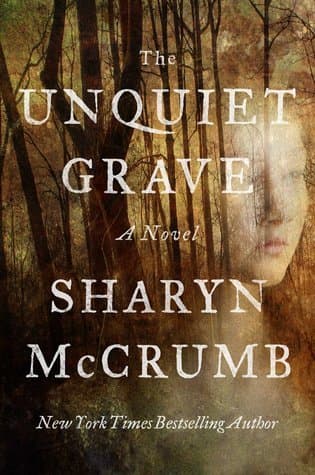
Sharyn McCrumb (2017)
Genre
Historical Fiction / Mystery
Reading Time
9-12 hours
Key Themes
See below
Sign in to track this book
In 1890s West Virginia, a young Black attorney's career is shaped by an unusual murder trial. The prosecution's main witness is the victim's ghost.
In 1930, at Lakin State Hospital for the Colored Insane in West Virginia, Dr. James Boozer wants to use modern psychiatric methods, specifically the 'talking cure.' His new patient is James P. D. Gardner, an elderly Black attorney who tried to kill himself. Gardner resists at first, but Dr. Boozer's gentle manner and interest in his life persuade him to talk. Gardner begins to recall his career as West Virginia's first Black attorney, a path with many social challenges and personal costs, leading to his most famous and unusual case.
In Greenbrier County, West Virginia, 1897, Zona Heaster, a young woman, falls in love with Erasmus Trout Shue, a charming blacksmith new to the area. Zona's mother, Mary Jane Heaster, distrusts Shue, sensing something dark about him and disapproving of his past marriages. Despite her mother's warnings, Zona marries Shue. Their marriage is short and mysterious, ending in tragedy that changes the lives of those in Greenbrier County and becomes a key event in Gardner's memories.
Weeks after their marriage, news reaches the Heaster home: Zona Heaster Shue has died. Erasmus Shue says he found her at the bottom of the stairs, claiming her death was from a fall made worse by a recent illness. The local doctor, Dr. George Knapp, arrives and, without a full check, says the cause of death was an 'everlasting faint.' Zona is quickly buried. The community mourns, but the fast burial and lack of investigation leave Mary Jane with a sense of unease.
Mary Jane Heaster is filled with grief and a strong belief that Zona did not die naturally. She struggles to accept the official story, given her intuition and earlier doubts about Erasmus Shue. Mary Jane's grief turns into a search for the truth. She visits Zona's grave daily, praying for a sign, sure that there is more to her daughter's death. This time marks the start of her search for justice, driven by a mother's love and a growing feeling of unfairness.
A month after Zona's burial, Mary Jane's prayers seem to be answered in an extraordinary way. Zona's ghost appears to her, multiple times over several nights. The ghost, dressed in white, describes her death: Erasmus Shue murdered her by breaking her neck after an argument. The ghost tells Mary Jane to tell the authorities and demand an autopsy. This supernatural account becomes the key, unbelievable, but ultimately convincing evidence that will move the murder investigation forward.
Mary Jane Heaster, with her ghost's testimony, goes to Greenbrier County Prosecutor John Alfred Preston. Preston, a former Confederate cavalryman, is very skeptical of Mary Jane's story, seeing it as grief and imagination. However, Mary Jane's strong belief, along with the unusual quick burial and Dr. Knapp's brief check, eventually convinces Preston to act. He reluctantly orders Zona's body to be exhumed, a decision that leads to a shocking discovery and a landmark murder trial.
Zona Heaster Shue's body is exhumed. During the autopsy, Dr. Knapp, with other doctors, finds clear signs of foul play: Zona's neck is broken, and her windpipe is crushed. These injuries match the ghost's story to Mary Jane and directly go against Erasmus Shue's explanation of a fall. With this physical evidence, Erasmus Shue is arrested and charged with his wife's murder. The Greenbrier community is shocked by the news, and a sensational trial is set.
As Erasmus Shue's trial nears, James P. D. Gardner, a young and ambitious Black attorney facing prejudice in the late 19th-century legal system, joins the defense team. While the main defense attorney, Colonel George S. Patton (grandfather of the famous general), is more established, Gardner's role is important. He deals with the ethical issues of defending a man accused of such a crime, whose guilt seems clear, and the strange nature of the prosecution's key 'witness' – a ghost. This case will be a defining moment in his career.
The trial of Erasmus Shue begins, drawing much public attention due to the unusual circumstances. Prosecutor Preston, despite his earlier doubts, presents Mary Jane Heaster's testimony about Zona's ghost as key evidence. The defense, led by Patton and including Gardner, tries to discredit Mary Jane, showing her as a grieving, confused mother. They argue that ghost testimony is not allowed and that no physical evidence directly links Shue to the crime, ignoring the autopsy findings. The courtroom becomes a fight between legal principles and the compelling, if unbelievable, supernatural story.
Despite the defense's efforts, the jury, influenced by Mary Jane Heaster's strong testimony and the autopsy's physical evidence, finds Erasmus Shue guilty of murder. He is sentenced to life imprisonment. For James P. D. Gardner, the Greenbrier Ghost case is a deep experience, challenging his ideas of justice, truth, and the limits of the rational world. He thinks about a mother's love, human resilience, and how justice can be served in unexpected ways. This case leaves a lasting mark on his professional and personal life.
Back in 1930 at Lakin Asylum, James P. D. Gardner continues to talk with Dr. Boozer, moving past the Greenbrier Ghost case to discuss the following decades of his life. He describes the constant prejudice he faced as a Black attorney in a segregated society, the struggles for respect and chances, and the personal cost. He speaks of losing his wife and children to illnesses that he, despite his success, could not prevent, showing the systemic inequalities affecting Black families. These tragedies led to his despair and suicide attempt.
As James P. D. Gardner shares his life story, Dr. Boozer listens with empathy and respect, as a doctor and as a fellow Black man navigating a prejudiced world. Boozer sees the heavy burden Gardner carried—being a pioneer, the pain of injustice, and deep personal loss. Through their sessions, Gardner begins to process his trauma and find some peace. Dr. Boozer's 'talking cure' helps, not just in treating mental illness but in recognizing Gardner's extraordinary, often painful, life experiences, giving him a path to recovery and dignity.
The Protagonist
From a despairing, suicidal patient, Gardner embarks on a journey of self-revelation and healing through recounting his life, ultimately finding a measure of peace and validation.
The Supporting
Starting as an eager but inexperienced doctor, Boozer matures in his understanding of mental health and the human condition through his deep engagement with Gardner's life story.
The Victim/Ghost
From a vibrant, willful bride, Zona tragically becomes a murder victim whose spirit returns to ensure her killer is brought to justice, achieving posthumous agency.
The Supporting
Mary Jane transforms from a grieving, suspicious mother into a tenacious crusader for justice, empowered by a supernatural experience.
The Antagonist
Initially a charming newcomer, Shue's true violent nature is exposed, leading to his conviction and imprisonment.
The Supporting
Preston moves from deep skepticism about the supernatural to a reluctant acceptance of its role in uncovering the truth, prioritizing justice over personal belief.
The Supporting
Patton, a seasoned lawyer, attempts to uphold rational legal principles against an unprecedented supernatural claim, ultimately failing to prevent a conviction.
The Mentioned
Initially dismissing Zona's death as natural, Dr. Knapp is later forced to acknowledge the truth of her murder through a more thorough examination.
The novel explores how justice can appear through unusual, even supernatural, means when normal systems fail. Mary Jane Heaster's belief in her daughter's ghost, and the ghost's direct account, helps uncover the truth about Zona's murder. This challenges the legal system's rational framework, seen in Prosecutor Preston's initial doubt and the defense's attempts to dismiss the supernatural. The physical evidence from the autopsy confirms the ghost's story, suggesting that truth, however it is revealed, demands justice. This theme is key to Gardner's thoughts on the case, as it made him consider the limits of purely logical ways to find truth.
““Sometimes the truth doesn’t come out of the mouth of the living, but from the unquiet grave.””
The widespread racial prejudice of late 19th and early 20th century West Virginia is a core theme, directly experienced by James P. D. Gardner. His journey as the first Black attorney shows the huge obstacles he faced, from segregated institutions to constantly having to prove his ability in a white-dominated profession. Lakin Asylum, a segregated facility, highlights the systemic inequality. Gardner's personal losses, like his family dying from illnesses that affected Black communities more, further show the terrible impact of these social structures. His fight for dignity and recognition is a constant thread in the historical story.
““The law was meant to be blind, they said. But it had eyes, and it saw the color of my skin.””
Mary Jane Heaster's character shows the strong and lasting power of a mother's love and intuition. Her immediate distrust of Erasmus Shue, even before his violent nature is clear, comes from a basic maternal instinct. Her deep grief and firm belief that Zona was murdered, despite official statements, drive her to seek justice. Zona's ghost appearing to Mary Jane directly shows this strong bond, suggesting that a mother's love can go beyond death to protect her child. Her persistence against doubt ultimately makes the legal system act.
““A mother knows. A mother always knows when something is wrong with her child, even if she can’t name it.””
The novel looks at the subjective and often unclear nature of truth and how memory shapes it. Gardner's retelling of the Greenbrier Ghost case decades later, filtered through his experiences and time, highlights this. The 'truth' of Zona's murder is first hidden by Shue's lies and a quick examination, then revealed by a ghost's extraordinary 'memory,' and finally confirmed by physical evidence. The story's structure, with Gardner's memories brought out by Dr. Boozer, shows how looking back at the past can bring clarity, healing, and a deeper understanding of one's own truth. The mix of folklore, personal testimony, and forensic fact creates a nuanced look at what 'truth' means.
““Memory is a tricky thing. Sometimes it hides the truth, and sometimes it holds it close until you're ready to see it.””
The book skillfully combines the known folklore of the Greenbrier Ghost with carefully researched historical facts. It examines how a true crime event can become a legend, then tries to uncover the human stories and reasons beneath the myth. The contrast between the sensational 'ghost story' and the clear evidence from the autopsy is central. Sharyn McCrumb uses this dynamic to explore the lasting power of local legends and how they reflect community worries and desires for justice, while also grounding the story in the verifiable details of the trial and the lives of the real people involved, such as James P. D. Gardner.
““They called it a ghost story. But for some, it was just the plain, hard truth, come back to haunt the living.””
An overarching story that contains another story within it.
The novel employs a frame narrative, with the present-day (1930) story of James P. D. Gardner at Lakin Asylum framing his recollections of the Greenbrier Ghost murder trial from 1897. Dr. Boozer's 'talking cure' sessions provide the impetus for Gardner to delve into his past, allowing the historical murder mystery to unfold through his memories. This device allows for a dual exploration of themes: the immediate personal healing of Gardner in the present and the historical unfolding of the legal case. It also provides a unique perspective on the past, filtered through the experiences of a pioneering Black attorney.
A ghost providing crucial evidence in a legal case.
The most unique plot device is the testimony of Zona Heaster Shue's ghost to her mother, Mary Jane. This supernatural intervention serves as the catalyst for the entire murder investigation and trial. It challenges the boundaries of rationality and legal admissibility, forcing the characters and the reader to grapple with the possibility of truth revealed through extraordinary means. While the ghost's words lead to physical evidence (the broken neck), the initial 'witness' is entirely otherworldly, making the Greenbrier Ghost case a landmark in American legal folklore and a central element of the novel's intrigue.
Fictionalizing a true historical event with added depth and perspective.
Sharyn McCrumb takes a well-known piece of American folklore, the Greenbrier Ghost, and reimagines it by grounding it in meticulous historical research and introducing a new, compelling perspective through the character of James P. D. Gardner. This device allows the author to explore not just the sensational aspects of the ghost story but also the social, racial, and legal complexities of the late 19th century. By focusing on Gardner, the novel adds layers of meaning to the historical event, transforming it from a mere curiosity into a vehicle for examining broader societal issues and the personal struggles of marginalized individuals.
Scenes from the past interspersed within the present narrative.
The novel extensively uses flashbacks as James P. D. Gardner recounts his life story to Dr. Boozer. These flashbacks are not linear but are triggered by Boozer's questions and Gardner's own associations, gradually revealing the details of the Greenbrier Ghost case and Gardner's personal and professional journey. This device allows the author to build suspense around the historical mystery while simultaneously developing Gardner's character and his present-day state. It effectively connects the past trauma and triumphs to Gardner's current emotional and mental state.
“The past is never dead. It's not even past.”
— A recurring theme and a famous quote often misattributed to Faulkner, but fitting the book's exploration of historical influence.
“There are no new sins, only new ways to commit them.”
— Reflecting on human nature and the timelessness of moral failings, a perspective from one of the older characters.
“Sometimes the greatest kindness you can show someone is to let them believe a lie.”
— A pragmatic view on truth and compassion, especially when dealing with painful realities.
“Grief is a landscape, not a road. You wander through it, you don't travel down it.”
— Describing the non-linear and encompassing nature of grief, as experienced by characters mourning losses.
“The mountains remember. They don't forget the blood spilled on their slopes or the tears that watered their valleys.”
— Emphasizing the deep connection between the land and its history, a characteristic of McCrumb's Appalachian setting.
“Justice is a slow river, but it always reaches the sea.”
— A hopeful, albeit patient, perspective on the eventual triumph of justice, even if delayed.
“Every family has its ghosts, whether they're buried in the ground or just in the attic of their minds.”
— Highlighting the lingering presence of past family members and events, both literal and metaphorical.
“The dead don't care about our opinions. They just want their stories told right.”
— A poignant reflection on the duty of the living to honor the dead by preserving their true narratives.
“Some truths are like old bones; best left buried.”
— A character's cynical view on the potential harm of unearthing certain painful or disruptive truths.
“Love, like a good whiskey, only gets better with age, and sometimes, more potent.”
— A folksy observation on the enduring and strengthening nature of long-term love.
“You can't outrun your own shadow, and you certainly can't outrun your past.”
— A character grappling with the inescapable consequences and influence of their history.
“Silence can be a louder scream than any shout.”
— Describing the powerful and often overlooked impact of unspoken pain or secrets.
“The heart has its own reasons, which reason knows nothing of.”
— A philosophical musing on the irrational yet powerful nature of human emotions, particularly love and attachment.
“History is not just dates and names; it's the echo of human lives in the chambers of time.”
— A profound statement on the personal and experiential aspect of history, rather than just factual recall.
Ready to see how well you understood this book? Take our interactive quiz with 10 questions.

Biography coming soon.