“It was my theory that if you don't find a boyfriend by the time you're fifteen, you'll be alone the rest of your life.”
— Kate's early musings on her romantic prospects.

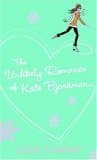
Louise Plummer (1995)
Genre
Young Adult / Romance
Reading Time
180 min
Key Themes
See below
Sign in to track this book
Armed with a romance writer's phrase book and a fierce commitment to truth, Kate Bjorkman chronicles her authentic, messy, and utterly swoon-worthy love story, proving reality can be more compelling than fiction.
Kate Bjorkman, the narrator, immediately addresses the reader. She explains her project: writing a romance novel using 'The Romance Writer's Phrase Book,' but based entirely on her own experiences with a boy named Gus. She wants truth and conflict, even within the romance genre, rejecting the often-clichéd scenarios of typical romance novels. Kate describes her first meeting with Gus, noting his quirky charm and her immediate attraction to him, which felt different from previous crushes. She sets the stage for her story, promising a narrative that mixes her real-life relationship with the structured, sometimes absurd, framework of a romance writing guide.
Kate clearly remembers the day Gus came into her life. It wasn't a dramatic entrance, but a series of small, important observations. She describes him as an unusual but captivating presence, noting his mannerisms and how he carried himself. Their first real interaction, though short, left a lasting impression on Kate, sparking a feeling she hadn't had before. She felt drawn to him, a sense of recognition beyond a simple crush. This first meeting lays the groundwork for their relationship, marking the start of Kate's genuine affection and the inspiration for her unique writing project.
Before their romance fully starts, Kate details the time when she and Gus became close friends. They spend time together, sharing interests, jokes, and quiet moments that strengthen their bond. Kate describes their conversations, often filled with comfortable silence broken by insightful or funny exchanges. She highlights Gus's thoughtfulness and how he truly listened to her, making her feel seen and understood. This period is important. It builds a strong emotional foundation, showing their connection is based on more than just physical attraction, preparing them for a romantic relationship.
Kate describes her first kiss with Gus as a major turning point. She details the lead-up, the nervous wait, and the kiss itself, emphasizing its impact on her. After the kiss, Kate feels many emotions—excitement, confusion, and a growing sense of love. She deals with what this new intimacy means for their friendship and their future. This scene captures the awkward yet exciting nature of young love, as Kate tries to process her strong feelings and the change in their dynamic.
As their relationship continues, Kate openly discusses the challenges and conflicts they face. These are not grand, dramatic events, but everyday misunderstandings, insecurities, and outside pressures that affect young couples. She details specific arguments, moments of doubt, or times when communication breaks down. Kate uses these real difficulties to go against the idealized scenarios often found in romance novels. She shows how she and Gus work through their issues with varying success. These conflicts highlight their individual personalities and the effort needed to maintain a healthy relationship, even one based on true affection.
Throughout her story, Kate often refers to 'The Romance Writer's Phrase Book.' She uses its often-clichéd prompts and phrases to frame her real-life experiences. She points out the irony and humor in trying to fit authentic, messy emotions into the book's strict categories. For example, she might use a phrase about 'smoldering glances' to describe a much more ordinary but equally meaningful look from Gus. This device lets her comment on romance writing itself, comparing its artificiality with the true complexities of her relationship. It also acts as a structural guide for her narrative.
Beyond the dramatic moments, Kate dedicates sections to the quiet, intimate times that define her relationship with Gus. These include shared laughter, comfortable silences, knowing glances, and small gestures of affection that say a lot. She describes particular dates, conversations, or even just sitting together, feeling a deep sense of belonging and understanding. These moments show the depth of their bond, illustrating how their love is built on shared experiences and a mutual appreciation for each other's unique qualities. They contrast with the conflicts, reinforcing the strength and tenderness of their romance.
Kate acknowledges her friends and family and how they influence her relationship with Gus. She might mention a friend's comment or a family member's reaction, offering a glimpse into the world around their romance. While not central to the plot, these interactions add realism, showing that their relationship exists within a larger social context. These brief mentions highlight how relatable her story is, as most young relationships are observed and sometimes discussed by those closest to the individuals.
Although the story is from Kate's first-person view, she often tries to interpret Gus's thoughts and feelings, giving the reader a more complete picture of their dynamic. She speculates on his reactions, wonders about his motivations, and recalls his words, trying to convey his character and internal world. This shows her deep empathy and understanding of him, proving their connection is not one-sided. By trying to articulate Gus's perspective, even through her own lens, Kate enriches the narrative and makes their relationship feel more balanced and real.
Later in her narrative, Kate reflects on how her understanding of love and romance has changed since she met Gus. She compares her initial, perhaps more naive, expectations with the reality of a lasting, real relationship. She realizes that love isn't just about grand gestures or perfect scenarios, but about commitment, forgiveness, and shared growth. This reflection shows her personal development and the impact Gus has had on her worldview. It shows that her 'unlikely romance' has taught her important lessons about life and relationships.
As Kate nears the end of her 'romance novel,' she doesn't offer a definitive, happily-ever-after conclusion. Instead, she presents an ongoing, evolving picture of her relationship with Gus. She acknowledges that their story isn't over and that, like all real relationships, it will continue to have ups and downs. She feels content and optimistic about their future together, embracing the imperfections and the genuine love they share. This open-ended conclusion supports her initial idea that true romance is messy, real, and continuously unfolding, rather than a neatly packaged fantasy.
In her final thoughts, Kate closes her 'romance novel,' repeating her main message about the importance of truth in storytelling. She looks back at her writing journey, using 'The Romance Writer's Phrase Book' to frame her genuine experiences. She feels satisfied with her work, believing she has captured the essence of her real romance with Gus, with its conflicts and joys. Kate's final thoughts emphasize that while the phrase book provided structure, the heart of her story came from her authentic feelings and the unique bond she shares with Gus, proving that real life can be the most compelling romance of all.
The Protagonist
Kate evolves from a girl experiencing her first profound love to a young woman who deeply understands the nuances and imperfections of real relationships, while finding her voice as a writer.
The Supporting
Gus remains a consistent and loving presence, growing with Kate through the challenges of their relationship, demonstrating commitment and understanding.
The Mentioned/Plot Device
Its 'role' remains consistent, serving as a humorous and structural counterpoint to Kate's authentic storytelling throughout the book.
This theme explores the contrast between the clichéd, perfect scenarios in traditional romance novels and the messy, authentic reality of a genuine relationship. Kate's entire project is about this. She uses 'The Romance Writer's Phrase Book' to frame her real experiences with Gus, often showing how absurd it is to fit real life into such a mold. She shows that true love isn't always dramatic or flawless. It is built on shared laughter, quiet understanding, and handling everyday conflicts. For example, instead of a 'dashing hero,' Gus might simply be there to listen.
“What do you do if you've lived a real romance with a great guy and he loves you as much as you love him? Simple, I wrote a romance novel with help from THE ROMANCE WRITER'S PHRASE BOOK. Nothing is made up. I want truth and conflict even in romance. I'm betting you'll want the same.”
This theme is woven throughout Kate's narrative. She champions honesty and truth in her 'romance novel.' She consciously rejects the fabrication often found in fiction. Instead, she presents her experiences with Gus as they actually happened, including the mundane, the awkward, and the challenging moments. Her commentary on the writing process and her frequent ironic references to the 'Phrase Book' highlight her commitment to showing that compelling stories don't need artificial drama. They can get their power from genuine human connection and emotion. This reflects a deeper belief in the value of real experiences.
“Nothing is made up. I want truth and conflict even in romance. I'm betting you'll want the same.”
Kate's relationship with Gus is not just about finding love; it is also a journey of self-discovery. Through her interactions with Gus and the process of documenting their romance, Kate understands herself, her emotions, and her values better. She learns about patience, communication, vulnerability, and the complexities of human connection. Her reflections on their conflicts and moments of intimacy show her growth as a person. They show how a significant relationship can shape one's identity and worldview. The act of writing also makes her process her experiences, helping her personal development.
“I was learning that love wasn't about fireworks all the time. Sometimes it was just quiet, steady warmth.”
The novel itself explores how language shapes our understanding of reality and how narratives are built. Kate's use of 'The Romance Writer's Phrase Book' highlights the arbitrary and sometimes misleading nature of conventional romantic language. She contrasts it with her own attempts to find words that truly capture her unique experience. She shows how choosing specific words and structures can either enhance or distort truth. This theme is clear in her humorous struggle to apply the phrase book's overly dramatic language to her often understated, yet deeply meaningful, moments with Gus.
“The Phrase Book had a whole section on 'smoldering glances,' but Gus just looked at me like he really saw me, which was way better.”
The story is presented as Kate's own romance novel, with her as the author and narrator.
The entire novel is a meta-narrative, meaning it's a story within a story. Kate Bjorkman is writing her own romance novel about her real-life relationship with Gus. This device allows for Kate's direct address to the reader, her commentary on the writing process, and her interjections about 'The Romance Writer's Phrase Book.' It creates a self-aware, conversational tone and enables the author, Louise Plummer, to explore themes of authenticity in storytelling and the nature of fiction versus reality. The frame story allows for a unique blend of personal narrative and literary critique.
Kate tells her story directly to the reader, creating an intimate and conversational tone.
Kate narrates her story in the first person, frequently breaking the fourth wall to speak directly to the reader. This creates an immediate sense of intimacy and allows the reader to feel like a confidant. The direct address reinforces Kate's role as the author of her own story, making her reflections and opinions feel more personal and engaging. It also allows her to share her insecurities, her humor, and her genuine feelings without filters, drawing the reader into her unique perspective on love and writing.
A literal guide used ironically to highlight the contrast between real life and romance novel clichés.
Kate uses a fictional 'Romance Writer's Phrase Book' as a structural and comedic device. She frequently quotes from it and then applies its often-over-the-top phrases to her much more mundane, yet deeply meaningful, real-life experiences with Gus. This satirical juxtaposition serves several purposes: it provides humor, it underscores the novel's central theme of challenging idealized romance, and it acts as a loose framework for Kate's narrative, giving her a starting point for each 'chapter' or scene, even if she ultimately subverts its advice.
Kate recounts past events as she 'writes' her novel, structuring the plot non-chronologically at times.
While primarily sequential, Kate's narrative often employs recollection and flashback as she 'writes' her romance novel. She doesn't just tell the story as it unfolds in the present; she reflects on past moments with Gus, detailing their first meeting, their early dates, and significant conversations. This device allows her to carefully craft her story, selecting and emphasizing key memories that illustrate the development of their relationship. It also enables her to add her current perspective and insights to past events, enriching the narrative with her evolving understanding of love.
“It was my theory that if you don't find a boyfriend by the time you're fifteen, you'll be alone the rest of your life.”
— Kate's early musings on her romantic prospects.
“I was in love with a boy who didn't know I existed. This was a common problem.”
— Kate reflecting on her crush on Dave Marston.
“The worst thing about being invisible was that you started to believe you were.”
— Kate's feeling of being overlooked by her crush.
“Sometimes I felt like my life was a movie, and I was just the extra walking across the background.”
— Kate's feeling of not being the main character in her own story.
“Being a good person was hard work. Being a good person and getting noticed was even harder.”
— Kate's struggle to balance her desire for goodness with her desire for attention.
“My mother always said that boys were like buses. If you missed one, another would come along. But what if you lived in a town with no bus service?”
— Kate's humorous and slightly cynical view on her mother's dating advice.
“I decided that the best way to get a boy to notice you was to do something completely unexpected.”
— Kate's strategic thinking about how to attract Dave Marston's attention.
“It wasn't about being perfect, it was about being perfectly yourself, and hoping someone else thought that was perfect too.”
— Kate's evolving understanding of self-acceptance in the context of romance.
“Love was complicated. Like algebra, but with more feelings and less clear answers.”
— Kate's struggle to understand the complexities of her emotions.
“Sometimes the most unlikely people were the ones who saw you most clearly.”
— Kate's realization about an unexpected friendship or connection.
“Being brave didn't mean you weren't scared. It meant you did it anyway.”
— Kate facing her fears, romantic or otherwise.
“I learned that sometimes, the best plans were the ones you didn't make.”
— Kate reflecting on how things unfolded unexpectedly.
“The heart wants what it wants, even if your head is screaming, 'Are you crazy?'”
— Kate's internal conflict between logic and emotion in her romantic pursuits.
“Maybe being an extra wasn't so bad, if you got to be an extra in a really good story.”
— Kate finding contentment in her role, even if it wasn't always the lead.
Ready to see how well you understood this book? Take our interactive quiz with 10 questions.