“The truth is never simple. It is always complicated, and often very unpleasant.”
— A character reflects on the nature of truth during the investigation.

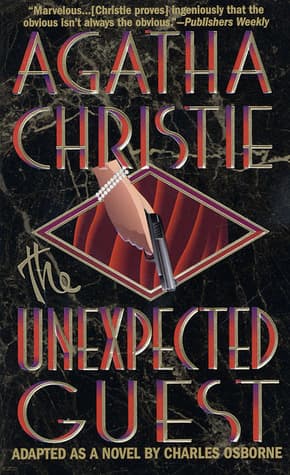
Agatha Christie (2000)
Genre
Thriller / Mystery
Reading Time
287 min
Key Themes
See below
Sign in to track this book
In a fog-shrouded Welsh manor, an unexpected guest stumbles upon a murder and a dazed wife, only to uncover a web of past loves, hates, and a dead man's lingering shadow.
On a foggy night in Wales, Michael Starkwedder's car gets stuck in a ditch. He walks to the nearest house, the isolated country estate of the Warwicks. He enters through an open French window to find Laura Warwick standing over the dead body of her husband, Richard Warwick, a cruel and invalid man, with a gun in her hand. Laura immediately confesses to killing Richard, but her dazed and almost mechanical manner makes Starkwedder question the truth. Feeling a strange need to help her, he quickly plans to make it appear as if an intruder committed the crime, suggesting she wipe the gun and place it in Richard's hand.
Laura's story, made up with Starkwedder's help, is that an intruder shot Richard. The local police, led by Inspector Thomas and Sergeant Cadwallader, arrive and begin their investigation. They find the murder weapon, a gun that belonged to Richard, and note the open French window, seemingly supporting the intruder theory. However, Inspector Thomas is observant and quickly notices inconsistencies in Laura's account and the scene. He finds it suspicious that a man like Richard, confined to a wheelchair, would be sitting up in his study late at night.
The police begin interviewing the other residents and staff of the Warwick household. These include Julian Farrar, Richard's political agent and a family friend; Miss Bennett, Richard's stern nurse; Henry Angell, Richard's mentally disabled younger brother, who has a childlike interest in killing and guns; and Mrs. Warwick, Richard and Henry's elderly, somewhat confused mother, who often mixes the present with the past. Each character offers a look into the house's dynamics and Richard's cruel nature, showing many potential motives and secrets.
During the investigation, Julian Farrar, a man who secretly loved Laura, suddenly confesses to Inspector Thomas, claiming he killed Richard. He provides details that seem to fit the crime. However, his confession is short-lived. Soon after, he takes it back, stating he only confessed to protect Laura, whom he believed was guilty. This sudden change of heart further complicates the investigation, making the police even more suspicious of the relationships in the house and the true identity of the murderer.
As the investigation continues, a piece of evidence emerges: a wallet found near the crime scene belonging to a man named MacGregor. MacGregor was a big-game hunter and adventurer who was believed to have died in Africa two years prior. This discovery confuses the case, as it suggests the killer might be someone from Richard's distant past, or even MacGregor himself, who disliked Richard. The police must now consider that MacGregor faked his death and returned for revenge.
Henry Angell, Richard's disabled brother, becomes more suspicious. He often plays with toy guns, copying the murder, and makes comments that suggest he knows more than he lets on, or perhaps that he was present at the time of the killing. His innocent yet disturbing remarks about 'shooting Richard' and his interest in the 'bang-bang' worry the family and the police, leading some to believe he might be capable of such an act, perhaps without fully understanding its seriousness.
Despite her initial shock and pretended grief, Laura's true feelings about Richard's death begin to show. She expresses a sense of freedom and relief, hinting at the oppressive and cruel nature of her marriage. Starkwedder, who initially helped her, starts to suspect her more deeply, realizing that her apparent daze might have been a planned act. He watches her closely, trying to figure out if she is truly innocent or if his initial help merely covered up her true guilt, fueled by her hatred for Richard.
Miss Bennett, the nurse, reveals details about Richard's manipulative and cruel personality, suggesting many people had reasons to wish him dead. She also mentions Richard's recent fear of someone from his past. Mrs. Warwick, Richard's elderly mother, often mistakes Starkwedder for her other son, Henry, and makes confusing remarks about the past. Her ramblings, though seemingly unclear, sometimes touch upon old family secrets and grudges, particularly concerning Richard's relationship with MacGregor and his treatment of Henry.
Inspector Thomas, having put together various clues and inconsistencies, sets a trap. He announces that they have found MacGregor, alive, and that he is being brought to the house. This announcement is a bluff, meant to provoke a reaction from the real killer. The tension in the house grows. Finally, under pressure, the true murderer confesses, revealing a motive rooted in past events and the complex relationships within the Warwick family.
In a dramatic twist, Laura Warwick confesses to the murder of her husband, Richard. However, her confession has a shocking detail: she did not act alone. She conspired with Michael Starkwedder, the unexpected guest, to kill Richard. Starkwedder, who had initially presented himself as a helpful stranger, was in fact her lover and accomplice, having planned the murder with her. The entire 'accidental' discovery and the subsequent framing of an intruder were part of their elaborate scheme to escape suspicion and begin a new life together.
The Protagonist/Antagonist
He begins as a seemingly helpful stranger but is ultimately revealed as the co-conspirator and lover of the murderer.
The Protagonist/Antagonist
From a seemingly innocent, suffering wife, she is revealed to be a cold, calculating murderer.
The Victim
His character is explored primarily through the testimonies and recollections of others, revealing his destructive nature.
The Supporting
He systematically uncovers the truth behind the murder, navigating through deceptions and misdirections.
The Supporting
Driven by love, he attempts to protect Laura by falsely confessing, only to retract it and remain a suspect.
The Supporting
His character remains largely static, serving as a red herring and a symbol of Richard's cruelty.
The Supporting
She serves as a reliable witness, observing the family's dysfunction without significant personal development.
The Supporting
Her character remains consistent in her state of mental decline, offering fragmented clues.
The Supporting
He supports Inspector Thomas throughout the investigation without significant personal character development.
The Mentioned
His character's supposed death and subsequent 'resurrection' are plot devices used to mislead the investigation.
The novel is built upon layers of deception, starting with Laura's initial 'dazed' confession and Starkwedder's 'helpful' intervention. Characters constantly present false fronts or hide information, leading the police down multiple wrong paths. Julian Farrar's false confession to protect Laura, and the elaborate setup of MacGregor as a suspect, show how easily appearances can mislead. The ultimate reveal that Starkwedder and Laura were co-conspirators shatters the initial idea of the 'unexpected guest' as an innocent bystander, showing that nothing is as it seems.
“"Nothing is ever as simple as it looks, Inspector. Especially in a house like this."”
Richard Warwick, though dead, is a constant symbol of cruelty. His tyrannical nature, his joy in tormenting Laura and Henry, and his past hurtful actions are recounted by almost every character. This theme explores how one person's malice can poison an entire household and drive others to desperate acts. The story suggests that Richard's evil was so great that it created a justifiable desire for his death among those he oppressed, making his murder almost a logical outcome of his character.
“"He liked to hurt people. It amused him. It was a game to him."”
The murder of Richard Warwick can be seen as retribution for his years of cruelty. While the police seek legal justice, the characters' relief at his death suggests a form of poetic justice for his victims. The novel deals with the idea of whether some individuals are so evil that their demise, even if through murder, brings a sense of deservedness. The final twist, where the 'innocent' party is revealed as a calculating killer, complicates this theme, questioning the morality of taking justice into one's own hands.
“"Some men, Inspector, are better dead. The world is a cleaner place without them."”
Love, in various forms, drives much of the plot. Julian Farrar's unrequited, obsessive love for Laura leads him to a false confession. More significantly, the passionate and illicit love between Laura and Michael Starkwedder is the ultimate motive for the murder. Their shared desire for a life free from Richard's tyranny fuels their elaborate conspiracy. This theme explores how love can become a destructive force, leading individuals to commit extreme acts, even murder, for their desires.
“"We loved each other, you see. And he was in the way."”
The Warwick household is a place of dysfunction and hidden secrets. The strained relationship between Richard and Laura, Richard's torment of his disabled brother Henry, and the elderly Mrs. Warwick's fragmented memories all point to a long history of unhappiness and unresolved conflicts. The investigation uncovers these layers, revealing a family deeply scarred by Richard's presence and bound by unspoken resentments and dark past events, such as MacGregor's mysterious disappearance.
“"This house has always held its secrets, Inspector. Dark ones."”
A stranger's sudden arrival disrupts and manipulates the murder scene.
Michael Starkwedder's arrival at the Warwick estate is the inciting incident. His presence immediately alters the murder scene, as he helps Laura fabricate the intruder story. This device introduces an outside element that not only witnesses the crime but actively participates in its cover-up, becoming both a narrator and a key player. It allows for an initial, biased perspective on the events, guiding the reader's initial assumptions and making his ultimate reveal as the co-conspirator even more impactful.
Misleading clues and false suspects designed to divert the investigation.
The novel heavily relies on red herrings to keep the reader guessing. The initial framing of an unknown intruder, Julian Farrar's false confession, Henry Angell's disturbing fascination with guns, and especially the discovery of MacGregor's wallet (a man believed to be dead) all serve to misdirect the police and the audience. These diversions are meticulously placed to create a complex web of suspicion, making the true killer's identity a surprise until the very end.
A character's dramatic confession, followed by a sudden retraction, adding layers of doubt.
Julian Farrar's sudden confession to Richard's murder, followed by his equally sudden retraction, is a significant plot device. It highlights his love for Laura and his willingness to sacrifice himself for her, while also creating further confusion for the police. This device makes the reader question his motives and whether Laura truly is guilty, prolonging the mystery and adding emotional depth to Julian's character. It's a classic Christie trope to complicate the pursuit of truth.
The victim's past cruelties provide multiple motives and suspects.
Richard Warwick's character, though he is dead for most of the story, is a crucial plot device. His universally despised nature and history of cruelty provide a credible motive for almost every character in the house to want him dead. This allows Christie to create a wide array of suspects, each with a plausible reason, making the identity of the actual killer harder to pinpoint. The victim's personality is essentially the catalyst for the entire mystery.
Inspector Thomas's strategic lie to provoke a confession.
Inspector Thomas's announcement that MacGregor has been found alive and is being brought to the house is a critical plot device. This is a deliberate bluff designed to pressure the real killer into revealing themselves. It creates a tense atmosphere and forces the murderer's hand, leading directly to the final confession. This tactic demonstrates the Inspector's shrewdness and provides a dramatic climax for the unraveling of the truth.
“The truth is never simple. It is always complicated, and often very unpleasant.”
— A character reflects on the nature of truth during the investigation.
“One must always consider the possibility of the unexpected.”
— A detective or observer remarks on the theme of the story.
“In a house of secrets, even the walls have ears.”
— Describing the atmosphere of suspicion in the setting.
“A guilty conscience needs no accuser.”
— A character comments on psychological guilt.
“The past has a way of catching up with the present.”
— Referring to hidden histories affecting current events.
“Appearances are often deceptive, especially in matters of murder.”
— A warning about not trusting surface evidence.
“Silence can be more telling than words.”
— Noting how characters' lack of speech reveals clues.
“Every man has his price, but not every man is willing to pay it.”
— A reflection on morality and compromise.
“Fear is a powerful motivator, perhaps the most powerful of all.”
— Discussing characters' actions driven by fear.
“In the end, it is not the crime itself but the cover-up that unravels everything.”
— A insight into how mysteries are solved.
“Love and hate are two sides of the same coin, especially in families.”
— Commenting on complex relationships among characters.
“The simplest explanation is often the right one, but not always.”
— A detective's musing on solving the case.
“Trust is a fragile thing, easily broken and hard to mend.”
— Reflecting on betrayals and alliances in the story.
“Sometimes, the most innocent face hides the darkest secrets.”
— A observation about deceptive characters.
Ready to see how well you understood this book? Take our interactive quiz with 10 questions.
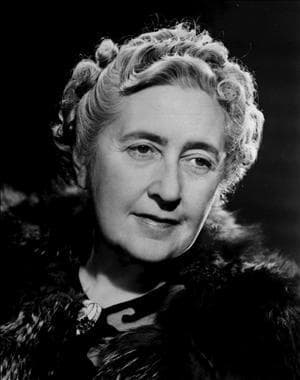
Dame Agatha Mary Clarissa Christie, Lady Mallowan, was an English writer known for her 66 detective novels and 14 short story collections, particularly those revolving around fictional detectives Hercule Poirot and Miss Marple. She also wrote the world's longest-running play, the murder mystery The Mousetrap, which has been performed in the West End since 1952. A writer during the "Golden Age of Detective Fiction", Christie has been called the "Queen of Crime". She also wrote six novels under the pseudonym Mary Westmacott. In 1971, she was made a Dame (DBE) by Queen Elizabeth II for her contributions to literature. Guinness World Records lists Christie as the best-selling fiction writer of all time, her novels having sold more than two billion copies.







