“The world may be mean, but people don't have to be, not if they refuse.”
— Cora's reflection on human nature and resistance.

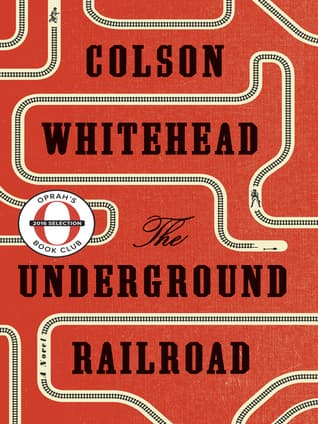
Colson Whitehead (2016)
Genre
Literary Fiction / Historical Fiction
Reading Time
300 min
Key Themes
See below
Sign in to track this book
Colson Whitehead's novel turns the Underground Railroad into a literal train, sending runaway slave Cora on a journey through different horrors of antebellum America, all while she is hunted.
Cora lives a brutal life on the Randall cotton plantation in Georgia, known for its cruelty, especially under the control of the brothers Terrance and James Randall. Cora's grandmother, Ajarry, was brought from Africa and endured many rapes and sales before ending up on the Randall farm, where she had children, including Cora's mother, Mabel. Mabel escaped the plantation when Cora was a child, leaving Cora alone, affected by her mother's departure. This early event shapes Cora's independence and distrust. Life on the plantation is a cycle of hard work, violence, and exploitation, with no hope.
Caesar, a literate slave bought from Virginia, asks Cora to escape using the Underground Railroad. Despite her initial hesitation and caution, Cora agrees, driven by her desire for freedom and the memory of her mother's escape. Their escape is dangerous. In the woods, they are ambushed by white men, including a young boy named Blake, who tries to capture Cora. In a moment of panic, Cora hits Blake with a hoe, killing him. This act solidifies her commitment to freedom but also makes her a murderer, increasing the hunt for her.
Cora and Caesar reach their first Underground Railroad station, a real train system with tracks and tunnels, and arrive in South Carolina. The state at first seems to offer progress and opportunity for Black people. They find jobs in a museum, where Cora poses as a 'African savage' exhibit, and Caesar works in a factory. The state provides housing, education, and medical care, and slavery seems abolished. However, Cora soon learns the truth: the state's 'progress' is a eugenics experiment. Black men are sterilized without their knowledge, and Black women are used for forced medical procedures. The idea of freedom falls apart as Cora realizes they are still trapped, but in a different kind of bondage.
Meanwhile, the slave catcher Ridgeway, who failed to catch Cora's mother, Mabel, tracks Cora and Caesar. With his Black henchman, Homer, and his dogs, Ridgeway arrives in South Carolina, having found clues about them. When Cora and Caesar hear about Ridgeway, they know their 'safe place' is no longer safe. Caesar is captured and lynched by a mob, and Cora barely escapes with the help of a conductor, Sam. She has to leave her seemingly safe life and go back into the Underground Railroad tunnels, leaving South Carolina.
Cora's next stop is North Carolina, a state that has outlawed all Black people, slave or free. Here, she experiences extreme racial terror. The state regularly holds public lynchings of Black people, displaying their bodies along the 'Freedom Trail' as a warning. Cora hides in a dark attic for months in the home of a white abolitionist family, the Valentines. She lives in isolation, fear, and sensory deprivation, hearing the sounds outside and facing the constant threat of discovery. She reads a book from the Valentines, finding a temporary escape, but the fear and the reality of North Carolina weigh on her.
Cora's sanctuary in North Carolina is destroyed when Ridgeway and his men get close. The Valentines' home is raided, and the family is killed for hiding a fugitive. Cora escapes through a hidden tunnel, avoiding Ridgeway again. This escape is difficult, as she crawls through dark, small spaces while Ridgeway's men are above her. She is again in the unknown, leaving behind the only kindness she had found in months and understanding the great risks taken by those who helped her.
Cora travels to Indiana, finding refuge on a thriving, self-sufficient abolitionist farm owned by a free Black man named Valentine. Here, she finds community and relative peace, working with other free Black people and escaped slaves. She connects with Royal, an Underground Railroad conductor, and starts to hope for a stable future. However, Ridgeway, still wanting to catch Cora and get revenge for his past failure with Mabel, tracks her to the farm. He tells her about the Randall plantation, now burned and its former inhabitants scattered or dead, a reminder of her inescapable past.
Ridgeway and his men ambush the Indiana farm. A violent fight happens, and many of the farm's inhabitants are killed or captured. Royal, who had become close to Cora, sacrifices himself to protect her during the raid, showing the constant danger and loss in her journey. Cora again escapes Ridgeway, but with trauma and the loss of another person she trusted. This event makes her face the reality that even in communities meant for freedom, slavery's shadow can still reach.
After the destruction in Indiana, Cora continues her journey north, guided by the remaining Underground Railroad conductors. She travels with other escaped slaves, enduring harsh conditions and constant watch. Her path is still dangerous, but she is driven by a desire for true freedom, not just from slavery's chains, but from the systemic oppression and violence that follows Black people in America. She carries her past, the memories of those lost, and the strength forged through her suffering, moving towards an uncertain but hopeful future.
Cora eventually reaches a remote station where she meets Molly, who says the railroad goes no further. Molly is with a large wagon train going to the far North, a place rumored to be truly free. Cora, with her determination, decides to join them, accepting the unknown and the continued journey as her path to freedom. The novel ends with Cora getting into the wagon, her future uncertain but her spirit unbroken. She has survived horrors, and while the destination is not fully revealed, moving forward, choosing her own path, shows her triumph and the human spirit in the face of oppression.
The Protagonist
Cora transforms from a traumatized, isolated individual into a resilient survivor, actively pursuing her freedom and finding a sense of self despite continuous hardship.
The Antagonist
Ridgeway remains a static character, never wavering from his cruel ideology or his singular obsession with capturing Cora.
The Supporting
Caesar begins as a hopeful catalyst for escape but ultimately becomes a tragic victim of the system, his death a turning point for Cora.
The Mentioned
Mabel's arc is largely in the past, her actions serving as a foundational element for Cora's story.
The Supporting
Homer remains a static, unsettling figure, a product of his environment and Ridgeway's influence.
The Supporting
Royal represents a brief period of hope and community for Cora, ultimately sacrificing himself for her freedom.
The Supporting
Sam acts as a pivotal helper, facilitating Cora's escape from a dangerous situation.
The Supporting
Ethel represents the fearful but ultimately compassionate white abolitionists who risked their lives.
The Supporting
Martin acts as a temporary protector for Cora, sacrificing his life for the cause.
The novel shows the physical and psychological violence of slavery. From descriptions of life on the Randall plantation, including whippings, sexual assault, and forced labor, to the dehumanization in South Carolina's 'living exhibits' or North Carolina's public lynchings, Whitehead shows the horrors. Cora's constant fear, family loss, and arbitrary suffering show how slavery took away humanity and autonomy, making individuals property. The story emphasizes that even 'kind' forms of slavery or post-slavery control are still oppression.
“The only way to stop a slave from running was to make sure he couldn't run. And the only way to make sure he couldn't run was to make sure he couldn't be a man.”
Cora's journey is a search for freedom, beyond just escaping physical chains. In each state, she faces different forms of racial oppression, making her redefine what freedom means. Her search is also tied to her identity, dealing with her mother's escape and her own place in a world that tries to control her. She tries to find herself amid trauma and loss, finding strength in her resilience and her refusal to be broken, even as her destination is unclear.
“Freedom was a thing that shifted, a place of constant motion. You had to keep moving to keep it.”
Whitehead questions the idea of linear progress by showing how systemic racism adapts and continues. South Carolina, at first seeming like a progressive haven, turns out to be a eugenics experiment, showing that even 'abolition' can hide new forms of control. North Carolina's ban on Black people and public executions show a more open, but equally systemic, racism. The novel suggests that the promise of American freedom has always been affected by slavery, and that racism is deeply ingrained in the nation, changing but never disappearing.
“America, too, was a delusion, but it was a delusion everyone believed, which made it more powerful than a nation.”
The novel explores the lasting effects of trauma, both personal and across generations. Cora carries the trauma of her mother's abandonment, plantation violence, and the constant threat of capture. The story often includes memories of Ajarry, Mabel, and other ancestors, showing how slavery's legacy affects future generations. These memories are not just personal but collective, forming a shared history of suffering and resistance that shapes characters' identities and experiences. Cora's constant loss shows the ongoing psychological wounds of the slave system.
“The past was a wound that would not heal. It festered and bled.”
Despite the brutality, the novel also shows the human spirit of resistance and resilience. Cora's act of running is defiance, and her survival against odds shows her strong will. The Underground Railroad itself is a symbol of collective resistance, a network of people risking their lives for freedom. Even small acts of rebellion, like Ajarry's endurance or Cora's refusal to break, add to a larger story of resilience in the face of oppression. The novel celebrates the courage of those who fought back, both openly and subtly.
“She was a stray, and a stray knows it has to fight for its place.”
A magical realist reimagining of the historical network as an actual subterranean railway.
Whitehead's most prominent plot device is the literal interpretation of the Underground Railroad as a subterranean network of tracks, trains, and conductors. This magical realist element allows the narrative to physically transport Cora from state to state, each stop representing a distinct societal experiment or manifestation of racism. It provides a tangible, almost mythical, pathway to freedom, while simultaneously highlighting the immense danger and secrecy involved in the historical movement. The trains become a symbol of hope and progress, but also of the perilous journey and the constant threat of discovery. The physical railroad underscores the idea of a hidden, organized resistance.
Cora's journey through different states, each representing a distinct form of racial oppression.
Cora's journey across various states (Georgia, South Carolina, North Carolina, Indiana) functions as a series of mini-odysseys. Each state presents a unique and distinct manifestation of racial oppression, from overt plantation brutality to deceptive 'progress' and outright state-sanctioned extermination. This device allows Whitehead to explore the multifaceted nature of American racism, demonstrating that there was no single 'slave experience' and that the fight for freedom involved confronting diverse, evolving threats. It's akin to 'Gulliver's Travels,' where each new land reveals a different societal flaw, broadening the scope of the novel's critique of American history.
Interspersed chapters providing insight into the antagonist's motivations and worldview.
Periodically, the narrative shifts focus from Cora to Ridgeway, the slave catcher. These chapters delve into his backstory, his philosophy, and his relentless pursuit of Cora. This device offers a chilling insight into the mindset of those who perpetuated and enforced slavery, humanizing the antagonist without excusing his cruelty. It allows the reader to understand the ideological underpinnings of his actions and the systemic nature of the institution he serves. By showing his internal world, Whitehead emphasizes that the horrors of slavery were not just acts of individual cruelty but were rooted in a deeply flawed and destructive worldview.
Cora's mother's escape and unknown fate as a driving force and central mystery.
Mabel's escape and subsequent disappearance form a powerful, unresolved mystery that significantly drives Cora's journey and defines her character. The memory of Mabel's flight simultaneously fuels Cora's hope for freedom and her deep-seated feelings of abandonment. Her mother's story is intertwined with Ridgeway's obsession, making Cora an extension of his past failure. This device connects Cora's personal quest to a generational legacy of resistance and loss, highlighting the continuous struggle for freedom that spans across time and family lines. The eventual revelation of Mabel's fate provides a poignant resolution to this long-standing emotional anchor for Cora.
“The world may be mean, but people don't have to be, not if they refuse.”
— Cora's reflection on human nature and resistance.
“If you want to see what this nation is all about, you have to ride the rails. Look outside as you speed through, and you'll find the true face of America.”
— A character describing the metaphorical Underground Railroad.
“Stolen bodies working stolen land. It was an engine that did not stop, its hungry boiler fed with blood.”
— Description of the plantation system's brutality.
“The only way to know how long you have been traveling is to ask someone who knows the time.”
— Cora's observation about disorientation and freedom.
“In America the quirk was that people were things.”
— Narrator's commentary on the dehumanization of slavery.
“The whites came to this land for a fresh start and to escape the tyranny of their masters, just like the slaves they would soon enslave.”
— Historical irony noted in the narrative.
“She was a stray, and like all strays she was a survivor.”
— Description of Cora's resilience.
“The underground railroad, she thought. It was a joke—until it wasn't.”
— Cora's realization about the railroad's reality.
“Freedom was a thing that shifted as you looked at it, the way a forest is dense with trees up close but from outside, from the empty meadow, you see its true limits.”
— Philosophical musing on the nature of freedom.
“Every state is different. Each one a state of possibility.”
— Reflection on the varying conditions in different states.
“The treasure, of course, was the treasure of the self, the only thing worth stealing back.”
— Commentary on reclaiming identity under oppression.
“To see the chains was to see the man, and to see the man was to see the chains.”
— Observation on the inextricable link between slavery and identity.
“The railroad's conductors were the bravest people she had ever known, for they risked everything for a principle.”
— Cora's admiration for those aiding escapees.
“In her heart she carried the map of her escape, a geography of hope.”
— Description of Cora's inner resilience and journey.
Ready to see how well you understood this book? Take our interactive quiz with 10 questions.
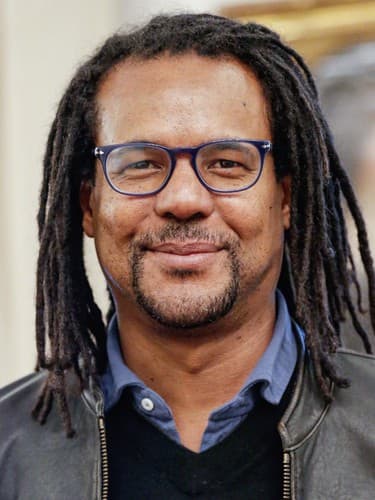
Arch Colson Chipp Whitehead is an American novelist. He is the author of eight novels, including his 1999 debut work The Intuitionist; The Underground Railroad (2016), for which he won the 2016 National Book Award for Fiction and the 2017 Pulitzer Prize for Fiction; and The Nickel Boys, for which he won the Pulitzer Prize for Fiction again in 2020. He has also published two books of non-fiction. In 2002, he received a MacArthur Genius Grant.







