“I will tell you something else. I do not play to win. I play to make music.”
— Ryder contemplating his approach to the upcoming concert.


Kazuo Ishiguro (2009)
Genre
Literary Fiction / Fantasy
Reading Time
1260 min
Key Themes
See below
Sign in to track this book
A famous pianist arrives in a strange European city, unable to remember his concert or his past, as reality shifts around him, revealing a life spiraling out of control.
Ryder, a famous concert pianist, arrives in a constantly dim and rainy Central European city. A nervous young man named Stefan, who claims to be his son, and a woman named Sophie, who claims to be his wife, meet him. Ryder remembers neither of them, nor agreeing to perform a concert in this city. The hotel manager, Gustav, is overly polite and constantly reminds Ryder of the high expectations the city has for him. Ryder is immediately overwhelmed by many demanding requests and the strange, dreamlike logic of his surroundings, where conversations wander and time seems to stretch and change.
Ryder attends a meeting where he meets the city's important people, including its aging and increasingly unstable conductor, Mr. Brodsky. It becomes clear that Ryder's visit is not just for a concert, but to somehow 'fix' the city's cultural problems, especially Mr. Brodsky's decline. Brodsky is obsessed with his failures and his difficult relationship with his daughter, whom he believes has given up her musical dreams. Ryder finds himself caught in Brodsky's personal dramas, expected to mediate and give advice, all while his own concert preparations are constantly put off or interrupted by these strange, increasing demands.
Sophie shares details of their past, which Ryder still struggles to remember. She talks about their life together, their son Stephan, and the pressures that led to their separation. Ryder tries to connect with Stephan, who is often distant and upset. Their attempts to spend time together are constantly stopped by the city's odd residents and Ryder's growing duties. One particularly complex sequence involves Ryder trying to find Stephan, leading him through a series of absurd encounters with various citizens, each with their own requests or stories, further delaying his goal.
Ryder discovers that Miss Collins, a woman from his past, is also staying at the hotel. Their reunion is awkward, full of unspoken resentments and missed chances. Miss Collins is now in a relationship with a hotel porter, and Ryder finds himself in uncomfortable conversations with both of them, reflecting on his own past relationships and career choices. The hotel staff, especially the manager Gustav, are overly involved in Ryder's life, constantly watching and commenting, adding to the suffocating atmosphere of expectation and responsibility that fills Ryder's stay.
The hotel porter, who is with Miss Collins, tells Ryder about his life and his deep bond with his dog, Boris. He expresses worries about his future and his perceived shortcomings. Ryder, despite his own growing pressures, tries to offer advice and comfort, finding himself acting as an impromptu therapist. The porter's dog appears often, often at bad times, and its well-being becomes another unexpected concern Ryder is expected to handle among the city's other demands. This interaction further shows Ryder's inability to escape the personal dramas of those around him.
In a particularly confusing sequence, Ryder is tasked with going with Mr. Brodsky to a sanatorium. The journey takes an inexplicably long time and involves many detours. During the trip, Mr. Brodsky talks about his life, his regrets, and his artistic struggles, seeing Ryder as a confessor and a potential savior. The sanatorium itself is a strange, almost empty place, further blurring the lines between reality and dream. Ryder's attempts to guide Brodsky are often useless, as the conductor remains lost in his own world of past complaints and worries, making the journey's purpose seem increasingly pointless.
As the concert day nears, the pressure on Ryder grows sharply. Everyone he meets, from the hotel staff to casual acquaintances, speaks of the concert as a major event, a turning point for the city's mood and cultural standing. Ryder is constantly reminded of his 'duty' and the 'hopes' he carries. Yet, he rarely gets a chance to practice, constantly pulled away by the personal crises and demands of others. The audience for his concert remains a largely unseen, abstract group, but its collective expectation is a strong, almost suffocating force throughout his stay.
Ryder promises Stephan he will attend his school performance, an important event for the boy. However, just as he is about to leave, he is stopped by a series of urgent, seemingly unavoidable demands from various citizens. These demands, often involving obscure errands or long, rambling conversations, delay him until he misses Stephan's performance. The incident shows Ryder's deep inability to control his own schedule or prioritize his personal relationships amid the overwhelming, almost conspiratorial, pressures of the city.
On the concert day, Ryder is still unprepared. He is met by a final, desperate series of requests and encounters. Mr. Brodsky's condition seems to worsen, and Ryder is again drawn into his dramatic statements. Sophie and Stephan are also present, their own hopes and worries adding to the chaos. Ryder struggles to find a moment of peace to focus on his music, constantly pulled in different directions, his concentration broken by the never-ending stream of personal dramas and expectations that have defined his entire visit to the city. The concert itself remains an abstract goal, overshadowed by the immediate, overwhelming present.
Ryder finally reaches the concert hall, a grand but somewhat rundown building. The atmosphere is tense with anticipation. However, before he can even begin his performance, another unexpected event occurs. He is suddenly driven away in a car by an unfamiliar person, on what seems to be another urgent, unexplained errand. The concert, the peak of his entire visit, is again put off or perhaps entirely missed, leaving Ryder confused and resigned as the car speeds through the city's familiar, yet still alien, streets.
During this final, long car ride, Ryder is with a new group of characters who seem to represent parts of his past. The conversations are fragmented and dreamlike, touching on his career, his relationships, and his sense of personal responsibility. He faces the possibility that his entire experience in the city is a manifestation of his own worries and unresolved issues. The journey becomes a metaphorical exploration of his life, his successes, and his failures, all seen through the distorting lens of the city's unique reality. The destination remains unclear, mirroring his own uncertain future.
The novel ends with Ryder still in the car, traveling through the city and beyond. The journey seems endless, a continuous movement without a clear destination or resolution. He watches the passing landscapes, the faces of his companions, and reflects on his stay. He remains 'unconsoled,' unable to find peace or closure for the many personal and professional demands that have consumed him. The car ride symbolizes his constant state of being pulled along by outside forces and his internal worries, leaving the reader with a sense of ongoing, unresolved struggle.
The Protagonist
Ryder begins as a man disoriented by his surroundings and ends still adrift, unable to consolidate his past or present, perpetually 'unconsoled.'
The Supporting
Sophie seeks to reconnect with Ryder and their son, but ultimately remains in a state of longing, her hopes largely unfulfilled by Ryder's perpetual distraction.
The Supporting
Stephan begins by eagerly seeking his father's attention but ends increasingly resigned to Ryder's consistent absence and emotional unavailability.
The Supporting/Antagonistic Force
Brodsky remains trapped in his cycle of self-pity and professional anxiety, clinging to Ryder as a potential savior, but ultimately finding no true resolution.
The Supporting
Gustav maintains his role as an anxious facilitator of the city's demands, never truly developing beyond his initial function.
The Supporting
Miss Collins re-enters Ryder's life as a reminder of his past, but her own narrative arc is tied to her current relationship, offering a contrast to Ryder's rootlessness.
The Supporting
The Porter's anxieties and his bond with Boris remain a consistent presence, highlighting Ryder's inability to meaningfully connect or offer lasting comfort.
The Supporting
Leo's initial optimism and reverence for Ryder are tested by the chaotic reality of Ryder's visit, leaving his own future as an artist uncertain.
Ryder's deep memory loss and his inability to recall his past, his family, or even agreeing to the concert, is central to the novel. His identity is constantly being shaped by those around him, as they share 'memories' he doesn't have. This theme explores how much of our identity is linked to our past, and what happens when that past is broken or unreachable. The city itself feels like forgotten memories, with its familiar yet strange qualities. Ryder's struggle to put his life back together reflects a common human worry about self-knowledge and being true to oneself.
“Perhaps I should have started by mentioning that I had no memory of ever agreeing to perform in this city.”
Ryder is constantly bombarded by the expectations of the entire city, from the hotel manager Gustav to the troubled Mr. Brodsky, and even his 'family.' Everyone sees him as a savior, a solution to their personal and collective problems. This creates an overwhelming sense of responsibility that paralyzes Ryder, stopping him from focusing on his own purpose (the concert) or even his personal relationships. The novel exaggerates this burden to show how outside pressures can consume a person, leading to a loss of control and self. The city's collective anxiety becomes Ryder's personal burden.
“It was as though the entire city were holding its breath, waiting for me to provide the necessary inspiration.”
Throughout the novel, Ryder is a passive receiver of events, constantly pulled in different directions by others' demands and stories. His schedule is never his own, his plans are always thwarted, and his attempts to take control are useless. This theme explores the feeling of being carried along by forces beyond one's command, whether they are outside pressures, internal worries, or the surreal logic of a dream-like existence. Ryder's inability to even practice for his own concert highlights a deep lack of control, mirroring a common modern experience of feeling overwhelmed and powerless.
“I was being carried along, like a leaf in a stream, by forces I barely understood.”
Ryder, as a famous artist, is expected to give a great musical performance, yet he is constantly prevented from preparing for it. The city's residents treat him less as an artist and more as a problem-solver, a symbol, or a confessor. This tension between the artist's need for creative space and the public's often superficial or practical demands is central. Mr. Brodsky's own decline and his daughter's giving up music further explore the pressures and compromises in a life dedicated to art, especially when faced with overwhelming outside expectations and personal failures. The true purpose of art is blurred by the city's desperate needs.
“They were not interested in the music itself, it seemed, so much as what it represented.”
The entire novel works with a logic that resembles a dream: time and space are distorted, conversations loop and wander, characters appear and disappear, and situations become absurdly complex without clear reason. This widespread surrealism reflects Ryder's confused state of mind and the subjective nature of his experience. It blurs the line between internal anxiety and external reality, suggesting that the city and its residents might be projections of Ryder's own subconscious. This theme invites the reader to question the very nature of reality and how perception shapes our understanding of the world.
“It was a conversation that seemed to have no beginning and no end, only a perpetually shifting middle.”
Ryder's memory loss and subjective perception make him an unreliable guide to the events.
Ryder's persistent memory loss and his bewildered, passive reactions to the unfolding events establish him as an unreliable narrator. The reader experiences the surreal and confusing world of the city solely through his fragmented perception, making it difficult to discern what is 'real' versus what might be a manifestation of his internal state. This device immerses the reader in Ryder's disorientation, creating a sense of unease and forcing them to question the veracity of the narrative and the nature of the reality presented.
The narrative operates under a non-linear, often absurd, and disorienting internal consistency.
The novel's events unfold with a pervasive dream logic where time and space are fluid, conversations are circular, and actions lack conventional cause-and-effect. Characters often appear and disappear without explanation, and situations escalate into bizarre complexity. This surrealism reflects Ryder's fragmented mental state and creates a sense of profound disorientation, mirroring the feeling of being trapped in a dream. It prevents the reader from finding solid footing, emphasizing the protagonist's lack of control and the elusive nature of reality.
Subtle hints and recurring patterns suggest Ryder's ultimate failure to achieve his goals.
Throughout the novel, Ryder's repeated inability to focus on his concert, his constant detours, and his broken promises to Stephan subtly foreshadow his ultimate failure to perform or reconcile. Each missed practice session or delayed meeting forges a chain of events that makes the final outcome feel inevitable, even if the specific mechanism of failure remains surprising. This device builds a sense of mounting dread and emphasizes the theme of loss of control, showing how small, seemingly insignificant interruptions cumulatively lead to a larger, unavoidable disappointment.
The city represents Ryder's subconscious, his past, and the collective anxieties of his life.
The unnamed Central European city itself functions as a major symbolic device. Its perpetually dim, rain-swept atmosphere, its labyrinthine streets, and its demanding, intrusive inhabitants can be interpreted as a manifestation of Ryder's own subconscious mind, his forgotten past, and the overwhelming anxieties of his professional and personal life. The city is less a physical place and more a psychological landscape, where every encounter and every demand serves to illuminate Ryder's internal struggles and his 'unconsoled' state. It embodies the pressures and unresolved issues he carries within him.
“I will tell you something else. I do not play to win. I play to make music.”
— Ryder contemplating his approach to the upcoming concert.
“But you see, there are times when one has to do certain things, even if one doesn't feel up to them. For the sake of others.”
— Ryder's mother figure urging him to fulfill his commitments.
“Perhaps I should have been more careful, more precise, more… I don't know, more like myself.”
— Ryder reflecting on a past interaction or performance.
“It was as if some vital part of me had been left behind, somewhere back along the road, and I had been too distracted to notice its absence.”
— Ryder experiencing a sense of incompleteness or loss.
“The feeling that I was constantly on the verge of remembering something crucial, something that would explain everything, but it always eluded me.”
— Ryder's persistent struggle with memory and understanding.
“We are all, in our own way, trying to find our way back to something, aren't we?”
— A character speaking to Ryder about universal human striving.
“Sometimes the most important things are the ones we can't quite grasp, the ones that slip through our fingers just as we reach for them.”
— Ryder pondering the elusive nature of truth or happiness.
“It's always the same, isn't it? The further you go, the more you realize you're still in the same place.”
— A character expressing a sense of futility or circularity.
“Perhaps it's not so much about what you play, but how you play it. The intention behind the notes.”
— Ryder considering the deeper meaning of musical performance.
“The past is never really past, is it? It just keeps coming back in different guises.”
— Ryder or another character reflecting on the persistent influence of history.
“There was a certain logic to the illogic, if one only looked hard enough.”
— Ryder trying to make sense of the surreal events around him.
“It was as if the entire town was holding its breath, waiting for something to happen, or perhaps for something not to happen.”
— Ryder observing the atmosphere of the unnamed European town.
“I was trying to remember what it was I was supposed to be doing, and why I was here at all.”
— Ryder's recurring state of confusion about his purpose.
“Sometimes, you have to pretend you know what you're doing, even when you haven't the faintest idea.”
— A character offering Ryder advice on navigating challenging situations.
“The world was full of echoes, and sometimes it was hard to tell which voice was your own.”
— Ryder's struggle with identity and external influences.
Ready to see how well you understood this book? Take our interactive quiz with 10 questions.
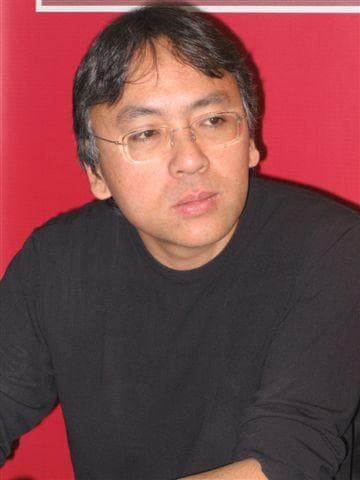
Sir Kazuo Ishiguro is a Japanese-born British novelist, screenwriter, musician, and short-story writer. He is one of the most critically acclaimed and praised contemporary fiction authors writing in English, having been awarded the 2017 Nobel Prize in Literature. In its citation, the Swedish Academy described Ishiguro as a writer "who, in novels of great emotional force, has uncovered the abyss beneath our illusory sense of connection with the world".







