“One reads for pleasure, and that is the great thing. One should not be ashamed of it.”
— The Queen's initial thoughts on reading purely for enjoyment, contrasting with her prior sense of duty.

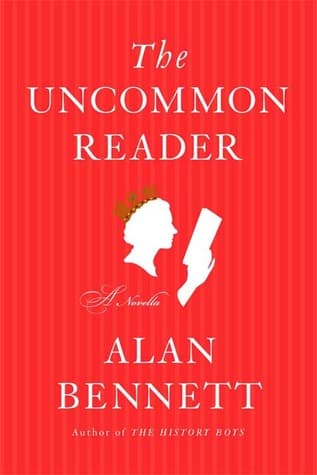
Alan Bennett (2007)
Genre
Literary Fiction
Reading Time
120 min
Key Themes
See below
Sign in to track this book
When her corgis lead her to a mobile library, the Queen unexpectedly trades royal duties for literary pursuits, alarming her advisors and transforming her world view with every turn of a page.
While walking her corgis on the grounds of Buckingham Palace, the Queen encounters a mobile library van. Her corgis lead her directly to it. Feeling a sense of duty, and curiosity, she decides to borrow a book. This first interaction is awkward, as the Queen has never before had to select a book or talk to a librarian in such a casual setting. She meets Norman, a kitchen boy who uses the library, and the librarian asks him to help the Queen with her selection. This seemingly small event starts a deep and unexpected change in the Queen's life, as she enters the world of literature.
The Queen's first borrowed book is by Ivy Compton-Burnett, a challenging author. She struggles with it at first, finding it dense and hard to understand, often falling asleep. But she keeps going, driven by a growing curiosity. Norman, the kitchen boy, becomes her unofficial guide, recommending other authors and genres. He suggests simpler, more engaging books, helping her understand literature. Slowly, the Queen begins to enjoy reading, starting with books she can relate to, like biographies and historical accounts, before reading more diverse and complex fiction. This period shows a shift from duty-bound engagement to genuine interest.
As the Queen's reading habit grows, it begins to interfere with her royal schedule. She finds herself reading during official engagements, in the car, and even during private audiences. Her attention during state dinners and ceremonial events lessens, her mind often on the stories in her books. She becomes less interested in trivial conversations and more prone to philosophical thoughts inspired by her reading. Her staff, especially her Private Secretary Sir Kevin, and her dresser, Miss Lapin, worry about her unusual behavior and her neglect of duties. They see her new hobby as a problem for the monarchy.
Norman, initially a shy kitchen boy, becomes an important part of the Queen's reading journey. He is the only one who truly understands her new passion and gives her recommendations, insights, and a way to discuss her literary discoveries. Their conversations, formal at first, become genuine talks about books and ideas. Norman introduces her to authors like Jean Genet and Proust, expanding her horizons beyond traditional royal reading. His simple nature and love for books make him the perfect confidante, bridging the social gap between them and letting the Queen explore her intellectual curiosity without judgment from her worried courtiers.
Sir Kevin, the Queen's Private Secretary, and other household members become alarmed by her reading habit. They see it as an eccentricity, a distraction, and a threat to the monarchy's stability and dignity. They fear she is losing touch with her main role and becoming too introspective. They try various ways to discourage her, from subtly suggesting she read less to trying to stop Norman from talking to her. Sir Kevin even arranges for the mobile library to be removed from the palace grounds. Their efforts, however, only strengthen the Queen's resolve and her commitment to reading.
Through her extensive reading, the Queen begins to see the world, and its people, with fresh eyes. She develops more empathy for ordinary lives, understanding motivations and struggles far removed from her sheltered existence. She starts to observe her staff and the public not just as subjects, but as individuals with complex inner lives, like the characters in her books. This new perspective makes her more critical of superficiality and protocol, and more interested in genuine connection and intellectual engagement. She questions the rigid structures of royalty and her own role, leading to self-reflection and a growing detachment from her former self.
The Queen's literary immersion begins to show in her public and private talks. She starts to include literary references and philosophical observations in her conversations, often confusing and discomforting those around her. During official engagements, she makes unexpected remarks, quoting authors or comparing fictional scenarios and real-world events. Her staff finds these comments baffling and inappropriate, fearing they undermine her authority and make her seem eccentric. This new way of speaking highlights the growing difference between her inner intellectual life and the expectations of her public role.
Because of the concerns of Sir Kevin and other courtiers, Norman is eventually dismissed from his position in the palace kitchen. This is officially for a small infraction, but really because he is seen as a bad influence on the Queen. The Queen is deeply saddened and angered by this, recognizing it as a direct attempt to cut her connection to reading. Despite Norman's absence, her resolve to read only strengthens. She continues her literary explorations independently, showing that her passion has become self-sustaining and no longer needs an external guide. This event solidifies her rebellion against the constraints imposed by her staff.
After reading many books and absorbing many stories, the Queen realizes she wants to write. She sees that reading is a passive act, and true engagement with literature is in creation. She begins to secretly work on her own manuscript, finding a new purpose and a deeper connection to the literary world. This decision is the ultimate act of defiance against the expectations of her role. It changes her from an 'uncommon reader' into an uncommon writer. It shows her complete embrace of a life guided by intellectual curiosity and creative expression, regardless of her royal position.
At a state occasion, the Queen makes a shocking announcement: she intends to abdicate the throne. She explains that her true calling is now writing, a pursuit she can no longer do with the demands of monarchy. This declaration sends shockwaves through the establishment and the nation. The novella ends with the Queen, free from her royal duties, embracing her new life as a writer, with Norman, reinstated and working as a librarian, by her side. This final act shows how reading can change people and the ultimate freedom of intellectual pursuit over societal expectations. It suggests a future where literature redefines power and purpose.
The Protagonist
From a duty-bound monarch, she transforms into an avid reader, then a thoughtful critic, and finally, a writer, choosing intellectual freedom over royal obligation.
The Supporting
Begins as a shy kitchen boy, becomes an influential literary guide to the Queen, and eventually a librarian, finding his own place within the world of books.
The Antagonist
Remains largely static, stubbornly adhering to protocol and failing to understand or appreciate the Queen's intellectual evolution.
The Supporting
Remains a loyal and concerned observer, unable to fully comprehend the Queen's intellectual transformation.
The Supporting
Remains largely unchanged, serving as a foil to the Queen's intellectual growth.
The Supporting
A minor character whose primary role is to initiate the Queen's journey.
The Mentioned
A minor character who observes the Queen's transformation from a political perspective.
The Mentioned
Serve as a backdrop, reflecting societal and familial reactions to the Queen's changes.
The central theme is how reading can deeply change an individual, no matter their background or position. The Queen, initially limited by duty and protocol, finds freedom and a new sense of self through literature. Books open her eyes to different perspectives, challenge her old ideas, and let her experience lives far from her own. This change leads her to question her role and ultimately pursue a life of intellectual and creative fulfillment.
“Reading, she decided, was like a drug, a habit, a compulsion, and she was hooked.”
The Queen's journey is one of self-discovery. Through reading, she begins to understand herself not just as a monarch, but as an individual with intellectual desires and creative potential. She sheds the identity her title gave her and discovers a more authentic self. Her engagement with various authors helps her express her own thoughts and feelings, leading to a deep re-evaluation of her life's purpose and her place in the world. This ends with her decision to become a writer, a complete reimagining of her identity.
“She was no longer Queen, but a reader. And reading, she had discovered, was a subversive act.”
The novella subtly explores class differences through the friendship between the Queen and Norman, the kitchen boy. Norman, from a working-class background, is the Queen's intellectual equal and guide, bridging the large social gap between them through their shared love of books. His simple nature and knowledge of literature contrast sharply with the snobbery and superficiality of some of the Queen's courtiers. The book suggests that intellectual curiosity and cultural appreciation go beyond social hierarchies.
“Books did not care who was reading them.”
A main conflict in the story is the Queen's struggle to balance her royal duties with her growing personal passion for reading. Her staff sees her reading as a failure of duty, while she increasingly finds her official engagements meaningless compared to the richness of literature. This theme shows the tension between societal expectations and individual desires, ultimately leading the Queen to choose personal fulfillment and intellectual freedom over the rigid demands of her inherited role.
“One could not be a monarch and a reader. Or, if one was, one had to choose.”
The novella examines how power and authority are seen and kept. The Queen's staff believes her authority comes from maintaining a certain image and following strict protocols. However, the Queen discovers a different kind of power in literature – the power of ideas, empathy, and critical thought. Her intellectual awakening subtly undermines the traditional power structures around her, as she becomes less interested in ceremonial power and more attuned to the subversive power of the written word. Her abdication redefines what 'power' means to her.
“She was not herself. She was a reader. And a reader, she had come to believe, was a dangerous thing.”
A literal and symbolic gateway to a new world for the Queen.
The mobile library serves as the inciting incident and a potent symbol. It is a humble, everyday object that unexpectedly brings the vast world of literature directly to the isolated Queen. It represents accessibility, the democratic nature of books, and the serendipitous nature of discovery. Its eventual removal and the Queen's continued reading highlight that the true 'library' is within her, not just a physical place. It acts as a catalyst for her transformation, bringing the outside world, both literally and intellectually, into the confines of the palace.
The kitchen boy who contrasts with the Queen's world and catalyzes her literary journey.
Norman serves as a crucial foil to the Queen, representing common sense, genuine intellectual curiosity, and a lack of pretension. His humble background contrasts sharply with the Queen's royal existence, yet he becomes her most important guide and confidante. He is a catalyst for her deeper engagement with literature, introducing her to new authors and engaging her in meaningful discussions. His presence highlights the absurdity of class barriers and the universality of intellectual pursuit, proving that true wisdom and passion can come from unexpected places. He embodies the liberating spirit of reading.
A curated list of diverse authors that reflects and drives the Queen's intellectual growth.
The specific authors and genres the Queen reads (Ivy Compton-Burnett, Jean Genet, Proust, Nancy Mitford, etc.) are not just incidental details; they are a plot device illustrating her intellectual journey. Her initial struggles and eventual embrace of diverse writers showcase her evolving taste and broadening perspectives. The chosen authors often reflect the themes she's grappling with, allowing her to explore ideas of class, sexuality, power, and human nature. The list acts as a roadmap of her intellectual development, from classic literature to more challenging and unconventional works.
Bennett's use of gentle humor to critique societal norms and the monarchy.
Alan Bennett employs subtle irony and gentle satire throughout the novella. The humor often arises from the juxtaposition of the Queen's lofty position with her newfound, very human, intellectual struggles and obsessions. The reactions of her staff, particularly Sir Kevin, to her reading are portrayed as comically bureaucratic and out of touch. The satire targets the rigidity of tradition, the superficiality of court life, and the absurdities of protocol, using the Queen's transformation to subtly critique the institutions she represents. The ultimate irony is that her 'neglect' of duty leads her to a more profound understanding of humanity.
“One reads for pleasure, and that is the great thing. One should not be ashamed of it.”
— The Queen's initial thoughts on reading purely for enjoyment, contrasting with her prior sense of duty.
“Books, she thought, were a form of social engagement.”
— The Queen reflecting on how books connect her to others, even those she doesn't know personally.
“A book is a device to ignite the imagination.”
— The Queen's growing appreciation for the transformative power of literature.
“She had not known that one could be so changed by a book.”
— The Queen's realization of the profound impact reading has had on her perspective and life.
“The more she read, the more she realised how little she had read.”
— A common sentiment among avid readers, highlighting the vastness of literature.
“One could not be a queen and a reader. Not simultaneously.”
— The Queen's internal struggle between her royal duties and her burgeoning passion for reading.
“What is life without a book?”
— A rhetorical question from the Queen, underscoring the newfound importance of reading in her life.
“Reading is not a duty, it is a pleasure.”
— A core theme of the book, emphasizing the intrinsic joy of reading over any perceived obligation.
“She was no longer the monarch, but a reader.”
— The Queen's sense of liberation and altered identity when she is absorbed in a book.
“Books did not care who you were. They simply were.”
— The Queen's appreciation for the egalitarian nature of books, offering access to anyone.
“To read is to withdraw. To make oneself unavailable. One would have thought that a queen must always be available.”
— The conflict between the demands of monarchy and the solitary nature of reading.
“It was not just the stories themselves, but the act of reading that was subversive.”
— The Queen's realization that her new habit of reading is subtly challenging her established routine and the expectations placed upon her.
“She read not to escape, but to inhabit.”
— A nuanced description of the Queen's reading experience, suggesting a deeper engagement with the world through books.
“Books did not offer a way out but a way in.”
— Further expanding on the idea that reading deepens understanding rather than merely providing an escape.
Ready to see how well you understood this book? Take our interactive quiz with 10 questions.

Alan Bennett is a celebrated English playwright, novelist, and actor, renowned for his sharp wit and keen observations of British life. His notable works include the novella "The Uncommon Reader" and the autobiographical "The Lady in the Van," which was adapted into a film. Bennett's writing often explores themes of class, aging, and English identity with humor and pathos.







